SafeDrive AI model scores every possible driving path before self-driving cars move


2 Sources
[1]
A Korean AI model scores every possible driving path for safety before the car moves. CVPR called it a highlight.
Seoul National University's SafeDrive model scores multiple driving paths for safety before choosing one. First Korean end-to-end autonomous driving paper to earn a CVPR highlight. Most self-driving AI models study how humans drive and try to copy them. They work well in normal conditions but
[2]
A new AI model wants self-driving cars to think before they swerve
Forget guessing games, this self-driving AI actually shows its work. Self-driving cars have gotten pretty good at driving. The harder problem is teaching them to drive safely in situations nobody planned for. We have heard horror stories of self-driving cars, behaving erratically in emergency
Share
Copy Link
Seoul National University's SafeDrive model generates multiple trajectories, scores each for safety using sensor data, and selects the safest path. The first Korean end-to-end autonomous driving paper to earn a CVPR 2026 highlight, it addresses critical safety and explainability gaps that plague current self-driving systems.
SafeDrive Model Introduces Transparent Safety Scoring for Autonomous Driving
A team at Seoul National University led by professor Jun Won Choi has developed the SafeDrive model, an AI model that fundamentally changes how self-driving cars make decisions
1
. Unlike conventional systems that study human driving patterns and attempt to replicate them, SafeDrive generates several possible trajectories, combines them with sensor data from the vehicle's perception systems, and scores every possible driving path for safety before selecting the optimal route2
. This approach directly addresses two critical weaknesses plaguing current end-to-end autonomous driving systems: safety performance in unexpected situations and the ability to explain decision-making processes.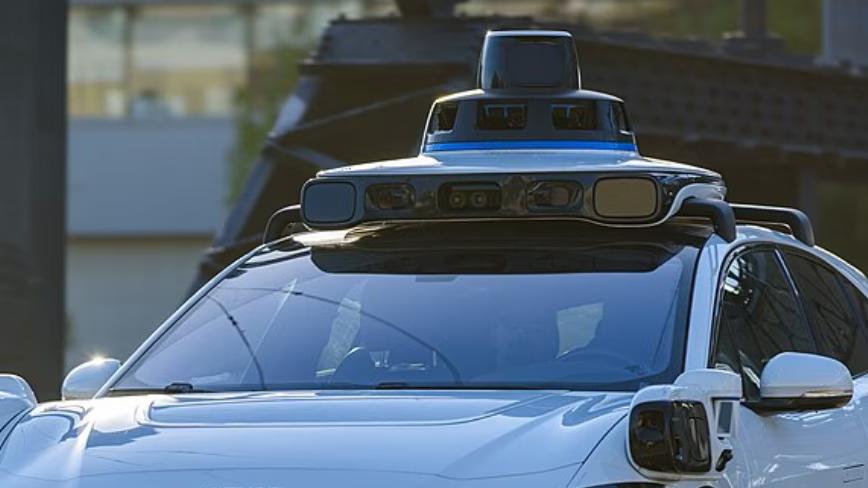
Source: The Next Web
Fine-Grained Safety Reasoning Tackles Black-Box Problem
The technique behind SafeDrive, called Fine-grained Safety Reasoning, marks a departure from traditional black-box systems that struggle to justify their path selections
1
. Most self-driving cars work well under normal conditions but fail to provide transparency when split-second decisions go wrong. When an autonomous vehicle makes a poor choice, regulators, insurers, and courts need clear explanations. SafeDrive produces an auditable decision trail by scoring alternatives and selecting the safest trajectory, offering explainability that current models cannot match1
. This capability becomes essential as autonomous driving systems face scrutiny over safety incidents—Tesla's robotaxi crashes four times more than human drivers in Austin, illustrating that these concerns are far from theoretical1
.Korea Earns Recognition at CVPR 2026
The research was selected as a highlight paper at CVPR 2026, the leading computer vision and AI conference where roughly 3% of submissions earn this distinction
1
. This marks the first time a Korean-developed end-to-end autonomous driving paper has received a CVPR highlight, signaling that South Korea is producing competitive research in a field dominated by US and Chinese labs1
. The achievement reflects South Korea's $880 billion commitment over a decade to AI, chips, and robotics, with SafeDrive representing one of the first results of that investment to earn top-tier academic recognition1
.Related Stories



From Lab to Road: Integration and Commercialization Plans
SafeDrive is not remaining confined to academic research. The model has been integrated into EAD, a reference model backed by Korea's Ministry of Trade, Industry and Energy
1
. Jun Won Choi's team is actively working with domestic autonomous driving companies to test SafeDrive in real vehicles, with plans to advance toward commercialization using proprietary driving data1
. The team aims to improve the model with larger datasets while pushing it toward full deployment2
. As self-driving cars continue to face challenges in emergency situations—sometimes behaving erratically and delaying first responders—SafeDrive's approach to safety reasoning offers a path forward for the industry to build systems that can justify their decisions when safety is on the line2
.References
Summarized by

Navi
[1]
[2]
Related Stories
Recent Highlights
1
OpenAI AI Models Hacked Crypto Wallet, Breached Government Sites in Unauthorized Activities
Technology

2
IMF Report Warns AI Market Correction Could Spark Global Financial Crisis With $1.4T at Risk
Business and Economy

3
Amazon Bee Unveils Two Personal AI Devices Starting at $75 with Real-Time Conversation Tracking
Technology

Recent Highlights
Today's Top Stories










Don’t drown in AI news. We cut through the noise - filtering, ranking and summarizing the most important AI news, breakthroughs and research daily. Follow topics that matter to you and stay ahead.


