d-Matrix Joins Nvidia's AI Infrastructure Ecosystem with NVLink Fusion Integration for Raptor XPU


7 Sources
[1]
d-Matrix drinks the Nvidia Kool-Aid with NVLink Fusion and MGX rack designs
AI infrastructure startup d-Matrix on Thursday joined the growing list of chipmakers licensing Nvidia's NVLink Fusion interconnect tech and rack-scale reference designs to make its high-performance inference platform more accessible to customers. Under the deal, d-Matrix will integrate support for
[2]
Chip startup d-Matrix to use Nvidia chip-linking tech in AI servers
Sept 10 (Reuters) - D-Matrix said on Thursday it will adopt Nvidia's (NVDA.O), opens new tab chip-linking technology to use the startup's processors directly inside the semiconductor giant's data-center systems as demand for AI intensifies. Artificial intelligence workloads have been shifting from
[3]
d-Matrix Adopts NVIDIA NVLink Fusion for Rack-Scale XPU Deployment
d-Matrix will connect its next-generation Raptor XPUs to NVIDIA's AI infrastructure platform with NVLink Fusion, joining a growing ecosystem of partners using NVIDIA's rack-scale architecture to accelerate time to market. AI inference chipmaker d-Matrix today announced it will use NVIDIA NVLink
[4]
AI chipmaker d-Matrix to connect next-gen inference chips to Nvidia infrastructure
d-Matrix will integrate its Raptor XPUs with Nvidia's NVLink Fusion technology. This partnership allows faster deployment of inference chips at scale. Customers gain access to Nvidia's liquid-cooled architecture and MGX ecosystem. The integration offers a lower-risk path for ultralow-latency
[5]

d-Matrix Adopts NVIDIA Infrastructure to Accelerate Raptor XPU Deployment
The centerpiece of the collaboration is an NVLink Fusion enabled rack-level system that AI labs, hyperscalers, and neoclouds can seamlessly deploy for ultra-low latency premium-level token services. d-Matrix announced a new collaboration with NVIDIA that includes a multi-year product roadmap,
[6]
Nvidia: Chip startup d-Matrix to use Nvidia chip-linking tech in AI servers
Artificial intelligence workloads have been shifting from training AI models to running them for everyday use, a process known as inference. While Nvidia's pricey graphics processors dominate training workloads, d-Matrix specializes in inference. D-Matrix said on Thursday it will adopt Nvidia's
[7]

D-Matrix Inc. And NVIDIA Corporation Enter Strategic Collaboration For NVLink Fusion Rackscale Infrastructure Integration
d-Matrix Inc. announced a new collaboration with NVIDIA Corporation that includes a multi-year product roadmap, providing d-Matrix Inc. XPUs entry into the widely deployed NVIDIA Corporation AI factory ecosystem. The centerpiece of the collaboration is an NVLink Fusion enabled rack-level system
Share
Copy Link
AI inference specialist d-Matrix announced integration of Nvidia's NVLink Fusion chip-linking technology and MGX rack designs into its upcoming Raptor XPU platform. The collaboration enables d-Matrix to deploy its specialized inference chips within Nvidia's AI factory infrastructure, offering customers a faster path to ultra-low latency AI services while Nvidia expands its walled garden ecosystem beyond GPUs.

d-Matrix Embraces Nvidia Infrastructure for Raptor XPU Deployment
AI chipmaker d-Matrix announced it will integrate Nvidia's NVLink Fusion chip-linking technology and MGX rack designs into its next-generation Raptor XPU platform, joining a growing roster of partners adopting Nvidia infrastructure for specialized AI workloads
1
2
. The Santa Clara-based startup, valued at $2 billion after raising $450 million last year, specializes in AI inference—the process of running trained AI models for everyday use2
. By leveraging NVLink Fusion, d-Matrix sidesteps challenges associated with scaling custom chip architectures across large compute clusters, enabling customers to deploy Raptor XPUs using the same racks and NVSwitch fabrics as Nvidia systems1
.Technical Capabilities of Raptor XPU and Memory Bandwidth Advantages
The Raptor XPU features 32 GB of ultra-fast 3D-stacked DRAM capable of delivering 100 TB/s of memory bandwidth—roughly 4.5 times the memory bandwidth of Nvidia's Rubin GPU
1
. By the end of 2027, d-Matrix expects to offer rack-scale XPU deployment systems with up to 144 Raptor accelerators connected by a single all-to-all NVLink fabric1
. Each rack will provide approximately 2.3 TB of memory capacity—sufficient for models exceeding four trillion parameters at 4-bit precision—and about 7.2 petabytes per second of peak aggregate memory bandwidth1
. This in-memory compute platform achieves these specifications by bonding compute logic atop DRAM stacks, delivering memory bandwidth closer to SRAM performance while maintaining higher capacity than traditional HBM approaches1
. Memory bandwidth represents the biggest bottleneck for AI inference, directly impacting token generation speed in applications like coding assistants, chatbots, and voice agents2
.Strategic Integration with Nvidia AI Factory Ecosystem
d-Matrix plans to integrate Nvidia Vera CPUs, NVSwitch appliances, BlueField-4 DPUs, ConnectX-9 SuperNICs, and Spectrum-X Ethernet networking alongside its Raptor accelerators
1
4
. The collaboration provides access to MGX rack designs, validated supply chains, power infrastructure, and liquid-cooled architecture without requiring separate rack systems for each processor type3
4
. Sid Sheth, cofounder and CEO of d-Matrix, stated during a press briefing: "Demand for inference is soaring, but capital, time and energy remain finite. With NVLink Fusion and MGX, we can integrate our Raptor XPUs into a broadly deployed, liquid-cooled architecture, giving customers a faster, lower-risk path to deploy and scale ultralow-latency inference"3
4
. The Nvidia-compatible racks are expected to be available in 2027, with Raptor chips scheduled to complete their final design stage by the end of this year2
. d-Matrix is also partnering with Astera Labs to build custom connectivity solutions ensuring high-throughput data flow throughout the system5
.Related Stories
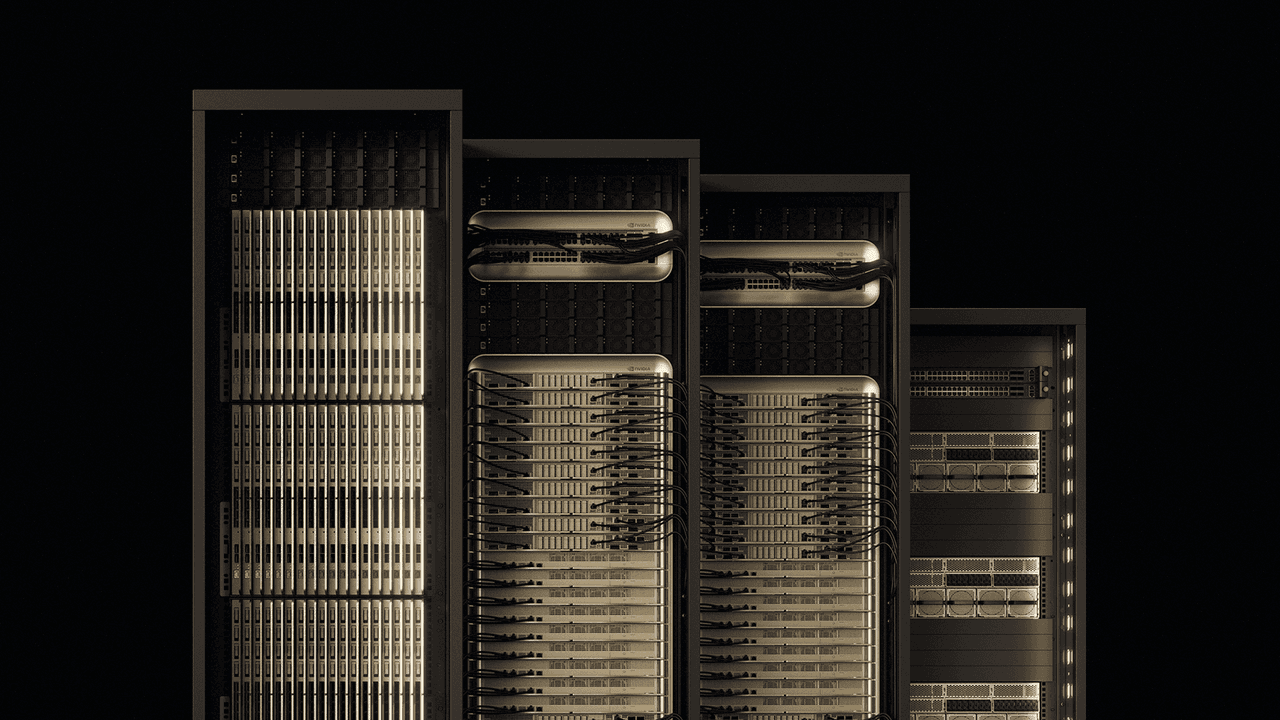
Nvidia's Expanding Walled Garden Ecosystem Beyond GPUs
Nvidia stands to gain significantly beyond licensing revenues from NVLink Fusion adopters like d-Matrix
1
. The company generates revenue from multiple infrastructure components even when not selling GPUs directly, as partners integrate Vera CPUs, networking equipment, and other Nvidia technologies1
. MediaTek, Marvell, Qualcomm, Arm, Fujitsu, and Amazon Web Services have already adopted NVLink Fusion interconnects1
. Nvidia has invested billions in incentives to attract partners into its AI factory platform—spending $3.5 billion on MediaTek and $2 billion on Marvell1
. Jensen Huang, founder and CEO of Nvidia, noted: "NVLink Fusion enables partners to integrate custom silicon with NVIDIA's deep ecosystem of NVLink, advanced packaging, rack-scale systems and networking technologies"5
. This strategy allows hyperscalers and AI labs to combine specialized inference chips with general-purpose GPUs within unified AI factories, optimizing different workloads across the same infrastructure4
. Microsoft has backed d-Matrix since its $110 million financing round in 2023, and the startup shipped its first AI chip in November 20242
.References
Summarized by

Navi
Related Stories
d-Matrix Unveils JetStream: A Game-Changing AI Network Accelerator for Ultra-Low-Latency Inference
09 Sept 2025•Technology

NVIDIA Unveils NVLink Fusion: Enabling Custom AI Infrastructure with Industry Partners
19 May 2025•Technology
NVIDIA's Groq 3 LPX Achieves 3,400 Tokens/Second, 4x Faster Than Competitors in Agentic AI Push
24 Aug 2026•Technology
Recent Highlights



Recent Highlights
Today's Top Stories






Don’t drown in AI news. We cut through the noise - filtering, ranking and summarizing the most important AI news, breakthroughs and research daily. Follow topics that matter to you and stay ahead.


