3 Sources
[1]
DeepSeek plans large Huawei chip order for new Inner Mongolia data centre
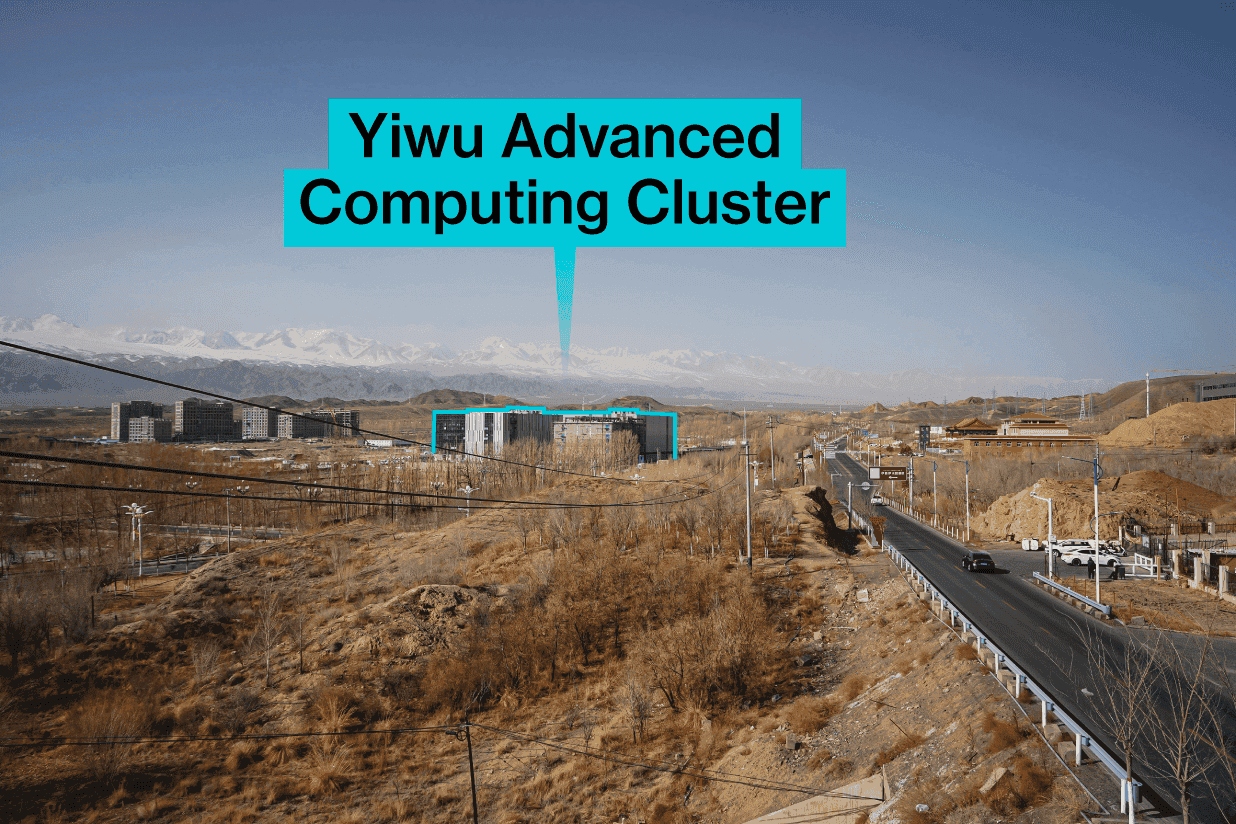
The reported one-gigawatt site at Ulanqab would run on Huawei Ascend silicon rather than Nvidia, extending a shift Jensen Huang has called a "horrible outcome" for America DeepSeek is preparing a large order of Huawei AI chips for a new data centre, according to Bloomberg. Neither the size of the order nor the chip model has been disclosed, and DeepSeek has not confirmed the plan. The data centre has been reported since the summer. Bloomberg described a site of roughly one gigawatt in Ulanqab, Inner Mongolia, which could begin partial operations in late 2027 or early 2028. The reporting is based on people familiar with the project rather than information from DeepSeek itself. Ulanqab is part of a broader Chinese strategy. The Eastern Data, Western Compute programme is moving energy-intensive computing infrastructure towards western regions where electricity is cheaper, and Inner Mongolia has signed around $27bn in AI computing projects as part of that push. The choice of chips is the more significant part of the story. Nvidia's most capable AI accelerators cannot legally be sold in China, leaving Huawei's Ascend family as one of the main domestic options for a Chinese AI lab building computing capacity at this scale. DeepSeek has been moving in that direction for months. Its V4 model was tuned to run on Huawei's Ascend 950 when it launched in April, and Chinese cloud providers subsequently placed orders for hundreds of thousands of the chips. Nvidia has been open about why it sees that shift as a problem. Jensen Huang described DeepSeek running on Huawei chips as a "horrible outcome" for America, arguing that export controls risk pushing China's AI software ecosystem towards Chinese hardware. That is the bigger issue to watch rather than the size of any individual order. Every model optimised for Ascend creates more software and tooling that does not depend on Nvidia's CUDA ecosystem, which has been one of the company's biggest advantages and a major barrier to competing hardware. The hardware strategy is not settled, either. DeepSeek has separately been reported to be developing its own inference chip with SMIC, which would make a large Huawei order more of a bridge than a permanent destination if that project succeeds. Chinese chip design is changing under the same pressure. Export controls have encouraged domestic developers to move from general-purpose GPUs towards custom ASICs, which can be cheaper to produce on the manufacturing processes available inside China. The scale is what makes the reported order significant. A one-gigawatt data centre cannot be supplied with accelerators simply from existing inventory, so a commitment of this size would say something about Huawei's ability to manufacture at scale as well as DeepSeek's plans. Huawei has been expanding Ascend production to meet growing demand. The company has been increasing output through 2026 and targeting a sharp rise in AI chip revenue, a strategy that depends on customers with large computing requirements making commitments of this kind. Money does not appear to be the immediate constraint. DeepSeek has been raising funds at multibillion-dollar scale, while its founder has described artificial general intelligence as the company's goal, an ambition that requires substantial computing capacity. The economics inside China are different as a result. DeepSeek has been able to price aggressively in part because it does not have to buy Western hardware at Western prices, while a domestic chip supply chain helps preserve that advantage. Most of the details remain unconfirmed. The order value, number of chips, specific Ascend generation, delivery schedule, and whether a contract has actually been signed have not been disclosed. The data centre itself has not been publicly confirmed by its reported owner either. DeepSeek has not acknowledged the Ulanqab project, and reporting about it has relied on unnamed sources since July. The broader direction is clearer than the individual details. A Chinese AI lab operating at the frontier is increasingly building around domestic accelerators and domestic computing capacity. That trend was already underway, and a Huawei order would be another sign that it is continuing.
[2]
DeepSeek plans big Huawei AI chip order to power new data centre
The startup doesn't currently plan to use the 950DT chips for training, one of the people said, even though Huawei designed and marketed these processors to serve that more demanding function. While DeepSeek tried to train its previous models on Huawei chips, it has so far relied on Nvidia accelerators for this crucial step. DeepSeek plans to deploy at least 160,000 of Huawei Technologies Co.'s top accelerators at a massive data centre it's building in Inner Mongolia, which could create one of the largest known clusters of Huawei AI chips and advance China's efforts to replace Nvidia Corp. The AI pioneer intends to use Huawei's next-generation Ascend 950DT chips for operating its models, though the timeline for installation will depend on Huawei's production capabilities, according to people familiar with the matter. The startup doesn't currently plan to use the 950DT chips for training, one of the people said, even though Huawei designed and marketed these processors to serve that more demanding function. While DeepSeek tried to train its previous models on Huawei chips, it has so far relied on Nvidia accelerators for this crucial step. DeepSeek wants to purchase more of Huawei's best chips, according to the people, but China's semiconductor champion doesn't currently have the production capacity. Shortages of components such as top-end memory will cap Huawei's output of the 950DT at the low hundreds-of-thousands this year, one of the people said. Huawei is balancing demand from other clients and trying to export small volumes overseas, so fulfilling DeepSeek's order could take more than a year, the people said, speaking on condition of anonymity to discuss a confidential deal. If completed as envisioned, the Inner Mongolia hub will be key to driving AI development at DeepSeek, which is in talks to raise billions of dollars to build out its infrastructure. The installation would dwarf other publicly known clusters of Huawei's Ascend processors, a meaningful step as China tries to wean itself off Nvidia components. By the time it comes online, according to one person with knowledge of Huawei's production capabilities, China could have several clusters of that size. DeepSeek did not respond to requests for comment and a Huawei spokesperson had no immediate comment. More than one hundred thousand chips in a single facility would put DeepSeek's ambitions in the ballpark of the data centres Western companies now routinely build -- albeit China's would be filled with less capable processors. Nvidia's accelerators are the global standard for training and running AI models, but are largely prohibited from sale to China without US permission. Huawei is one of a handful of firms central to Beijing's goal of dominating AI despite US restrictions. The Shenzhen-based telecom titan has emerged as the Asian country's de facto national chipmaking champion, while Hangzhou-headquartered DeepSeek has set the template for disruptive AI model releases that's since been followed by the likes of Moonshot. China's ability to produce -- and eventually, export -- its own AI chips is one of the defining factors of its technological competition with the US. It's a metric closely watched by American policymakers, who have levied years of restrictions on companies including Huawei in order to stall that progress. Those curbs have constrained Huawei's production and performance. Bloomberg News reported last year that Huawei plans to make around 1.6 million Ascend dies in 2026: enough base components for around 600,000 of the company's marquee 910C chips plus a smattering of other models. Unveiled around a year ago, the 950DT is an upgraded and more capable version that's widely regarded as comparable in power to Nvidia's previous Hopper generation of chips. Still, even the possibility of a 160,000-chip cluster shows progress. Just six months ago, an official newspaper of tech hub Shenzhen said that it began operations of the country's first ever 10,000-chip intelligent computing cluster using Huawei's Ascend series -- a tiny facility compared to data centres in the US. Elon Musk's SpaceXAI brought a cluster 10 times that size online in 2024. In June, Chinese food delivery giant Meituan said it trained an AI model using 50,000 domestic chips, without providing further details. Z.AI Co. in July completed construction of a 1-gigawatt data centre it plans to fill with only Chinese-made chips, though its current installed base is low, in the ballpark of 10,000 cards. San Jose, California-based Nvidia has complained that this transition to homemade silicon in China is the natural consequence of years of US export controls, which Washington first imposed in 2022 over concerns that American AI chips could boost China's military. Beijing is indeed urging China's AI labs to switch to domestic hardware, an effort that some are embracing more fervently than others. China's private sector still prefers Nvidia chips, though, as evidenced by large orders from the likes of Alibaba Group Holding Ltd. and Tencent Holdings Ltd. after US President Donald Trump eased Washington's restrictions. And Chinese companies can still access massive quantities of even Nvidia's best chips by renting computing power located overseas, which doesn't generally violate the US rules. Washington has also accused the likes of Moonshot and DeepSeek of using smuggled Nvidia hardware to fuel their AI development. But China's central government is holding fairly firm: while Trump's team was prepared to allow the sale of as many as a million Nvidia H200 chips, which are the top model from a previous Nvidia generation, Beijing has so far green-lit a fraction of that total for import. DeepSeek is one of several Chinese companies that have optimized their models to run on domestic accelerators. The firm has asked for Beijing's help in convincing Huawei to allocate more chips to the startup -- and faster, one of the people said. China's Ministry of Industry and Information Technology, which oversees national tech policy, did not respond to a faxed request for comment. DeepSeek's AI infrastructure goals in Inner Mongolia are at a gigawatt scale, which at full utilization would consume enough energy to power roughly 750,000 homes. The 160,000 Ascend 950DT chips DeepSeek plans to install there would comprise only one chunk of that capacity. It's unclear what types of chips the AI lab plans to use for the remainder. Trump administration officials have alleged that the startup has procured Nvidia's top Blackwell chips and installed them in Inner Mongolia, a claim Bloomberg hasn't independently verified.
[3]
NVIDIA Is Reportedly Giving Up On China As A Lost Cause Amid An Unassailable Lead From Huawei, As DeepSeek Snubs H20 GPUs For 160,000 Units Of Huawei's Ascend 950DT Chips
It was only in July that DeepSeek's CEO created seismic waves by boldly declaring that NVIDIA was digging its own grave in China. And now, merely weeks later, DeepSeek is apparently helping that prognostication come to fruition by placing a massive order for Huawei's Ascend 950DT AI chips, further dimming NVIDIA's prospects in a market that is increasingly becoming insular. DeepSeek has reportedly eschewed NVIDIA's China-specific H200 GPUs to place a gigantic ~$2.56 billion order for 160,000 units of Huawei's Ascend 950DT chips, which will populate its new 1GW data center in Mongolia Bloomberg is now reporting that DeepSeek has placed a massive order of 160,000 Ascend 950DT chips with Huawei to populate its 1GW data center in inner Mongolia. With the street price of each 950DT chip currently hovering at around 111,000 Yuan or ~$16,000 (vs. $15,000 to $25,000 for NVIDIA's H20 GPU), the total order might amount to ~$2.56 billion. Of course, Huawei's production capacity for the Ascend 950DT chip is extremely constrained at the moment, limited to only a few hundred thousand units per year. This means that Huawei can take as much as 1 year to fulfill DeepSeek's order. For the benefit of those who might not be aware, the Ascend 950DT chip is built on Huawei's self-developed third-generation DaVinci v3 architecture, and leverages SMIC's N+3 process technology (an advanced 7-nanometer class process). While the chip can handle both the training- and decode-related workloads, DeepSeek is primarily placing this order to fulfil its inference needs. What's more, each Ascend 950DT chip comes equipped with 144 GB of specialized High Bandwidth Memory (HiZQ 2.0 HBM), achieving a 4.0 TB/s memory bandwidth and a 2.0 TB/s GPU-to-GPU interconnect speed. It also natively supports low-precision formats such as FP8, FP4, and Huawei's proprietary HiF8. Of course, Huawei also features the chip within its Atlas 950 SuperPoD infrastructure, which links up to 8,192 Ascend 950DT chips to deliver 8 EFLOPS of peak AI compute power. Do note that DeepSeek's CEO, Liang Wenfeng, had noted back in July that "all tasks [NVIDIA] GB300 can do, the Huawei supernode can do, latency and all the same. The only cost: 4 Huawei GPUs equal 1 NVIDIA GPU, and it's two years behind." To summarize, DeepSeek has opted to go with Huawei's Ascend 950DT chips instead of NVIDIA's H20 GPUs despite a ~4x performance hit, a year-long delay in delivery, and not-too-hefty of a price differential. It is hardly a surprise, therefore, that NVIDIA seems to have given up on China, according to Steven Glinert, the CEO of Sphere Semi. Finally, do note that inner Mongolia is increasingly emerging as the epicenter of China's AI build out, where the cold, arid climate is uniquely suited for solar-powered data centers. For instance, the power costs for Alibaba's Ulanqab data center in Mongolia range between 0.32 and 0.35 yuan per kilowatt-hour, which equates to just ~$0.05 per kWh! Also, ByteDance is currently in talks to add 5-6GW of capacity in Mongolia, with the cost of each 1GW of capacity currently hovering at around $23.8 billion. What's more, Follow Wccftech on Google to get more of our news coverage in your feeds.
Share
Copy Link
DeepSeek plans to deploy at least 160,000 Huawei Ascend 950DT chips at its new 1-gigawatt data centre in Ulanqab, Inner Mongolia. The $2.56 billion order marks a significant shift toward domestic AI hardware as US export restrictions limit access to Nvidia's accelerators, advancing China's AI infrastructure independence.
DeepSeek is preparing to deploy at least 160,000 Huawei Ascend 950DT chips at a new data centre in Ulanqab, Inner Mongolia, according to Bloomberg
1
2
. The order, valued at approximately $2.56 billion based on current street prices of around $16,000 per chip, represents one of the largest known clusters of Huawei AI chips and signals a decisive move toward domestic AI hardware3
. The AI pioneer intends to use these Huawei Ascend 950DT chips primarily for inference workloads rather than training, despite the processors being designed for both functions2
.The reported one-gigawatt site at Ulanqab could begin partial operations in late 2027 or early 2028
1
. Ulanqab is part of China's Eastern Data, Western Compute programme, which moves energy-intensive computing infrastructure toward western regions where electricity is cheaper1
. Inner Mongolia has signed around $27 billion in AI computing projects as part of this strategic push1
. The region offers significant cost advantages, with power costs ranging between 0.32 and 0.35 yuan per kilowatt-hour, equating to just $0.05 per kWh3
.Huawei faces significant production constraints that could delay fulfillment of DeepSeek's order by more than a year
2
. Shortages of components such as top-end memory will cap Huawei's output of the 950DT at the low hundreds of thousands this year2
. Huawei is balancing demand from other clients and attempting to export small volumes overseas, further complicating the delivery schedule2
. Bloomberg News reported that Huawei plans to make around 1.6 million Ascend dies in 2026, enough base components for around 600,000 of the company's marquee 910C chips plus other models2
.The choice of Huawei AI chips over Nvidia accelerators reflects the impact of US export restrictions on China's AI infrastructure development. Nvidia's most capable AI accelerators cannot legally be sold in China without US permission, leaving the Ascend series as one of the main domestic options for Chinese AI labs building computing capacity at scale
1
. Jensen Huang described DeepSeek running on Huawei chips as a "horrible outcome" for America, arguing that export controls risk pushing China's AI software ecosystem toward Chinese hardware1
. DeepSeek is choosing Huawei's Ascend 950DT chips despite a roughly 4x performance hit compared to Nvidia's H20 GPUs and not-too-hefty price differential3
.
Source: Wccftech
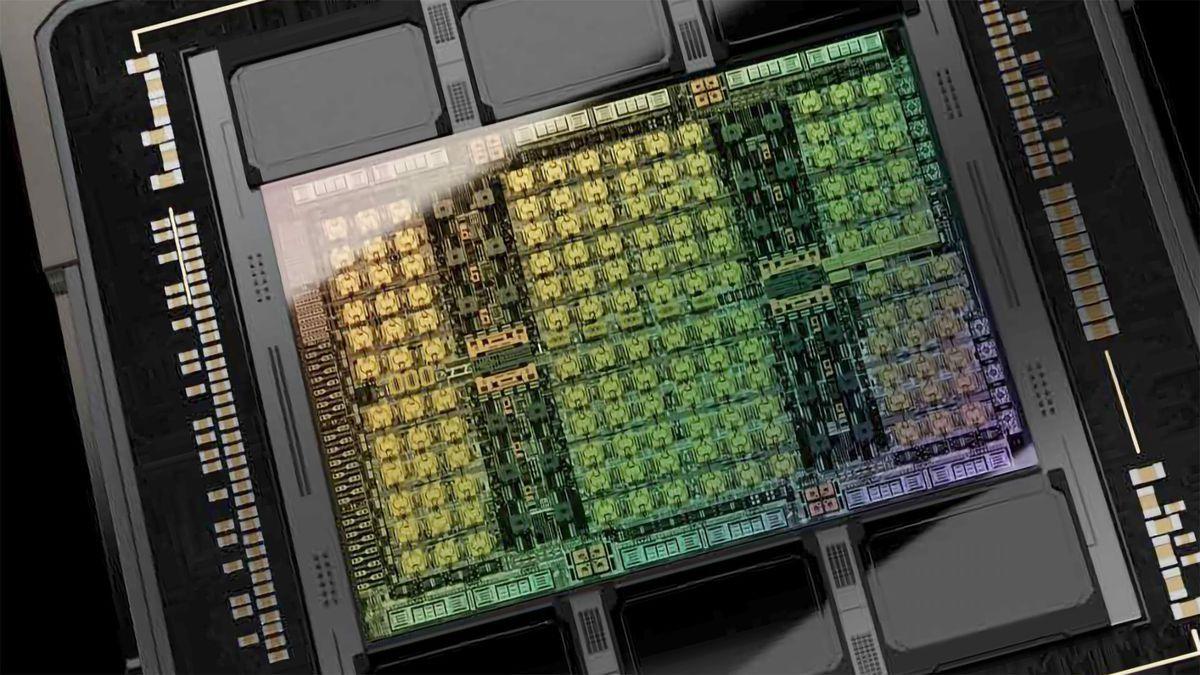
The Ascend 950DT chip is built on Huawei's self-developed third-generation DaVinci v3 architecture and leverages SMIC's N+3 process technology, an advanced 7-nanometer class process
3
. Each chip comes equipped with 144 GB of specialized High Bandwidth Memory (HiZQ 2.0 HBM), achieving a 4.0 TB/s memory bandwidth and a 2.0 TB/s GPU-to-GPU interconnect speed3
. The chip natively supports low-precision formats such as FP8, FP4, and Huawei's proprietary HiF83
.Related Stories
Every model optimized for the Ascend series creates more software and tooling that does not depend on Nvidia's CUDA ecosystem, which has been one of the company's biggest advantages and a major barrier to competing hardware
1
. Steven Glinert, CEO of Sphere Semi, suggested that Nvidia seems to have given up on China as a lost cause3
. DeepSeek has been moving in this direction for months, with its V4 model tuned to run on Huawei's Ascend 950 when it launched in April1
.
Source: The Next Web
The installation would dwarf other publicly known clusters of Huawei's Ascend processors, representing meaningful progress as China tries to wean itself off Nvidia components
2
. Just six months ago, Shenzhen began operations of China's first ever 10,000-chip intelligent computing cluster using the Ascend series, tiny compared to data centres in the US2
. DeepSeek is in talks to raise billions of dollars to build out its infrastructure, with artificial general intelligence described as the company's goal by its founder1
.DeepSeek has separately been reported to be developing its own inference chip with SMIC, which would make a large Huawei order more of a bridge than a permanent destination if that project succeeds
1
. Export controls have encouraged domestic developers to move from general-purpose GPUs toward custom ASICs, which can be cheaper to produce on the manufacturing processes available inside China1
. The economics inside China are different as DeepSeek has been able to price aggressively in part because it does not have to buy Western hardware at Western prices, while a domestic chip supply chain helps preserve that advantage1
.Summarized by
Navi
10 Jul 2025•Technology

05 Feb 2025•Technology

21 Apr 2025•Technology