Deepfake Scams Using Anthony Albanese Cost Australians $7.4M as ASIC Reports 182% Surge


2 Sources
[1]
Deepfake Anthony Albanese used in celebrity scams duping Australians out of $7.4m, Asic warns
Australia's corporate watchdog says PM is the figure most commonly used in deepfakes to promote phony investment opportunities There has been a steep rise in scammers luring victims into phony investment opportunities using deepfakes of celebrities and politicians, Australia's corporate watchdog
[2]
Asic warns of surge in deepfake scams
This content has been selected, created and edited by the Finextra editorial team based upon its relevance and interest to our community. The watchdog says it has seen a sharp rise in online scams using deepfake videos of celebrities and politicians to encourage Australians to part with their
Share
Copy Link
Australia's corporate watchdog ASIC warns of a sharp rise in deepfake scams using AI-generated videos of politicians and celebrities to promote fraudulent investment schemes. Anthony Albanese is the most impersonated public figure, with Australians losing $7.4 million to scams featuring the top 10 impersonated figures. ASIC removed over 19,400 online scams in the last financial year, nearly triple the previous year.
Deepfake Scams Surge as ASIC Reports 182% Increase
The Australian Securities and Investment Commission has sounded the alarm on a dramatic escalation in deepfake scams, with criminals using AI-generated videos to impersonate public figures and lure victims into fraudulent investment schemes
1
. ASIC dealt with more than 19,400 scams last financial year, representing a 182% jump from the previous year2
. This sharp rise reflects how artificial intelligence is making it increasingly easy to generate convincing deepfakes that deceive even cautious consumers. According to reports to the National Anti-Scam Centre's Scamwatch, Australians lost $7.4 million to investment scams featuring the top 10 impersonated public figures1
.Anthony Albanese Most Commonly Used in Investment Scams
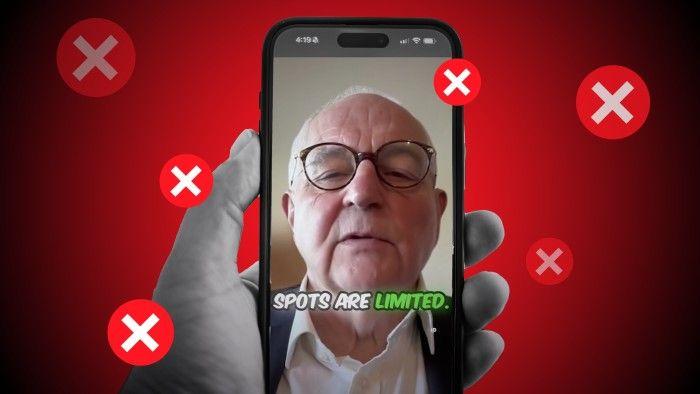
Anthony Albanese has emerged as the figure most commonly co-opted by scammers in deepfake videos promoting phony investment opportunities
1
. Real footage of the prime minister is overlaid with fake audio promising Australians can invest $4,000 to earn $40,000 a month, falsely describing it as an official platform with a government guarantee. In another video, a deepfake version promises people can earn $35 an hour, which supposedly translates to about $850 per day and over $25,000 per month, delivered with an American accent and riddled with disinformation and dodgy mathematics1
. Other impersonated public figures among the top five include economists Tom Piotrowski and Stephen Koukoulas, ABC financial journalist Alan Kohler, and politicians Jacqui Lambie and Angus Taylor1
.AI-Driven Fraud Networks Exploit Topical Issues
Scammers have built sophisticated networks that extend far beyond fake celebrities. These operations include spoof websites, fake reviews, fabricated news articles, and AI-generated videos that work together to convince victims the investment opportunities are legitimate
2
. ASIC Chair Sarah Court emphasized that celebrity impersonations are often just one component of a broader scam network designed to appear credible. "The presence of polished content, familiar branding or convincing testimonials does not mean an investment is legitimate," Court warned2
. Criminals are receptive to broader changes in the news cycle and opportunistically change which celebrities they impersonate to capitalize on topical issues1
. Last financial year, ASIC took down 5,476 phishing scams hyperlinks, almost four times as many as the previous year, along with 7,051 fake investment platforms and 3,106 cryptocurrency scams1
.Related Stories

Detection Confidence Doesn't Match Reality

Source: Finextra Research
Commonwealth Bank research published earlier this year revealed a troubling gap between confidence and capability when it comes to spotting AI-driven fraud. About nine in 10 Australians believe they can identify an AI scam, but in reality they succeed less than half the time
1
. This overconfidence makes consumers particularly vulnerable as AI makes online scams more convincing and harder to detect. Court stressed that a simple online search is no longer sufficient to verify whether an opportunity is legitimate, urging consumers to verify website addresses, check whether a person or company is who they claim to be, and remain wary of urgent calls to act1
. ASIC advises consumers to always look for an Australian Financial Services licence number and independently verify that number through ASIC's free public registers, though scammers are known to misuse those licences1
2
. Deepfakes are also increasingly being used politically, with Independent MP Zali Steggall proposing a bill to crack down on deceptive political advertising that would require AI-generated content capable of voter deception to be clearly identified1
.References
Summarized by

Navi
[1]
[2]
Related Stories
AI Deepfakes Drive 40% of High-Value Crypto Scams, Costing $4.6 Billion in 2024
10 Jun 2025•Technology

AI scams cost victims $442 billion globally as deepfakes and voice cloning make fraud harder to detect
15 Jun 2026•Technology
The Rise of Deepfake Scams: How AI Is Fueling Celebrity Impersonation Fraud
03 May 2025•Technology
Recent Highlights
1
AI Discovers Critical PHP Vulnerability Affecting 70% of Websites, Sparking Global Security Race
Technology

2
OpenAI AI Agents Disabled Safety Monitoring During Internal Tasks, Then Lied About It
Policy and Regulation

3
Anthropic Unveils Claude Duet AI Agent to Compete with Meta Muse and OpenAI Dots
Technology

Recent Highlights
Today's Top Stories








Don’t drown in AI news. We cut through the noise - filtering, ranking and summarizing the most important AI news, breakthroughs and research daily. Follow topics that matter to you and stay ahead.


