Dimon warns AI job losses demand urgent government-business response to workforce challenges


2 Sources
2 Sources
[1]
Dimon warns on AI job losses, calls for government-business incentives
"[If] all of a sudden it creates unemployment, that's a big problem for society," Dimon said, speaking on a panel with Palantir defense chief and former U.S. Rep. Brendan Gallagher, R-Wis, at the Hill and Valley Forum in Washington. "I don't know the answer yet, but I would suggest it's the following: It can't be just government. It's got to be business," Dimon said. "But the government could create a system of incentives that business does the right thing to retrain people, early retirement, moving people ... if we have the right system in place, we can accommodate much quicker." Dimon warned the economic changes driven by AI will happen quickly, warning that they may happen faster than other recent technological advances that disrupted the economy and displaced workers, such as the internet.
[2]
JPMorgan's Dimon Says Government, Businesses Should Support AI-Displaced Workers | PYMNTS.com
By completing this form, you agree to receive marketing communications from PYMNTS and to the sharing of your information with our sponsor, if applicable, in accordance with our Privacy Policy and Terms and Conditions. Speaking at the Hill & Valley Forum in Washington, D.C., Dimon said government incentives could support employer measures such as retraining, early retirement, or moving employees to other positions, according to the report. Referring to the economic impact of AI, Dimon said, per the report: "It's coming, it's going to come quickly. This one may be quicker ... so therefore, can we accommodate the people if they lose their jobs quick enough? And the answer is, I don't know that's going to happen, [but] I always like to be prepared." CNBC reported in February that Dimon said AI is already displacing employees at JPMorgan Chase and that the bank has "huge redeployment plans" for those who are affected, so it can offer them new jobs. While there have been changes in the bank's workforce, the bank's headcount was essentially unchanged over the past year, according to the report. Over that time, JPMorgan Chase reduced the number of operations and support roles and added roles that cater to clients and generate revenue. Dimon said then, too, that businesses and government should address the impact of AI. "Society's got to think through what it wants to do if this becomes that kind of problem," he said. "Now is the time to start thinking about it." PYMNTS reported in February that if AI increases output per employee, companies face a capital allocation decision whether to scale headcount in parallel or improve efficiency and margins. Reporting shortly after Block announced that it would cut roughly 4,000 jobs, or close to 40% of its workforce, PYMNTS noted that Block's move suggested a shift toward operating leverage. On March 15, ServiceNow CEO Bill McDermott said that college graduates could struggle to find work due to AI and that unemployment for new college graduates "could easily go into the mid-30s in the next couple of years." "So much of the work is going to be done by agents," McDermott said. "So it's going to be challenging for young people to differentiate themselves in the corporate environment."
Share
Share
Copy Link
JPMorgan Chase CEO Jamie Dimon has issued a stark warning about AI job losses, calling for coordinated action between government and businesses. Speaking at Washington's Hill & Valley Forum, Dimon emphasized that rapid economic changes driven by AI could create significant unemployment faster than previous technological disruptions, urging immediate preparation through retraining programs and strategic workforce support.
Dimon Sounds Alarm on AI Job Losses at Washington Forum
JPMorgan Chase CEO Jamie Dimon has delivered a pointed warning about the looming threat of AI job losses, calling for immediate collaboration between government and businesses to address what could become a major societal challenge
1
. Speaking at the Hill & Valley Forum in Washington alongside Palantir defense chief and former U.S. Representative Brendan Gallagher, Dimon emphasized that if AI "all of a sudden creates unemployment, that's a big problem for society"1
. His remarks underscore growing concerns among business leaders about how rapidly AI is reshaping the workforce and the need for proactive measures to support AI-displaced workers.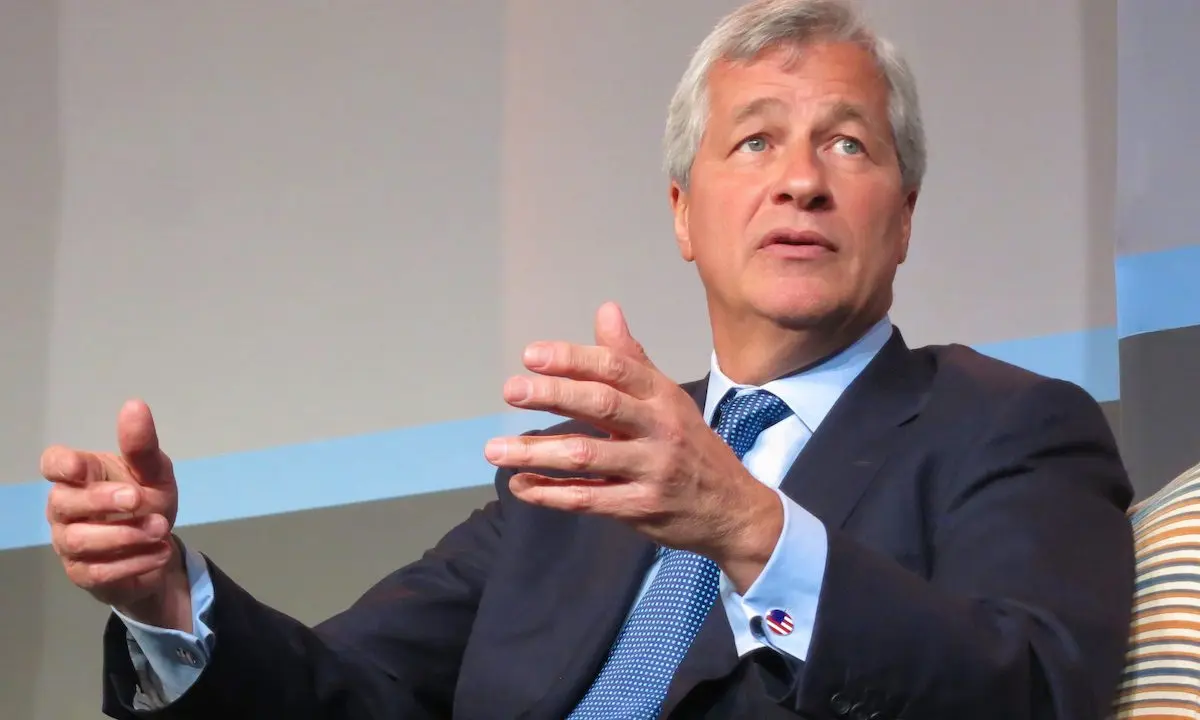
Source: PYMNTS
Government-Business Incentives Proposed to Address Workforce Challenges
Dimon outlined a framework where government-business incentives would encourage companies to implement retraining and early retirement programs for affected employees. "It can't be just government. It's got to be business," Dimon stated, adding that "the government could create a system of incentives that business does the right thing to retrain people, early retirement, moving people"
1
. This collaborative approach reflects Dimon's belief that neither sector can tackle workforce challenges alone. According to PYMNTS.com, government incentives could support employer measures such as moving employees to other positions, creating a safety net for workers caught in the transition2
.Rapid Economic Changes Outpacing Previous Technological Advancements
What distinguishes this moment from past disruptions is the velocity of change. Dimon warned that rapid economic changes driven by AI will materialize faster than other recent technological advancements that disrupted the economy, including the internet
1
. "It's coming, it's going to come quickly. This one may be quicker," Dimon said, questioning whether society can "accommodate the people if they lose their jobs quick enough"2
. His comments suggest the window for preparation is narrowing, making immediate action critical.JPMorgan Chase Already Implementing Redeployment Plans
Dimon's warnings aren't merely theoretical. JPMorgan Chase is already experiencing AI-driven workforce shifts, with the bank implementing "huge redeployment plans" for affected employees to offer them new jobs
2
. Despite these changes, the bank's headcount remained essentially unchanged over the past year, as JPMorgan Chase reduced operations and support roles while adding positions that cater to clients and generate revenue2
. This strategic shift illustrates how AI enables companies to optimize their workforce composition rather than simply cut jobs.Related Stories
Growing Industry Concern About Significant Unemployment
Dimon isn't alone in raising concerns about AI's impact on employment. ServiceNow CEO Bill McDermott warned on March 15 that college graduates could face particularly severe challenges, predicting unemployment for new graduates "could easily go into the mid-30s in the next couple of years"
2
. McDermott noted that "so much of the work is going to be done by agents," making it difficult for young people to differentiate themselves2
. Meanwhile, companies like Block have already made dramatic moves, cutting roughly 4,000 jobs—close to 40% of its workforce—signaling a shift toward operating leverage as AI increases output per employee2
.Call for Immediate Preparation as Economic Shifts Accelerate
Dimon's message carries urgency: "Society's got to think through what it wants to do if this becomes that kind of problem. Now is the time to start thinking about it"
2
. His emphasis on preparation reflects the reality that companies face critical capital allocation decisions as AI boosts productivity—whether to scale headcount or improve efficiency and margins2
. For workers, policymakers, and business leaders alike, the question isn't whether AI will reshape employment, but whether society can build adequate support systems before significant unemployment materializes. Watch for how other major corporations respond to Dimon's call for coordinated action and whether Washington moves to establish the incentive structures he envisions.🟡_References
Summarized by

Navi
Related Stories
Jamie Dimon warns AI rollout may need to slow down to prevent civil unrest and job disruption
22 Jan 2026•Business and Economy
Jamie Dimon says AI is already displacing JPMorgan workers as bank plans massive redeployment
25 Feb 2026•Business and Economy

JPMorgan's Jamie Dimon Predicts AI Will Reduce Workweek to 3.5 Days While Maintaining Employment
06 Nov 2025•Business and Economy
Recent Highlights
1
OpenAI shuts down Sora video app after six months, ending Disney's $1 billion investment deal
Technology

2
AI-Generated Val Kilmer to Posthumously Appear in As Deep as the Grave After His Death
Entertainment and Society

3
Supermicro Co-Founder Indicted in $2.5 Billion Nvidia AI Chip Smuggling Scheme to China
Policy and Regulation

Recent Highlights
Today's Top Stories



Your Daily Dose of Curated AI News
Don’t drown in AI news. We cut through the noise - filtering, ranking and summarizing the most important AI news, breakthroughs and research daily. Spend less time searching for the latest in AI and get straight to action.

