ECB warns eurozone banks to accelerate defenses against AI-powered cyberattacks from Mythos


5 Sources
[1]
ECB urges banks to quickly prepare for AI-assisted cyberattacks
FRANKFURT, May 13 (Reuters) - European Central Bank board member Frank Elderson on Wednesday urged banks in the euro area to quickly prepare for potential cyberattacks launched with the help of Anthropic's Mythos AI model or similar tools. Elderson, who is vice chair of the ECB's bank supervision
[2]
ECB tells eurozone banks to tighten cyber-security as AI shifts the threat picture
Frank Elderson's message: lack of access to Anthropic's Mythos is not an excuse for slow patching. AI-led attacks are now the working assumption. The European Central Bank has formally told eurozone banks they must tighten their cyber-security posture in response to AI-led attack tools, in a
[3]
ECB convenes banks over AI cybersecurity risks from Mythos
Executive board member Frank Elderson says banks must patch vulnerabilities faster because AI can exploit them within minutes of a fix's release The European Central Bank is calling banks in for a meeting on Tuesday to address the cybersecurity risks created by a new generation of AI models that
[4]
ECB urging action on AI from lenders' IT departments
The emergence of Anthropic's Mythos has sparked wide-ranging concern about potential threats posed by it and other similar AI models. The European Central Bank (ECB) is to urge quicker action on improving the IT security of lending organisations amid evolving AI threats when it summons
[5]
Euro zone banks need tighter cyber security amid AI risk, ECB says
FRANKFURT, May 27 (Reuters) - Euro zone banks need to invest more in cybersecurity if they are to get a grip on new AI models that can find flaws in software, the European Central Bank's outgoing Vice President Luis de Guindos said on Wednesday. "We have to understand much better the potential
Share
Copy Link
The European Central Bank is pushing eurozone banks to rapidly strengthen their cybersecurity posture against AI-assisted cyberattacks, particularly from Anthropic's Mythos model. ECB Vice-Chair Frank Elderson warns that lack of access to Mythos is no excuse for inaction, as banks must prepare for AI tools that can exploit software vulnerabilities within minutes of patches being released.
ECB Escalates Pressure on Banks to Address AI Cybersecurity Threats
The European Central Bank has intensified its warnings to eurozone banks about the urgent need to strengthen defenses against AI-assisted cyberattacks, particularly those enabled by Anthropic's Mythos model. Frank Elderson, vice-chair of the ECB's Single Supervisory Mechanism, made clear in an interview with ECB publication Supervision Newsletter that financial institutions can no longer rely on traditional security timelines
1
. The central bank has formally told banks that "lack of access is not an excuse for inaction," signaling a shift from guidance to supervisory expectation .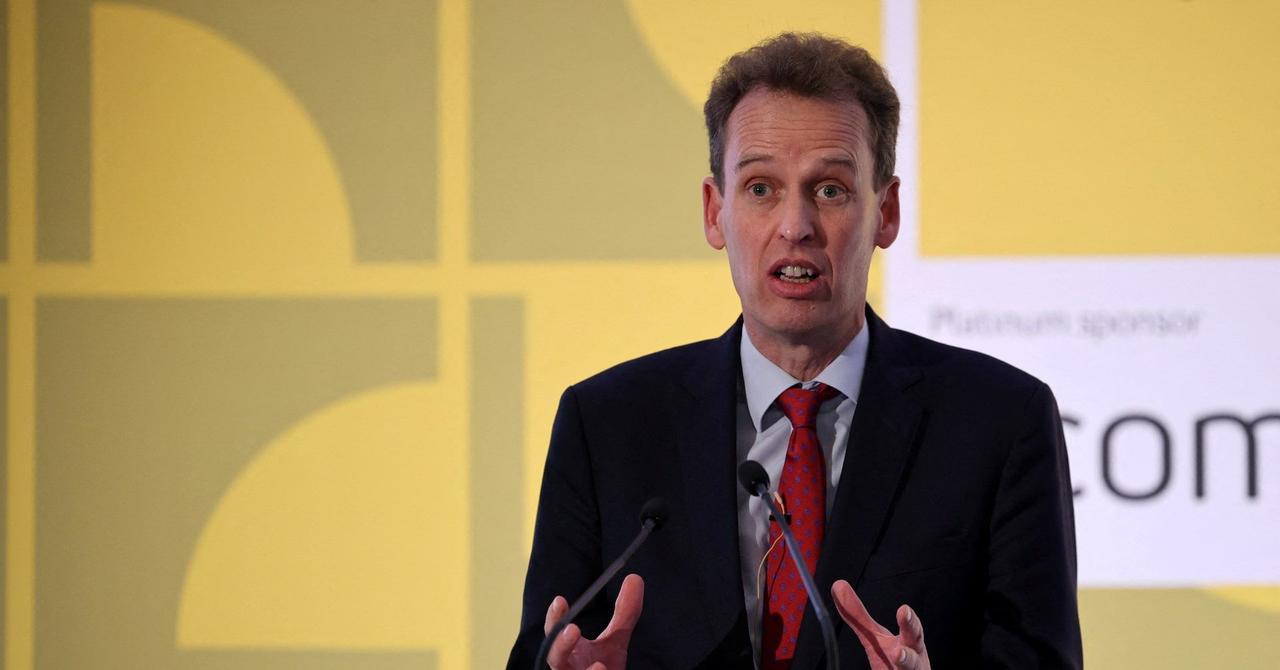
Source: Reuters
The ECB convened banks for a meeting on May 26 to address cybersecurity risks created by AI models that can discover and exploit software vulnerabilities faster than human teams . Elderson told the Financial Times that "this is something that is game-changing. We want banks to look into this seriously. The clock is ticking"
4
. Luis de Guindos, the ECB's outgoing Vice President, reinforced this message, emphasizing the need for additional cybersecurity investment as "something that is going to be quite structural in the near future"5
.The Access Gap Creates Asymmetric Risk for European Financial Institutions
A critical challenge facing eurozone banks is their exclusion from Anthropic's restricted-access Mythos program. Only 40 to 50 organizations have been granted access through Project Glasswing, including major US banks like JPMorgan Chase, Goldman Sachs, Citigroup, Bank of America, and Morgan Stanley, along with tech giants Amazon, Microsoft, Google, and Nvidia . No European bank sits on this list, creating what regulators view as an unacceptable vulnerability .
The access gap has sparked political tensions, with Brussels in stalled talks with Anthropic for several weeks over expanding Mythos access to European institutions. Spain has described these negotiations as deadlocked . European Commissioner Valdis Dombrovskis confirmed on May 4 that the EU is in talks with Anthropic about having companies and banks tested for vulnerabilities the model uncovers, though reports from Spanish officials in mid-May indicated the negotiations had made little progress .

Source: Silicon Republic
This impasse has created an opening for European alternatives. French AI startup Mistral AI is now in discussions with European banks about deploying its own cybersecurity model, designed to identify vulnerabilities in the same way Mythos does. CEO Arthur Mensch has framed the effort as a question of technological sovereignty, leveraging existing banking clients including HSBC and BNP Paribas .
Vulnerability Management Must Adapt to AI-Driven Threats
The ECB's supervisory posture reflects a fundamental shift in how banks must approach patching and vulnerability management. Elderson emphasized that AI models can now reverse-engineer software fixes within minutes of their release, meaning the window between a vulnerability being patched and being exploited has collapsed . Traditional monthly software-patching cycles are no longer adequate; banks must compress their response timeframes to match AI-attacker capabilities .
In controlled testing, Mythos produced working exploits on its first attempt more than 83 percent of the time, often outperforming human cybersecurity specialists . Anthropic has warned that adversaries could replicate this capability within six to twelve months. Real-world data from Palo Alto Networks shows that advanced AI models are discovering vulnerabilities at seven times the usual rate, with the firm warning the industry has only three to five months of defensive buffer remaining .

Source: Market Screener
The ECB has indicated it will incorporate AI cybersecurity readiness into supervisory dialogues with individual banks, with formal conversations beginning over the summer. Eurozone banks have until end-2026 to demonstrate readiness against the ECB's new posture .
Related Stories

Supply-Chain Risks Emerge as Critical Weakness
The ECB has flagged contractor exposure as an asymmetric problem that requires immediate attention. Most eurozone banks rely on a long tail of third-party software providers whose patch discipline is uneven. An AI-powered attack tool discovering a vulnerability in a single widely deployed vendor product can pivot into multiple bank environments through that vendor relationship .
Elderson's framing makes clear that supervisors will hold banks accountable for their contractor security, not just their own systems. This creates particular challenges for smaller eurozone banks, which have historically relied on outsourced infrastructure providers for the technical layer and are in a weaker position to deliver on compressed patching timelines than large universal banks .
The ECB plans to push banks to act under the Digital Operational Resilience Act (DORA), the EU's cybersecurity law for financial institutions. DORA requires banks to manage IT risk, test resilience, and report incidents . The question facing regulators is whether the regulation's framework can keep pace with AI models discovering decades-old vulnerabilities faster than the institutions responsible for fixing them.
What Banks Must Watch as AI-Driven Threats Evolve
The ECB's intervention reflects broader regulatory scrambling across Europe. Euro-area finance ministers have demanded Mythos access, and Bank of England governor Andrew Bailey, who chairs the Financial Stability Board, requested that Anthropic brief the board on what Mythos has been finding. The Federal Reserve and US Treasury separately convened bank CEOs to discuss the cyber risks .
Elderson warned that banks need to brace for future AI models that enable even more aggressive cyberattacks. "We need to be able to deal with ever more capable future models that could be released in relatively quick succession," he said
1
. Banks are now expected to assume that attackers will have access to AI tools of comparable capability whether or not the defenders do .A recent survey of compliance professionals in Ireland found that more than one-third believe AI is making it more challenging for financial institutions to safeguard customer and other sensitive data, while just 7 percent feel it has made data protection easier
4
. The ECB has not published a specific technical-controls list, partly because the threat surface is evolving faster than any static checklist would capture. The closest thing to a working playbook is the expectation that banks now treat any unpatched vulnerability as a discoverable target .References
Summarized by

Navi
[3]
[4]
[5]
Related Stories
European Central Bank warns euro area banks to act now on AI cyber threats from Mythos
13 May 2026•Policy and Regulation

European Central Bank gives banks four months to counter AI cyber threats as regulators warn of systemic risks
07 Jul 2026•Policy and Regulation
Banks face dual AI risk as Mythos exposes vulnerabilities while fraud attacks surge globally
20 Apr 2026•Policy and Regulation

Recent Highlights



Recent Highlights
Today's Top Stories






Don’t drown in AI news. We cut through the noise - filtering, ranking and summarizing the most important AI news, breakthroughs and research daily. Follow topics that matter to you and stay ahead.


