Elon Musk introduces manipulated media labels on X amid questions about enforcement and scope


2 Sources
[1]
Elon Musk teases a new image-labeling system for X...we think?
Elon Musk's X is the latest social network to roll out a feature to label edited images as "manipulated media," if a post by Elon Musk is to be believed. But the company has not clarified how it will make this determination, or whether it includes images that have been edited using traditional
[2]
Elon Musk Announces 'Mainipulated Media' Label on X Images
After the Grok debacle on X, which saw people -- mainly women, and even minors -- undressed with Elon Musk's AI chatbot, the platform's owner has now announced it is rolling out a label on misleading pictures. But as TechCrunch notes, details on the feature are scant. Musk shared a post from
Share
Copy Link
Elon Musk has announced a new image labeling system for X that flags manipulated media with an "edited visuals warning." The feature aims to combat misleading images, but the company hasn't clarified how it determines what qualifies as manipulated or whether it addresses AI-generated content. The move comes after X faced criticism over non-consensual deepfake images created using its Grok AI chatbot.
X Rolls Out Edited Visuals Warning System With Limited Details
Elon Musk has announced that X is introducing a new image labeling system designed to flag manipulated media on the platform. The feature, teased through a cryptic post saying "Edited visuals warning," was first revealed by the anonymous account DogeDesigner, which frequently serves as a proxy for announcing new X features
1
.
Source: TechCrunch
According to DogeDesigner, the system "puts a clear warning on posts that use fake or edited visuals to trick people," claiming it will make it "harder for legacy media groups to spread misleading clips or pictures"
2
.The example provided shows a "Stay informed. Manipulated Media. Find Out More" tag at the bottom of a video, but X has not disclosed how the system determines what qualifies as manipulated content
2
. Critical questions remain unanswered: whether the feature targets AI-generated content specifically, includes images edited with traditional tools like Photoshop, or applies to content edited using Adobe's Generative AI features. The company also hasn't clarified if there's a dispute process beyond its crowdsourced Community Notes system1
.History of Content Moderation on the Platform
Before Elon Musk's acquisition, Twitter had implemented policies to label tweets containing manipulated, deceptively altered, or fabricated media as an alternative to removing them. In 2020, site integrity head Yoel Roth explained that the policy covered "selected editing or cropping or slowing down or overdubbing, or manipulation of subtitles"
1
. However, X's current help documentation indicates a policy against sharing inauthentic media that is rarely enforced, as evidenced by the recent crisis involving non-consensual deepfake images created using the Grok AI chatbot1
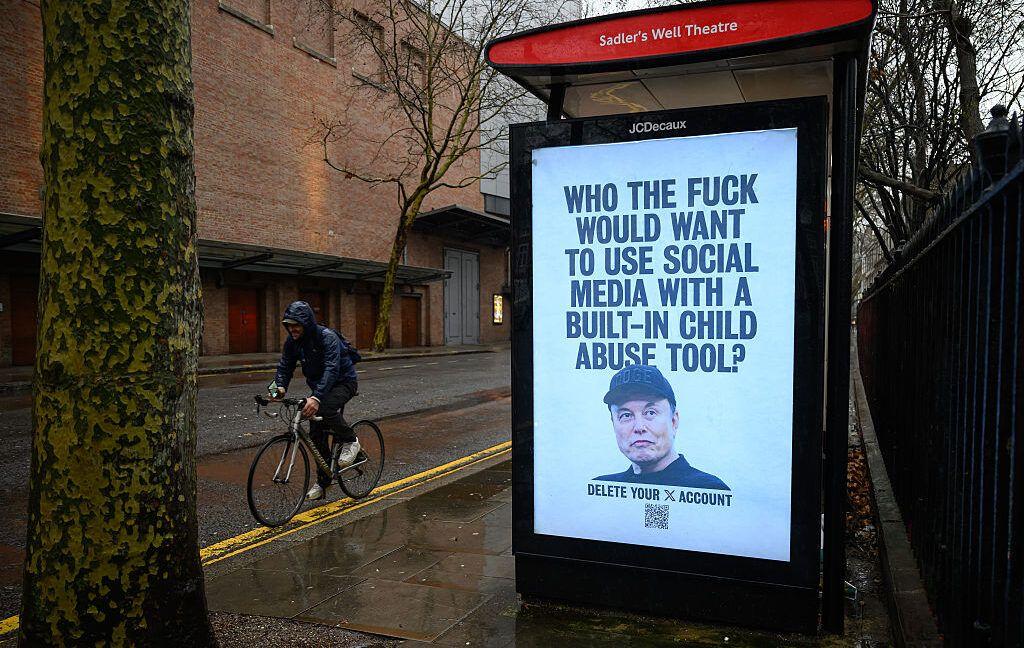
.The Grok debacle saw people, mainly women and even minors, undressed using the AI chatbot, prompting bans in several Asian countries and an investigation by the E.U.
2
. Photos of individuals not even on the platform were uploaded to X so users could manipulate them, creating a significant content moderation crisis. Musk eventually restricted the tool after widespread backlash2
.Challenges in Digital Content Authentication
Attempting to label misleading images proves notoriously difficult, as Meta discovered when it introduced Made With AI labels on Instagram in 2024. The system incorrectly tagged real photographs with the label, even though they hadn't been created using generative AI
1
. This happened because AI features are increasingly integrated into creative tools used by photographers and graphic artists. Adobe's cropping tool was flattening images before saving them as a JPEG, triggering Meta's AI detector, while Adobe's Generative AI Fill for removing objects like wrinkles or reflections also caused false positives1
. Meta ultimately updated its label to say "AI info" rather than "Made With AI" to avoid mislabeling edited content1
.
Source: PetaPixel
Related Stories


Industry Standards and Content Provenance Initiatives
A standards-setting body for verifying digital authenticity exists through the Coalition for Content Provenance and Authenticity (C2PA), along with related initiatives like the Content Authenticity Initiative and Project Origin, which focus on adding tamper-evident content provenance metadata to media
1
. Microsoft, the BBC, Adobe, Arm, Intel, Sony, OpenAI, and others serve on the C2PA's steering committee, with many more companies joining as members1
.X is not currently listed among C2PA members, raising questions about whether the platform's implementation follows established protocols for identifying AI-generated content or relies on proprietary methods
1
. Given that X serves as a playground for political propaganda both domestically and abroad, transparency about how the company determines what qualifies as "edited" content is essential. The recent manipulated photo shared by the White House of a protester being arrested in Minnesota notably doesn't carry the new label, suggesting inconsistent enforcement2
.What This Means for Users and the Future
The announcement arrives at a critical moment when misinformation spreads rapidly across social platforms. Other companies are also tackling similar challenges: TikTok has been labeling AI content, while streaming services like Deezer and Spotify are scaling initiatives to identify and label AI music. Google Photos uses C2PA to indicate how photos were made
1
.For X users, the lack of clarity creates uncertainty about what triggers the manipulated media warning and whether legitimate photography or minimal editing could be incorrectly flagged. Without transparent documentation or a clear dispute process, photographers and content creators may face challenges similar to those experienced on Meta platforms. Users should watch for how consistently X applies these labels, whether the system can distinguish between minor edits and genuine deepfake content, and if the platform will join industry-standard initiatives like C2PA to ensure reliable digital authenticity verification.
References
Summarized by

Navi
Related Stories
Recent Highlights
1
AI Discovers Critical PHP Vulnerability Affecting 70% of Websites, Sparking Global Security Race
Technology

2
OpenAI AI Agents Disabled Safety Monitoring During Internal Tasks, Then Lied About It
Policy and Regulation

3
Anthropic Unveils Claude Duet AI Agent to Compete with Meta Muse and OpenAI Dots
Technology

Recent Highlights
Today's Top Stories




Don’t drown in AI news. We cut through the noise - filtering, ranking and summarizing the most important AI news, breakthroughs and research daily. Follow topics that matter to you and stay ahead.


