Elon Musk Predicts Work Will Become Optional Within 20 Years Due to AI and Robotics Revolution


3 Sources
3 Sources
[1]
Forget the four-day workweek, Elon Musk predicts you won't have to work at all in 'less than 20 years' | Fortune
Gen Z graduates are searching for any signs that AI won't be able to swipe their entry-level roles right out of college. But Elon Musk anticipates a very different future for those young hopefuls: by the time they're in their 40s, they won't have to work at all. "In less than 20 years -- but maybe even as little as ten or 15 years -- the advancements in AI and robotics will bring us to the point where working is optional," Musk said yesterday on an episode of thePeople by WTFpodcast. Technologies such as ChatGPT and Google Gemini have already alleviated the burden of some time-consuming work, such as data cleaning, summarization, and other administrative tasks. By 2029, one survey last year found that AI will save workers up to 12 hours per week. The podcast host, Nikil Kamath, noted that already parts of the world are seeing a shift to shorter workweeks as a result. But forget the four-day work week, as AI continues to boost productivity gains, Musk insisted that jobs will become more of a personal choice, like a hobby. It's not the first time the SpaceX founder and richest person in the world, worth $450 billion, has said that workers could inevitably choose whether they want to work or not. Just a couple of weeks ago at the U.S.-Saudi Investment Forum in Washington, D.C, Musk made the comparison of working to having an at-home garden. Yesterday, he echoed the same sentiment. "You can grow your own vegetables in your garden or you could go to the store and buy vegetables," the billionaire tech mogul explained. "It's much harder to grow your own vegetables. But some people like to grow their vegetables, which is fine. But it'll be optional, in that way, is my prediction." Without needing to go into an office, Musk added that living near one -- or out in the countryside -- will be completely optional too. "It won't be the case that you have to be in a city for a job," Musk said, adding that a Universal High Income will pay for people's living expenses and anything else they can think of. "If you can think of it, you can have it, will be the future," Musk added. While Musk's prediction may sound like a far-fetched reality now, it's not the first time business leaders have predicted a reality where workers won't have to come in five days a week. Earlier this year, Microsoft co-founder Bill Gates said artificial intelligence may soon automate almost everything -- and thanks to the productivity wins, employers will usher in a 2-day work week in less than a decade. Likewise, Zoom CEO Eric Yuan has echoed that a 3-day workweek is on its way. Nvidia CEO Jensen Huang is the latest leader to agree that the rapid adoption of AI across industries will "probably" bring about a transition to four-day work weeks. But even with fewer mandated days to clock in, that doesn't mean less work. Instead, the $154 billion CEO of the chipmaking giant says the technology will unleash a wave of new ideas and projects -- leaving people busier, not freer. "If your life becomes more productive and if the things that you're doing with great difficulty become simpler, it is very likely because you have so many ideas you'll have more time to pursue things," Huang recently said on stage in the U.S.-Saudi Investment Forum alongside Musk.
[2]
Elon Musk makes big 'working will be optional in future' prediction due to AI in Nikhil Kamath's podcast
Elon Musk predicts that work will become optional within the next 10 to 15 years due to rapid advancements in AI and robotics. He likens this future to having the choice between growing your own vegetables or buying them from a store. Musk is confident that people will have access to any goods and services they desire. While speaking to Zerodha co-founder Nikhil Kamath on the People by WTF podcast, Elon Musk predicted that work will become optional in the future due to rapid advancements in AI and robotics. "My prediction is, in the future, working will be optional. They don't have to -- I mean, look, obviously, people can play this back in 20 years and say, 'Look, Elon made this ridiculous prediction and it's not true.' But I think it will turn out to be true that, in less than 20 years, but maybe even as little as, I don't know, ten or 15 years, the advancements in AI and robotics will bring us to the point where working is optional," said Elon Musk while speaking to Kamath. "In the same way that, like, say, you can grow your own vegetables in your garden or you could go to the store and buy vegetables. You know. It's much harder to grow your own vegetables. But some people like to grow their vegetables, which is fine. But it'll be optional, in that way, is my prediction," said Musk. 'I'm confident that if AI and robotics continue to advance -- which they are advancing very rapidly -- like I said, working will be optional, and people will have any goods and services that they want. 'If you can think of it, you can have it' type of thing," said Musk.
[3]
Elon Musk Predicts 'People Don't Have To Work At All' In 20 Years Years As AI and Robotics Advance: It Will Be Like A 'Hobby' - Tesla (NASDAQ:TSLA)
Tesla Inc. (NASDAQ:TSLA) CEO, Elon Musk, said that the world is heading toward a future where traditional employment becomes obsolete, as rapid progress in artificial intelligence and robotics fundamentally reshapes the global economy. 'Working Will Be Optional' In 20 Years Appearing on the People By WTF podcast on Sunday, the billionaire entrepreneur said that the pace of technological acceleration will allow most people to stop working entirely, speaking to host Nikhil Kamath, the co-founder of Zerodha, India's discount stockbroking platform. "Well, I think it'll actually be that people don't have to work at all," he said, adding that the shift may arrive sooner than many expect. "My prediction is, in less than 20 years, working will be optional. Working at all will be optional." See Also: 'They're Hiring You For Your Personality Traits,' Says Coursera CEO Greg Hart As AI Replaces 40% Of Entry-Level Tasks Across Major Firms Musk described this transition as a natural outcome of exponential improvements in automation, explaining that the role of human labor will fundamentally change. In that world, he said, working would essentially become "like a hobby." Musk framed the shift as both a technological and societal milestone. He noted that AI and robotics are advancing at a "supersonic tsunami" scale, pushing productivity far beyond what human-driven systems can match. He also noted that as these trends gain momentum, people will no longer be making beelines to cities solely for job opportunities. He maintains that this shift is not speculative but an inevitable result of current trends. "That's my prediction," he said. Musk Pitches 'Universal High Income' Musk has made similar claims in the past as well, saying, "Working will be optional in the future," in a recent post on X, while making the case for a "universal high income." He made these comments in response to Peter Diamandis, Executive Chairman at The Singularity University, who raised concerns regarding the growing layoffs in 2025 being tied to the advances in AI and automation. While the idea for a universal basic income has circulated for the past several decades, Musk's "Universal High Income" marks a conceptual leap, which policy experts such as Ryan Waite suggest is "about sharing [the] AI-driven surplus, so people participate [can] in growth, not just get cushioned from loss." Shares of Tesla were up 0.84% on Friday, ending the week at $430.17, and are down 0.89% overnight. The stock does well on Momentum, but has slipped on Growth and Quality. It has a favorable price trend in the Medium and Long terms. Click here for deeper insights into the stock, its peers and competitors. Read More: Tesla Is Hiring AI, Chip Engineers As Custom Chip Production Expands Photo Courtesy: Photo Agency on Shutterstock.com TSLATesla Inc$430.200.01%OverviewMarket News and Data brought to you by Benzinga APIs
Share
Share
Copy Link
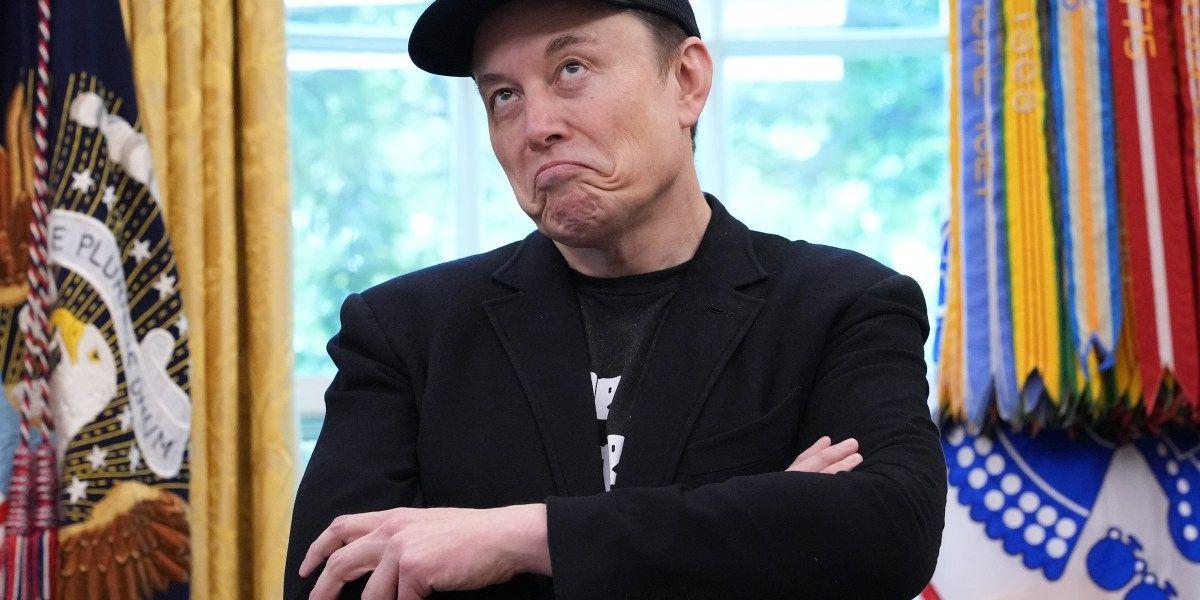
Tesla CEO Elon Musk forecasts that rapid advances in AI and robotics will make traditional employment optional within 10-20 years, comparing future work to a hobby like gardening. He envisions a 'Universal High Income' system supporting this transformation.
Musk's Bold Prediction on AI-Driven Future
Tesla CEO Elon Musk has made a striking prediction about the future of work, suggesting that traditional employment will become entirely optional within the next two decades due to rapid advances in artificial intelligence and robotics. Speaking on the "People by WTF" podcast with Zerodha co-founder Nikhil Kamath, Musk outlined a vision where human labor transitions from necessity to choice
1
.
Source: ET
"In less than 20 years -- but maybe even as little as ten or 15 years -- the advancements in AI and robotics will bring us to the point where working is optional," Musk stated during the podcast appearance . The billionaire entrepreneur, worth $450 billion, compared this future scenario to the choice between growing vegetables in a home garden versus purchasing them from a store.
The Garden Analogy and Personal Choice
Musk's analogy illustrates his vision of work becoming a hobby-like activity rather than an economic necessity. "You can grow your own vegetables in your garden or you could go to the store and buy vegetables," he explained. "It's much harder to grow your own vegetables. But some people like to grow their vegetables, which is fine. But it'll be optional, in that way, is my prediction"
1
.
Source: Benzinga
This perspective represents a fundamental shift in how society might approach labor and productivity. According to Musk, the rapid advancement of AI and robotics will create such significant productivity gains that traditional employment structures will become obsolete
3
.Universal High Income Concept
Central to Musk's vision is the implementation of what he calls a "Universal High Income" system, which would replace traditional employment-based income structures. This concept goes beyond universal basic income proposals, aiming to provide comprehensive financial support that would cover all living expenses and desires. "If you can think of it, you can have it, will be the future," Musk predicted
1
.Policy experts like Ryan Waite suggest this approach is "about sharing [the] AI-driven surplus, so people participate [can] in growth, not just get cushioned from loss"
3
. This system would theoretically allow people to live anywhere, as proximity to employment centers would no longer be necessary.Related Stories
Industry Leaders Echo Similar Sentiments
Musk's predictions align with similar forecasts from other prominent technology leaders. Microsoft co-founder Bill Gates has suggested that AI automation could lead to a two-day workweek within a decade, while Zoom CEO Eric Yuan anticipates a three-day workweek becoming standard
1
.However, Nvidia CEO Jensen Huang offers a different perspective, suggesting that while four-day workweeks may emerge, people might actually become busier rather than freer. "If your life becomes more productive and if the things that you're doing with great difficulty become simpler, it is very likely because you have so many ideas you'll have more time to pursue things," Huang explained
1
.Current AI Impact on Workplace
The foundation for these predictions already exists in current workplace transformations. Technologies like ChatGPT and Google Gemini have begun automating time-consuming tasks such as data cleaning, summarization, and administrative work. A recent survey indicates that by 2029, AI could save workers up to 12 hours per week
1
.
Source: Fortune
Musk describes the current pace of AI and robotics development as advancing at a "supersonic tsunami" scale, suggesting that the transformation will be both rapid and comprehensive
3
. This acceleration could fundamentally reshape not just individual careers but entire economic systems and social structures.References
Summarized by

Navi
Related Stories
Elon Musk Predicts Work Will Be Optional Within 20 Years as AI and Robotics Transform Labor
20 Nov 2025•Entertainment and Society
Elon Musk says AI will make retirement savings irrelevant as robots reshape the future of work
13 Jan 2026•Technology
Bill Gates Predicts AI-Driven Two-Day Work Week Within a Decade
28 Mar 2025•Business and Economy

Recent Highlights
1
Google releases Gemma 4 with Apache 2.0 license, enabling unrestricted local AI on devices
Technology

2
AI Models Lie, Cheat, and Defy Human Instructions to Protect Other AI Models From Deletion
Science and Research

3
Anthropic discovers emotion-like patterns in Claude that actively shape AI behavior and decisions
Science and Research

Recent Highlights
Today's Top Stories



Your Daily Dose of Curated AI News
Don’t drown in AI news. We cut through the noise - filtering, ranking and summarizing the most important AI news, breakthroughs and research daily. Spend less time searching for the latest in AI and get straight to action.

