Nvidia CEO Jensen Huang Predicts AI Will Increase Productivity and Busyness, Potentially Leading to 4-Day Work Weeks


3 Sources
[1]
Nvidia CEO Says AI Will Actually Make Us Busier in the Future
"I actually expect us to have more things to do," CEO Jensen Huang told Fox Business. Elon Musk recently insisted that our robot-filled future will allow humans to collect free money for doing nothing, while bots do all the labor. But Nvidia CEO Jensen Huang doesn't seem to be buying that
[2]
Nvidia CEO Jensen Huang says AI will 'probably' bring 4-day work weeks: 'Every industrial revolution leads to some change in social behavior'
Nvidia CEO Jensen Huang says the world is "at the beginning of the AI revolution," and the rapid adoption of artificial intelligence across industries could bring "probably" a transition to four-day work weeks, marking another shift in social behavior akin to previous industrial revolutions. But
[3]
Nvidia's Jensen Huang Says AI Could Spark 4 Day Work Weeks -- But Warns We'll Be 'Busier' Than Ever - NVIDIA (NASDAQ:NVDA)
Nvidia Corp. NVDA CEO Jensen Huang believes artificial intelligence could trigger a shift to four-day work weeks, but cautioned that workers will paradoxically become busier than ever as artificial intelligence accelerates business execution and idea generation. Check out the current price of NVDA
Share
Copy Link
Nvidia CEO Jensen Huang discusses the impact of AI on future work patterns, suggesting that while AI may lead to 4-day work weeks, it will also make people busier by enabling faster execution of ideas and increasing productivity.
Nvidia CEO's Vision of an AI-Driven Future
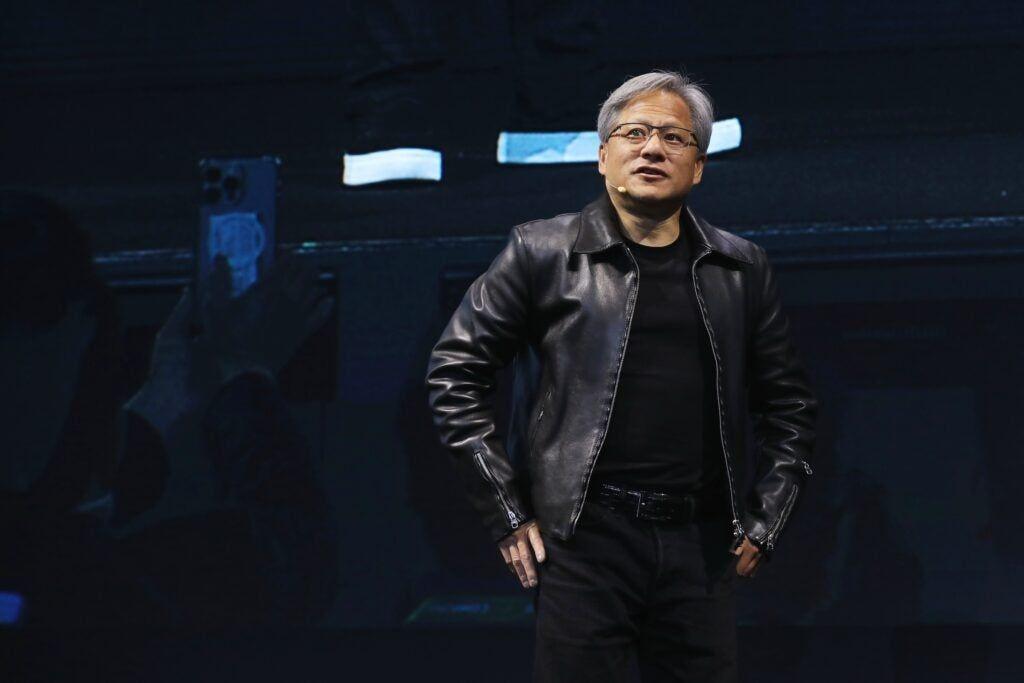
Jensen Huang, CEO of Nvidia, has shared his insights on how artificial intelligence (AI) will shape the future of work and productivity. In recent interviews, Huang painted a picture of a world where AI and robotics will be ubiquitous, potentially leading to significant changes in work patterns and social behavior
1
2
.
Source: Benzinga
Increased Productivity and Busyness
Contrary to the notion that AI will lead to more leisure time, Huang suggests that people might actually become busier in the future. He explains, "I have to admit that I'm afraid to say that we are going to be busier in the future than now"
1
. This increased busyness, according to Huang, will stem from AI's ability to accelerate task completion, allowing for the pursuit of more ideas and projects2
.The Potential for 4-Day Work Weeks
Despite predicting increased busyness, Huang also sees the possibility of shorter work weeks. He notes, "Every industrial revolution leads to some change in social behavior," drawing parallels to historical shifts from seven-day to five-day work weeks
2
. Huang expresses hope for four-day work weeks, allowing more time for family, reading, and travel1
.AI's Impact Across Industries
Huang envisions AI and robotics permeating various sectors:
- Healthcare: Robotic surgery in hospitals
- Manufacturing: AI-driven factories and production lines
- Agriculture: Robotic systems for farming
- Transportation: Self-driving vehicles
1
2
He estimates that by the end of the decade, about $3 to $4 trillion of AI factory infrastructure will be built out
2
.Economic Growth and Job Transformation
The Nvidia CEO anticipates significant economic growth driven by AI and automation. He predicts:
- Increased GDP
- Higher productivity
- Better quality of life
However, Huang also acknowledges that AI will lead to job market changes. "Some jobs will go away. Many jobs will be new and invented. But one thing for sure, every job will be changed as a result of AI," he states
2
.Related Stories
Nvidia's Position in the AI Revolution
Source: Gizmodo
As a leading provider of AI chips, Nvidia is at the forefront of this technological shift. The company recently reported record quarterly earnings of $46.7 billion, underlining the growing demand for AI technologies
2
3
. Huang emphasized Nvidia's role in supplying tools for AI-driven industrial transformation and highlighted the company's new Blackwell Ultra architecture as a key driver of growth2
.Geopolitical Considerations
The interview also touched on the geopolitical aspects of AI chip production and distribution. Huang positioned US technology as a potential global standard, stating, "Having the world build AI on American tech stack helps America win"
2
. This comes amid ongoing discussions about chip exports to China and related regulatory concerns.As the world stands "at the beginning of the AI revolution," Huang's insights offer a glimpse into a future where increased productivity and shorter work weeks coexist with heightened business activity and economic growth. The full impact of this AI-driven transformation remains to be seen, but it's clear that significant changes in work patterns and social behaviors are on the horizon.
References
Summarized by

Navi
Related Stories
Nvidia CEO Jensen Huang Weighs In on AI's Impact on Jobs and Innovation
14 Jul 2025•Technology
Jensen Huang Warns AI Leaders Against Fearmongering as Nvidia Pushes Optimistic Vision
16 Mar 2026•Technology

Nvidia CEO Jensen Huang Pushes for Maximum AI Automation While Promising Job Security
25 Nov 2025•Business and Economy
Recent Highlights



Recent Highlights
Today's Top Stories



Don’t drown in AI news. We cut through the noise - filtering, ranking and summarizing the most important AI news, breakthroughs and research daily. Follow topics that matter to you and stay ahead.


