Bill Gates Predicts AI-Driven Two-Day Work Week Within a Decade


5 Sources
[1]
Will AI lead to shorter workweeks? Bill Gates, Elon Musk, and others say yes
Serving tech enthusiasts for over 25 years. TechSpot means tech analysis and advice you can trust. What just happened? There are plenty of justifiable concerns over what impact AI will have on the workplace of the near future. Bill Gates is one big tech name who believes the technology will have
[2]
Bill Gates says 2-day work week is coming -- thanks to AI
Bill Gates believes the future of work could look radically different -- and it may only require a two-day work week, thanks to AI. Speaking on the The Tonight Show with Jimmy Fallon, Gates posed a hypothetical question: "What will jobs look like in the future? Should we work just two or three
[3]
Forget 70 hour work-week. Why Bill Gates thinks a 2-day work week is coming in next 10 years
Bill Gates reveals names of four Indians he would love to have dinner withBill Gates envisions a future where artificial intelligence dramatically reshapes the workforce, potentially reducing the standard workweek to just two days within the next decade. The Microsoft co-founder believes that rapid
[4]
AI will cut your workweek to 2 days, says Bill Gates -- but warns it may shrink your paycheck too!
Bill Gates predicts that in the next decade, artificial intelligence (AI) could drastically change the workforce, reducing the traditional workweek to just two or three days. As jobs evolve and AI handles more tasks, society will need to rethink how people spend their time. Gates suggests this
[5]
Bill Gates insists: "AI will replace humans for most things" - Softonic
As artificial intelligence accelerates its transformation of the world of work, Bill Gates has once again highlighted the deep changes AI will bring to society. In a recent interview, the Microsoft co-founder warned that many current jobs are likely to disappear, as machines become increasingly
Share
Copy Link
Bill Gates envisions a future where AI advancements could lead to a two-day work week, reshaping the job market and societal norms. This prediction sparks discussions on the potential benefits and challenges of AI-driven workforce transformation.

Bill Gates Predicts AI-Driven Transformation of Work
Microsoft co-founder Bill Gates has recently made headlines with his bold prediction that artificial intelligence (AI) could lead to a two-day work week within the next decade. Speaking on The Tonight Show with Jimmy Fallon, Gates posed the question, "What will jobs be like? Should we just work like 2 or 3 days a week?"
1
AI's Impact on Various Industries
Gates believes that AI will dramatically reshape the workforce, potentially reducing the need for human labor across multiple industries. He envisions a future where AI-driven automation handles most routine tasks in manufacturing, logistics, and food production, making human intervention increasingly unnecessary
3
.Healthcare and Education Transformation
Among the professions set to undergo significant transformation, Gates highlighted healthcare and education. He predicts that within the next decade, AI will make "great medical advice [and] great tutoring" free and commonplace
1
. This could potentially alleviate workforce shortages in these critical sectors by making high-quality services more accessible to the masses2
.Potential Benefits and Challenges
Gates suggests that this shift could improve productivity, combat burnout, and even boost birth rates. In Japan, for instance, the Tokyo Metropolitan government is experimenting with a four-day workweek to address the country's declining population problem
1
.However, Gates also warns that while AI might reduce work hours, it could potentially shrink paychecks as well. This raises questions about income distribution and economic stability in an AI-dominated future .
Shifting Perspectives on Work
Gates emphasizes that humans were not born to work, but rather forced into jobs by scarcity and necessity. As AI progresses, he argues, we will move away from this scarcity-driven model and into an era of abundance, where machines handle much of the labor. This transition will require a significant cultural and psychological adjustment
5
.Related Stories
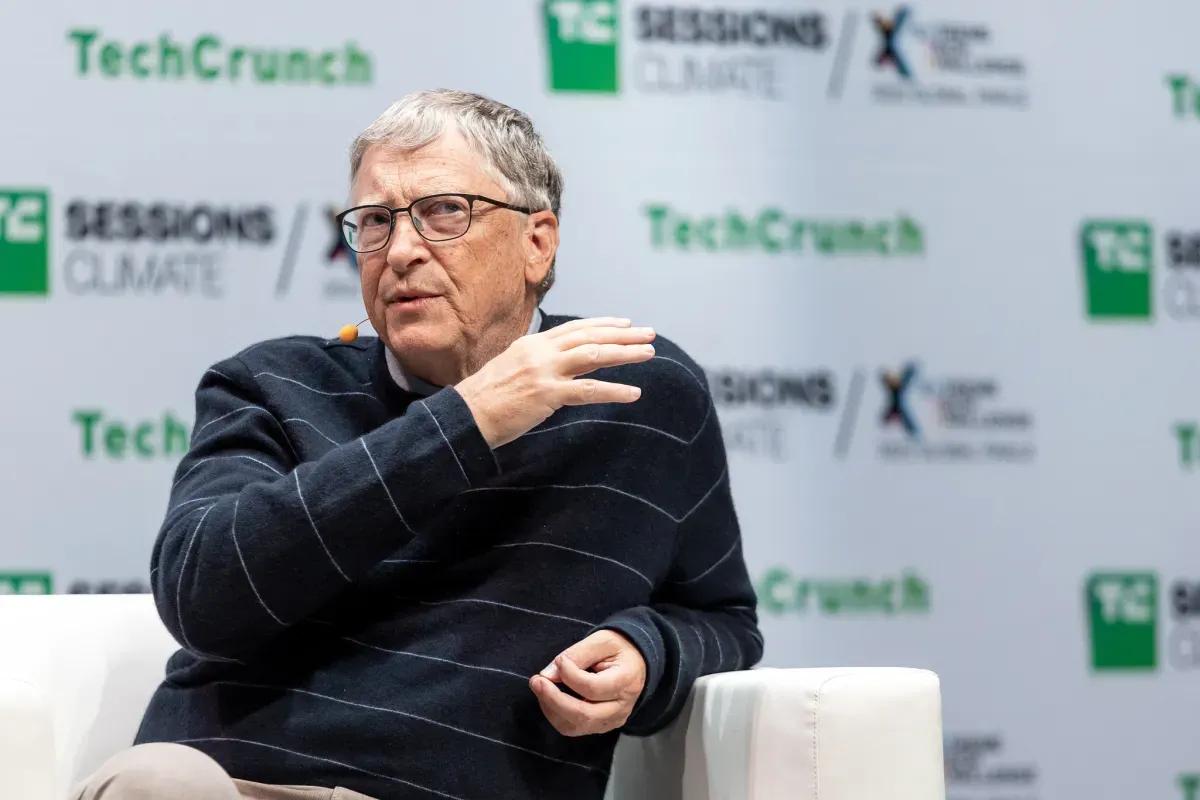
Other Tech Leaders' Views
Gates is not alone in his vision of an AI-driven workforce. Elon Musk has similarly suggested that AI could eventually make traditional jobs obsolete, predicting that "AI will be able to do everything." Musk even proposed the idea of a "universal high income" to support people in an AI-dominated world .
The Road Ahead
As AI continues to evolve rapidly, the future of work remains uncertain. While some leaders are optimistic about a shift away from long hours, others remain hesitant. The challenge lies in reshaping mindsets to embrace this new paradigm and addressing the potential economic and social implications of such a dramatic shift in the nature of work
5
.References
Summarized by

Navi
[4]
Related Stories
Bill Gates Predicts AI Will Replace Most Human Jobs Within a Decade
27 Mar 2025•Technology
Bill Gates Warns of AI's Rapid Progress and Its Impact on the Future of Work
02 Aug 2025•Technology
Bill Gates warns AI will transform society more than any human invention, cites bioterrorism risk
09 Jan 2026•Policy and Regulation

Recent Highlights



Recent Highlights
Today's Top Stories







Don’t drown in AI news. We cut through the noise - filtering, ranking and summarizing the most important AI news, breakthroughs and research daily. Follow topics that matter to you and stay ahead.


