Elon Musk Slashes Tesla AI Chips Memory Amid Global Shortage, Claims Optimus Performance Unaffected


4 Sources
[1]
Musk says AI chip memory cuts won't hurt Optimus
Elon Musk said Tesla is reducing the memory capacity planned for its AI5 and AI6 chips as the company prepares the processors for large-scale production. AI5 will now use 72 GB of LPDDR5 instead of the previously planned 144 GB, while AI6 is expected to carry 144 GB of LPDDR6. Musk said the
[2]
Elon Musk Halves Tesla AI5 Memory Amid Memory Shortage, Then Bumps It To 96GB To Dodge Sitting At The Bottom Barrel Of Chip Specifications
Tesla CEO Elon Musk has clarified that instead of using 72GB of DDR5 RAM, his firm's AI5 chip will instead use 96GB in order to ensure that the firm is not the only one relying on using the minimum 72GB specification for the chip that will power the Optimus humanoid robot. Musk had earlier remarked
[3]
Elon Musk Says Tesla Cut Optimus Robot Memory to Scale Production - Tesla (NASDAQ:TSLA)
Elon Musk Says Cutting Optimus Memory Was Tesla's 'Only Way' to Scale, As Micron Says Humanoid Robots Need 200GB+ of Memory Each Tesla Inc. (NASDAQ:TSLA) CEO Elon Musk said Thursday that the electric vehicle giant has cut the memory specifications on its next-generation Optimus robot chips to
[4]
Elon Musk Slashes Memory Requirements For Tesla's AI5 Chip By Half To 72 GB, And AI6 By A Third To 144 GB, But Says The Performance Of Optimus Won't Be Affected
In what is a testament to the chronically constrained supply of memory right now, Elon Musk has just announced a significant de-spec for Tesla's AI5 and AI6 chips just to secure volume production for these chips. Elon Musk asserts that the AI5 and AI6 de-spec won't affect the performance of
Share
Copy Link
Elon Musk announced Tesla cut AI5 chip memory from 144GB to 96GB and AI6 from planned capacity to 144GB amid severe memory supply constraints. The reduction aims to secure volume production for Optimus humanoid robots, though Micron Technology estimates each humanoid robot requires 200GB of DRAM.
Tesla Reduces AI Chip Memory Specifications Amid Supply Constraints
Elon Musk revealed Tesla is cutting memory capacity for its AI5 chip and AI6 chip as the company prepares for large-scale production of processors powering its Optimus robot and Full Self-Driving systems
1
2
. The AI5 chip memory was initially slashed to 72GB of LPDDR5—half the originally planned 144GB—before Musk adjusted it to 96GB to avoid being "the only company using the min RAM version of LP5"2
. The AI6 chip memory now carries 144GB of LPDDR6, representing a one-third reduction from initial specifications4
. Musk described the memory reduction as "the only way to get enough volume for Optimus production," emphasizing it would "greatly" reduce costs while having a "negligible effect on Optimus performance"3
. He explained that memory bandwidth matters more than total memory capacity for the humanoid robot's performance3
.
Source: Wccftech
AI5 and AI6 Architecture Relies on SRAM for Performance
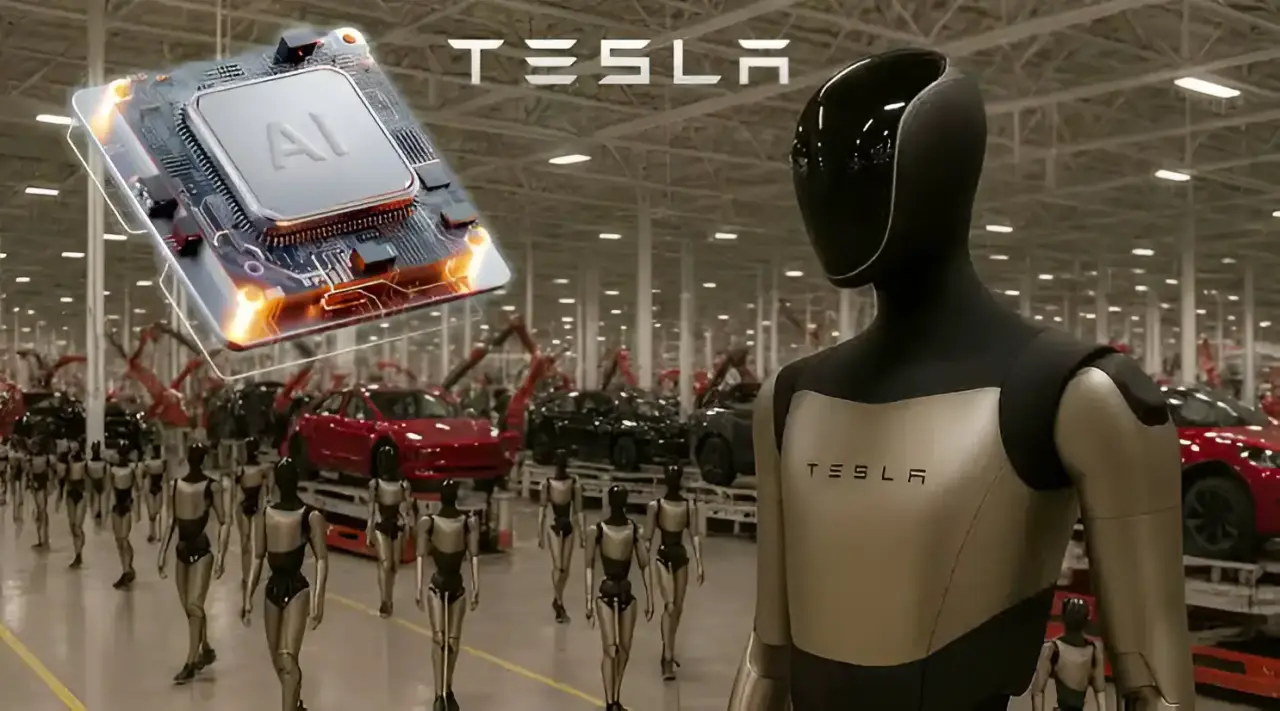
The AI5 uses a half-reticle design featuring a large central compute die surrounded by 12 DRAM modules
1
. Manufacturing will occur at TSMC and Samsung using 2nm process technology, with the chip expected to deliver between 2,000 and 2,500 TOPS of performance1
. The single-chip version aims to match performance with Nvidia H100, while a dual-chip configuration targets competition with Blackwell-based systems1
4
. Trial production is already underway at Samsung's Taylor facility in Texas, with volume production expected in 20271
4
. Tesla plans to use TSMC and Samsung for AI6 and AI6.5 production as well1
. These designs rely heavily on SRAM, with Musk stating that roughly half of their TRIP AI compute accelerators are dedicated to SRAM1
4
. This architectural choice allows calculations held in SRAM cache to access effective memory bandwidth about an order of magnitude higher than DRAM1
.
Source: Wccftech
Related Stories
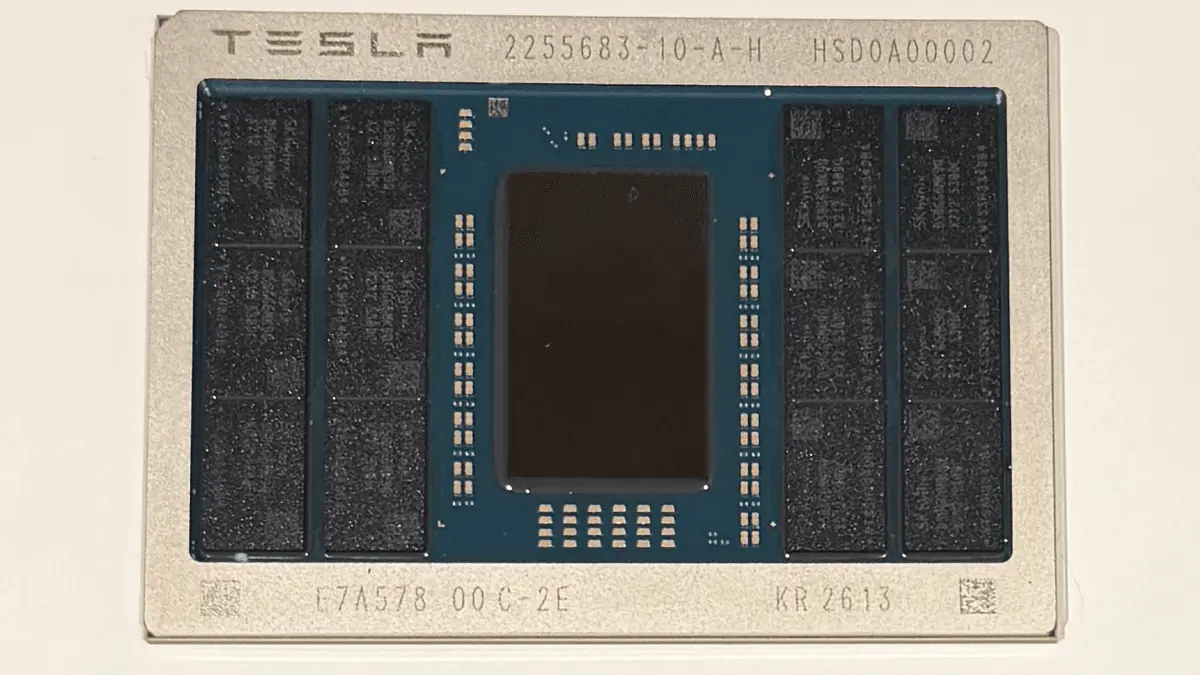
Micron Forecasts Massive Memory Demand for Humanoid Robots
The memory supply constraint driving Tesla's specification changes reflects broader industry challenges. Micron Technology CEO Sanjay Mehrotra estimated during the company's fiscal fourth-quarter earnings call that each humanoid robot could eventually require around 200GB of DRAM and several terabytes of NAND storage
1
3
. Micron believes physical AI could become a major source of memory and storage demand by the end of the decade1
4
. An X user calculated that 10 billion robots would require 2 trillion gigabytes of RAM, far exceeding the roughly 45 billion gigabytes of DRAM the world produces annually3
. Tesla has reportedly placed its first large-scale component order for roughly 5,000 Optimus units and is auditing Chinese suppliers ahead of production3
. The company aims to eventually build 1 million Optimus units per year3
. The AI5 chip taped out in April, according to Musk, who believes it will be three times as efficient as Nvidia's chips on a performance-per-Watt basis and achieve comparable performance at just 10% of the total cost2
.
Source: Benzinga
References
Summarized by

Navi
[1]
Related Stories
Tesla Unveils AI5 Chip: A Game-Changer in Performance and Manufacturing Strategy
23 Oct 2025•Technology

Elon Musk confirms Tesla and SpaceX AI will keep ordering Nvidia chips despite AI5 development
19 Mar 2026•Business and Economy

Elon Musk Announces Ambitious Plan to Outproduce All AI Chip Makers Combined with Tesla's Custom Silicon
25 Nov 2025•Technology
Recent Highlights



Recent Highlights
Today's Top Stories












Don’t drown in AI news. We cut through the noise - filtering, ranking and summarizing the most important AI news, breakthroughs and research daily. Follow topics that matter to you and stay ahead.


