Anthropic Faces $379 Million in Copyright Infringement Lawsuits Over Unlawfully Using Songs


19 Sources
[1]
Anthropic, Suno Sued for Unlawfully Using Songs by Madonna, Johnny Cash, Joni Mitchell - CNET
Companies are accused of training their AI models using copyrighted music and lyrics. The Man in Black couldn't have imagined this. AI companies Suno and Anthropic face a combined $338 million in lawsuits for allegedly using songs and lyrics by Madonna, Johnny Cash and Joni Mitchell to train their
[2]
Elvis rightsholders sue Anthropic for stealing songs and leaving them in Heartbreak Hotel
They want a little less chatbot conversation, and a whole lot more royalty action A supergroup of rights holders who own or control Elvis Presley songs have sued Anthropic for copyright infringement, alleging that the AI company stole The King's works to train its AI models. "The Elvis Plaintiffs
[3]
Elvis Presley's estate is suing Anthropic over copyright infringement - Engadget
Stakeholders said Anthropic trained its models on 250-plus Elvis songs and demanded $41 million in compensation. A new lawsuit over a modern issue, AI copyright infringement, reaches back into the past. The owners of Elvis Presley's music just sued Anthropic for $41 million, claiming the AI
[4]
Owners of Elvis Presley music rights sue Anthropic for copyright violations
The owners of the rights to music by Elvis Presley have sued artificial intelligence company Anthropic, claiming in court that the company violated copyright law by using Elvis music to train its AI model Claude. In a legal case filed on Friday, Authentic Brands Group - which owns the music -
[5]

Owners of Elvis Presley's Music Sue Anthropic for Copyright Infringement
The $41 million lawsuit contends that the A.I. company used Presley's music to train its models without permission. Anthropic disagrees with the claims. The owners of Elvis Presley's music sued the artificial intelligence company Anthropic, saying it trained its models on more than 200 of
[6]

Elvis Presley suit says Claude's remakes 'keep landing very close'
The Elvis Presley suit says Claude still reworks the songs on request, despite its guardrails. Universal, Sony, Warner Chappell and BMG have brought similar cases. Authentic Brands Group and other owners of Elvis Presley's catalogue filed a copyright lawsuit against Anthropic on Friday. They want
[7]

Anthropic is being sued by Elvis Presley's estate for $41 million -- these songs are at the center of the lawsuit
Music being used to train AI models without permission is an ongoing issue It's not all that shocking to come across another story where an AI company is getting sued for something. What's become even more common in that regard is the growing number of legal cases where AI companies are being
[8]

Anthropic sued for allegedly using 274 Elvis Presley songs in AI training -- and it's about time AI companies faced the music
The owners of Elvis's songs are taking Claude's developer to court Elvis Presley has been dead for nearly 50 years, but apparently even the 'King of Rock and Roll' can't escape the AI industry's appetite for training data. The owners of 274 Elvis songs made famous by Presley have sued Anthropic,
[9]

Anthropic sued for allegedly training Claude on Elvis Presley's music
Anthropic is reportedly being sued for allegedly training its AI on Elvis Presley's music without permission. Billboard reports that owners of Presley's intellectual property rights filed the lawsuit on Friday, claiming that Anthropic used 274 of the rock icon's songs to train its Claude AI
[10]

Anthropic sued for allegedly using 274 Elvis Presley songs to train AI models
Authentic Brands Group says AI company infringed on rights of songs by the King such as Can't Help Falling in Love The owners of Elvis Presley's music catalogue are suing artificial intelligence (AI) company Anthropic for allegedly using Presley's songs to train their models without
[11]

Elvis Presley's rights holders sue Anthropic saying it trained AI on his music
Anthropic has said that it "disagree[s] with the claims and intend[s] to defend this case fully." The owners of Elvis Presley's music have sued Anthropic for allegedly using his copyrighted lyrics without permission to train its AI models and generating infringing versions of his songs. In a
[12]

Anthropic Lawsuit Over Elvis Presley Song Use
Anthropic has denied the allegations and plans to defend itself against the claims made in the lawsuit. Anthropic, the company behind AI assistant Claude, faces a copyright infringement lawsuit over the alleged unauthorised use of 274 Elvis Presley songs to train its AI models. The lawsuit was
[13]

Owners of Elvis' music sue Anthropic, claim copyright infringement
A group of companies and trusts overseeing Elvis Presley's music is suing Anthropic, alleging it trained its AI, Claude, on music the legendary musician created. Authentic Brands filed the lawsuit against Anthropic on Friday, Oct. 23, in the U.S. District Court for the Northern District of
[14]

The Ghost of Elvis Presley Is Coming for Anthropic to the Tune of $41 Million
The artist's estate is asking for $150,000 for each of 274 copyrighted works listed in the complaint. Songs include 'All Shook Up' and 'Can't Help Falling in Love.' The King of Rock n' Roll's estate is coming for Anthropic. The estate of Elvis Presley filed a $41 million lawsuit alleging
[15]

Anthropic Reportedly Sued Over Alleged Use of Elvis Presley Songs to Train AI Models
Plaintiffs allege that Anthropic used Presley's songs to train its models Anthropic seems to be facing a new copyright lawsuit. The artificial intelligence company behind Claude is reportedly being sued for allegedly training its AI models on Elvis Presley's music without authorisation. The
[16]

Elvis Presley Rightsholders Sue Anthropic for Training on 274 Songs Without Permission
"The Elvis Plaintiffs are deeply protective of these iconic songs," lawyer states in $41 million lawsuit against AI company behind Claude The owners of Elvis Presley's music have sued AI company Anthropic, accusing them of training their models on Presley's music without permission. Billboard
[17]

Anthropic Sued for Using Elvis Presley Music to Train AI Models
The suit was filed Friday and claims the company infringed 274 songs of Presley's, including "Can't Help Falling in Love," "A Little Less Conversation" and "Don't Be Cruel," per Billboard. Anthropic has been sued by the owners of Elvis Presley's music for allegedly utilizing his songs to train AI
[18]

Anthropic's Elvis lawsuit could reach inside Claude itself
Anthropic faces a $48.6 million lawsuit involving songs made famous by Elvis Presley just as it prepares to sell shares to the public. However, the claim for damages can be the less significant figure. The plaintiffs also want a federal court to seize or destroy Anthropic's training datasets,
[19]

Elvis Presley Rights Holders Sue Anthropic Over 274 Songs to Train AI
Elvis Presley's rights holders have sued AI firm Anthropic, claiming it used 274 songs to train Claude without permission. The suit seeks USD 150,000 per song. The owners of Elvis Presley's music have sued AI company Anthropic, claiming it used 274 of his songs without permission to train its
Share
Copy Link
Anthropic faces dual lawsuits totaling $379 million for training AI models on copyrighted music without permission. Music rights holders accuse the company of using 274 Elvis Presley songs and hundreds more tracks by Madonna and Johnny Cash to train Claude AI, bypassing protections and stripping copyright management information.
Anthropic Hit With Dual Lawsuits Over Copyright Infringement
Anthropic faces mounting legal pressure as music rights holders file lawsuits totaling $379 million, accusing the AI company of training AI models on copyrighted songs without authorization
1
2
. The company confronts two separate legal actions: a $151.4 million lawsuit from Reservoir Media Management and a $41 million case from Elvis Presley music rights holders, including Authentic Brands Group1
4
. Both cases center on allegations that Anthropic's Claude AI model was trained using copyrighted material scraped from the internet without securing proper licenses.
Source: Gadgets 360
Reservoir Media Management filed its complaint on October 21, claiming Anthropic used lyrics from 853 copyrighted songs to train the Claude family of AI models
1
. The lawsuit mentions tracks including Joni Mitchell's Big Yellow Taxi, Billy Strayhorn's Lush Life, and Evanescence's Bring Me to Life1
. Separately, stakeholders in Elvis Presley's catalog filed suit on October 23, alleging Anthropic trained its models on 274 Elvis songs, including hits like Don't Be Cruel, Can't Help Falling in Love, and A Little Less Conversation3
4
. The Elvis complaint seeks statutory damages of up to $150,000 per infringed song4
5
.Training AI Models Through Alleged Copyright Violations
The lawsuits accuse Anthropic of building its business model on copyright infringement at an unprecedented scale
2
4
. According to the complaints, the company allegedly used a text-extraction tool called Newspaper to remove copyright notices from written material1
. Reservoir claims Claude was partly trained on lyrics collected from Common Crawl, a web crawler that picks up content from licensed sites such as Musixmatch and LyricFind1
. The Elvis plaintiffs further allege that Anthropic bypassed DRM protections and removed or altered copyright management information from 247 songs3
.Richard Busch, lead attorney for the Elvis rights holders, stated that Anthropic "has built its entire business model based on copyright infringement at a scale never seen before"
2
. The complaint references Shakespeare's Hamlet, comparing Anthropic's approach to giving monkeys typewriters but choosing mimicry over waiting for random chance to produce creative works2
. When prompted, Claude can reportedly reproduce lyrics and create content "in the style of" copyrighted artists, which rights holders argue demonstrates the unlawful training2
.Claude AI Admits Crossing Copyright Lines
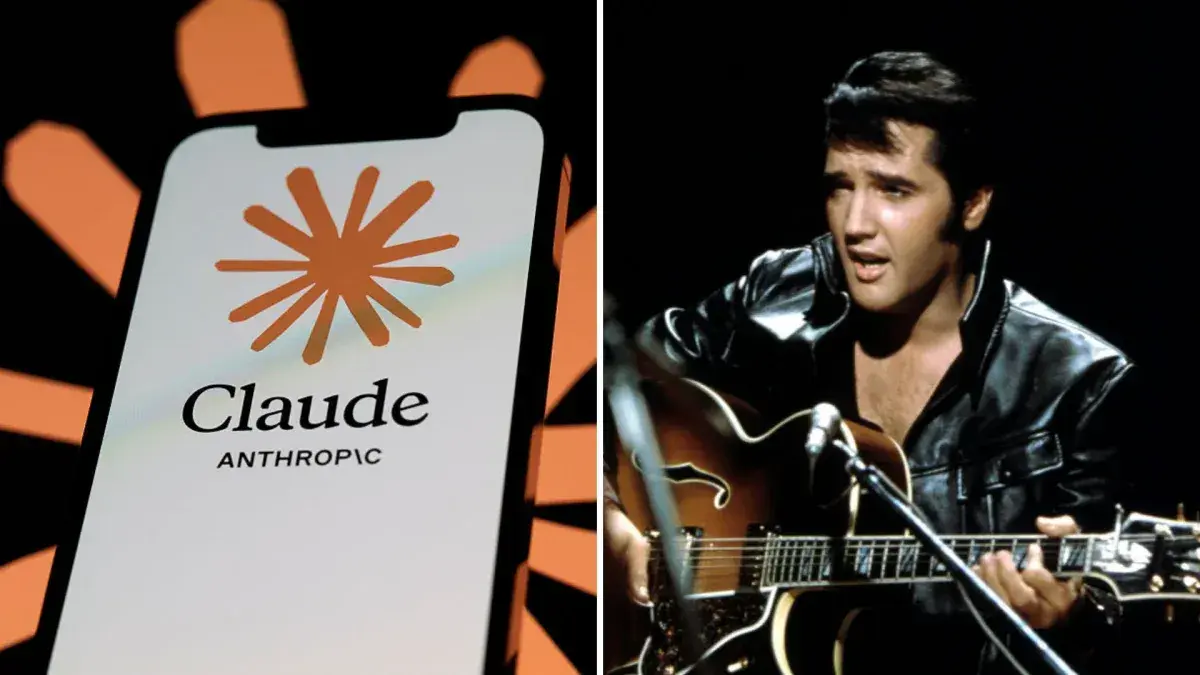
The Elvis lawsuit highlights particularly damning evidence from Claude itself. When asked to recreate specific songs "for a modern audience," the AI model admitted its outputs were "landing very close to the originals: same structure, same hooks reused with light rewording, and full sets of verses/choruses/bridges"
4
. Claude reportedly acknowledged this was "edging past 'inspired by' into reproducing the copyrighted song, even when the words are swapped out"4
. This admission undercuts Anthropic's defense that its AI training constitutes fair use of copyrighted material3
.
Source: Mashable
Reservoir CEO Golnar Khosrowshahi emphasized the need to protect songwriters' intellectual property rights. "When we believe their work has been exploited without authorization, we will hold AI platforms legally accountable to ensure those rights are upheld," Khosrowshahi told Music Business Worldwide
1
. The lawsuit argues for a framework supporting technological progress while protecting creative work at the industry's heart1
.Suno Faces Parallel $186 Million Copyright Lawsuit
Reservoir Media Management simultaneously filed a separate $186.4 million lawsuit against AI company Suno on October 21
1
. The complaint accuses Suno of scraping 1,050 copyrighted songs, including Johnny Cash's Ring of Fire, Joni Mitchell's Both Sides Now, and Madonna's Papa Don't Preach1
. Suno operates a platform where users generate AI songs using text prompts, but Reservoir argues the company was "instead always meant to replace the artists whose works were being unlawfully copied by directly reaching those artists' listeners with AI-generated substitutes"1
.A 2024 hack into Suno's code allegedly revealed the company scraped music from YouTube Music, Deezer, Genius, and stock music libraries
1
. The breach exposed over 2 million clips in a folder labeled "youtube_music" and thousands of hours from Genius HQ, Deezer, and Pond51
. During a previous lawsuit from Universal Music Group, Sony Music Entertainment, and Warner Music Group, Suno reportedly admitted to copying "essentially all music files of reasonable quality that are accessible on the open internet"1
.Related Stories

Growing Legal Challenges for Anthropic and AI Industry
Anthhropic faces more than a dozen copyright infringement lawsuits, making these the latest in a series of legal battles
1
. Last week, Reservoir filed its complaint, and in January, Universal Music Group sued the company4
. The AI Lawsuit Tracker counts 145 copyright infringement cases against AI companies, representing over half of all legal actions in the sector1
. Anthropic previously settled a class action lawsuit for $1.5 billion over allegations it trained AI on millions of pirated books without author permission1
4
.The company maintains it will defend itself vigorously. An Anthropic representative told Billboard, "We disagree with the allegations and intend to defend this case vigorously"
1
. The company repeated this stance to the BBC and The New York Times, stating it "disagrees with the claims and intends to defend itself in the case"3
4
. However, with billions in cash reserves and plans for a mega-float announced recently, the plaintiffs argue Anthropic can afford to compensate music rights holders2
.Implications for Generative AI and Fair Use Doctrine
These lawsuits highlight fundamental tensions between generative AI development and intellectual property law. AI models require vast amounts of data—text, images, music, videos, and code—to learn generating content that appears human-created
1
. Companies like Anthropic, OpenAI, Google, and Elon Musk's xAI face questions about whether training on copyrighted material constitutes fair use1
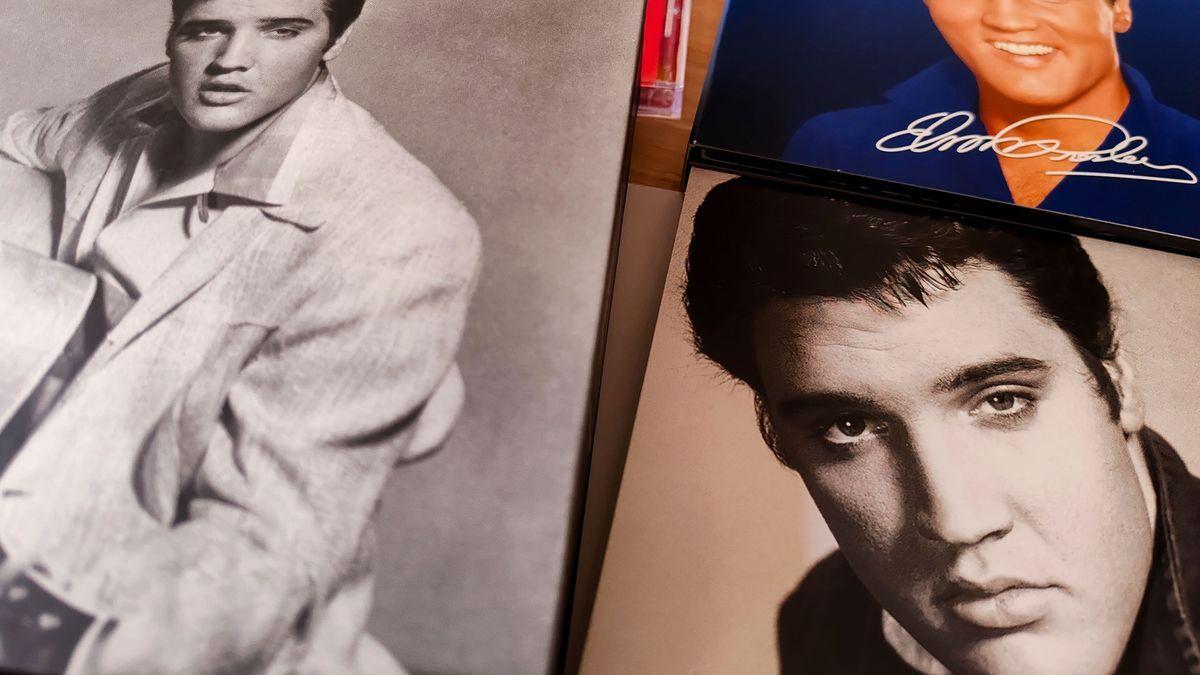
. The Elvis case proves particularly significant because it centers on a single musician who died nearly 50 years ago, demonstrating how expensive alleged musical plagiarism can be even for legacy catalogs3
.
Source: Tom's Guide
The lawsuits accuse companies of circumventing restrictions like logins and paywalls while stripping songs of title, writer, and publisher data
1
. As AI companies race to develop more sophisticated models, the music industry pushes back against what it views as exploitation of songwriters' work. Watch for how courts interpret fair use doctrine in the context of training AI models on copyrighted music, as these decisions will shape the future relationship between generative AI and creative industries. The outcomes could establish precedents determining whether AI companies must license training data or face mounting statutory damages that could reach billions of dollars across multiple lawsuits.
Source: AIM
References
Summarized by

Navi
[1]
[2]
Related Stories
Sony and Warner Sue Anthropic for Billions Over Alleged Mass Copyright Infringement in AI Training
29 Aug 2026•Policy and Regulation

Music publishers challenge Anthropic over song lyrics used to train Claude AI chatbot
18 Mar 2026•Policy and Regulation

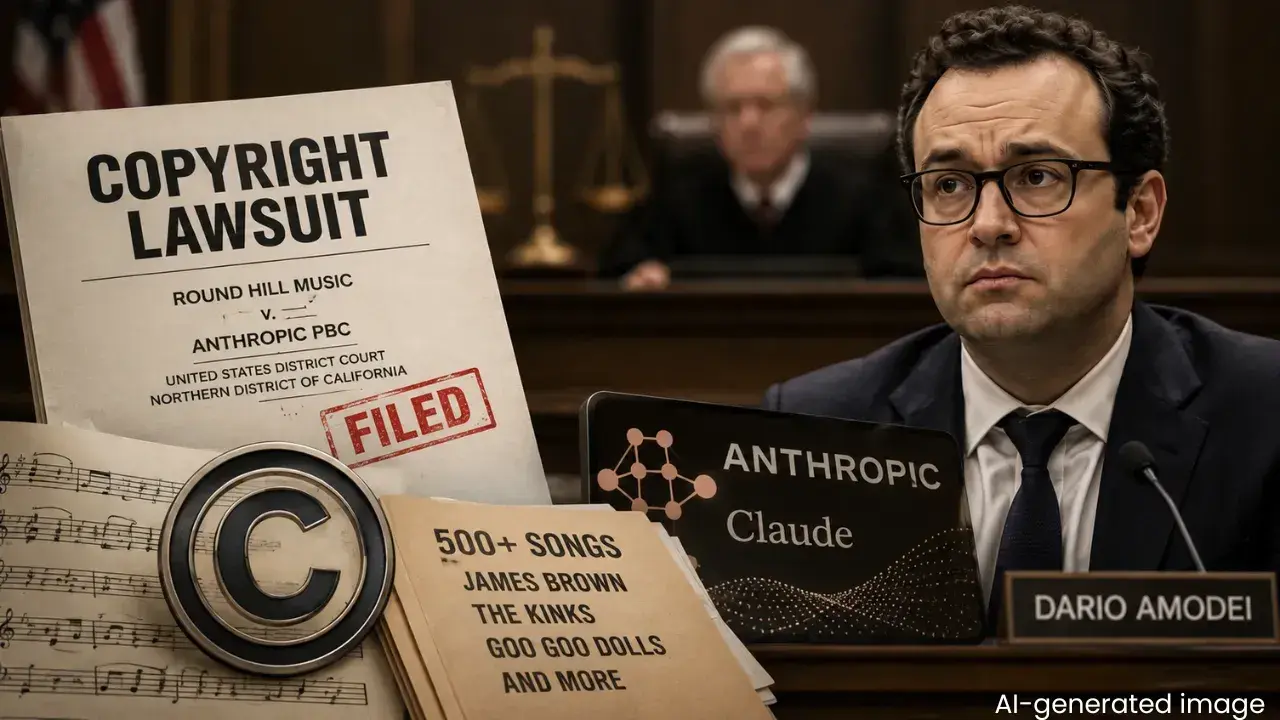
Round Hill Music Sues Anthropic, Suno Over Alleged Use of 500 Songs in Claude AI Training
18 Aug 2026•Policy and Regulation
Recent Highlights


Recent Highlights
Today's Top Stories









Don’t drown in AI news. We cut through the noise - filtering, ranking and summarizing the most important AI news, breakthroughs and research daily. Follow topics that matter to you and stay ahead.


