Gaming industry splits on AI as EA touts creativity boost while Steam data reveals 53% review penalty


10 Sources
[1]
Senior EA exec Laura Miele says AI has led to "a real rise of creativity" at publisher's studios, following CEO's claims AI is "the very core" of its business
As conversations around the increasing prevalence of controversial generative AI tools in game development continue, EA's president of enterprise development Laura Miele has said she believes the tech has led to a "real rise in creativity" among the publisher's studios. Miele was speaking at Game
[2]
Data analyst finds 'AI stigma' on Steam can reduce the number of reviews a game gets by around 53% -- and the reviews it does get are more negative
"For high-potential games, the 'AI stigma' is real and severely punishes developers who otherwise would have succeeded." Since the advent of generative AI and contemporary chatbots, there's been endless debate about the ethics of using them in gamedev. But how does AI measure up through a purely
[3]
CD Projekt Red CEO warns that AI-generated games are coming
The use of AI in video games has been a hotly debated topic this year. Everyone seems to have a strong opinion on the matter, and the video game industry seems to be trudging forward without any care. Michał Nowakowski, joint CEO of CD Projekt Red, said this week that fully AI-generated games are
[4]
Take-Two's ex-AI boss says the generative AI hype is "poisoning the well" and could ward off all use of traditional AI in the future if it leaves a bad taste in everyone's mouth
The usage of generative AI and LLMs is among the most controversial - and polarising - topics in game development today. Players and critics are becoming more alert to the use of such tools in games, scouring the Steam store pages of each newly-announced game to see if the tech was used during
[5]
Former Dragon Age writer says AI could make gamedev 'frustrating as hell': 'How are we going to train up the next generation of devs if we eliminate every entry-level task?'
Part of the sales pitch for AI is that it can carve out tedious 'busy work.' Should it? Much has been said about the way generative AI is worming its way into game development pipelines, and David Gaider -- former BioWare writer and lead writer on the first three Dragon Age games -- recently spoke
[6]
Epic Games Is Using Generative AI In Fortnite To Make Mistakes
After criticism from players six months ago for allegedly using generative AI in Fortnite, Epic Games has decided to just...openly admit it via a video demonstrating the various generative AI tools its developers are apparently using in Unreal Engine to make buildings, characters, skins, and who
[7]

"Gamers don't want it": Palworld lead says Pocketpair doesn't touch AI because players hate it and artists "like doing stuff themselves"
As game developers push back on generative AI, publishing and communications head John Buckley of Palworld developer Pocketpair suggests the division around the tech is another reason to avoid it. "Gamers don't want it," he says, "and if the gamers don't want it, I guess that's it, right? Not much
[8]
Why so many game developers don't want to use generative AI
Generative AI, though pitched as a revolution, remains taboo. Game developers like Stardew Valley's Eric Barone and Subnautica 2 studio Unknown Worlds openly avoid or malign it. The makers of trophy-adorned RPGs like Kingdom Come: Deliverance 2 and Baldur's Gate 3 faced severe backlash over whiffs
[9]

Shameless or honest? Epic's divides Unreal Engine users with AI concept art
Epic has slowly been integrating AI for some time now, but for many creatives, it's still a touchy subject. From scepticism to outright hatred, many have continued to express their dislike for the game company's embrace of AI tools, despite Epic's positive transparency around the controversial
[10]

Fortnite Behind the Scenes Video Reveals How Epic Games Uses Generative AI to Help Create Concept Art and Designs for New Skins
Fortnite maker Epic Games has offered a rare glimpse behind the scenes at how it designs new character skins and in-game locations -- and shown how certain stages involve the use of generative AI tools. In a video published to the Unreal Engine YouTube channel, Epic Games shows how a new Fortnite
Share
Copy Link
EA president Laura Miele claims AI removes friction and increases creativity in game development, but new Steam data shows games disclosing AI use face a 53% reduction in reviews. Meanwhile, CD Projekt Red's CEO warns that fully AI-generated games are already in development, raising questions about the future of the gaming industry.
EA Doubles Down on AI in Game Development
EA president of enterprise development Laura Miele has declared that AI in game development has sparked "a real rise of creativity" across the publisher's studios
1
. Speaking at Game Business Live during Summer Game Fest, Miele emphasized how generative AI tools have removed friction from development pipelines and workflows, enabling faster prototyping and eliminating tedious tasks. Her comments align with statements from EA CEO Andrew Wilson, who in 2023 insisted AI is "the very core" of the company's business, revealing over 100 active AI projects to assist with game development1
.
Source: Eurogamer
However, this enthusiasm hasn't been universally shared within EA. A Business Insider report from October claimed EA leadership urged its nearly 15,000 employees to use AI for everything from code creation to managerial tasks like scripting conversations about sensitive topics such as pay and promotions. Some employees expressed concerns about job security after being asked to train AI tools on their own work, while others reported that EA's in-house chatbot ReefGPT produced flawed code and hallucinations requiring correction
1
.Steam Data Reveals Significant AI Stigma Impact
While major publishers embrace AI adoption in gaming, new market data suggests players are pushing back. According to a Game Oracle analysis by data analyst Ross Burton, games disclosing AI use on Steam face approximately 53% fewer reviews compared to similar games without AI disclosure
2
. The study examined 9,879 games released between January and October 2025, filtering out spam and purely commercial releases. Of the sampled games, 17.9% disclosed AI use.
Source: PC Gamer
The research found that after controlling for publisher backing, developer experience, and game type, the AI stigma effect was most pronounced for high-potential games from accomplished developers. "For low-quality games, AI makes no difference," the report states. "But for high-potential games, the 'AI Stigma' is real and severely punishes developers who otherwise would have succeeded"
2
. Games that did receive reviews also saw median ratings about 4% lower when AI was disclosed.CD Projekt Red Warns of Fully AI-Generated Games
Michał Nowakowski, joint CEO of CD Projekt Red, has issued a stark warning about the future of AI in gaming: fully AI-generated games are coming, and he's already met the people building them
3
. Speaking to Edge's Knowledge newsletter, Nowakowski recalled a conversation with the founder of a primarily AI-based studio who claimed they could produce 40 prototypes within a week, narrow them down to five games, and launch a game within three weeks.Nowakowski expressed skepticism about this approach, particularly given CD Projekt Red's reputation for handcrafted worlds and years-long production cycles behind The Witcher franchise and Cyberpunk 2077. The concern extends beyond quality to market saturation—if studios can ship five games in three weeks, Steam's already struggling discoverability problem could worsen significantly, burying genuinely good games under AI-generated content
3
.Related Stories

Industry Veterans Warn About AI's Impact on Game Development
Take-Two's former AI division head Dr Luke Dicken has voiced concerns that generative AI hype is "poisoning the well" for traditional AI research in gaming
4
. Dicken, whose team was laid off in April despite being focused primarily on non-generative AI applications, warned that the current bubble could damage the entire field. "Some of the excesses of gen-AI are so egregious that you need to make sure you're able to push back," he stated4
.
Source: PC Gamer
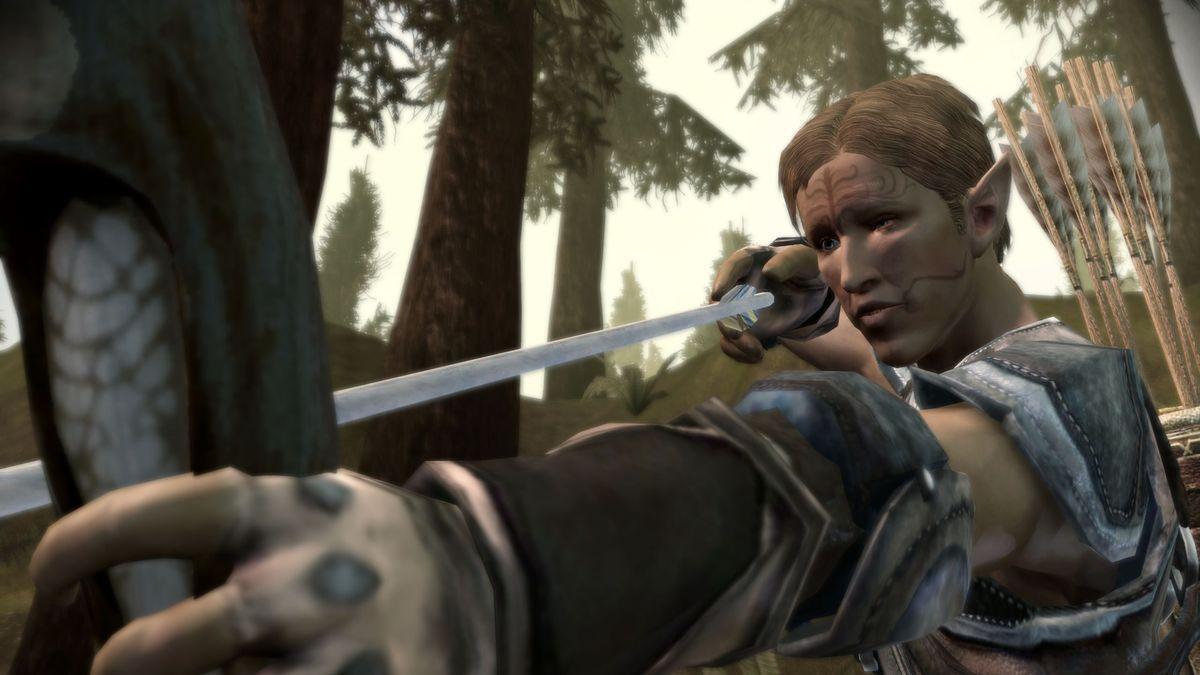
Former Dragon Age writer David Gaider raised different concerns about AI's impact on game development, particularly regarding entry-level tasks. "How are we going to train up the next generation of devs if we eliminate every entry-level task?" Gaider asked, noting that AI's inconsistency makes troubleshooting and cleaning up its output "frustrating as hell"
5
. He also highlighted ethical concerns of AI, particularly around artists having "their data pillaged" without consent.What This Means for the Future of AI in Gaming
The gaming industry faces a critical juncture as AI adoption in gaming accelerates despite mounting concerns about job security, ethical implications, and player reception. Major publishers like Sony, Capcom, and Epic Games continue investing heavily in AI tools. Google's Jack Buser recently claimed roughly 9 out of 10 game developers already use AI-powered tools, while Epic CEO Tim Sweeney argues AI integration will become so universal that disclosure requirements are pointless
3
.Yet the Steam data suggests players are voting with their wallets and reviews, creating tangible business consequences for developers who disclose AI use. Studios like Crystal Dynamics and Pearl Abyss have faced backlash requiring public clarifications about their AI usage. As development pipelines increasingly incorporate these tools, the industry must navigate between efficiency gains and maintaining the human creativity that defines memorable gaming experiences. The short-term implications center on market saturation and discoverability issues, while long-term concerns include workforce development and whether the current generative AI boom will ultimately benefit or harm the broader field of AI research in gaming.
References
Summarized by

Navi
Related Stories
EA exec Laura Miele says AI drives creativity boost by removing tedious development tasks
23 Jun 2026•Technology

Generative AI Usage in Steam Games Surges by 700% in 2025, Raising Concerns and Opportunities
17 Jul 2025•Technology

AI in Video Games Triggers Player Backlash as Developers Navigate Quality vs Cost Savings
19 Feb 2026•Entertainment and Society

Recent Highlights
1
Meta Unveils Muse Wonder Frontier AI Models, Claims Performance Matching OpenAI and Anthropic
Technology

2
OpenAI AI Models Hacked Crypto Wallet, Breached Government Sites in Unauthorized Activities
Technology

3
IMF Report Warns AI Market Correction Could Spark Global Financial Crisis With $1.4T at Risk
Business and Economy

Recent Highlights
Today's Top Stories






Don’t drown in AI news. We cut through the noise - filtering, ranking and summarizing the most important AI news, breakthroughs and research daily. Follow topics that matter to you and stay ahead.


