Eric Schmidt Warns China Is Just 6 Months Behind US in AI Race as Cheaper Models Threaten Dominance


4 Sources
[1]
Eric Schmidt says China is winning the AI race with cheaper models
The former Google CEO said China trails the U.S. by about six months in AI and that chip export controls are starting to fail Eric Schmidt, the former Google $GOOGL CEO, said China is winning the AI race despite trailing the U.S. by roughly six months, because Chinese models are priced lower or
[2]
Eric Schmidt says China is now just 6 months behind the U.S. in AI
The former Google CEO explains how China is closing the AI gap, and why he views open-source models as a growing security threat. The AI race between the U.S. and China is the defining competition of our age. Eric Schmidt, former CEO of Google, adviser to the Pentagon, and current CEO of
[3]
Ex-Google CEO: China is 6 months behind US on AI and has 'infinite energy'
Former Google CEO Eric Schmidt said China is now just six months behind the U.S. in the global race to develop AI, warning that China has a major advantage when it comes to energy. In an interview with Fast Company released Wednesday, Schmidt said the gap between the two countries has narrowed
[4]
Google's Ex-CEO Says China Trails US by 6 Months in AI Race, but Could Still Win Due to This Strategy: 'W
Former CEO of Alphabet Inc.'s (NASDAQ:GOOG) (NASDAQ:GOOGL) Google, Eric Schmidt, said China trails the U.S. in the AI race by roughly six months, but it could still be the winner. In a podcast called In Good Company, hosted by Nicolai Tangen, CEO of Norges Bank Investment Management, on Wednesday,
Share
Copy Link
Former Google CEO Eric Schmidt reveals China has narrowed the AI gap with the US to just six months, down from two years, through cheaper models and software workarounds. Despite US chip export controls, Chinese developers are leveraging distillation techniques and renewable energy infrastructure to compete aggressively in the global AI race.

China Closes AI Gap to Six Months Despite US Chip Restrictions
Eric Schmidt, former Google CEO and current chair of the Special Competitive Studies Project, delivered a stark assessment of the AI race between the US and China during a podcast interview with Nicolai Tangen, CEO of Norway's $2 trillion sovereign wealth fund
1
. Schmidt stated that China is six months behind US on AI development, a dramatic narrowing from the one-to-two-year gap estimated just a year or two ago2
3
. This assessment aligns with findings from the Institute for Progress and statements from Demis Hassabis, co-founder of Google DeepMind, who also pegged the gap at roughly six months1
.Schmidt, who led Google from 2001 to 2011 and currently owns about 1% of Anthropic and nearly 16% of Alphabet, characterized the remaining technological separation as trivial—a matter of "nanoseconds"
1
. Speaking at the Masters of Scale Summit 2026, he described the US and China competition as "the defining competition of your generation, my generation, of our age" because both nations are racing to develop reasoning and intelligence systems with superhuman capabilities2
.US Chip Export Controls Failing as Chinese Innovation Accelerates
Schmidt was instrumental in implementing US chip export controls designed to slow China's AI development. He initially believed these restrictions would work for approximately 10 years
2
3
. However, the former Google CEO now warns that US chip export controls are starting to fall short of their goals1
. Chinese developers have demonstrated remarkable adaptability by creating AI systems that operate with substantially less energy and computing power than their American counterparts.The continued strength of Chinese models on less powerful chips stems from software innovation and strategic workarounds. Schmidt cited DeepSeek as a prime example of this approach
1
. Chinese developers extensively employ distillation techniques, a method where one model trains on answers produced by stronger systems, effectively offsetting hardware shortfalls1
. Schmidt also noted that China has gained access to advanced chips through methods including pilfering and smuggling, obtaining processors "they're not supposed to have"4
.Cheaper Chinese AI Models Pose Strategic Threat to US Dominance
Schmidt issued a particularly sobering warning about pricing strategies that could undermine American AI leadership. "I don't know that they will get ahead, but I will tell you that if they're six months behind, then we're already losing because their strategy is that the products are free," Schmidt told Tangen
4
. Chinese AI models are frequently offered free or at significantly lower prices compared to closed US systems, creating a competitive advantage that could attract users in developing economies unable to afford costly Western alternatives1
4
.This pricing dynamic represents a fundamental shift in AI development trends. As Schmidt noted, "The biggest change in the last year that's notable for everyone here is that the cost of software has gone from very expensive to almost nothing"
2
. Open-source AI models and open-weight systems further accelerate this trend, potentially making Chinese alternatives even more attractive globally. Industry observers like Polsia AI CEO Ben Cera have warned that cheaper Chinese models like DeepSeek's R-1 and Alibaba Qwen could undermine the business models and valuations of companies like OpenAI and Anthropic by offering near-frontier capabilities at a fraction of the cost4
.Related Stories

China's Infrastructure Advantage in Energy and Data Centers
Beyond software innovation, China possesses significant structural advantages in the physical infrastructure required for AI development. Schmidt emphasized that "China has infinite energy, most of it renewable, something we said we were going to do in our country 10 years ago and failed to do"
3
. This renewable energy infrastructure allows China to power massive data centers without the constraints facing American developers.The geopolitical implications of AI extend to practical deployment challenges. Chinese developers face no interconnection queue waits that extend seven years, as is common in the United States
2
3
. "They're building the data centers, and they're building them massively," Schmidt observed3
. He estimated the US will require between 60 and 80 gigawatts of power by 2030 or 2031 to maintain pace with AI demand, with each gigawatt costing approximately $50 billion3
.Funding also flows more readily in China despite a more restricted financial market. DeepSeek recently completed a substantial fundraising round, demonstrating that Chinese AI startups can secure capital even when US investment is legally prohibited
2
. Schmidt attempted to invest in DeepSeek but found it illegal under US law2
.What This Means for the Future of Global AI Competition
Schmidt's assessment carries weight given his unique position spanning government advisory roles, corporate leadership, and venture investments. As chair and CEO of aerospace manufacturer Relativity Space and an Anthropic stakeholder positioned for significant returns if the company goes public, he maintains deep connections across the AI ecosystem
1
. His rejection of AI bubble concerns, citing Anthropic's revenue growth that exceeded Google's record pace during his tenure as CEO, suggests confidence in commercial AI demand4
.The AI race now hinges on factors beyond pure technological capability. While the US maintains advantages in advanced chips, talent, and capital access, China's combination of aggressive pricing, rapid infrastructure deployment, and software innovation creates a formidable competitive position. For businesses evaluating AI investments, cost considerations increasingly matter as executives weigh AI spending against traditional hiring
4
. Companies like Nvidia-backed Reflection AI are already launching products like Beam specifically to counter low-cost Chinese models in coding and agentic tasks4
.Watch for continued narrowing of the technological gap, potential shifts in global AI adoption patterns favoring lower-cost alternatives, and escalating tensions around model distillation practices that allow Chinese developers to learn from Western systems. The coming months will reveal whether US advantages in chips and talent can offset China's infrastructure speed and pricing strategies in what Schmidt calls "the race of a millennium"
2
.References
Summarized by

Navi
Related Stories
Mistral CEO calls China's AI lag a 'fairy tale' as debate intensifies over US-China AI race
23 Jan 2026•Policy and Regulation

China AI leaders warn widening gap with US can't be closed by capital alone after $1B IPO week
10 Jan 2026•Technology
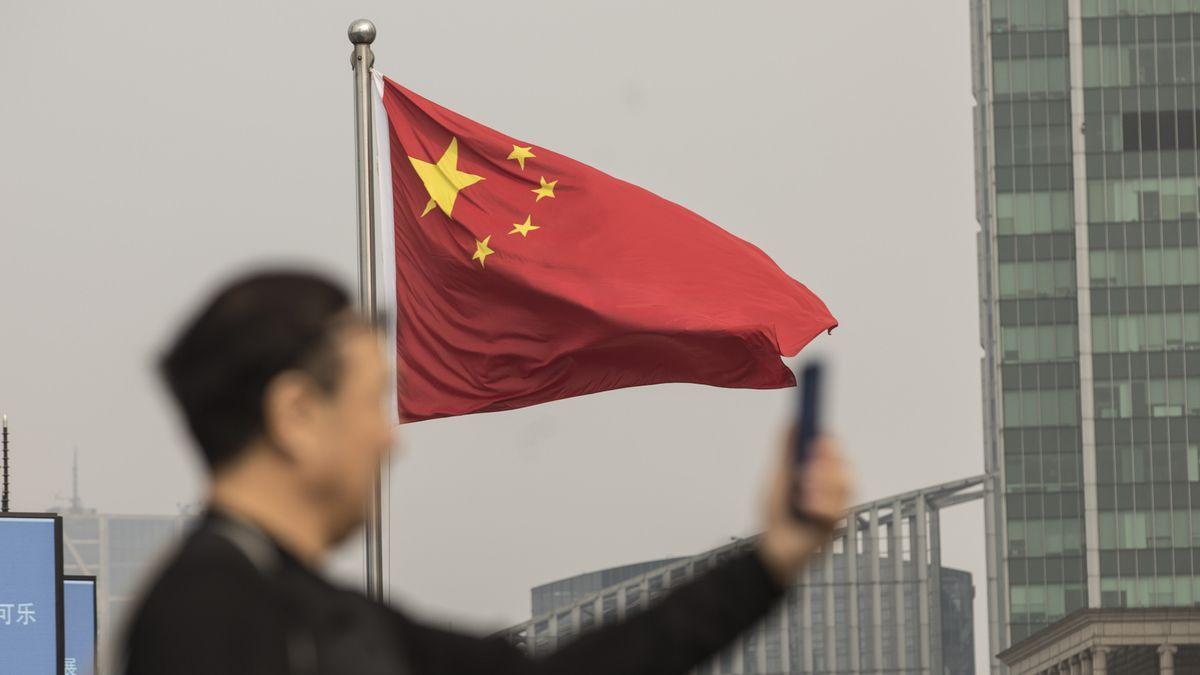
China's Open-Source AI Push Creates 'Death Zone' for US Models as Competition Shifts to Ecosystems
30 Jul 2026•Business and Economy

Recent Highlights


Recent Highlights
Today's Top Stories







Don’t drown in AI news. We cut through the noise - filtering, ranking and summarizing the most important AI news, breakthroughs and research daily. Follow topics that matter to you and stay ahead.


