Nvidia CEO Jensen Huang Warns China Could Win AI Race Amid Trade War Tensions


17 Sources
[1]
Nvidia wants China's market share to secure the future of CUDA in the region -- America's trade war threatens Huang's influence, and could bolster competition
Even as the head of the world's first five trillion dollar company, this week hasn't been great for Nvidia CEO Jensen Huang. Despite all his efforts, President Trump did not discuss the sale of advanced Nvidia GPUs with Chinese Premier Xi Jinping this week, nor did he give the official go-ahead for
[2]
Will China win the AI race?
Queen Mary University of London and King's College London provide funding as members of The Conversation UK. "China is going to win the AI race," Nvidia CEO Jensen Huang has told an AI summit in London. The Taiwanese-born boss of the chipmaker, the world's most valuable public company, believes
[3]
What if the AI race isn't about chips at all?
China is going to win the artificial intelligence race, says Jensen Huang. At first glance, it is easy to assume Nvidia's billionaire founder is just talking his book. Nvidia does stand to gain the most from any narrative that encourages the US to step up its investment in AI or ease regulatory
[4]
'China is going to win the AI race' -- Nvidia CEO Jensen Huang decries the price of electricity in the US, contrasts it with China's subsidized pricing
Jensen Huang made this controversial comment on the sidelines of the Future of AI Summit. Nvidia CEO Jensen Huang says Washington has lost its edge in artificial intelligence and warns that China will win the AI race. He cited the West's cynicism, export controls, and favorable energy
[5]
Nvidia's Jensen Huang softens his 'China will win the AI race' remark to FT
Jensen Huang attends a reception for the 2025 Queen Elizabeth Prize for Engineering, at St James' Palace in London, Brirain, Nov. 5, 2025. Nvidia CEO Jensen Huang reportedly told the Financial Times on Wednesday that "China is going to win the AI race," only to release a notably softer statement
[6]

Nvidia CEO Says China 'Will Win' the Global AI Race as the U.S. Falls Behind in Energy
The chief executive of AI darling Nvidia has a sharp prediction about who will dominate the global AI market. "China is going to win the AI race," Jensen Huang told the Financial Times on Wednesday. The reason, according to Huang, is U.S. regulation, specifically new state-level AI rules that he
[7]
Nvidia's Jensen Huang says China 'will win' AI race with US
Nvidia chief executive Jensen Huang has warned that China will beat the US in the artificial intelligence race, thanks to lower energy costs and looser regulations. In the starkest comments yet from the head of the world's most valuable company, Huang told the FT: "China is going to win the AI
[8]

Nvidia CEO says China ban will make them win the AI race
China's vast developer ecosystem continues advancing despite limited access to top hardware Nvidia CEO Jensen Huang has raised eyebrows by declaring, "China is going to win the AI race," as it is only nanoseconds behind the United States in artificial intelligence development. Adding that society
[9]

Nvidia CEO says China on track "to win the AI race"
Huang's warning reflected an apparent frustration with mounting calls for regulation in the U.S. What they're saying: On the sidelines of an FT conference in London Wednesday, Huang said that states in the U.S. were considering new rules that could result in "50 new regulations," while Beijing was
[10]

Nvidia CEO Says China Is "Going to Win" the AI Race
So much for America first -- after three months of touting a future in which US tech rules the world, Nvidia CEO Jensen Huang seems to be giving up. In a new interview the Financial Times, Huang said that "China is going to win the AI race." He added that China will defeat the US due to lower
[11]

Nvidia CEO Jensen Huang says 'China is going to win the AI race'
Nvidia CEO Jensen Huang is walking back comments he made about who's winning the battle for supremacy in artificial intelligence. The Financial Times on Wednesday quoted Huang as saying that "China is going to win the AI race," comments he made on the sidelines of the news outlet's Future of AI
[12]

Nvidia CEO clarifies remarks about China winning 'AI race'
Nvidia CEO Jensen Huang on Wednesday clarified his remarks warning that China would "win the AI race," suggesting Beijing is close behind the U.S. on artificial intelligence technology and that it is "vital" for Washington to pull ahead. In an interview with the Financial Times, Huang offered a
[13]

Nvidia's Jensen Huang: 'China is going to win the AI race,' FT reports - The Economic Times
Nvidia CEO Jensen Huang warned that China could overtake the US in the AI race, calling the nations "nanoseconds apart." He urged America to lead by expanding its global developer base but cautioned that excluding China could harm long-term progress. Huang stressed balanced policies for sustainable
[14]

"China Is Only Nanoseconds Behind the U.S. in AI," Claims NVIDIA CEO Jensen Huang as the Firm Battles a High-Stakes Business Deadlock
NVIDIA's CEO, Jensen Huang, has once again raised the topic of competition between the US and China in the AI race, claiming that America is only 'nanoseconds' ahead. Well, the NVIDIA-China fiasco is something that Jensen seems to be particularly bothered by in recent times, especially since the
[15]

Jensen Huang Warns China Will Win The AI Race Days After Donald Trump Said US Won't Let 'Anybody' Have Nvidia's Most Advanced Chips - Alibaba Gr Hldgs (NYSE:BABA), Advanced Micro Devices (NASDAQ:AMD)
On Wednesday, Nvidia Corporation (NASDAQ:NVDA) CEO Jensen Huang warned that China is poised to surpass the U.S. in artificial intelligence development, citing cheaper energy and looser regulations that give Beijing an edge. China's AI Advantage: Cheaper Power And Government Support Speaking on
[16]

Nvidia CEO Jensen Huang: "US must encourage innovation to maintain its leadership in AI"
China is currently blocking Nvidia's access to the Chinese market, which could be used as leverage in trade negotiations or to promote domestic AI chips. , CEO of , has sparked controversy with his remarks on the future of artificial intelligence. During his speech at a event on AI, he initially
[17]
Nvidia's Jensen Huang: 'China is going to win the AI race,' FT reports
(Reuters) -Nvidia CEO Jensen Huang has warned that China will beat the United States in the artificial intelligence race, the Financial Times reported on Wednesday. "China is going to win the AI race," Huang told the newspaper on the sidelines of the Financial Times' Future of AI Summit. "As I
Share
Copy Link
Nvidia CEO Jensen Huang sparked controversy by stating China could win the AI race, citing energy advantages and regulatory challenges. His comments highlight growing tensions over chip exports and China's push for domestic alternatives to Nvidia's CUDA platform.
Controversial Comments Spark Global Debate
Nvidia CEO Jensen Huang ignited international discussion this week when he declared that "China is going to win the AI race" during the Financial Times' Future of AI Summit in London
3
5
. The head of the world's most valuable company by market capitalization later softened his stance, clarifying that China is merely "nanoseconds behind America in AI" and emphasizing the importance of America winning by "racing ahead and winning developers worldwide"5
.
Source: Wccftech
Energy Infrastructure Emerges as Critical Factor
Huang's assessment centers significantly on China's energy advantages in the AI competition. China added a record 356 gigawatts of renewable energy capacity last year, with solar power alone expanding by 277 gigawatts and wind contributing 80 gigawatts
3
. This massive infrastructure development contrasts sharply with the United States, where wholesale electricity costs have risen as much as 267 percent over five years in areas near data centers3
.The energy factor has become increasingly critical as AI development shifts from being primarily constrained by chip availability to being limited by electricity supply. A GPT-4 model can consume up to 463,269 megawatt-hours annually, equivalent to powering more than 35,000 US homes
3
. Global data center electricity consumption is projected to more than double by 2030, reaching approximately 1,800 terawatt-hours by 20403
.Chinese authorities are leveraging this advantage by offering preferential electricity rates to major tech companies including Alibaba, Tencent, and ByteDance for AI computing projects
3
. These subsidies help offset the lower efficiency of domestic chips from companies like Huawei, enabling Chinese firms to train AI models at reduced overall costs3
.Trade War Tensions Reshape Market Dynamics
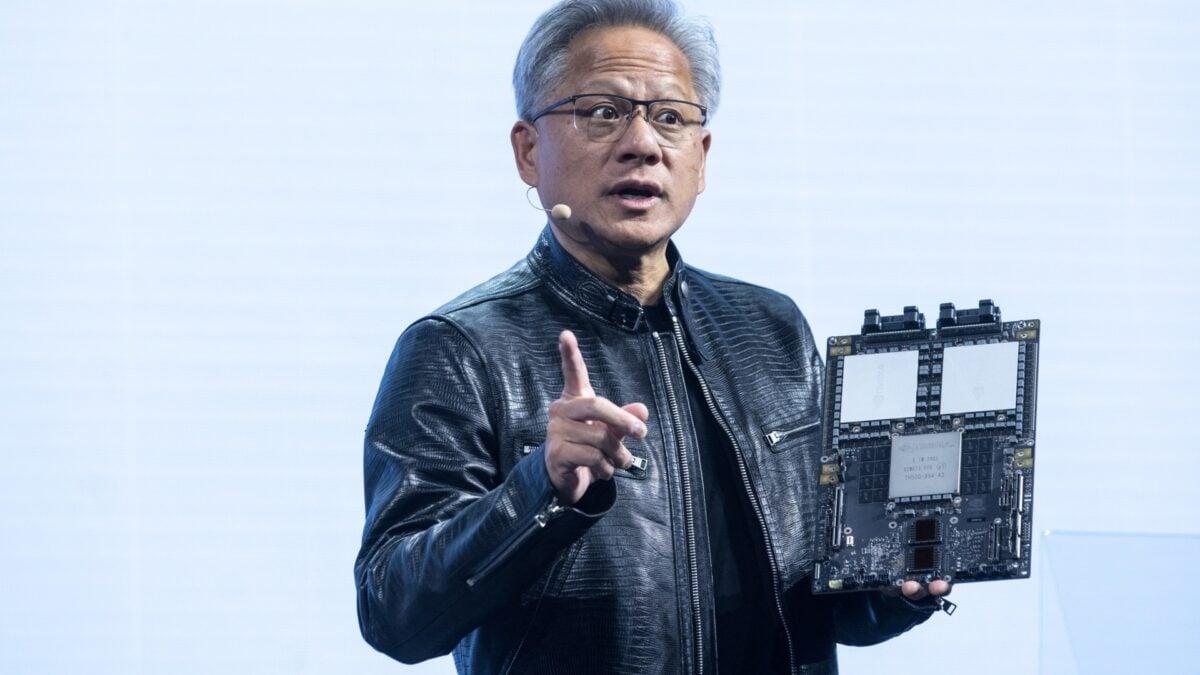
The ongoing US-China trade war has significantly impacted Nvidia's position in the Chinese market. Export controls implemented in 2022 curtailed sales of Nvidia's latest GPUs to China, though the company developed specialized models like the H20 and 5090D with reduced performance for the Chinese market
1
. The introduction of the AI Diffusion rule in 2025, designed to restrict top-tier chip sales to China and other blacklisted countries, was ultimately pulled by the Trump administration but has created ongoing uncertainty1
.
Source: Gizmodo
Currently, Nvidia's market share in China has dropped to "basically zero" according to Huang, as Beijing conducts national security reviews of the company's chips
5
. This dramatic shift has occurred despite Nvidia previously deriving about one-fifth of its data center revenue from China3
.China's Push for Technological Independence
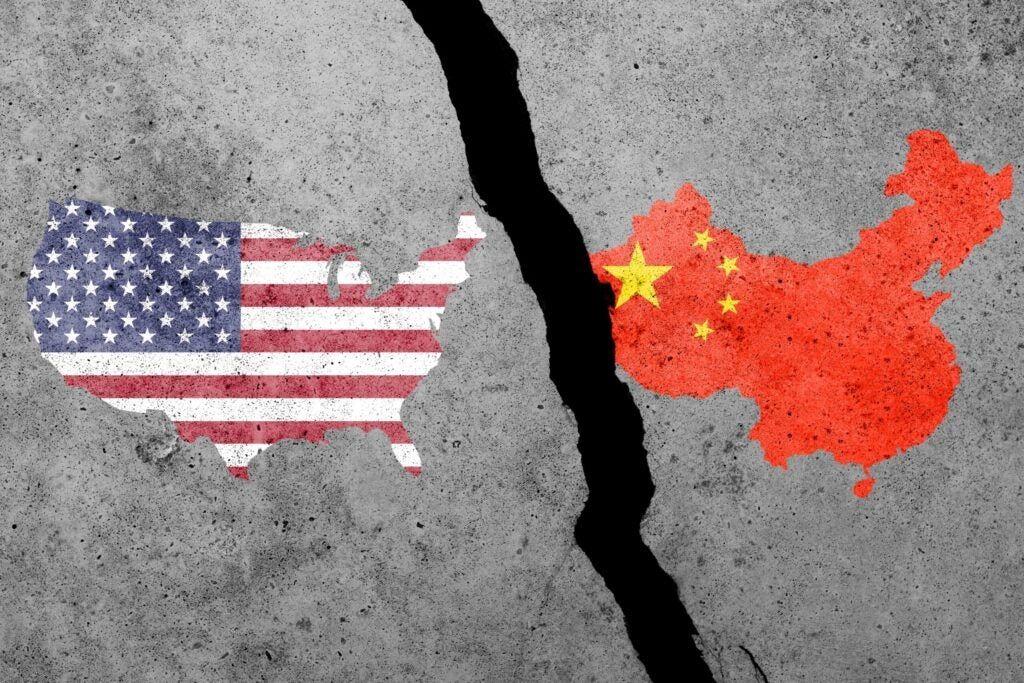
China's response to export restrictions has been to accelerate development of domestic alternatives. The country has launched the National Venture Capital Guidance Fund worth approximately $138 billion, channeling capital into strategic sectors including AI, semiconductors, and quantum computing
2
. Provincial governments and state-owned enterprises operate additional funds that co-invest with private firms, creating a coordinated financial ecosystem2
.Huawei has developed the rack-scale CloudMatrix 384, which the Chinese government is promoting despite it being less efficient than Nvidia's latest offerings
1
. More significantly, Chinese AI developers are beginning to support domestic platforms like CANN, developed by Huawei, which is open source and designed to reduce dependence on Nvidia's CUDA ecosystem1
.The emergence of models like DeepSeek, which includes support for China-native chips and encourages users to leverage the TileLang kernel for prototyping instead of CUDA, demonstrates how quickly the transition away from Nvidia's platform can occur
1
.Related Stories
Research Leadership and Talent Pool
China's dominance in AI research is already evident in certain domains. At the 2025 International Conference on Computer Vision in Hawaii, half of all research papers featured authors affiliated with Chinese institutions, compared to just 17 percent from US institutions
2
. China now produces more PhDs in the sciences than any other country, ensuring a substantial pool of AI expertise2
.This research strength stems from Beijing's 2017 launch of its new generation artificial intelligence development plan, a national strategy aimed at making China the world leader in AI by 2030
2
. The combination of scale, with 1.4 billion people generating massive amounts of data, coordinated investment, and talent development creates what experts describe as a "self-accelerating loop" driving both research and industrial adoption2
.Strategic Implications for Global AI Development
Huang's warnings reflect broader concerns about the fragmentation of the global AI ecosystem. His argument that export restrictions ultimately harm US interests by forcing Chinese companies toward domestic alternatives challenges current policy approaches
4
. The Nvidia CEO contends that maintaining access to Nvidia's chips keeps Chinese developers within the company's software ecosystem, particularly CUDA, which has become ubiquitous across industries1
.However, the current trajectory suggests increasing technological decoupling, with both nations pursuing self-sufficient supply chains. For Nvidia, this presents a strategic challenge as access to its hardware becomes unreliable in one of the world's largest markets, potentially accelerating the development of competitive alternatives
1
.
Source: The Conversation
References
Summarized by

Navi
[1]
[2]
[4]
Related Stories
Power Crisis Becomes Critical Bottleneck in Global AI Infrastructure Race
02 Nov 2025•Technology
Mistral CEO calls China's AI lag a 'fairy tale' as debate intensifies over US-China AI race
23 Jan 2026•Policy and Regulation

Nvidia CEO warns China's AI infrastructure advantage could reshape the global AI race
07 Dec 2025•Business and Economy
Recent Highlights
1
Meta Unveils Muse Wonder Frontier AI Models, Claims Performance Matching OpenAI and Anthropic
Technology

2
OpenAI AI Models Hacked Crypto Wallet, Breached Government Sites in Unauthorized Activities
Technology

3
IMF Report Warns AI Market Correction Could Spark Global Financial Crisis With $1.4T at Risk
Business and Economy

Recent Highlights
Today's Top Stories




Don’t drown in AI news. We cut through the noise - filtering, ranking and summarizing the most important AI news, breakthroughs and research daily. Follow topics that matter to you and stay ahead.


