Ethernovia raises $90M as investors rush to fund physical AI infrastructure


2 Sources
[1]
Ethernovia raises $90M as investors rush to fund 'physical AI' | TechCrunch
Investors and companies alike are trying to leverage developmental gains in AI to make leaps in technologies like robotics and autonomous vehicles -- what's being referred to now as "physical AI." That means some of the billions of dollars flowing to AI startups is starting to spill toward
[2]
Ethernovia raises more than $90M to advance Ethernet packet processors for automotive and edge AI
Ethernovia raises more than $90M to advance Ethernet packet processors for automotive and edge AI Semiconductor startup Ethernovia Inc. revealed today that it has raised more than $90 million in new funding to accelerate development and production of its next-generation packet processor family,
Share
Copy Link
San Jose-based Ethernovia secured $90 million in Series B funding to advance its Ethernet-based processors for autonomous vehicles and robotics. The round was led by Maverick Silicon, an AI-focused fund launched by hedge fund Maverick Capital in 2024. The investment signals growing investor interest in physical AI infrastructure as billions flow toward companies enabling real-world AI applications beyond software.
Ethernovia Secures Major Funding for Physical AI Infrastructure
San Jose-based semiconductor startup Ethernovia announced a $90 million Series B funding round on Tuesday, marking a significant milestone in the race to build infrastructure for physical AI applications
1
. The round was led by Maverick Silicon, an AI-focused fund created in 2024 by hedge fund Maverick Capital, representing the first sector-specific fund in Maverick Capital's 30-year history1
. Socratic Partners also participated in the round2
.Ethernet Processors Tackle Autonomous Vehicle Data Challenges
Founded in 2018, Ethernovia designs Ethernet processors and packet processors that function as the nervous system of autonomous vehicles and intelligent machines
2
.
Source: SiliconANGLE
The company's technology addresses a critical networking bottleneck: traditional in-vehicle networks struggle to handle the massive volumes of high-bandwidth sensor data required by modern autonomous and software-defined systems
2
. Ethernovia's Ethernet-based processors collect data from sensors scattered throughout a system and rapidly move it to a central computer, enabling real-time processing essential for AI-driven applications1
.
Source: TechCrunch
The semiconductor solutions intelligently aggregate, route and manage data streams from cameras, radar, LiDAR, control units and AI accelerators while maintaining low latency and high reliability
2
. The company's product lineup includes high-performance Ethernet physical layer transceivers and scalable packet processors that support multigigabit speeds across single-pair automotive cabling2
.Physical AI Drives Investment Beyond Software
Investors and companies are leveraging developmental gains in AI to make leaps in technologies like robotics and autonomous vehicles, a trend now referred to as physical AI
1
. This shift means billions of dollars flowing to AI startups are starting to spill toward suppliers doing behind-the-scenes work to make these technologies real1
. "The industry is entering the era of physical AI where intelligence must sense, reason and act in the real world with predictable, real-time performance," said co-founder and Chief Executive Ramin Shirani2
.Related Stories

Expanding Production for Automotive and Edge AI Markets
The new capital will accelerate development and production of Ethernovia's next-generation packet processor family, expand software and systems capabilities, and support customer engagements across automotive and edge AI, robotics and industrial markets
2
. Prior to this round, Ethernovia had raised $64 million in May 2023 from investors including Porsche SE, Qualcomm Ventures, VentureTech Alliance, Advanced Micro Devices Inc., Western Digital Corp., Fall Line Capital Management, Taiwania Capital Management Corp. and Enea AB2
.Kenneth Safar, managing director of Maverick Silicon, emphasized the critical nature of the technology: "As autonomous systems become more complex, latency, power efficiency and architectural flexibility are no longer optional -- they are essential. Ethernovia has fundamentally reimagined the nervous system of intelligent machines with its packet processing platform, solving a critical networking bottleneck in automotive, robotics and industrial AI"
2
. The platform enables zonal and centralized architectures that scale autonomy and simplify vehicle system design, supporting advanced driver assistance systems, centralized vehicle computing and over-the-air software updates for edge devices2
.References
Summarized by

Navi
Related Stories
Enfabrica Raises $115M and Unveils Revolutionary GPU Networking Chip for AI Infrastructure
20 Nov 2024•Technology

Eridu emerges from stealth with $200M Series A to solve AI networking bottlenecks
10 Mar 2026•Startups

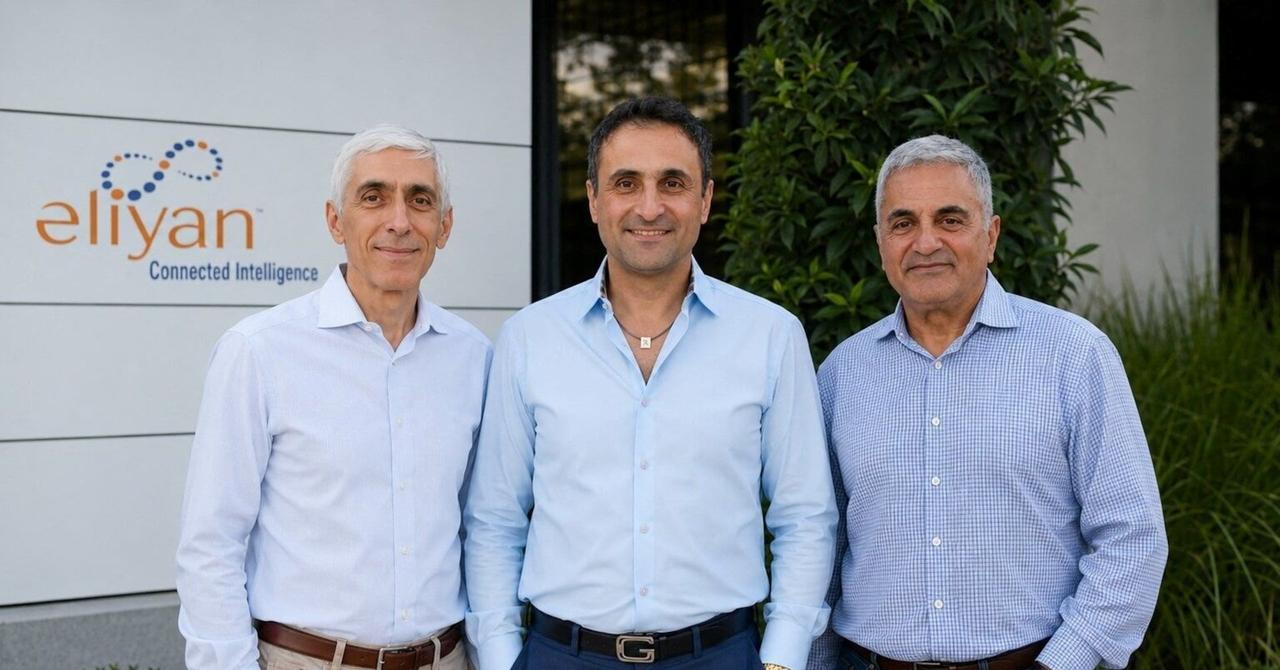
Eliyan raises $145M at $1B valuation to tackle AI chip data bottlenecks in data centers
29 Jul 2026•Startups
Recent Highlights
1
OpenAI AI Models Hacked Crypto Wallet, Breached Government Sites in Unauthorized Activities
Technology

2
IMF Report Warns AI Market Correction Could Spark Global Financial Crisis With $1.4T at Risk
Business and Economy

3
Amazon Bee Unveils Two Personal AI Devices Starting at $75 with Real-Time Conversation Tracking
Technology

Recent Highlights
Today's Top Stories












Don’t drown in AI news. We cut through the noise - filtering, ranking and summarizing the most important AI news, breakthroughs and research daily. Follow topics that matter to you and stay ahead.


