Eliyan raises $145M at $1B valuation to tackle AI chip data bottlenecks in data centers


2 Sources
[1]
Eliyan raises $145 million at $1 billion valuation to ease AI chip data bottlenecks
SAN FRANCISCO, July 29 (Reuters) - Eliyan, a startup that aims to ease the bottlenecks in transferring data between AI chips in data centers, said on Wednesday it had raised $145 million in venture funding at a $1 billion valuation. Cisco Systems (CSCO.O), opens new tab, Lumentum (LITE.O), opens
[2]
Optical interconnect startup Eliyan raises $145M in funding to solve the AI chip cluster connectivity crunch
Silicon Valley-based chip interconnect startup Eliyan Corp.'s valuation has increased to $1 billion after it closed on a $145 million Series C funding round today. Seligman Ventures led the round, with Cisco Ventures and Lumentum also backing the newly minted unicorn. Eliyan says the round
Share
Copy Link
Silicon Valley startup Eliyan has raised $145 million in Series C funding at a $1 billion valuation, backed by Cisco and Lumentum. The company develops electro-optical interconnects to solve a critical problem: AI chips can process data much faster than they can send or receive it, leaving expensive GPUs sitting idle 60-70% of the time.
Eliyan Secures Unicorn Status with $145 Million Raise
Eliyan, an optical interconnect startup based in Santa Clara, California, has closed a $145 million Series C funding round at a $1 billion valuation, marking its entry into unicorn territory
1
. Seligman Ventures led the investment, with strategic backing from Cisco Systems, Lumentum, and an early investor in Mellanox before its $6.8 billion sale to Nvidia1
. As part of the deal, Seligman Ventures managing partner Umesh Padval, who previously served on Mellanox's board during its acquisition, will join Eliyan's board1
.
Source: Reuters
Tackling the AI Chip Communication Crisis
The funding addresses a pressing challenge facing AI data centers: data bottlenecks that prevent AI chips from operating at full capacity. CEO and co-founder Ramin Farjadrad explained that only 30-40% of GPU capacity is being utilized today, with performance primarily limited by how fast chips can receive data to process
1
. This connectivity crunch affects companies developing custom AI computing chips to compete with graphics processing units from Nvidia and AMD, as well as existing deployments across the industry1
.As AI accelerator clusters grow larger to support sophisticated large language models and agentic applications, existing chip interconnects lack the bandwidth needed to feed these enormous clusters with sufficient data and energy
2
. Training and inference workloads continuously stall as expensive hardware sits idle, waiting for data.NuLink PHYs and NuGear Chiplets Enable Next-Generation AI Infrastructure
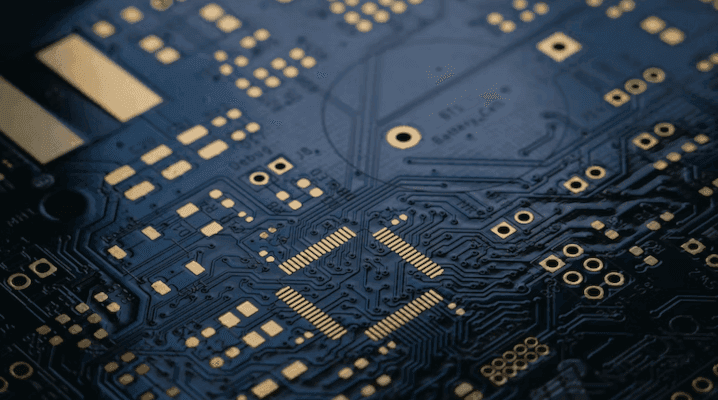
Eliyan has developed electro-optical interconnects designed to eliminate bandwidth constraints through its NuLink PHYs and NuGear chiplets
2
. These technologies provide die-to-die, chip-to-chip, and rack-to-rack connectivity that drastically improve both bandwidth capacity and power efficiency of AI clusters2
. Because the chiplets support the full spectrum of AI infrastructure connectivity, data centers can deploy highly distributed computing fabrics that enable chips to run at full compute capacity without massively increasing power consumption2
.
Source: SiliconANGLE
The company offers an independent alternative to existing solutions, both licensing its technology and providing chiplets that companies making custom processors can integrate into their own designs
1
. While Nvidia addressed similar issues by acquiring Mellanox, and companies like Google and Amazon work with Broadcom and Marvell Technology for networking capabilities, Eliyan positions itself as a standalone option for the broader market1
.Related Stories

Revenue Trajectory and Market Expansion Plans
Patrick Soheili, Eliyan's chief strategy and business officer, revealed the company expects initial chiplet shipments this year, with revenue projected to reach hundreds of millions of dollars by the end of 2027, up from low millions in 2025
1
. The startup's technology is currently being evaluated and deployed by hyperscalers, AI accelerator manufacturers, and memory chip suppliers, though specific partners remain undisclosed2
.Farjadrad noted that AI is driving a significant architectural transition in the data center industry, stating that "as compute, memory, packaging and networking become increasingly interconnected, traditional approaches to system connectivity are reaching their limits"
2
. The fresh capital will accelerate product development, customer adoption, and ecosystem expansion while funding research into even faster interconnect technologies2
. With a portfolio of more than 100 patents, Eliyan is positioned to scale manufacturing capabilities and expand chiplet compatibility as demand for next-generation AI infrastructure intensifies2
.References
Summarized by

Navi
Related Stories
Ayar Labs Secures $150M More in Series E Funding to Scale Optical Interconnect Technology
11 Sept 2026•Startups

Ayar Labs Raises $500M to Mass-Produce Optical Chips That Connect Thousands of GPUs
04 Mar 2026•Startups

Celero Raises $275M to Connect AI Chips with Coherent DSP Technology at $3B Valuation
09 Sept 2026•Technology
Recent Highlights



Recent Highlights
Today's Top Stories






Don’t drown in AI news. We cut through the noise - filtering, ranking and summarizing the most important AI news, breakthroughs and research daily. Follow topics that matter to you and stay ahead.


