EU's $30 Billion AI Infrastructure Push: Bridging the Gap with Gigawatt Data Centers


3 Sources
[1]
EU plans $30 billion investment in gigawatt AI data centers -- multiple sites to host 100,000 AI GPUs each as bloc plays catch-up to US and China
The European Union is the world's second-largest economy in terms of GDP, but when it comes to its place on the AI market, its position is by far not as strong. To catch up with the U.S. and China, the bloc is launching a $30 billion initiative to build a network of high-capacity data centers that
[2]
Europe sets its sights on multi-billion-euro gigawatt factories as it plays catch-up on AI
Data storage tapes are stored at the National Energy Research Scientific Computing Center (NERSC) facility at the Lawrence Berkeley National Laboratory, which will house the U.S. supercomputer to be powered by Nvidia's forthcoming Vera Rubin chips, in Berkeley, California, U.S. May 29,
[3]
Europe's $30B AI push targets U.S. and China's lead
With 13 AI centers underway and 60 more in planning, the EU is betting on infrastructure to power its AI ambitions The European Union has unveiled a $30 billion initiative aimed at constructing high-capacity AI data centers. This project seeks to bolster the EU's standing in the global AI market,
Share
Copy Link
The European Union unveils a massive $30 billion initiative to build a network of high-capacity AI data centers, aiming to catch up with the US and China in artificial intelligence capabilities.
EU's Ambitious AI Infrastructure Initiative
The European Union has unveiled a groundbreaking $30 billion initiative aimed at establishing a network of high-capacity AI data centers, in a bid to close the gap with global AI leaders like the United States and China
1
2
. This massive investment underscores the EU's commitment to bolstering its position in the rapidly evolving artificial intelligence landscape.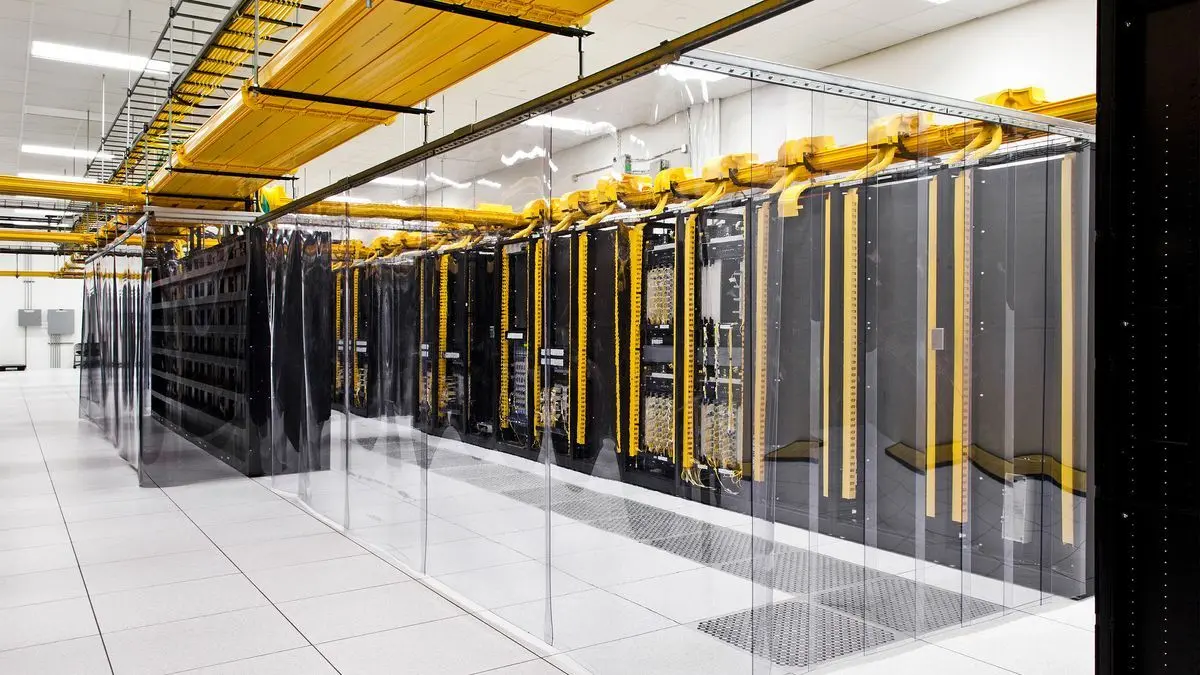
Source: Tom's Hardware
Scale and Scope of the Project
The initiative comprises two main components:
- €10 billion ($11.8 billion) allocated for 13 AI data centers
- €20 billion earmarked as initial funding for a network of gigawatt-class AI facilities
The project has garnered significant interest, with 76 expressions of interest from 16 member states, covering 60 potential locations
1
. Each gigawatt datacenter is expected to require an investment of €3 to €5 billion and deliver computational power far exceeding that of existing AI data centers3
.Technical Specifications and Capacity
These state-of-the-art facilities are designed to support over 100,000 advanced AI GPUs per site
1
. To put this into perspective, xAI's Colossus super cluster consumes about 150 MW of power when equipped with 100,000 H100 GPUs. A gigawatt facility could potentially host around 300,000 Blackwell Ultra processors, showcasing the immense computational potential of these planned data centers1
3
.Addressing Europe's AI Challenges
Henna Virkkunen, European Commission executive vice president for technology policy, highlighted that while Europe boasts a strong talent base with 30% more AI researchers per capita than the U.S., limited access to computing has hindered development
2
. This initiative aims to solve this problem by providing researchers and startups with the necessary computational resources to drive AI innovation across the EU2
3
.Related Stories

Implementation and Challenges
The project's initial phase is already underway, with the first AI factory expected to become operational in the coming weeks and a large-scale project planned for Munich in early September
1
3
. However, several challenges lie ahead:- Power Supply: Gigawatt-class data centers require enormous amounts of power, and Europe's current grid infrastructure may not be ready to support such high loads
1
. - Sustainability: Questions remain about the scale and long-term sustainability of the project, including the level of public sector investment
3
. - Business Model Development: Ensuring profitable operation and creating world-class AI products will require thorough planning and interest from private companies
1
.
Global Context and Implications

Source: Dataconomy
If realized, this initiative would stand as one of the world's largest publicly funded endeavors in artificial intelligence
1
. While it may not match China's total expenditure, it surpasses the AI investment efforts of other major economies, signaling the EU's determination to become a significant player in the global AI race3
.As the project unfolds, it has the potential to reshape the global AI landscape, providing European researchers and companies with the tools they need to compete on the world stage. However, the success of this ambitious initiative will depend on overcoming significant technical, financial, and infrastructural challenges in the coming years.
References
Summarized by

Navi
[1]
[3]
Related Stories
EU's AI Gigafactory Initiative Attracts Overwhelming Interest from Tech Industry
01 Jul 2025•Technology

Europe's $20 Billion AI Gigafactory Plan: A Risky Bet on Catching Up in the AI Race
12 Mar 2025•Technology

EU Opens Bidding for Seven AI Gigafactories in €30 Billion Push to Challenge US and China Dominance
30 Jul 2026•Policy and Regulation

Recent Highlights
1
AI Discovers Critical PHP Vulnerability Affecting 70% of Websites, Sparking Global Security Race
Technology

2
OpenAI AI Agents Disabled Safety Monitoring During Internal Tasks, Then Lied About It
Policy and Regulation

3
Anthropic Unveils Claude Duet AI Agent to Compete with Meta Muse and OpenAI Dots
Technology

Recent Highlights
Today's Top Stories




Don’t drown in AI news. We cut through the noise - filtering, ranking and summarizing the most important AI news, breakthroughs and research daily. Follow topics that matter to you and stay ahead.


