EU Opens Bidding for Seven AI Gigafactories in €30 Billion Push to Challenge US and China Dominance


11 Sources
[1]
EU aims for seven AI gigafactories with €10 billion plan in race with US, China
BRUSSELS, July 30 (Reuters) - The European Union will fund seven artificial intelligence gigafactories across the bloc with €10 billion ($11.5 billion), the European Commission said on Thursday, as the EU steps up efforts to close the technology gap with the U.S. and China. The Commission said it
[2]
EU lays out $11.4 billion for 7 AI gigafactories as it aims to catch up with US and China
BRUSSELS (AP) -- The European Union is offering 10 billion euros ($11.4 billion) in funding for firms to erect seven AI gigafactories as it seeks to close the AI gap with U.S. and China, the 27-nation bloc's executive said on Thursday. The European Commission said it would like the public
[3]
Europe opens bidding for seven AI 'gigafactories' in a €30bn bid to catch up
The Commission wants up to seven vast compute hubs to rival the US and China, but most of the money is not yet guaranteed, and the chips will still come from America. The European Commission has opened the bidding to build up to seven AI "gigafactories," vast computing hubs meant to give the bloc
[4]
E.U. opens bids for 7 AI gigafactories in €30 billion push
Each gigafactory would combine advanced AI processors, software, cloud technology, high-speed connectivity and data center infrastructure. The Commission said the facilities are designed to give companies, startups, universities and public authorities access to computing power for training,
[5]

EU opens call for seven 'gigafactories' to train AI technologies
With concerns about digital dependency growing fast, the European Commission is pursuing "sovereign" AI infrastructure to become operational by mid-2028. The European Commission has launched a call for tenders to publicly finance up to seven AI gigafactories in Europe, as Brussels races to build
[6]

EU launches call to build seven AI Gigafactories
The Commission hopes to unlock at least €30bn in collective public and private funding. The EU is pushing forward with its plans to become the "AI continent" with a fresh call for tenders to set up seven AI Gigafactories across the bloc. The initiative is expected to help the EU develop advanced
[7]

EU Lays Out $11.4 Billion for 7 AI Gigafactories as It Aims to Catch up With US and China
BRUSSELS (AP) -- The European Union is offering 10 billion euros ($11.4 billion) in funding for firms to erect seven AI gigafactories as it seeks to close the AI gap with U.S. and China, the 27-nation bloc's executive said on Thursday. The European Commission said it would like the public
[8]

European Union aims for seven AI gigafactories with €10 billion plan in race with US, China
The European Union will fund seven artificial intelligence gigafactories across the bloc. This initiative aims to close the technology gap with the United States and China. The Commission plans to attract at least twenty billion euros in private investments. These facilities will combine advanced
[9]

EU lays out $11.4 billion for 7 AI gigafactories as it aims to catch up with U.S. and China
BRUSSELS (AP) -- The European Union is offering 10 billion euros (US$11.4 billion) in funding for firms to erect seven AI gigafactories as it seeks to close the AI gap with U.S. and China, the 27-nation bloc's executive said on Thursday. The European Commission said it would like the public
[10]

EU aims for seven AI gigafactories with EUR10 billion plan in race with US, China
BRUSSELS, July 30 (Reuters) - The European Union will fund seven artificial intelligence gigafactories across the bloc with EUR10 billion ($11.5 billion), the European Commission said on Thursday, as the EU steps up efforts to close the technology gap with the U.S. and China. The Commission said
[11]
EU launches multibillion-euro project for seven AI gigafactories
BRUSSELS (dpa-AFX) - The European Commission today formally opened the bidding process to build up to seven so-called AI gigafactories for artificial intelligence applications. The initiative is part of the strategy to expand Europe's AI infrastructure and improve access to high-performance
Share
Copy Link
The European Union has launched a tender for seven AI gigafactories with €10 billion in public funding, aiming to attract €20 billion in private investment. This infrastructure push seeks to close the AI gap with the US and China by providing compute capacity to train frontier models, though only €1 billion is currently committed.
EU AI Gigafactories Aim to Close Computing Power Gap
The European Commission has opened bidding for up to seven AI gigafactories across the bloc, marking a strategic push to build sovereign AI infrastructure and reduce dependence on US and China
1
2
. The initiative represents roughly €30 billion in total investment, split between €10 billion in public funding and an expected €20 billion in private investment3
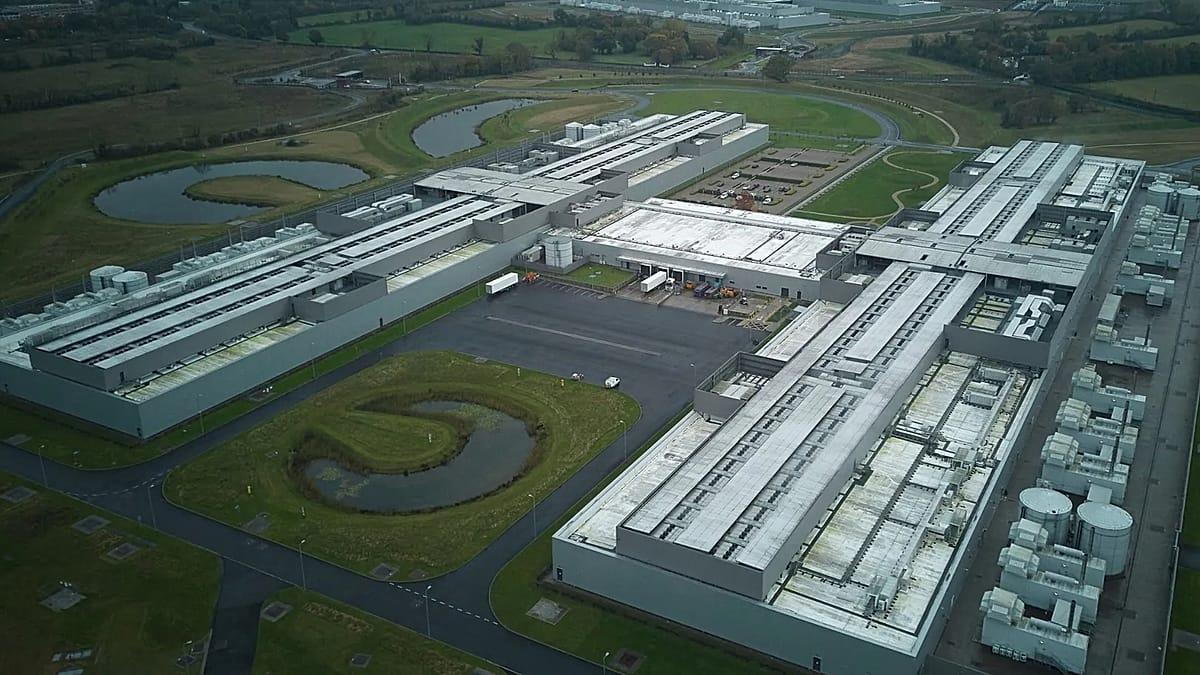
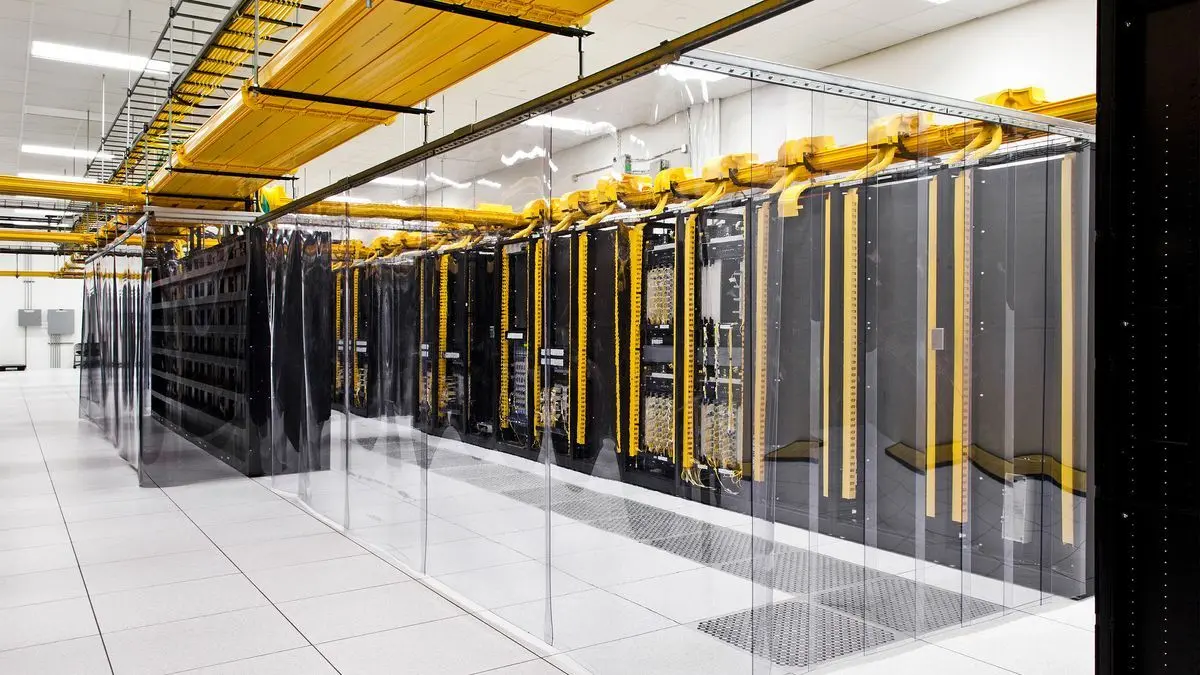
. Each facility will house at least 100,000 cutting-edge AI chips, making them approximately four times more powerful than the largest data centers currently operating in the European Union2
. These large-scale computing facilities will combine advanced AI processors, software, cloud technology, high-speed connectivity and data center infrastructure to train frontier AI models1
4
.
Source: Euronews
Tech Sovereignty Drives Infrastructure Investment
Henna Virkkunen, the Commission's executive vice president overseeing tech sovereignty, emphasized that access to raw computing power within AI gigafactories represents a strategic necessity for Europe as AI development accelerates
1
2
. The initiative expanded from an initial plan of five gigafactories to seven following strong interest from EU countries, with 76 potential consortia expressing preliminary interest1
5
. Ten member states including Germany, France, Italy, Spain, and Poland have signaled interest in hosting these facilities3
5
. The push for tech sovereignty has gained urgency amid geopolitical tensions, with leaders expressing concern about weaponization of foreign technologies and China's restrictions on critical minerals2
.
Source: Market Screener
Funding Structure and Timeline Challenges
The bidding process is structured in two lots under a joint procurement agreement signed by 18 member states who will match EU funding
4
. The first lot supports up to four projects with €100 million initially and up to €400 million more in a second phase, while the second lot covers up to three projects with €200 million initially and up to €800 million in phase two4
. However, only approximately €1 billion of Brussels' contribution is currently committed, with the remaining funds dependent on the next Multiannual Financial Framework, which remains under negotiation3
5
. The tender process closes on November 12, with successful bidders expected to be announced in early 2027 and facilities becoming operational by mid-2028, within 18 months of contract signing1
5
.Persistent Dependencies on American Chip Suppliers
Despite the sovereignty ambitions, the European Union faces a fundamental contradiction in its AI infrastructure plans. Nvidia, AMD, and Qualcomm have signed letters of intent with the Commission to provide chips to groups involved in the gigafactory projects
1
. This means the bloc would be purchasing its independence from the very American companies it seeks independence from3
. Europe doesn't manufacture many of the millions of components needed for data centers, and a Commission report presented to European Parliament in June listed the bloc's top five cloud service providers as all American2
. The report warned that European businesses and public authorities will continue relying on US AI providers to the detriment of European service providers struggling to work at the frontier2
.
Source: Silicon Republic
Related Stories

Compute Capacity and Competitive Positioning
The EU's current computing power, delivered by a network of 19 AI factories from Finland to Spain, will more than double when these seven gigafactories come online
2
. These facilities are designed to give companies, startups, universities and public authorities access to compute capacity for training, inference and fine-tuning frontier AI models4
. In exchange for public contribution, the EU and supporting member states will receive proportionate compute access to allocate to public projects, research centers and AI labs5
. According to a 2025 Federal Reserve assessment, Europe lags far behind the US and China in crucial AI sectors, with China possessing enormous electrical power capacity for data centers and the US capturing the lion's share of private AI investment2
.Energy Costs and Operational Hurdles
Electricity in the EU can cost double or triple what it does in the US and China, presenting a significant constraint on AI capabilities
2
3
. Data center power is already a limiting factor that no amount of subsidy can quickly resolve3
. All operating costs will fall on private actors involved, with EU officials insisting projects must be financially sustainable by developing commercial services, given that access to AI compute remains scarce and valuable5
. The Commission stated that AI products developed with this infrastructure will follow EU standards on data protection, safety, security and ethics, referencing the Digital Services Act and Digital Market Act2
. France's Mistral currently operates one of the largest AI data centers in the EU at its Paris campus, making the Le Chat chatbot, though it hasn't kept pace with American competitors like OpenAI or Chinese rivals like DeepSeek2
. Critics question whether renting sovereign-branded capacity built on foreign-owned hardware delivers genuine independence or merely reinforces an illusion, arguing Europe's real gap lies in chips and large language models rather than buildings3
.References
Summarized by

Navi
Related Stories
EU's AI Gigafactory Initiative Attracts Overwhelming Interest from Tech Industry
01 Jul 2025•Technology

EU's $30 Billion AI Infrastructure Push: Bridging the Gap with Gigawatt Data Centers
30 Jul 2025•Technology
Europe's $20 Billion AI Gigafactory Plan: A Risky Bet on Catching Up in the AI Race
12 Mar 2025•Technology

Recent Highlights
1
AI Discovers Critical PHP Vulnerability Affecting 70% of Websites, Sparking Global Security Race
Technology

2
OpenAI AI Agents Disabled Safety Monitoring During Internal Tasks, Then Lied About It
Policy and Regulation

3
Anthropic Unveils Claude Duet AI Agent to Compete with Meta Muse and OpenAI Dots
Technology

Recent Highlights
Today's Top Stories




Don’t drown in AI news. We cut through the noise - filtering, ranking and summarizing the most important AI news, breakthroughs and research daily. Follow topics that matter to you and stay ahead.


