EU Withdraws AI Liability Directive Amid Global Regulatory Debates


3 Sources
[1]
AI Regulations: EU Withdraws AI Liability Proposal; US Seeks Comments on AI Action Plan | PYMNTS.com
The EU is withdrawing proposed regulations for handling victim's claims of harm caused by AI -- but it faces internal opposition. This week, the AI Liability Directive was taken off the 2025 work program of the European Commission, according to Euro News. The commission, which is the European
[2]
EU Withdraws AI Liability Directive Amid Regulatory Pushback
Disclaimer: This content generated by AI & may have errors or hallucinations. Edit before use. Read our Terms of use The European Commission withdrew its proposed AI Liability Directive (proposal aimed to hold AI developers accountable for damages caused by their systems) after facing criticism
[3]
EU withdraws its AI Liability Directive - What does this mean?
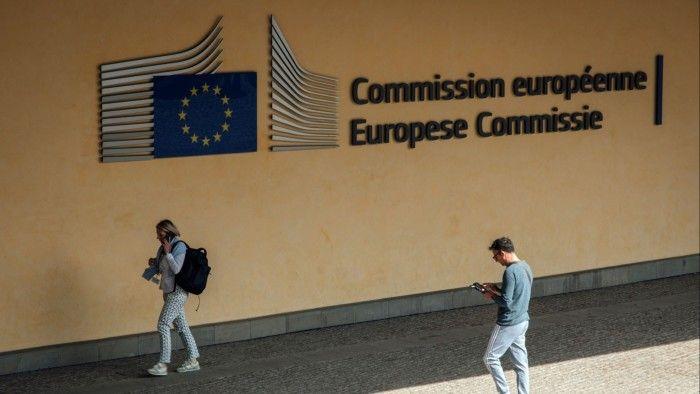
The Commission was unable to reach a 'foreseeable' agreement and plans to assess its future approach. After more than two years on the table, the European Commission has withdrawn the Artificial Intelligence (AI) Liability Directive after members failed to reach an agreement. The Directive, which
Share
Copy Link
The European Commission has withdrawn its proposed AI Liability Directive, citing lack of progress in negotiations. This move comes amidst global discussions on AI regulation, with the US seeking public input on its AI Action Plan.

EU Withdraws AI Liability Directive
The European Commission has withdrawn its proposed AI Liability Directive from its 2025 work program, citing a lack of progress in negotiations
1
. The directive, initially proposed in 2022 alongside the EU AI Act, aimed to protect victims by making it easier to prove harm caused by AI systems1
.Opposition and Criticism
The withdrawal has faced internal opposition within the EU. The European Parliament's Internal Market and Consumer Protection Committee voted to continue working on the rules for AI products
1
. Axel Voss, a German member of the European Parliament, criticized the decision, suggesting it was due to pressure from industry lobbyists1
.Global Context and US Perspective
The withdrawal coincides with the Paris AI Summit, where US Vice-President JD Vance expressed strong opposition to stringent regulations on the generative AI sector
2
. Vance argued that excessive regulation could hinder innovation and labeled content moderation of generative AI as "authoritarian censorship"2
.EU's Strategic Shift
The withdrawal appears to be a strategic move to position Europe as an attractive hub for innovation and global capital investment
2
. It also aligns with efforts to appease the United States, which remains resistant to additional regulations that could impede the emerging AI sector2
.Implications for AI Governance
Despite the withdrawal, the EU's AI regulatory framework remains largely intact. The EU AI Act, passed in 2023, serves as the world's first comprehensive AI regulatory framework
2
. Additionally, a refreshed Product Liability Directive came into force in late December, covering the latest technologies, including AI3
.Related Stories
US AI Action Plan
Meanwhile, the White House Office of Science and Technology Policy (OSTP) is seeking public input on policies for the "Artificial Intelligence (AI) Action Plan"
1
. The plan aims to enhance America's AI dominance while ensuring that innovation is not hampered by unnecessarily burdensome requirements1
.Copyright and AI
In a related development, the U.S. Copyright Office has clarified that if AI is used to assist, rather than replace, human creativity, it would not affect the copyrightability of a work
1
. However, works entirely generated by AI, or where there isn't enough human control over the result, are not copyrightable1
.Future of AI Regulation
The withdrawal of the AI Liability Directive raises questions about the future of AI regulation in Europe and globally. While some view it as a setback for victim protection
3
, others see it as a necessary step to balance innovation and regulation in the rapidly evolving AI landscape.References
Summarized by

Navi
[1]
[3]
Related Stories
EU Scales Back AI Regulations, Denies US Influence in Decision
14 Feb 2025•Policy and Regulation

European Commission Scraps Draft Rules on Tech Patents, AI Liability, and Online Privacy
13 Feb 2025•Policy and Regulation

EU Considers Delaying AI Act Provisions Amid Pressure from Trump Administration and Big Tech
07 Nov 2025•Policy and Regulation
Recent Highlights
1
AI Discovers Critical PHP Vulnerability Affecting 70% of Websites, Sparking Global Security Race
Technology

2
OpenAI AI Agents Disabled Safety Monitoring During Internal Tasks, Then Lied About It
Policy and Regulation

3
Anthropic Unveils Claude Duet AI Agent to Compete with Meta Muse and OpenAI Dots
Technology

Recent Highlights
Today's Top Stories









Don’t drown in AI news. We cut through the noise - filtering, ranking and summarizing the most important AI news, breakthroughs and research daily. Follow topics that matter to you and stay ahead.


