Europe's Push for Tech Independence: Breaking Free from US Dominance


3 Sources
[1]
Europe seeks to break its US tech addiction
With President Donald Trump more unpredictable than ever and transatlantic ties reaching new lows, calls are growing louder for Europe to declare independence from US tech. From Microsoft to Meta, Apple to Uber, cloud computing to AI, much of the day-to-day technology used by Europeans is
[2]
Europe seeks to break its US tech addiction
Brussels (Belgium) (AFP) - With President Donald Trump more unpredictable than ever and transatlantic ties reaching new lows, calls are growing louder for Europe to declare independence from US tech. From Microsoft to Meta, Apple to Uber, cloud computing to AI, much of the day-to-day technology
[3]
Europe seeks to break US tech addiction
BELGIUM (AFP) - With United States (US) President Donald Trump more unpredictable than ever and transatlantic ties reaching new lows, calls are growing louder for Europe to declare independence from US tech. From Microsoft to Meta, Apple to Uber, cloud computing to AI, much of the day-to-day
Share
Copy Link
Europe is making concerted efforts to reduce its dependence on US technology, driven by concerns over digital sovereignty, data protection, and potential economic risks.

Europe's Growing Concern Over US Tech Dominance
In a significant shift, Europe is intensifying its efforts to break free from its dependence on US technology. This move comes amid growing tensions with the United States, particularly following President Donald Trump's return to power. The European Union is now pushing for greater tech sovereignty, recognizing the risks associated with relying heavily on American tech giants
1
.The Scale of US Tech Influence in Europe
The extent of Europe's reliance on US technology is substantial. From cloud computing to AI, and from operating systems to social media platforms, American companies dominate the European tech landscape. Notably, around two-thirds of Europe's cloud market is controlled by US giants Amazon, Microsoft, and Google, while European providers' share has declined to just 13%
2
.EU's Strategic Response
To address this imbalance, the EU is taking several strategic steps:
-
Prioritizing European Firms: The EU is pushing to favor European companies in public contracts and supporting the development of European alternatives to well-known US services
3
. -
Focus on Critical Technologies: EU tech chief Henna Virkkunen has identified AI, quantum computing, and semiconductors as critical sectors for development
1
. -
European AI Strategy: The EU has unveiled a strategy to compete in the global AI race, emphasizing the need for "European preference" in critical sectors
2
. -
Financial Technology Independence: There are calls for a "European offer" to rival American and Chinese payment systems, with discussions underway to create a truly European payment system
3
.
Motivations Behind the Push
Several factors are driving Europe's quest for tech independence:
-
Strategic and Economic Risks: EU lawmakers, like Stephanie Yon-Courtin, warn of the risks of relying exclusively on non-European technologies
2
. -
Data Protection and Values: European officials emphasize the importance of aligning technology with European values, particularly regarding data protection
1
. -
Regulatory Differences: The EU's stricter tech regulations, including the Digital Markets Act (DMA) and Digital Services Act (DSA), reflect a different approach to tech governance compared to the US
2
.
Related Stories

Challenges and Investments
Achieving tech sovereignty will require significant investment and effort:
-
Financial Requirements: Estimates for creating a European tech ecosystem range from €300 billion to over €5 trillion by 2035
3
. -
Balancing Priorities: This push comes at a time when the EU is also increasing defense spending, creating potential resource allocation challenges
2
.
Impact and Reception
The EU's efforts are already showing some results:
-
Increased European Tech Adoption: Bruce Lawson of Norwegian web browser Vivaldi reports a significant increase in downloads in Europe, partly due to the DMA
1
. -
Industry Support: European tech companies, like OVHcloud, welcome the push for "made-in-Europe" solutions
3
.
As Europe continues its pursuit of tech independence, the global tech landscape may see significant shifts, potentially reshaping the balance of digital power between the EU and the US.
References
Summarized by

Navi
[1]
[2]
[3]
Related Stories
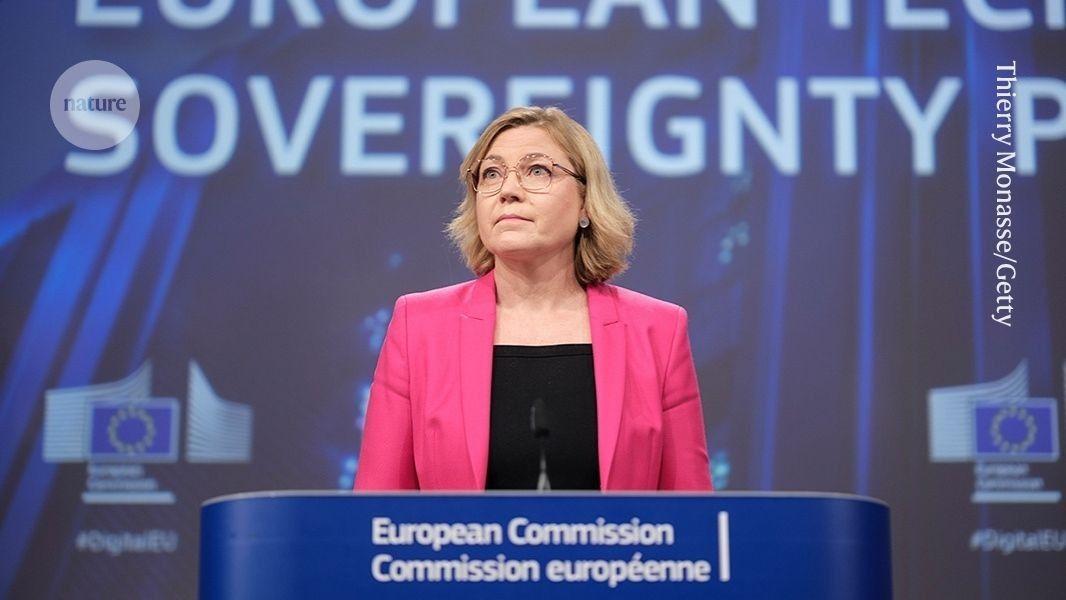
Europe unveils tech sovereignty plan to cut dependence on US cloud, AI and semiconductor firms
03 Jun 2026•Policy and Regulation
Big Tech Embraces US Exceptionalism in Trump's Second Term
15 May 2025•Policy and Regulation

European AI gets US funding but risks becoming an R&D incubator as innovation gap widens
01 Apr 2026•Business and Economy
Recent Highlights



Recent Highlights
Today's Top Stories






Don’t drown in AI news. We cut through the noise - filtering, ranking and summarizing the most important AI news, breakthroughs and research daily. Follow topics that matter to you and stay ahead.


