9 Sources
[1]
The European Union reveals details of its tech sovereignty package - Engadget
New proposals will see the EU further invest in European startups and companies as it looks to strengthen its homegrown tech footprint. The European Commission has announced a new European Technological Sovereignty Package, designed to further reduce its reliance on foreign tech. The EU wants to focus on building out Europe's capacity in areas such as semiconductors, AI, cloud computing and open-source projects. The package consists of two legislative proposals. The first is the Chips Act 2.0, a refresh of legislation introduced in 2023 that at the time was a response to what the Commission called "critical vulnerabilities in the global semiconductor supply chain." With the AI boom driving growth in the market, the Chips Act 2.0 will introduce a new excellence label for Europe's semiconductor regions, adopting an ecosystem approach for both AI-related and mainstream chips. The EU wants to bring chip manufacturers closer to their customers so they can capitalize on growth sectors such as data centres and cloud providers. Also part of the proposals is the Cloud and AI Development Act, which reinforces Europe's plan to triple data centre capacity on the continent within the next five to seven years. The legislation is another arm of the EU's Apply AI Strategy, which encourages AI adoption and innovation across its member states. The Commission says the Act will "support research and innovation in cutting-edge and sustainable technologies, while balancing AI ambitions with climate commitments." The conditions for deploying data centres across the EU will be streamlined, while a new EU-wide framework built around cloud and AI sovereignty will, it says, protect sensitive data while supporting the rollout of advanced AI and cloud tech. The new proposals also put a big onus on open-source projects in growth sectors like AI and cybersecurity. The EU says it will support open-source startups and invest in skills, while amplifying initiatives like the Open Internet Stack. The final component of the package is the Strategic Roadmap for Digitalisation and AI in the Energy Sector, which outlines the Commission's commitment to nurturing cooperation between the energy and digital sectors, and ensuring that any new data centres being added to the grid are done so sustainably and transparently. AI models "trained on European data and developed by European companies" will be key to improving Europe's electricity infrastructure, and the Commission will encourage a faster rollout of smart meters. "We cannot afford to depend on others for the technologies that keep our hospitals running, our energy grids stable and our services secure," said Commission President Ursula von der Leyen. "This is about protecting our citizens, defending our interests and making our own choices. Europe has the talent, the research excellence, the industrial base and the Single Market. Together, we must turn these strengths into technological sovereignty." The suite of new proposals will now be discussed by the European Parliament and the Council of the European Union. The Commission also intends to consult with member states, the European Investment Bank Group and other stakeholders on how its tech sovereignty package will be financed. Throughout 2026 we've seen a number of EU member states, particularly France, begin to shift away from an overreliance on countries like the US and China for its technology needs. Back in January, the French government announced that it was ditching Zoom and Microsoft teams in favor of a home-grown solution that will be in place across all of its civil service departments by next year. A few months later, the country also outlined plans to switch Windows to the open-source Linux on its workstations. Earlier this week, it was reported that the European Parliament is also taking steps towards shunning Google on its in-house computers. According to Politico, searches made via the address bar on Firefox and Edge will soon be hosted by French alternative Quant. Workers can still opt to use another search engine's website or change the default systems on their computer if they prefer.
[2]
European Union Outlines Plan to Reduce Dependence on American Tech
The 27-nation European Union outlined how it hopes to expand the region's data centers, semiconductors and cloud computing capabilities. European Union officials unveiled a broad plan on Wednesday to reduce dependence on American technology, which they increasingly see as a threat to the region's economic future and geopolitical security amid a rocky relationship with the Trump administration. Under the plan, officials outlined more government involvement in the region's tech industry to accelerate the construction of data centers and revive its semiconductor industry. It would also push European governments and businesses to purchase technology from domestic suppliers, particularly in areas seen as critical to security. European leaders have become increasingly alarmed by the reliance on American technology in areas like artificial intelligence, cloud computing and semiconductors. Many worry the dependence creates a "kill switch" that could be exploited by the Trump administration or future U.S. presidents to block access to essential tech services. "We cannot afford to depend on others for the technologies that keep our hospitals running, our energy grids stable and our services secure," Ursula von der Leyen, the president of the European Commission, the executive branch of the 27-nation bloc, said in a statement. By adopting more protectionist economic policies, the so-called technology sovereignty package could further strain Europe's relationship with the Trump administration after past disagreements over trade, the war in Ukraine and control of Greenland. Jamieson Greer, the U.S. trade representative, previously threatened retaliation against Europe over its digital policies. European officials are working to implement a trade pact with the United States, and President Trump has told them they must finish by July 4. The European Parliament is expected to vote on the package in mid-June, just ahead of that deadline. The tech package released on Wednesday was part of a wider strategy shift to drive economic growth. Europe has been squeezed between the United States' dominance in technology and China's strength in manufacturing. The European Union ran a trade deficit with China of about 145 billion euros in the first three months of this year, worth about $170 billion, driven in part by an influx of Chinese-made machinery and electric vehicles. The European Commission said the bloc relies on foreign providers for over 80 percent of its digital products, services, infrastructure and intellectual property. The American companies Amazon, Google and Microsoft dominate the European cloud computing market. Semiconductors and other vital components primarily come from companies based in the United States and Asia. European companies have also struggled to get a foothold in the fast-growing A.I. market, which is led by Anthropic and OpenAI of Silicon Valley. After more than a decade of aggressively regulating Apple, Google, Meta and others, many European leaders now want to develop a bigger tech ecosystem to compete with those U.S. giants. "The European Union stands at a defining moment to assert its technological sovereignty and reclaim its place in the global race for geoeconomic power," the European Commission said in the proposal. Many parts of the tech package could take a year or more before becoming law. The proposals must wind their way through a lawmaking process that requires agreement on a deal by European countries and the 720-member European Parliament. A major focus of the E.U. initiative, called the Cloud and A.I. Development Act, is boosting European cloud computing companies. For some tasks handling sensitive government work, non-European providers would be limited from winning contracts. The draft bill also encourages construction of data centers by speeding up permits, providing reliable electricity and investing government funds. The European Union says it wants to at least triple its data center capacity by 2030, from about 12 gigawatts currently. By 2036, officials said the region will need about 60 gigawatts, costing about $20 billion more. Another piece of the package, called the Chips Act 2.0, attempts to increase demand for semiconductors among European businesses, including automobile and defense firms. The proposed law builds on a 2023 law aimed at bolstering chip manufacturing. European officials said the tech plan was not about replacing American technology, but building resiliency so governments and companies in the region are not reliant on one foreign supplier. The policies are expected to benefit European companies including the business software giant SAP of Germany, the artificial intelligence company Mistral of France, and the cloud computing firm OVHcloud of France. Officials in Brussels have already eased other regulations to encourage tech development, including delaying implementation of some rules related to A.I. The European Commission also might create a fund to invest directly in domestic businesses -- including semiconductors and advanced manufacturing -- in exchange for ownership stakes. Countries like France have adopted policies to build data centers by promising access to affordable nuclear energy.
[3]
EU tech sovereignty package: chip emergency powers and curbs on US cloud
The Commission's 'AI continent' rhetoric sits atop draft laws that would let it override chip supply contracts and keep US providers away from sensitive government data. The European Commission unveiled its long-delayed technological sovereignty package on Wednesday, a bundle of four measures meant to loosen the bloc's dependence on American and Asian technology across semiconductors, cloud, artificial intelligence and open source. The Commission's own summary cast it in the language of ambition, a route to becoming what it calls an "AI continent." The accompanying draft texts read more like an attempt to claw back control. Two of the four instruments carry the weight. The first is a revised Chips Act, billed as Chips Act 2.0, which shifts the emphasis from building factories to building demand for European-made chips. The original 2023 act poured public subsidies into fabrication plants and fell short of its targets, a gap underlined when Intel scrapped plans for two mega-fabs in Germany. The revision goes further on crisis powers: according to a draft seen by the Financial Times, the Commission could force chipmakers to prioritise orders for crisis-critical products during a shortage, override existing contracts, buy chips centrally for member states, and fine companies up to €300,000 for withholding information about their supply-chain capacity. The urgency is not in dispute. The EU produces under 10 percent of the world's semiconductors and remains almost wholly reliant on the United States and Asia for the most advanced chips, those below five nanometres, the kind that train AI models. More than €52bn in public and private money has already been committed, with limited movement on that share. A sovereignty test for the cloud The second instrument with bite is the Cloud and AI Development Act, which would create a single EU-wide framework defining four tiers of cloud "sovereignty." Public authorities would have to run sovereignty risk assessments weighing how much of their infrastructure depends on non-EU firms, with the tiers judged on control over the service and supply chain, where AI inference data is processed, where the infrastructure sits and its cybersecurity. The practical effect, on current drafts, would restrict member states from using US cloud providers to process sensitive public-sector data in healthcare, finance and judicial systems, while leaving private-sector use untouched. Henna Virkkunen, the Commission vice-president for tech sovereignty, told reporters the aim was to ensure providers of critical workloads do not hold a "kill switch" over European data. She added that US companies would struggle to reach the highest sovereignty tier because of the US CLOUD Act, which can compel American firms to hand over data regardless of where it is stored. Commission President Ursula von der Leyen put the case more bluntly, saying the bloc cannot afford to depend on others for the technologies that keep its hospitals running and its grids stable. The remaining two measures are softer: an open-source strategy to fund European alternatives and push public administrations towards open-source tools, and a roadmap for digitalisation and AI in the energy system. The whole package leans on the Draghi competitiveness report, which found the EU reliant on non-EU suppliersfor more than 80 percent of its digital products, services and infrastructure. What happens next is a question of politics as much as drafting. The texts must be approved by all 27 member states, and they are split: France and Germany have pushed for a stricter European-preference line, while the Nordics and Ireland, where US cloud firms base much of their European operations, want a softer reading. The package also carries the EU's first formal legal definition of "digital sovereignty," a phrase Brussels has used for years without pinning down. Whether the instruments move the needle is the open question. Earlier efforts, from the 2023 Chips Act to the bloc's stalling AI gigafactory programme and its sovereign cloud contracts, set ambitious targets the spending has not yet met.
[4]
EU proposes to block foreign providers using 'kill switch' to disrupt vital tech across Europe
European Commission aims to reduce 'risky dependencies' on foreign suppliers in cloud computing, AI and semiconductor production The EU executive wants to ensure no foreign government or company has access to a "kill switch" to turn off or disrupt vital tech services across the continent, as part of an effort to cut dependencies on the US and China. Publishing "technological sovereignty" proposals that risk further tensions with Donald Trump, the European Commission said on Wednesday the bloc needed to reduce dependency on foreign suppliers in cloud computing, artificial intelligence and semiconductor production. The EU's vulnerabilities were exposed last year when China stopped semiconductor exports, almost bringing the European car industry to a halt. Meanwhile, there is concern that Trump or a future US president could use a "kill switch" to terminate US cloud computing services overnight, or require providers to hand over sensitive data. Henna Virkkunen, the European Commission vice-president for tech sovereignty, said the 2018 US Cloud Act - enabling federal authorities to access data stored by US providers in other countries for national security reasons - "was not in line with our rules here". Virkkunen said the EU was "not planning to work in isolation and produce everything ourselves" but had to identify "risky dependencies" by ensuring sensitive services and data, relating to security and law enforcement, were controlled in Europe. The EU needs to be sure no one has the "kill switch possibility," she said, adding it would be "very difficult" for US companies to pass strict EU criteria to provide cloud computing services in areas such as defence. The EU is reliant on foreign providers for more than 80% of digital products and services, infrastructure and intellectual property, the commission said, creating "excessive technological dependencies". The proposals, which have to be agreed by member states and the European parliament, could open a new front in ongoing tensions with the Trump administration, which has criticised EU digital regulation and routinely threatened allies with tariffs. Under the proposals, EU member states would be required to conduct a risk assessment into providers of their cloud computing services in sensitive areas, such as defence, criminal justice and border management. If the service was deemed risky, authorities could be required to switch providers. The draft law suggests US cloud providers operating in the EU might have to comply with EU data protection rules, and prove they would not be compelled to surrender EU data to US authorities. US companies could argue that entities they have already set up in Europe meet the EU's sovereignty requirements. Lara Natale, the senior director for public affairs at the Brussels-based thinktank, the Centre for Future Generations, said: "They will invest a lot of money in the upcoming months to try to lobby, try to create common positions, try to position themselves on the side of the new sovereignty discussion." The Computer and Communications Industry Association, whose members include Amazon and Google, said the commission had produced "a dangerous recipe for progressive market shutdown" that would push trusted providers out of parts of the EU market. The commission also wants to boost Europe's AI infrastructure, by fast-tracking the building of data centres and promoting European semiconductor production, in an effort to keep up with the US and China in the race to develop the technology. However, Olivier Darmouni, an associate professor at HEC Paris, cast doubts on proposals to build an "advanced manufacturing facility" in the EU for the most cutting-edge semiconductors and AI chips. For the EU to build such chips is not realistic "at the time scale that they need to catch up to the US and even try to match them in terms of AI leadership," Darmouni said. However, building other chips - RAM chips and memory chips, of which there is now a huge global shortage - could still be beneficial. Despite passing the European Chips Act in 2023, the EU produces only 10% of the world's semiconductors and is almost entirely dependent on the US and East Asia for the most advanced chips, including AI chips. Building the plants capable of fabricating state-of-the-art AI chips is a multi-year, multi-billion-dollar effort. As part of the plan to triple the EU's data centre capacity within five to seven years, the commission will roll out a rating system to ensure energy efficiency of the power-hungry facilities. It will also create "acceleration zones" to offer fast-tracked permitting for data centres. Darmouni said the proposals appeared to dodge the question of how the EU can reconcile its data centre buildout with its climate goals: "Very soon it will be in Europe as it is in the US, where people are worried that data centres are going to blow up their electricity bill - and the climate trajectory is going to suffer from that." Data centres consumed enough electricity to power nearly 20m homes in 2024 and this demand is expected to double by 2030.
[5]
European Union launches new tech sovereignty package to remove dependence from American and Asian AI and microchips | Fortune
European Union leaders, worried about the continent relying too heavily on American companies for AI and cloud computing services and Asia for microchips, are pushing back. The 27-nation bloc unveiled a "tech sovereignty" package on Wednesday with measures to promote homegrown European alternatives to Big Tech services and hardware. The efforts by Brussels have gained urgency as leaders worry about dependence on technologies from foreign providers, which they say could be "weaponized" against Europeans. Those fears crystallized after the International Criminal Court's top prosecutor was sanctioned by the Trump administration, which led to Microsoft canceling his email account, sparking fears of a "kill switch" hidden in U.S. tech services. "Europe wants to be in the position to make its own choices, avoiding risky dependencies on single dominant suppliers, one company or one third country," European Commission Executive Vice-President Henna Virkkunen, who oversees tech sovereignty, told reporters in Brussels. "Because we live in a world where geopolitics and technology go hand in hand. Those who champion technological innovation will shape the future, and we must ensure that Europe plays a leading role in this." A cornerstone of the package is a sequel to the EU's 2023 Chips Act to further boost local production of semiconductors by cutting red tape for chip fabs and fostering a European chipmaking ecosystem. Europe's vulnerability to the global chip supply chain centered in East Asia was highlighted last year in a power struggle at the Chinese-owned, Netherlands-based chipmaker Nexperia. Another key part of the package is supporting local cloud and AI development, with plans to triple Europe's data center capacity by over the next five to seven years. The EU is pushing to expand data centers to keep up with the AI boom, which is driving demand for cloud computing services. The proposals from the EU's executive arm still need to be debated by the EU's two other main institutions, the European Parliament and the Council of the European Union.
[6]
Can Europe rejoin the international tech race?
The EU is betting big on cloud computing and chips to reduce its technological dependence on the US and China, and to re-enter the global tech race. But whether it will succeed and how the two superpowers will react remain open questions. The European Commission has presented a sweeping package to boost homegrown technologies and reduce dependency on American and Chinese companies. Whether it will make a meaningful difference -- and how the two superpowers will react -- remain open questions. The EU imports most of its tech services and products from abroad. The digital market is dominated by US giants such as Google, Microsoft and Apple, and Chinese conglomerates such as Alibaba and TikTok-owner ByteDance. "We live in a world where geopolitics and technology are inseparable. Those who champion technological innovation will shape the future, and we must ensure that Europe plays a leading role in this," European Commission Executive Vice President Henna Virkkunen said. The package seeks to boost Europe's domestic tech sector, with a heavy focus on cloud infrastructure, AI services, open source and chips. In his landmark report on the languishing state of the European economy, former Italian Prime Minister Mario Draghi argued that most of the recent divergence in GDP growth between the EU and the US could be explained by digital technologies. Having missed the first wave of the digital economy -- the internet-driven services boom -- Draghi warned that Europe's last chance to rejoin the international tech race was not to be missed, namely the transformative potential of artificial intelligence. While growing dependency on foreign technologies had been widely known among European decision-makers for decades, US President Donald Trump's assertive trade agenda and China's willingness to weaponise such dependencies have provided fresh momentum. Will Brussels' move be enough to shift the dial, or is it too little too late? And what will be the economic cost of severing deeply entrenched dependencies if the EU draws the ire of Washington and Beijing? What's in the package? The main target of the European Commission's proposal is the cloud sector, which provides the physical infrastructure underpinning most digital services. Amazon, Microsoft and Google account for 80% of the European market, with EU-based providers relegated to the margins. The draft law introduces four different levels of digital sovereignty that public authorities must consider when purchasing cloud services, depending on how sensitive the use case is. The highest tier, covering sectors such as defence and healthcare, would effectively bar non-European companies from winning public contracts. The aim is to prevent a so-called "kill switch" scenario, the risk that a foreign government might simply cut off access to hospitals or fighter jets. For MEP Axel Voss (EPP/Germany), the Commission's approach is both bold and pragmatic. "Building genuine European cloud and AI sovereignty is overdue, and giving our providers a fair seat at the table in strategic public tenders is the right instinct," he said. Europe also needs to catch up on chips -- the fundamental components at the heart of almost every electronic device. The most advanced chips, used to develop cutting-edge AI technologies, are designed in the US and produced in Taiwan or South Korea. After the first Chips Act failed to significantly bring semiconductor factories back to Europe through state subsidies, the Commission is trying again -- this time focusing on stimulating demand for European chips, on the assumption that supply will follow. Certain key sectors, such as automotive, will also be required to diversify their chip suppliers in certain circumstances, as part of a broader effort to reduce reliance on Chinese-subsidised producers accused of flooding the market through dumping. Will it be effective? The guiding principle of the initiative is AI -- the transformative technology that, much like the internet before it, is reshaping the digital economy. Cloud data centres and chips provide the essential infrastructure for the next generation of AI. Yet the AI market is dominated by the likes of OpenAI, Anthropic and DeepSeek. A European preference in lucrative defence contracts could serve as a lifeline for Mistral AI, the only EU-based company at the cutting edge of the AI race. The EU lags significantly behind in data centre construction needed to meet expected demand for AI services in the coming years, held back by a mix of slow permitting, high energy costs and a scarcity of available land. "Europe cannot regulate its way out of technological dependency," MEP Matthias Ecke (S&D/Germany) told reporters. "It must build its own capacity, overcoming one-sided dependencies and restoring a genuine choice for businesses and consumers alike." At the same time, the EU is set to join a US-led initiative, Pax Silica, to secure chip supply chains, in recognition that Europe cannot do without Nvidia chips in the short term. That dependency could nonetheless prove self-perpetuating: regulators and rivals warn that Nvidia tends to build a closed ecosystem that is difficult to break away from. Will there be a backlash? The concept of technological sovereignty originated in French defence circles, rooted in the idea of developing an autonomous nuclear deterrent. The debate spilled over into digital technologies -- given their dual-use potential -- during Trump's first term. A stark wake-up call for EU policymakers came when, after the International Criminal Court issued an arrest warrant for Israeli Prime Minister Benjamin Netanyahu, the US administration sanctioned several ICC officials -- cutting them off from American services woven into daily life, such as Visa, Amazon and Uber. As Washington has grown more explicit about weaponising critical dependencies, concerns about retaliation against any treatment of US firms deemed unfair have mounted. Commission insiders, however, consider the US front largely pacified by the EU-US Turnberry agreement, which broadly favours the American side, and say the tone behind the scenes in recent weeks has been far more constructive than the public outbursts suggest. On the China front, the tech sovereignty debate is just one thread in a far broader tapestry of strained relations between Brussels and Beijing, with discussions around a potential trade war reaching a fever pitch in recent weeks. Both Washington and Beijing have weaponised strategic dependencies in what analyst Mark Leonard has called the Age of Unpeace. Yet neither superpower can afford to lose access to Europe's main strength: one of the world's largest and most lucrative markets. Where is Europe headed? In the complex chip value chain, Europe still controls critical chokepoints, most notably through Dutch company ASML, which holds a near-monopoly on the industrial machinery essential to chip production. The package also includes a strategy to leverage open-source technologies, which could help the EU overcome its fragmented tech landscape -- one that has yet to produce a company capable of directly competing with Silicon Valley's giants with an integrated offering. Still, the lack of a scalable European single market and access to capital are frequently cited by European start-ups as the main reasons they move abroad -- issues the Commission is attempting to address through the EU Inc. proposal and the capital markets union. In short, the EU faces structural problems dragging its tech sector back. The sovereignty package addresses some of them while attempting to leverage Europe's own strengths, conscious that complete autonomy in a globalised world is unrealistic. For instance, Japan coined the concept of "strategic indispensability," which emphasises controlling critical leverage points. "The target is to achieve something visible by 2030," Virkkunen said. "80% of technology is coming from outside Europe. We will not change that overnight."
[7]
EU sovereignty package aims to end reliance on foreign cloud, chips and AI
Three US cloud providers control 70pc of Europe's market. The Commission wants to change that. The European Commission today (3 June) published its long-awaited Technological Sovereignty Package, a bundle of legislation and strategy designed to cut the EU's dependence on non-European suppliers across chips, cloud, AI and open source. The headline items are two new legislative proposals: a Chips Act 2.0 and a Cloud and AI Development Act (CADA), alongside an Open Source Strategy and a roadmap for digitalising the energy sector. AWS, Microsoft Azure and Google Cloud currently account for around 70pc of Europe's cloud market, and the US Clouyd Act means American authorities can compel those providers to hand over data regardless of where it is stored. CADA introduces a single EU-wide sovereignty framework for cloud and AI, with the strictest restrictions on non-EU providers applying to sensitive public-sector workloads in areas like healthcare, finance and justice. Private companies are not covered. On chips, the revised act targets next-generation semiconductor capacity for AI workloads. AI-related components are expected to account for more than 70pc of the global semiconductor market by 2030, and Europe still leans heavily on third countries for advanced design and production. The Chips Act 2.0 speeds up permitting, deepens partnerships with allied nations and introduces a new excellence label for European semiconductor regions. Open Source key The Open Source Strategy looks to scale European-built alternatives in cloud, AI, cybersecurity and semiconductors, drawing on a developer base of more than 3m across the continent. The Strategy will: * Encourage wider adoption of existing open source solutions in public and private sectors; * Support EU organisations in contributing to open source development as high-quality alternatives to non-EU proprietary solutions, which are owned and controlled by a single supplier; * Strengthen Europe's open source ecosystem. This includes measures to "support open source businesses, address the security and long-term maintenance of open source, increase the EU's footprint in the governance of open source and promote digital skills in this area". "We live in a world where geopolitics and technology are inseparable," said Henna Virkkunen, executive vice-president for Tech Sovereignty, Security and Democracy. "Those who champion technological innovation will shape the future - and we must ensure that Europe plays a leading role in this. Today's package marks a major shift in how Europe approaches technological sovereignty. It is time for Europe to be in control of its data, of its supply chains, and of its future in a clean and sustainable way. We are strengthening Europe's digital autonomy and resilience while keeping our economy open to partners around the world." "We cannot afford to depend on others for the technologies that keep our hospitals running, our energy grids stable and our services secure," said Commission President Ursula von der Leyen. "This is about protecting our citizens, defending our interests and making our own choices. Europe has the talent, the research excellence, the industrial base and the Single Market. Together, we must turn these strengths into technological sovereignty." Both legislative proposals now need to clear the European Parliament and Council before taking effect. The Commission plans to launch a call for AI Gigafactories in July and will begin consultations on a European equity fund to back the package's broader ambitions. Don't miss out on the knowledge you need to succeed. Sign up for the Daily Brief, Silicon Republic's digest of need-to-know sci-tech news.
[8]
EU to unveil plan to wean itself off US, Asia tech
The EU will set out on Wednesday how the 27-country bloc hopes to slash its dependence on American and Asian technology, and favour European digital alternatives. The latest moves reflect a change in Brussels, not just moving away from regulating Big Tech but favouring European technology. The EU will set out on Wednesday how the 27-country bloc hopes to slash its dependence on American and Asian technology, and favour European digital alternatives. The plans risk further angering the United States, which has pushed back hard at the European Union's fines and rules in recent years against American tech companies. The bloc has in the past year ramped up its efforts to boost domestic manufacturing across different sectors, and catch up with rival companies in the United States and China. EU tech tsar Henna Virkkunen will unveil the new "technological sovereignty" package in Brussels, including new rules on chips, cloud computing and AI. The goal: to build digital ecosystems that ensure Europe retains control over services and data, and resists foreign interference. Brussels worries its soft underbelly has been exposed after crises over chips and rare earths with China last year, coupled with fears an angry President Donald Trump could one day pull the plug on US cloud computing via a "kill switch". In a draft strategy document seen by AFP, the EU said it is reliant on foreign providers for "over 80 percent of its digital products, services, infrastructure and intellectual property", based on an official 2023 report. The EU, however, insists the push is aimed not at shutting out foreign providers, but at strengthening European industry and keeping itself in the AI race. US cloud domination Based on the text seen by AFP, the package will include: -- a new law on cloud computing and artificial intelligence to encourage the construction of data centres in the EU. Brussels hopes the rules will triple the bloc's capacity in the next five to seven years; -- boosting the demand for European-made semiconductors with a new chips law; -- a push for the public sector to use more open-source software solutions that ensure greater control and flexibility, and avoid being locked in; -- creating a common EU scheme to rate the sustainability of data centres. Cloud computing is dominated by US platforms with the three biggest -- Microsoft's Azure, Amazon Web Services and Google Cloud -- making up 70 percent of the European market. The EU is estimated to spend 264 billion euros ($307 billion) annually on US cloud software, according to a 2025 report by French consultancy Asteres. Brussels is also expected to impose sovereignty criteria for public contracts in the cloud and AI sectors, and wants to force governments to undertake "sovereignty risk assessments" to identify European providers when needed. The push is partly fuelled by worries over Europeans' data since the Trump-era 2018 Cloud Act allows Washington to demand access to data from US-based providers regardless of where the information is held. 'We set our rules' There are fears the new rules could provoke retaliation by Trump. But an EU lawmaker who has worked closely on tech sovereignty told reporters Tuesday Europe "should not bow down to pressure". "We set our rules in Europe, according to the needs and the demands of the European citizens," said Matthias Ecke of the Socialists and Democrats, though he expects US providers to remain "dominant" despite the EU push. Brussels is making clear its determination. The European Commission said last week it wants to reserve for European firms a share of the mobile satellite frequencies currently used by US operators. The latest moves reflect a change in Brussels, not just moving away from regulating Big Tech but favouring European technology. Chips, cloud computing and AI "are the nervous system of the modern economy", powering everything from defence to healthcare, EU lawmaker Oliver Schenk said. "Europe therefore cannot afford to remain merely a consumer of critical technologies developed elsewhere," the conservative MEP told AFP.
[9]
EU targets Big Tech dependence with 'made-in-Europe' drive
BRUSSELS, June 3 (Reuters) - The European Commission proposed new laws on Wednesday to boost domestic cloud, AI and semiconductor industries, aiming to cut reliance on U.S. Big Tech in a move that could ratchet up transatlantic tensions. The Cloud and AI Development Act and Chips Act 2.0 form part of Europe's push for technological sovereignty and its efforts to close the gap with U.S. and Chinese rivals. The Commission wants to double the EU's global market share of semiconductors to 20% by 2030. "We cannot afford to depend on others for the technologies that keep our hospitals running, our energy grids stable and our services secure," Commission President Ursula von der Leyen said in a statement. EU tech chief Henna Virkkunen warned of the risk of potential 'kill switches' that could disable or disrupt services. "We want to be sure that in the critical fields we are always able to control the services and control the data in Europe," she told reporters. The proposal sets out sovereignty requirements for cloud providers in sensitive sectors such as banking, energy and healthcare, driven in part by concerns over U.S. laws such as the Cloud Act which requires U.S.-based providers to grant authorities access to data even if it is stored abroad. For critical public contracts, vendors will be required to ensure that software and hardware are made in the EU, excluding non-European countries from controlling data and services, EU tech chief Henna Virkkunen told reporters, confirming a Reuters story. "Of course this is not a very big part of our services but in very critical fields like defence for example, it is very important that the technology is controlled by Europeans from Europe and also data is staying here," she said. Amazon, Microsoft and Google are the world's three biggest cloud providers with a market share of over 60%. The proposal also includes a fast-track approval process for data centres which will get preferential grid access and reduced network charges for using European-made chips and improving energy efficiency. The updated Chips Act aims to boost European-made chips by encouraging agreements between manufacturers and buyers to guarantee future purchases of a product. Both proposals will be negotiated with EU member states and the European Parliament in the coming months before they can become law. (Reporting by Foo Yun Chee, additional reporting by Bart Meijers; Editing by Elaine Hardcastle)
Share
Copy Link
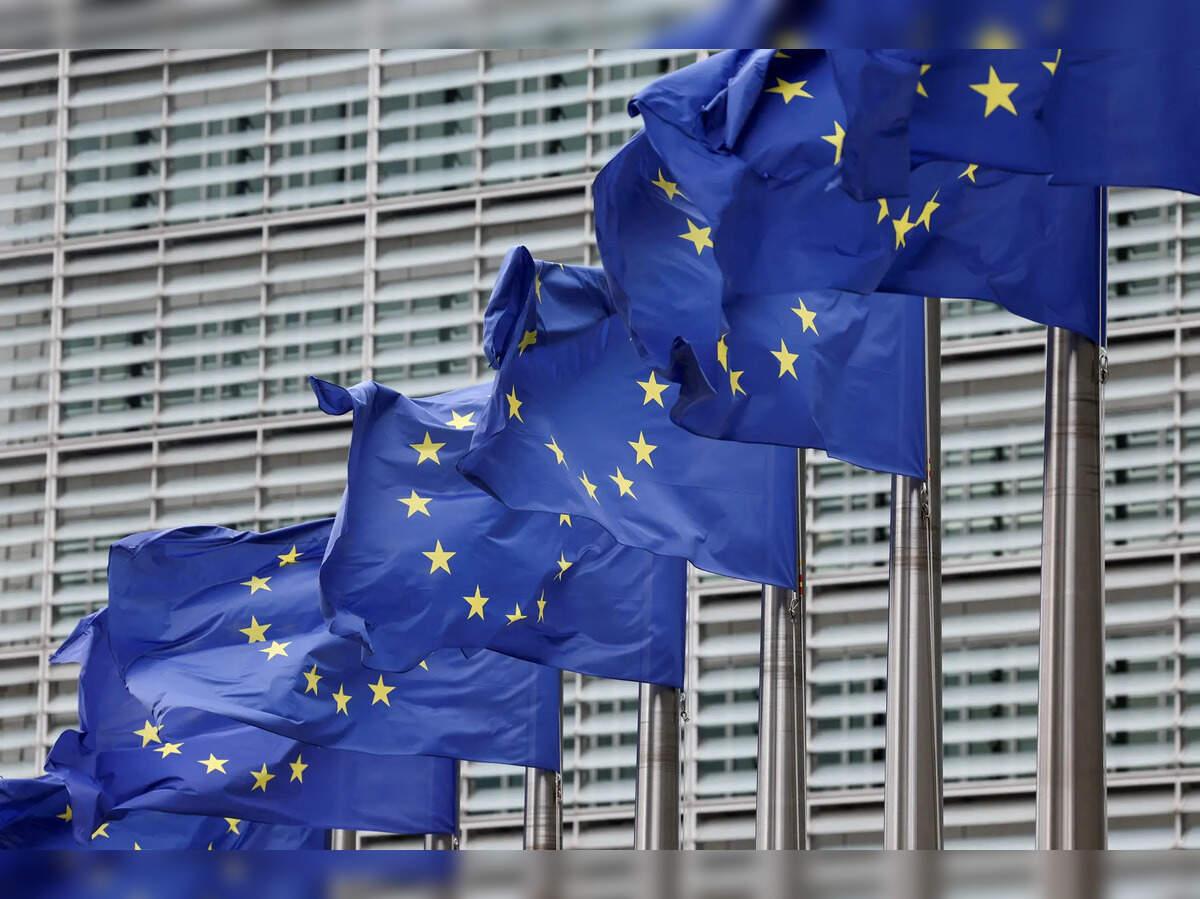
The European Union has announced a comprehensive tech sovereignty package aimed at reducing its reliance on American and Asian technology providers. The European Technological Sovereignty Package includes Chips Act 2.0 and the Cloud and AI Development Act, with plans to triple data center capacity and restrict foreign cloud providers from handling sensitive government data. The move comes amid fears of a potential kill switch that could disrupt critical European services.
The European Commission has unveiled its European Technological Sovereignty Package, a sweeping initiative designed to reduce dependence on American tech and Asian suppliers across semiconductors, artificial intelligence, and cloud computing
1
2
. The announcement comes as European leaders grow increasingly concerned about what they describe as a potential kill switch—the ability of foreign governments or companies to terminate essential tech services overnight or compel providers to hand over sensitive data4
. These fears intensified after the Trump administration sanctioned the International Criminal Court's top prosecutor, leading Microsoft to cancel his email account5
.
Source: ET
Commission President Ursula von der Leyen emphasized the urgency: "We cannot afford to depend on others for the technologies that keep our hospitals running, our energy grids stable and our services secure"
1
. The European Union currently relies on foreign providers for over 80 percent of its digital products, services, infrastructure and intellectual property2
4
. American companies Amazon, Google and Microsoft dominate the European cloud computing market, while semiconductors and other vital components primarily come from companies based in the United States and Asia2
.The first legislative pillar is Chips Act 2.0, a refresh of 2023 legislation that originally focused on building semiconductor manufacturing capacity
1
. The revised act shifts emphasis from building factories to building demand for European-made chips, addressing the shortfall after Intel scrapped plans for two mega-fabs in Germany3
. The EU produces under 10 percent of the world's semiconductors and remains almost wholly reliant on the United States and Asia for the most advanced chips below five nanometres—the kind that train AI models3
4
.
Source: Euronews
Chips Act 2.0 introduces significant crisis powers for semiconductor development. According to draft texts, the Commission could force chipmakers to prioritize orders for crisis-critical products during shortages, override existing contracts, buy chips centrally for member states, and fine companies up to €300,000 for withholding supply-chain capacity information
3
. The urgency became clear when China stopped semiconductor exports last year, nearly bringing the European car industry to a halt4
. More than €52 billion in public and private money has already been committed to semiconductor development3
.The Cloud and AI Development Act represents the package's most significant intervention in digital independence. The legislation creates a single EU-wide framework defining four tiers of cloud sovereignty, with public authorities required to conduct risk assessments weighing their dependence on non-EU firms
3
4
. For tasks handling sensitive government work in healthcare, finance, criminal justice, defense and border management, non-European providers would be limited from winning contracts2
4
.Henna Virkkunen, the European Commission vice-president for tech sovereignty, stated the aim was to ensure providers of critical workloads do not hold a kill switch over European data
3
. She noted that US companies would struggle to reach the highest sovereignty tier because of the US CLOUD Act, which can compel American firms to hand over data regardless of where it is stored3
4
. The draft law suggests US cloud providers operating in the EU might have to prove they would not be compelled to surrender EU data to US authorities and comply with EU data protection rules4
.Related Stories
The European Union aims to at least triple its data center capacity by 2030, from about 12 gigawatts currently
2
. By 2036, officials said the region will need about 60 gigawatts, costing about $20 billion more2
. The legislation encourages construction of data centers by speeding up permits, providing reliable electricity and investing government funds2
. The Commission will create "acceleration zones" to offer fast-tracked permitting and roll out a rating system to ensure energy efficiency4
.
Source: Silicon Republic
The package places significant emphasis on open-source projects in growth sectors like artificial intelligence and cybersecurity. The EU says it will support open-source startups and invest in skills, while amplifying initiatives like the Open Internet Stack
1
. The policies are expected to benefit European companies including SAP of Germany, artificial intelligence company Mistral of France, and cloud computing firm OVHcloud of France2
.By adopting more protectionist economic policies, the tech sovereignty package could further strain Europe's relationship with the Trump administration after past disagreements over trade, the war in Ukraine and control of Greenland
2
. Jamieson Greer, the U.S. trade representative, previously threatened retaliation against Europe over its digital policies2
. The Computer and Communications Industry Association, whose members include Amazon and Google, said the commission had produced "a dangerous recipe for progressive market shutdown" .The proposals must wind through a lawmaking process requiring agreement by all 27 member states and the 720-member European Parliament, which could take a year or more
2
5
. Member states are split: France and Germany have pushed for a stricter European-preference line, while the Nordics and Ireland, where US cloud firms base much of their European operations, want a softer approach3
. The European Parliament is expected to vote on the package in mid-June, just ahead of the July 4 deadline for implementing a trade pact with the United States2
. Experts question whether the EU can realistically build cutting-edge microchips at the time scale needed to catch up to the US in AI leadership, though building other chips like RAM and memory chips could still prove beneficial given the global shortage .Summarized by
Navi
[4]
17 Apr 2025•Policy and Regulation

09 Apr 2025•Technology

18 Nov 2025•Policy and Regulation

1
Technology

2
Policy and Regulation

3
Technology

News Categories