2 Sources
[1]
Europe Unveils a Record 35 New NVIDIA AI Supercomputers
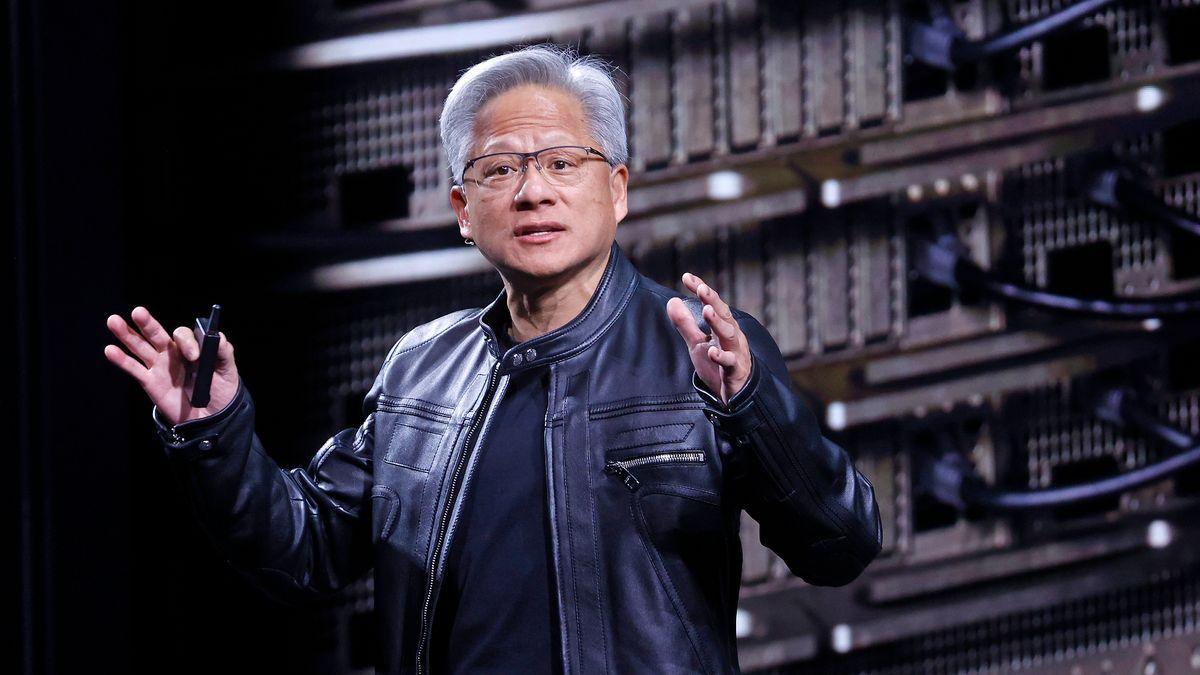
Expanded Access to Next-Generation NVIDIA AI Infrastructure Equips Millions of Researchers to Advance AI HPC and Scientific Discovery * Barcelona Supercomputing Center's EuroHPC AI Factory, BavariaAI's Blue Swan, IT4LIA, HLRS's HammerHAI, NAISS's Mimer EuroHPC AI Factory and more are building on next-generation NVIDIA AI infrastructure across 23 countries, accelerating the work of over 3 million researchers. * NVIDIA AI infrastructure is powering over 90% of Europe's AI factory buildout with 800 AI exaflops deployed or announced since last year. * NVIDIA is supporting initiatives to accelerate AI-driven climate science, healthcare and clean-energy decarbonization, including work with Siemens Energy on hydrogen-capable gas turbine burners. * Barcelona Supercomputing Center, CINECA, Fraunhofer and Jülich Supercomputing Centre are the latest institutes to use the CUDA-Q platform to integrate quantum processors, extending Europe's leadership in quantum-GPU supercomputing. ISC High Performance 2026 -- NVIDIA today announced that a record 35 NVIDIA AI HPC supercomputers are in development across Europe -- equipping more than 3 million researchers with next-generation infrastructure for continental AI, accelerated science and industrial innovation. The systems represent Europe's largest one-year expansion of supercomputers, spanning national supercomputing centers, AI factories and academic research institutions. Built on full-stack NVIDIA AI infrastructure, the systems will support research across climate science, healthcare, clean-energy decarbonization, quantum computing and fundamental science. The NVIDIA Blackwell and NVIDIA Hopper™ platforms are powering the majority of Europe's AI factory buildout, with 800 AI exaflops deployed or announced since last year. With NVIDIA Quantum InfiniBand networking, NVIDIA CUDA-X™ libraries, NVIDIA NIM™ microservices and NVIDIA AI Enterprise software, NVIDIA provides a full-stack platform for science, spanning model training, simulation, inference and agentic AI. "AI is the new instrument of science, and Europe is building the infrastructure to put it in the hands of millions of researchers," said Jensen Huang, founder and CEO of NVIDIA. "With NVIDIA accelerated computing, researchers can simulate more complex systems, train scientific AI models and build agentic AI workflows that turn Europe's data and expertise into breakthroughs for the world." Supercomputers including Barcelona Supercomputing Center's EuroHPC MareNostrum5 AI upgrade, BavariaAI's Blue Swan, IT4LIA, HLRS's HammerHAI and NAISS's Mimer EuroHPC AI Factory are among those based on advanced NVIDIA AI infrastructure. "BSC is committed to building AI infrastructure that advances science, industry and society," said Mateo Valero Cortés, director of the Barcelona Supercomputing Center. "With the upgrade to MareNostrum5 and NVIDIA accelerated computing, the consortium composed of Spain, Portugal and Türkiye will make available to European researchers the tools to tackle some of the world's most complex challenges, from climate modeling to biomedical discovery." "With the project 'Blue Swan Platform,' Bavaria is working on an innovative and independent, multimodal AI foundation model for important application areas like health and robotics," said Bavarian Minister of Science Markus Blume. "This will allow us to provide a powerful AI tool for science and industry that fully meets European standards. For this ambitious goal, we are currently building a special computing infrastructure at Friedrich-Alexander University in Erlangen -- the biggest GPU cluster you can find at any German university." "IT4LIA marks a strategic step in strengthening Europe's AI and HPC ecosystem, providing a high-performance infrastructure to the research and innovation ecosystem," said Gabriella Scipione, high-performance computing director of CINECA. "Through advanced accelerated computing, EuroHPC with CINECA, the Italian Ministry of University and Research, and the Italian Cybersecurity Agency are creating a trusted environment for open AI model development and applications across agritech, cybersecurity, meteorology, climate and manufacturing, strengthening Europe's technological autonomy and reinforcing Italy's role in the global AI landscape." "Germany has long been a leader in engineering, science and industrial innovation," said Michael Resch, director of the High-Performance Computing Center Stuttgart. "With HammerHAI, Germany's first AI factory, we are building on that foundation with secure, national AI infrastructure that will help researchers and industrial users accelerate simulation, inference and scientific discovery, strengthening Europe's ability to turn advanced computing into real-world breakthroughs." Europe's latest AI infrastructure expansion includes advancements at: * Barcelona Supercomputing Center's AI Factory, the first EuroHPC AI-specific installation: Will expand MareNostrum 5 with NVIDIA GB300 NVL72 and NVIDIA GB200 NVL4 systems, connected by the NVIDIA Quantum-X800 InfiniBand platform. Delivering up to approximately 20 exaflops of AI training and 33 exaflops of AI inference performance, the system will accelerate generative AI, climate modeling, health and biotech research, sustainable agriculture, energy systems and government AI services. * BavariaAI's Blue Swan: Brings 1,000 GPUs via NVIDIA GB200 NVL4 systems and NVIDIA Quantum-2 InfiniBand networking to FAU Erlangen and LRZ supercomputing centers. Delivering up to 11 exaflops of AI training and 22 exaflops of AI inference performance, the platform will support Bavaria's foundation model initiative, advancing open multimodal models for science, public administration, health research, robotics and perception. * IT4LIA: An AI factory with over 8,000 GPUs via NVIDIA GB200 NVL4 systems, NVIDIA Quantum-X800 InfiniBand networking and NVIDIA AI Enterprise software, delivering 82 exaflops of AI training and 164 exaflops of AI inference performance. * HLRS's HammerHAI: Will equip Germany's first AI factory with over 850 GPUs via NVIDIA GB200 NVL4 systems connected with NVIDIA Quantum-X800 InfiniBand. Delivering up to approximately 8 exaflops of AI training and 15 exaflops of AI inference performance, HammerHAI will give researchers and industrial users secure AI infrastructure for engineering simulation, large language model inference and scientific discovery. * NAISS's Mimer AI Factory, owned by the EuroHPC Joint Undertaking: Hosted at Linköping University, this supercomputer will deploy 100 NVIDIA GB200 NVL4 systems, totaling 400 GPUs, with NVIDIA ConnectX-8 networking. Delivering up to 4 exaflops of AI training and about 7 exaflops of AI inference performance, Mimer AI Factory will advance Sweden's AI science ecosystem across life sciences, materials research, autonomous systems, trustworthy AI and data-driven innovation. AI for Climate and Decarbonization NVIDIA is supporting initiatives that deploy AI infrastructure and software to help researchers apply AI to scientific challenges including climate and Earth systems modeling, biomedical research, and clean-energy technologies such as fusion, hydrogen and carbon capture. Accelerated simulation and industrial engineering are already enabling breakthroughs in clean-energy research. Siemens Energy is using the Siemens Xcelerator portfolio, accelerated by NVIDIA technologies, including NVIDIA Omniverse™ libraries, CUDA-X and AI infrastructure, to unify design, computational fluid dynamics simulation and manufacturing for gas turbines built to run on up to 100% hydrogen -- a complex physics challenge involving extreme heat, fluid dynamics and combustion behavior. The workflow supports rapid, simulation-driven design iterations for complex gas turbine burner configurations, followed by fast technology validation using additively manufactured combustors. This cuts simulation times by up to 77% to advance hydrogen-capable, low‑carbon gas turbines. Quantum-GPU Supercomputing Advances in Europe NVIDIA is enabling European supercomputing centers and institutions to develop and run useful hybrid quantum-classical applications using NVIDIA CUDA-Q™, an open, qubit-agnostic platform for hybrid computing, extending Europe's leadership in quantum-GPU supercomputing. CINECA, EuroHPC and Pasqal are integrating a neutral-atom QPU at the CINECA supercomputing center. The Pasqal hybrid environment is deploying the CUDA-Q platform through integration with Slurm. CUDA-Q provides Pasqal and CINECA with a platform for developing and running quantum applications including for optimization and materials science use cases. Fraunhofer FOKUS is facilitating the integration of NVIDIA CUDA-Q with the quantum programming language Eclipse Qrisp. Qrisp, initiated at Fraunhofer FOKUS and being further developed by the Eclipse Foundation, enables researchers to more easily write complex quantum algorithms which can then be simulated, optimized and run with NVIDIA CUDA-Q. The Barcelona Supercomputing Center has recently deployed a new analog quantum computer from QPU builder Qilimanjaro Quantum Tech, through the EuroHPC JU initiative. Qilimanjaro integrated NVIDIA CUDA-Q into its quantum software development kit, QiliSDK. Qilimanjaro is also working toward making its QPU available in the NVIDIA CUDA-Q platform for seamless control of quantum accelerated workflows at BSC. Researchers at the Jülich Supercomputing Centre, working with a team from NVIDIA, set a world record by fully simulating a universal 50-qubit quantum computer. The simulation was run on JUPITER, powered by its NVIDIA GH200 Grace Hopper Superchips. Jülich's JUQCS-50 (for 50 qubits) quantum simulator allows researchers to now test the largest possible quantum problems on supercomputers, to scale quantum computing.
[2]
NVIDIA Floods Europe With 35 Supercomputers Spanning 23 Countries, Stacking Up To 800 Exaflops Of AI Compute
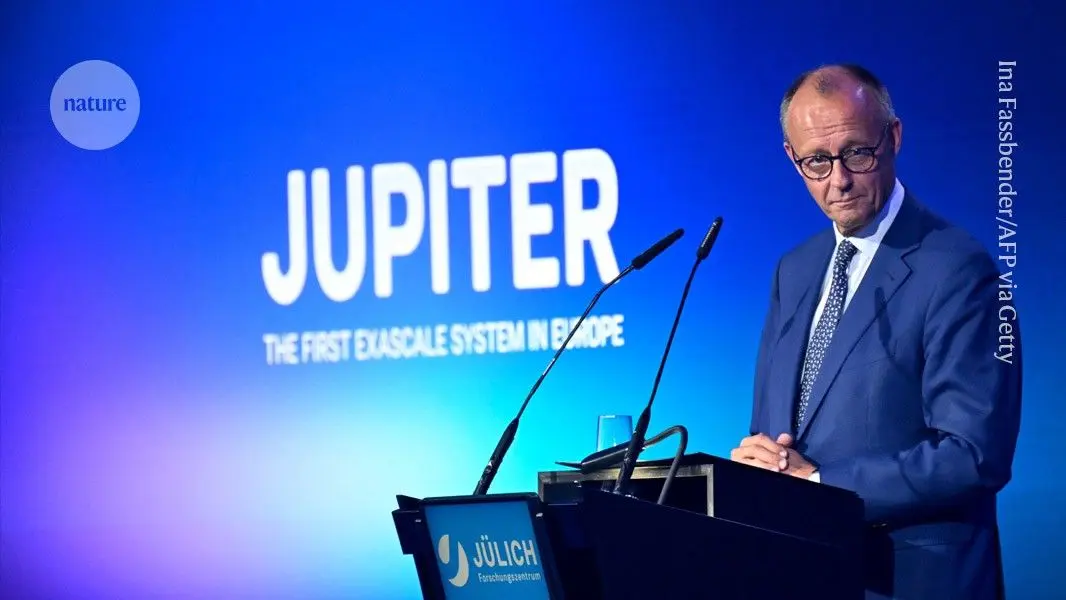
NVIDIA's AI prowess is being deployed across Europe with 35 brand new supercomputers offering 800 Exaflops of compute. Europe Is Building 35 All-NVIDIA AI supercomputers, including Hopper, Blackwell & Rubin Deployments That Scale Up To 800 Exaflops European nations are going into a supercomputer-frenzy, and the main driver behind them is NVIDIA's latest AI ecosystem, delivering up to 800 Exaflops of deployed & announced capacities that will deliver record levels of AI compute. Today, at ISC 2026, NVIDIA and its partners unveiled this multi-year collaboration, which will encompass several deployments across 23 countries. With these supercomputers, Europe is aiming to accelerate the work of over 3 million researchers. The major names behind these deployments include Barcelona Supercomputing Center's EuroHPC AI Factory, BavariaAI's Blue Swan, IT4LIA, HLRS's HammerHAI, NAISS's Mimer EuroHPC AI Factory, and more. The systems will span national supercomputing centers, AI factories, and academic research, harnessing NVIDIA's Quantum InfiniBand Networking, NVIDIA CUDA-X and CUDA-Q libraries, NVIDIA NIM microservices, NVIDIA AI Enterprise Software, and the full-stack platform NVIDIA is known to offer within its AI ecosystem. Blackwell and Hopper will power the majority of these upcoming deployments, but Europe has also shown great interest in the upcoming Vera Rubin platform. Some highlights include: * Barcelona Supercomputing Center's AI Factory, the first EuroHPC AI-specific installation: Will expand MareNostrum 5 with NVIDIA GB300 NVL72 and NVIDIA GB200 NVL4 systems, connected by the NVIDIA Quantum-X800 InfiniBand platform. Delivering up to approximately 20 exaflops of AI training and 33 exaflops of AI inference performance, the system will accelerate generative AI, climate modeling, health and biotech research, sustainable agriculture, energy systems, and government AI services. * BavariaAI's Blue Swan: Brings 1,000 GPUs via NVIDIA GB200 NVL4 systems and NVIDIA Quantum-2 InfiniBand networking to FAU Erlangen and LRZ supercomputing centers. Delivering up to 11 exaflops of AI training and 22 exaflops of AI inference performance, the platform will support Bavaria's foundation model initiative, advancing open multimodal models for science, public administration, health research, robotics, and perception. * IT4LIA: An AI factory with over 8,000 GPUs via NVIDIA GB200 NVL4 systems, NVIDIA Quantum-X800 InfiniBand networking, and NVIDIA AI Enterprise software, delivering 82 exaflops of AI training and 164 exaflops of AI inference performance. * HLRS's HammerHAI: Will equip Germany's first AI factory with over 850 GPUs via NVIDIA GB200 NVL4 systems connected with NVIDIA Quantum-X800 InfiniBand. Delivering up to approximately 8 exaflops of AI training and 15 exaflops of AI inference performance, HammerHAI will give researchers and industrial users secure AI infrastructure for engineering simulation, large language model inference, and scientific discovery. * NAISS's Mimer AI Factory, owned by the EuroHPC Joint Undertaking, is hosted at Linköping University. This supercomputer will deploy 100 NVIDIA GB200 NVL4 systems, totaling 400 GPUs, with NVIDIA ConnectX-8 networking. Delivering up to 4 exaflops of AI training and about 7 exaflops of AI inference performance, Mimer AI Factory will advance Sweden's AI science ecosystem across life sciences, materials research, autonomous systems, trustworthy AI, and data-driven innovation. The Jupiter supercomputer is one of the several deployments, marking the first exascale supercomputer for Europe. Deployed at Germany's Forschungszentrum Jülich, the system features the ability to map the entire human brain at a cellular scale and can also simulate the climate of the entire planet at 1km resolution. It also accelerates the development of next-generation wireless networks (5G & 6G) & can simulate a universal 50-qubit quantum computer. As mentioned above, Vera Rubin is also being deployed across global IT and AI research centers. Vera Rubin delivers 7 Exaflops of AI and 5 PFlops of native FP64 performance, delivering Top500 supercomputer performance in a single rack. These systems are already in mass production, and the Leibniz Supercomputing Centre, the National Energy Research Scientific Computing Center, and Los Alamos National Laboratory are developing next-generation supercomputers based on Rubin to advance open science, energy exploration, earth sciences, and national security. NVIDIA and its partners are also working on custom high-density Vera Rubin supercomputers, packing 144 GPUs per rack. With these, the Blue Lion installation is able to offer 30x higher compute power versus the existing deployment, and is primed for operation by 2027. Entry-level deployments based on NVL4, which house Intel Xeon CPUs, are also rolling out from Bull, Dell Technologies, GIGABYTE, HPE, and Supermicro, and are designed to help research institutions, national labs, and enterprises deploy rack-scale accelerated computing. Europe is stepping boldly into the AI era with a landmark initiative: 35 all-NVIDIA supercomputers spanning 23 countries, delivering a staggering 800 Exaflops of AI compute. Powered by Hopper, Blackwell, and the upcoming Rubin platforms, along with NVIDIA's full-stack ecosystem, these systems will empower over 3 million researchers to tackle humanity's greatest challenges in climate science, healthcare, energy, materials discovery, and beyond. From Spain's pioneering EuroHPC AI Factory to Germany's HammerHAI and Sweden's Mimer, this continent-wide deployment marks a new chapter of scientific acceleration and technological sovereignty. With systems already in production and next-generation Rubin installations on the horizon, Europe is not just catching up; it is building the infrastructure for a smarter, more innovative future. The AI revolution in Europe has officially begun. Follow Wccftech on Google to get more of our news coverage in your feeds.
Share
Copy Link
Europe is building 35 NVIDIA AI supercomputers spanning 23 countries, marking the continent's largest one-year expansion of AI infrastructure. The systems deliver 800 exaflops of AI compute power and will support over 3 million researchers working on climate science, healthcare, clean energy, and quantum computing breakthroughs.

Europe AI infrastructure is experiencing its most significant transformation as NVIDIA announces 35 new NVIDIA AI supercomputers under development across 23 countries. This record expansion of AI supercomputing represents the continent's largest one-year buildout of advanced computing systems, designed to equip more than 3 million researchers with next-generation tools for AI-driven scientific discovery
1
. The deployment spans national supercomputing centers, AI factories, and academic research institutions, all built on full-stack NVIDIA infrastructure.The systems will deliver 800 exaflops of AI compute across deployed and announced installations since last year, with NVIDIA's Blackwell and Hopper platforms powering over 90% of the buildout
1
. According to Jensen Huang, NVIDIA's founder and CEO, "AI is the new instrument of science, and Europe is building the infrastructure to put it in the hands of millions of researchers." The initiative positions Europe to compete globally in artificial intelligence while maintaining technological autonomy through sovereign computing capabilities.The Barcelona Supercomputing Center's EuroHPC AI Factory leads the charge as the first EuroHPC AI-specific installation, expanding MareNostrum 5 with NVIDIA GB300 NVL72 and GB200 NVL4 systems connected by Quantum-X800 InfiniBand. This system will deliver approximately 20 exaflops of AI training and 33 exaflops of AI inference performance
2
. Director Mateo Valero Cortés emphasized that the consortium of Spain, Portugal, and Türkiye will provide European researchers with tools to tackle complex challenges from climate modeling to biomedical discovery.BavariaAI's Blue Swan platform brings 1,000 GPUs via NVIDIA GB200 NVL4 systems to FAU Erlangen and LRZ supercomputing centers, delivering up to 11 exaflops of AI training and 22 exaflops of AI inference performance
2
. Bavarian Minister of Science Markus Blume stated the project will create an innovative, multimodal AI foundation model for health and robotics applications while building Germany's biggest GPU cluster at any university.IT4LIA marks a strategic advancement with over 8,000 GPUs via NVIDIA GB200 NVL4 systems, delivering 82 exaflops of AI training and 164 exaflops of AI inference performance
2
. CINECA's Gabriella Scipione explained the system creates a trusted environment for open AI model development across agritech, cybersecurity, meteorology, climate science, and manufacturing, strengthening Italy's role in the global AI landscape.HLRS's HammerHAI, Germany's first AI factory, will equip researchers with over 850 GPUs via NVIDIA GB200 NVL4 systems connected with Quantum InfiniBand, delivering approximately 8 exaflops of AI training and 15 exaflops of AI inference performance
2
. Director Michael Resch noted this secure, national infrastructure will help accelerate simulation, inference, and scientific discovery.Related Stories
The NVIDIA-powered systems leverage Quantum InfiniBand networking, CUDA-X libraries, NIM microservices, and AI Enterprise software to create a comprehensive platform spanning model training, simulation, inference, and generative AI workflows
1
. NAISS's Mimer AI Factory at Linköping University will deploy 100 NVIDIA GB200 NVL4 systems totaling 400 GPUs, delivering up to 4 exaflops of AI training and about 7 exaflops of AI inference performance to advance Sweden's AI science ecosystem across life sciences, materials research, and autonomous systems2
.Europe has also shown strong interest in the upcoming Vera Rubin platform, which delivers 7 exaflops of AI and 5 petaflops of native FP64 performance in a single rack
2
. The Leibniz Supercomputing Centre and other institutions are developing next-generation supercomputers based on Rubin, with custom high-density configurations packing 144 GPUs per rack expected to operate by 2027. These systems will support research initiatives including NVIDIA's collaboration with Siemens Energy on hydrogen-capable gas turbine burners for clean-energy decarbonization1
. The Barcelona Supercomputing Center, CINECA, Fraunhofer, and Jülich Supercomputing Centre are also using the CUDA-Q platform to integrate quantum processors, extending Europe's leadership in quantum-GPU supercomputing.Summarized by
Navi
10 Jun 2025•Technology

11 Jun 2025•Technology

10 Jun 2025•Technology

1
Startups

2
Technology

3
Policy and Regulation