Nvidia and HPE to Build Blue Lion Supercomputer in Germany, Powered by Next-Gen Vera Rubin Architecture


6 Sources
[1]
Nvidia, HPE to build new supercomputer in Germany
SAN FRANCISCO, June 10 (Reuters) - Nvidia (NVDA.O), opens new tab and Hewlett Packard Enterprise (HPE.N), opens new tab said on Tuesday they are partnering with the Leibniz Supercomputing Centre to build a new supercomputer using Nvidia's next-generation chips. The Blue Lion supercomputer, as the
[2]
The Blue Lion Supercomputer Will Run on NVIDIA Vera Rubin -- Here's Why That Matters
Two new supercomputers. One new architecture. Vera Rubin is built to change how science gets done -- in real time, at massive scale. Germany's Leibniz Supercomputing Centre, LRZ, is gaining a new supercomputer that delivers roughly 30x more computing power compared with SuperMUC-NG, the current
[3]
The Blue Lion Supercomputer Will Run on NVIDIA Vera Rubin -- Here's Why That Matters
Two new supercomputers. One new architecture. Vera Rubin is built to change how science gets done -- in real time, at massive scale. Germany's Leibniz Supercomputing Centre, LRZ, is gaining a new supercomputer that delivers roughly 30x more computing power compared with SuperMUC-NG, the current
[4]
Nvidia, HPE to build new supercomputer in Germany
Nvidia and HPE are building the "Blue Lion" supercomputer with Nvidia's "Vera Rubin" chips for the Leibniz Supercomputing Centre, available by early 2027. This boosts European scientific competitiveness against the U.S. and highlights Nvidia's expanded focus on AI for accelerated climate research,
[5]
Nvidia, HPE to build new supercomputer in Germany
SAN FRANCISCO -- Nvidia and Hewlett Packard Enterprise said on Tuesday they are partnering with the Leibniz Supercomputing Centre to build a new supercomputer using Nvidia's next-generation chips. The Blue Lion supercomputer, as the project is called, will become available to scientists in early
[6]

Nvidia, HPE to build new supercomputer in Germany
SAN FRANCISCO (Reuters) -Nvidia and Hewlett Packard Enterprise said on Tuesday they are partnering with the Leibniz Supercomputing Centre to build a new supercomputer using Nvidia's next-generation chips. The Blue Lion supercomputer, as the project is called, will become available to scientists in
Share
Copy Link
Nvidia and HPE are partnering with the Leibniz Supercomputing Centre to build the Blue Lion supercomputer, featuring Nvidia's next-generation Vera Rubin chips. This collaboration aims to boost European scientific competitiveness and advance AI-driven research in climate modeling and other fields.
Nvidia and HPE Collaborate on Blue Lion Supercomputer
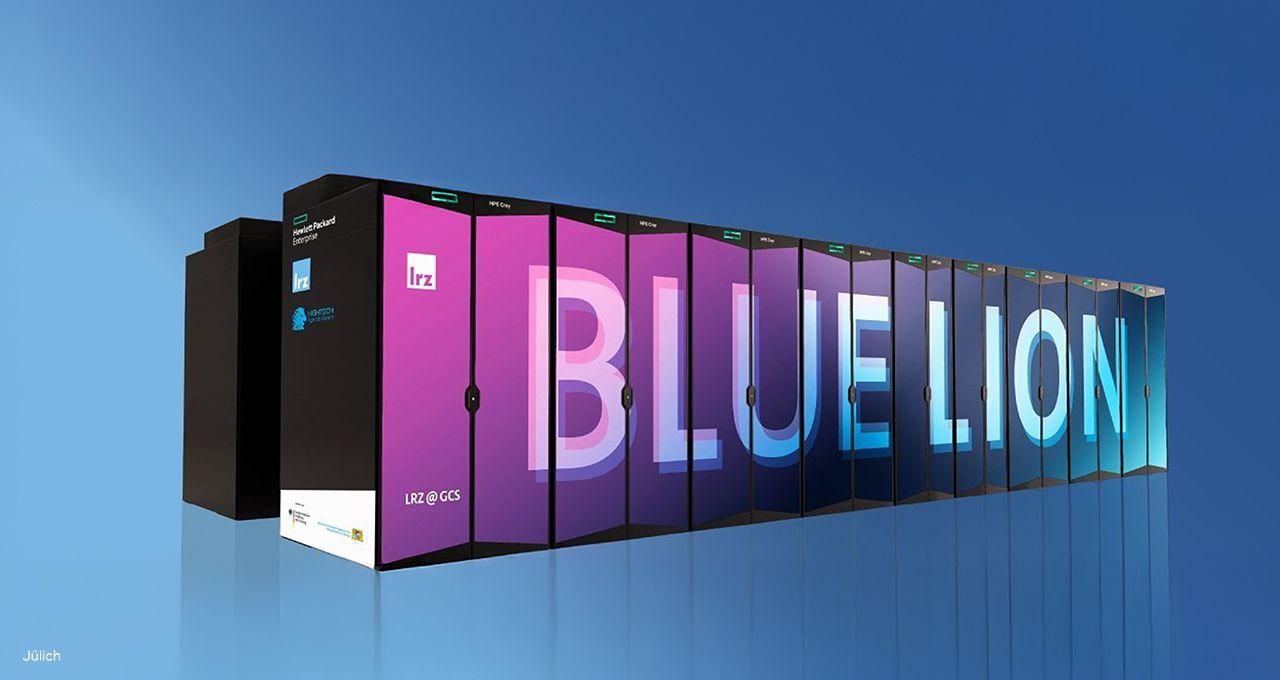
Nvidia and Hewlett Packard Enterprise (HPE) have announced a partnership with the Leibniz Supercomputing Centre (LRZ) to construct a new supercomputer named Blue Lion. This cutting-edge system will utilize Nvidia's next-generation "Vera Rubin" chips and is scheduled to be operational for scientists by early 2027
1
2
.
Source: ET
Blue Lion's Specifications and Capabilities
The Blue Lion supercomputer is designed to deliver approximately 30 times more computing power compared to LRZ's current high-performance computer, SuperMUC-NG. It will feature next-generation HPE Cray technology and Nvidia GPUs, incorporating HPE's 100% fanless direct liquid-cooling systems architecture for efficient cooling
3
.Blue Lion is tailored for researchers working on climate, turbulence, physics, and machine learning, with workflows that combine classic simulation and modern AI. The system will support job scaling across its entire infrastructure and utilize heat from its racks to warm nearby buildings
3
.Vera Rubin Architecture: A New Era in Scientific Computing
Source: NVIDIA
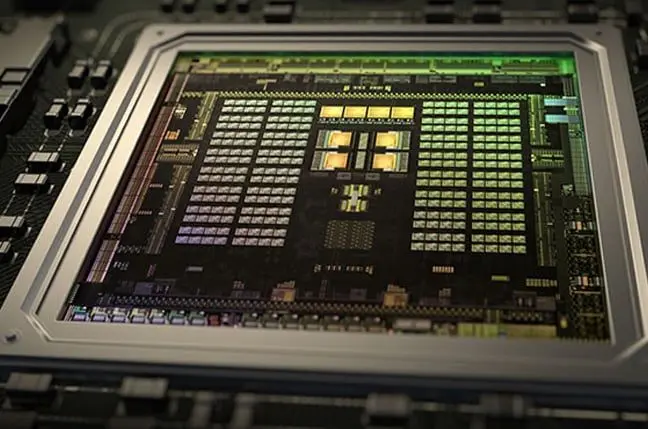
The Vera Rubin architecture, set to launch in the second half of 2026, represents a significant advancement in scientific computing. It aims to integrate simulation, data processing, and AI into a single, high-bandwidth, low-latency engine for science. This architecture combines shared memory, coherent compute, and in-network acceleration
3
.European Competitiveness in Supercomputing
The development of Blue Lion signifies a strategic move by European institutions to remain competitive with the United States in supercomputing capabilities. These advanced systems are crucial for various scientific fields, including biotechnology and climate research
1
4
.Nvidia's Expanding Role in Scientific Computing
Nvidia, known for its recent prominence in artificial intelligence, has a long-standing history of engaging scientists to utilize its chips for complex computational problems. The company is now advocating for the integration of AI in scientific research, proposing that AI systems can generate useful predictions based on limited precise calculations, significantly reducing processing time
1
5
.Related Stories

Climate in a Bottle: Nvidia's New AI Model
Alongside the Blue Lion announcement, Nvidia unveiled its "Climate in a Bottle" AI model. This innovative tool allows scientists to input initial conditions such as sea surface temperatures and generate long-term weather forecasts. Dion Harris, head of data center product marketing at Nvidia, explained that researchers can analyze thousands of scenarios in unprecedented detail, combining classic physics with AI to resolve turbulent atmospheric flows
1
5
.Global Impact and Future Prospects
The Blue Lion project is not limited to local research; it will support collaborative research initiatives across Europe. This development, along with other supercomputers like Doudna at Lawrence Berkeley National Lab and Jupiter at Forschungszentrum Julich, represents a shift in how high-performance systems are designed, used, and interconnected globally
3
4
.As science evolves into a real-time discipline, these advanced systems are poised to keep pace with the changing landscape of scientific research and data processing. The integration of AI, simulation, and data movement in these supercomputers marks a new era in scientific computing, promising faster and more efficient research outcomes across various fields
3
.References
Summarized by

Navi
Related Stories
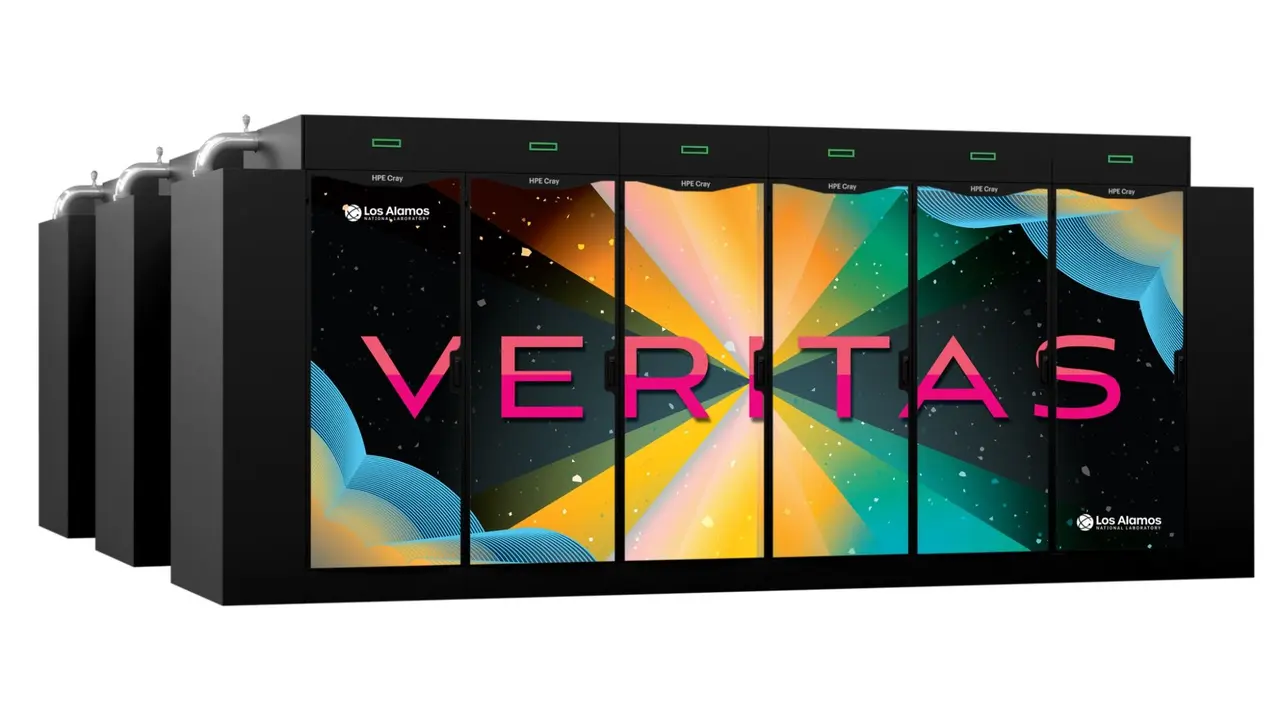
NVIDIA Vera CPU Powers New Los Alamos Supercomputers for Agentic AI and Scientific Discovery
22 Jun 2026•Technology
Europe Unveils 35 NVIDIA AI Supercomputers Across 23 Countries With 800 Exaflops of Power
22 Jun 2026•Technology

Doudna Supercomputer: Dell and Nvidia Join Forces with DOE for Next-Gen AI-Powered Scientific Discovery
30 May 2025•Technology
Recent Highlights
1
Microsoft and Nvidia Launch Surface Laptop Ultra: A $2,599 AI-Ready PC With RTX Spark Chip
Technology

2
Trump Consulted Grok AI Before Ordering Venezuela Invasion and Capture of Nicolás Maduro
Policy and Regulation

3
Scientists Build AI Model That Reconstructs Images From Brain Scans in Record Time
Science and Research

Recent Highlights
Today's Top Stories






Don’t drown in AI news. We cut through the noise - filtering, ranking and summarizing the most important AI news, breakthroughs and research daily. Follow topics that matter to you and stay ahead.


