4 Sources
[1]
Ex-Tesla Optimus scientist launches UMA to build Europe's humanoid robot
Rémi Cadene helped train the brains behind Tesla's Optimus. Now he wants to ship a humanoid from Paris, starting with Europe. A former Tesla scientist who helped build the intelligence behind Elon Musk's Optimus robot wants to do it all again from Paris, only this time for Europe. Rémi Cadene, chief executive and co-founder of the startup UMA, has unveiled plans for a lightweight, AI-powered humanoid called Northstar, Bloomberg first reported. he machine is being designed for manufacturing plants, logistics warehouses, and eventually homes. Cadene told Bloomberg that UMA is already in conversations with about 50 potential customers about how they might put it to work, and that Europe comes first before any push into the United States or Asia. That framing matters, because the continent has spent the past year trying to prove it can win the humanoid race rather than cede the field to American and Chinese rivals. Cadene is not the first Optimus alumnus to strike out alone either, following others who left Tesla to build dexterous robot hands and rival systems. Cadene's own CV is arguably the strongest thing UMA has going for it. He spent roughly three years at Tesla, from 2021 to 2024, working on the AI behind Autopilot and building the first neural networks for Optimus, before joining Hugging Face to lead LeRobot, the open-source toolkit that became core infrastructure for robot learning worldwide. He has surrounded himself with a similarly decorated founding team. It includes chief science officer Pierre Sermanet, a veteran of Google DeepMind and NYU, chief technology officer Simon Alibert, a LeRobot co-founder, and chief robot officer Robert Knight, the designer behind the widely used open-source SO-100 arm. UMA, short for Universal Mechanical Assistant, emerged from stealth in December 2025 with an investor list that reads like a who's who of the field. Backers include Greycroft, Red River West, Kima Ventures, and Factorial, while advisers include Meta's chief AI scientist and Turing Award winner Yann LeCun, alongside Hugging Face co-founder Thomas Wolf. The money behind it is harder to pin down. Before the public launch, Cadene was reported to be seeking around $40mn in seed funding, though UMA has not confirmed a final figure and the size of any closed round remains unclear. What UMA has been concrete about is the shape of the product. According to its launch materials, the plan spans a mobile industrial robot with dual arms for warehouses and assembly lines, plus a more compact humanoid intended for human-oriented spaces such as hospitals, labs, and homes. The company also says it will run several pilot programmes in logistics, manufacturing, and healthcare during 2026, positioning Northstar as a machine that can perceive, move, and manipulate objects in messy real settings rather than a stage-managed demo. The strategy leans on Europe's industrial base and its acute labour shortages, from warehouses with punishing staff turnover to healthcare systems short of millions of workers. Those gaps are exactly where humanoids for the home and the factory floor are being pitched hardest. It is a crowded and richly funded arena. European peers such as Germany's Neura Robotics and Stuttgart-based Sereact have raised heavily over the past year, while American leaders including Figure and 1X keep pushing deployment milestones and eye-watering valuations. UMA's wager is that a European team with open-source roots can move faster on the software than on the hardware, and that customers on the continent would rather buy a robot built closer to home. Whether UMA can turn a supergroup of researchers into a shipping product is the open question, and it is the same one facing every humanoid startup burning cash on the promise of physical AI. For now, Cadene has a name, a team, a target market, and a robot that still has to prove it can walk the talk.
[2]
Ex-Tesla Optimus scientist unveils European humanoid robot startup
A scientist who worked on Tesla's Optimus humanoid robot is now building a rival of his own -- in Europe, not Silicon Valley. Rémi Cadène, co-founder and CEO of Paris-based startup UMA, unveiled plans for a lightweight humanoid robot called Northstar and says the company is already talking to 50 potential customers. From Tesla's Autopilot group to Hugging Face Cadène spent roughly three years at Tesla, where he worked inside the Autopilot group on the AI systems behind both the company's driver-assistance software and Optimus, Tesla's humanoid robot. He left in early 2024 to join Hugging Face, the AI platform, where he led the development of LeRobot -- an open-source robotics library that has become core infrastructure across the field, growing from zero to more than 12,000 GitHub stars in about a year. Now he has taken that experience and planted it in European soil. UMA -- short for Universal Mechanical Assistant -- emerged from stealth in December 2025 with Cadène and three co-founders, including former Hugging Face engineer Simon Alibert and robot designer Rob Knight. The company is backed by venture firms Greycroft, Relentless, and Unity Growth, plus a roster of AI heavyweights investing as angels: Yann LeCun, Datadog CEO Olivier Pomel, and Hugging Face co-founder Thomas Wolf. The Northstar pitch: Europe first UMA's plan is to build a general-purpose, AI-powered humanoid robot for manufacturing plants, logistics warehouses, and eventually homes. Unlike most of its rivals, it is targeting Europe as the beachhead market rather than the US or China. Cadène's argument rests on demographics and industry structure. "Labor costs are very high and, given the demographic trends, there will be significant demand," he said, pointing to the continent's aging workforce and dense industrial base. UMA is aiming to start industrial pilot programs as early as this year. It's a deliberately contrarian bet. The humanoid race has been defined by American players like Tesla and Figure and by Chinese manufacturers such as Unitree that are racing down the cost curve. UMA is wagering that Europe's manufacturing depth and automation appetite -- combined with a talent pool that includes DeepMind, Tesla, Nvidia, and Hugging Face alumni -- make it fertile ground for a homegrown champion. How it stacks up against Optimus The competitive context matters, because Cadène's former employer is the loudest voice in this space -- and the one with the most to prove. Tesla is targeting a low-volume production start for its third-generation Optimus at Fremont this summer, and CEO Elon Musk has repeatedly promised the robot will become the company's most valuable product. But the reality lags the rhetoric. Musk admitted in January that no Optimus robots are doing "useful work" at Tesla in any material way, and Tesla has announced no external customers as it retools a Fremont line for Optimus production. The company furthest ahead on actual deployment isn't Tesla at all. Figure's robots have run shifts at BMW's Spartanburg plant, where the company says they helped build tens of thousands of vehicles -- the clearest example so far of a humanoid doing real, repetitive work at commercial scale. Same thing for the Hyundai/Boston Dynamics partnership. UMA, by contrast, has no shipping product yet. What it has is a credible team, a pile of investor money, and a claimed pipeline of 50 customers evaluating use cases. In a field where demos routinely outrun deployments, that pipeline -- and whether it converts into paid pilots this year -- is the number to watch. Based on the images the company has shared so far, the project appears to be far behind on the robotics front. However, the biggest bottleneck with humanoid robots appears to be software: having the robots understand and interact intelligently and autonomously with their physical environment. This appears to be where UMA has the biggest expertise. If you're watching the robotics and automation buildout, the same logic applies to your own home: rising electricity demand makes locking in low energy costs smarter than ever. With electricity rates climbing nearly 10% last year, home solar protects you against future rate increases. And with lease and PPA options, you can go solar with zero upfront cost and start saving immediately. If you want to find the best deal, check out EnergySage. It's a free service with hundreds of pre-vetted installers competing for your business, so you save 20 to 30% compared to going it alone. No sales calls until you pick an installer. Get your free quotes here.
[3]
This Former Tesla Scientist Is Developing a Rival to Elon Musk's Optimus as Humanoid Robot Race Heats Up
A new competitor has emerged for Elon Musk and Tesla Inc.'s (NASDAQ:TSLA) humanoid-robot goals after a former Optimus team member announced a new company competing in the robotics space. UMA Announces Robot The new venture, called UMA, is led by former Tesla scientist Rémi Cadène, who spent about three years at Tesla working on AI tied to both driver-assistance and Optimus, Electrek reported on Tuesday. Universal Mechanical Assistant, or UMA, based in Paris, France, says its first concept, a lightweight humanoid dubbed Northstar, is aimed initially at factories and warehouses, with a longer-term goal of home use. Cadène also said the company is already in discussions with 50 prospective customers and wants to begin industrial pilots as early as this year, the report said. However, UMA will initially target Europe for its operations, the report said. Tesla's Optimus Reaches Production Goal Musk also said that Optimus, combined with artificial intelligence, could make "excellent" healthcare accessible to everyone as robots continue developing. Figure Lands JCPenney Deal Tesla rival Figure shared in May that it had landed a deal with Catalyst Brands, an operator of several former mall staples, including JCPenney, Aeropostale and more. The deal came after the robot appeared at the White House earlier this year alongside First Lady Melania Trump at the Fostering the Future Together Initiative Global Summit. According to Benzinga Edge Rankings, Tesla offers satisfactory Momentum and Quality. It also offers a favorable price trend in the Short, Medium and Long term. Price Action: Tesla shares were down 1.47% to $398.54 during premarket trading on Wednesday. Disclaimer: This content was partially produced with the help of AI tools and was reviewed and published by a Benzinga editor. Check out more of Benzinga's Future Of Mobility coverage by following this link. Photo courtesy: Robert Way on Shutterstock.com Market News and Data brought to you by Benzinga APIs To add Benzinga News as your preferred source on Google, click here.
[4]
The Tesla Optimus's new rival is better dressed, but no, I still wouldn't feel "at ease" with it in my home
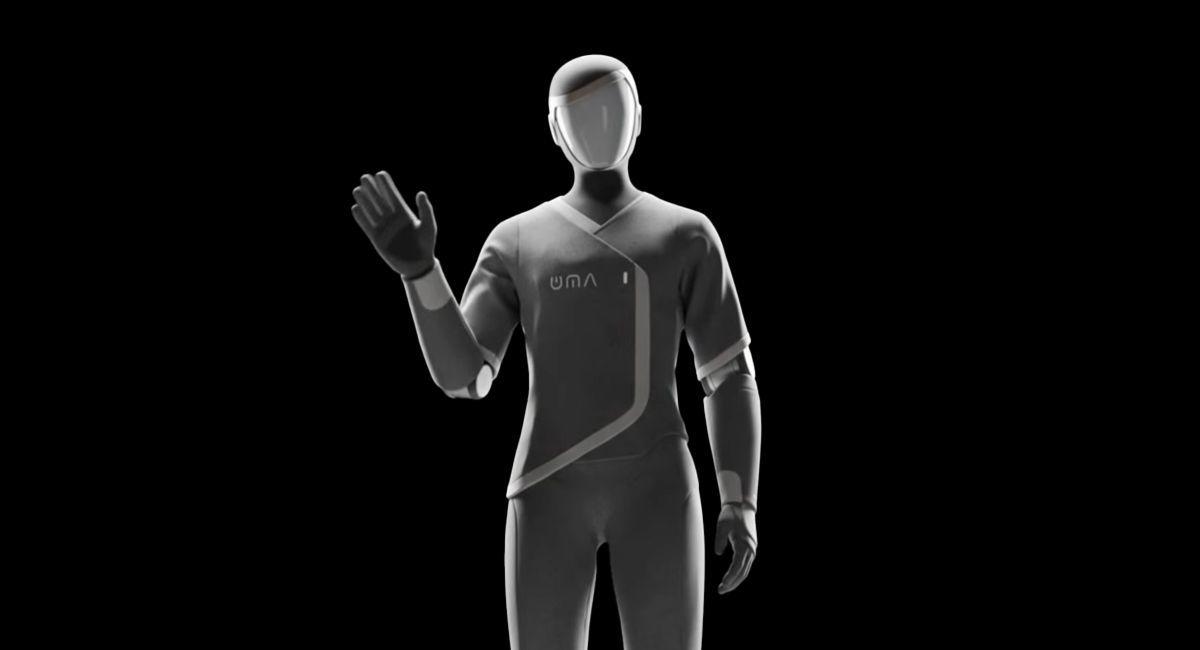
For a lot of people, the concept of AI-driven humanoid robots remains terrifying. Aside from the brief moments of hilarity when Tesla's Optimus falls over or turns out to be an actor dressed up, the prospect of robots becoming part of everyday life recalls dystopian sci-fi worlds, like those of Terminator or I, Robot. Their physical designs don't help. Like the infamously impractical Cybertruck design, Optimus's appearance seems to be modelled on a sinister Blade Runner-inspired vision of the future. But a European startup has come along that thinks it can make robots more appealing. UMA might be a late comer to the space, but it's showing that a European AI robot would at least be more sartorially elegant, because of course it would. Based in Paris, UMA was only founded last year. It's a relatively little-known name, but its leadership team is a veritable supergroup. The CEO is Rémi Cadène, who led AI on Tesla's Optimus. He's joined by Pierre Sermanet, formerly on the robotics team at Google DeepMind, Simon Alibert from the AI platform Hugging Face and the hardware designer Rob Knight. They've recently revealed a 40kg humanoid robot called Northstar, which is being billed as a safer and more palatable addition to an increasingly competitive space. UMA, which stands for Universal Mechanical Assistant, builds and owns its whole stack, from hardware to software, which it says means it can ensure safety across every level. It also says that Northstar has a key advantage in how it learns. Many industrial robots need to be specifically programmed for each new task, but Northstar will be capable of "real-time learning". It watches a human completing a task, attempts to replicate it, and gradually improves its performance through repetition, like humans themselves learn. Cadène has compared it to how children learn to tie their shoelaces by watching, practicing, and then gradually refining the skill. Demos at the company's Paris lab show robotic arms using computer vision to sort objects by colour. From Optimus to Boston Dynamics' Atlas and Figure AI's Figure 03, the expressionless black visors of many current robots serve several functions. They protect multiple cameras and sensors, and they help to avoid the uncanny valley effect that comes with artificial human visages while clearly framing the devices as functional equipment. That's supposed to make them less unnerving for the humans that work alongside them, but it also makes them look cold and somewhat sinister. UMA seems to have put some thought into this. The video above is a CG imagining, but it's interesting to see that the company is already paying a lot of attention to Northstar's outfit in an aim to soften its appearance. All the same same, I'm not quite convinced by Rémi's claims that this is a "robot you feel at ease having at your workplace and home". The motion-sensing security camera in the entrance to my building makes me feel nervous. How would I relax being shadowed by a robot that learns from me? Microsoft and Nvidia-backed Figure AI appears to be currently leading the robotics race, with its devices at the BMW plant in Spartanburg providing a real working example of a humanoid robot doing human work at commercial scale. Boston Dynamics is now working with Hyundai on a similar collaboration. As for Tesla, it claims to be targeting low-volume production of Optimus 3 this summer, but Elon Musk is notoriously flaky when it comes to forecasting product milestones. Tesla has announced no external customers. For its part, UMA has no shipping product yet, but it says it's in discussions with around 50 potential customers and plans to launch pilot programmes in manufacturing, logistics, and healthcare by the end of the year.
Share
Copy Link
Rémi Cadène, who helped build the AI behind Tesla's Optimus, has emerged from stealth with UMA, a Paris-based startup developing Northstar, a lightweight humanoid robot for European factories and homes. The company is already in talks with 50 potential customers and plans to launch industrial pilot programs in manufacturing and logistics by the end of 2026.
Rémi Cadène spent roughly three years at Tesla, from 2021 to 2024, working on the AI behind Autopilot and building the first neural networks for Tesla Optimus
1
. Now the ex-Tesla scientist is launching his own venture from Paris, aiming to prove that Europe can compete in the humanoid robot race against American and Chinese rivals. UMA, short for Universal Mechanical Assistant, emerged from stealth in December 2025 with plans for a lightweight, AI-powered humanoid robot called Northstar2
. The Paris-based startup is targeting manufacturing plants, logistics warehouses, and eventually homes, with Europe as its beachhead market rather than the United States or Asia.
Source: Creative Bloq
The Northstar robot weighs 40kg and is being designed with a distinctive capability: real-time learning through observation
4
. Unlike many industrial robots that require specific programming for each new task, Northstar watches a human completing a task, attempts to replicate it, and gradually improves its performance through repetition. Cadène has compared this approach to how children learn to tie their shoelaces by watching, practicing, and refining the skill. Demos at the company's Paris lab show robotic arms using computer vision to sort objects by color. UMA says it builds and owns its entire stack, from hardware to software, which allows for end-to-end control and safety across every level4
.Cadène has assembled a founding team with credentials spanning the biggest names in AI robotics. The team includes chief science officer Pierre Sermanet, a veteran of Google DeepMind and NYU, chief technology officer Simon Alibert, a LeRobot co-founder from Hugging Face, and chief robot officer Robert Knight, the designer behind the widely used open-source SO-100 arm
1
. Before founding UMA, Cadène joined Hugging Face in early 2024 to lead LeRobot, the open-source toolkit that became core infrastructure for robot learning worldwide, growing from zero to more than 12,000 GitHub stars in about a year2
. The investor list reads like a who's who of the field, with backers including Greycroft, Red River West, Kima Ventures, and Factorial1
. Advisers include Meta's chief AI scientist and Turing Award winner Yann LeCun, alongside Hugging Face co-founder Thomas Wolf1
. Before the public launch, Cadène was reported to be seeking around $40mn in seed funding, though UMA has not confirmed a final figure1
.Related Stories
UMA's strategy leans heavily on Europe's acute labor shortages, from warehouses with punishing staff turnover to healthcare systems short of millions of workers
1
. "Labor costs are very high and, given the demographic trends, there will be significant demand," Cadène said, pointing to the continent's aging workforce and dense industrial base2
. The company says it is already in conversations with about 50 potential customers about how they might put Northstar to work3
. UMA plans to run several industrial pilot programs in logistics, manufacturing, and healthcare during 2026, positioning Northstar as a machine that can perceive, move, and manipulate objects in messy real settings rather than stage-managed demos1
.
Source: Electrek
The humanoid robot race has become intensely competitive, with multiple players pushing toward commercial deployment. Figure AI appears furthest ahead on actual deployment, with its robots running shifts at BMW's Spartanburg plant, where the company says they helped build tens of thousands of vehicles
2
. Boston Dynamics is now working with Hyundai on a similar collaboration4
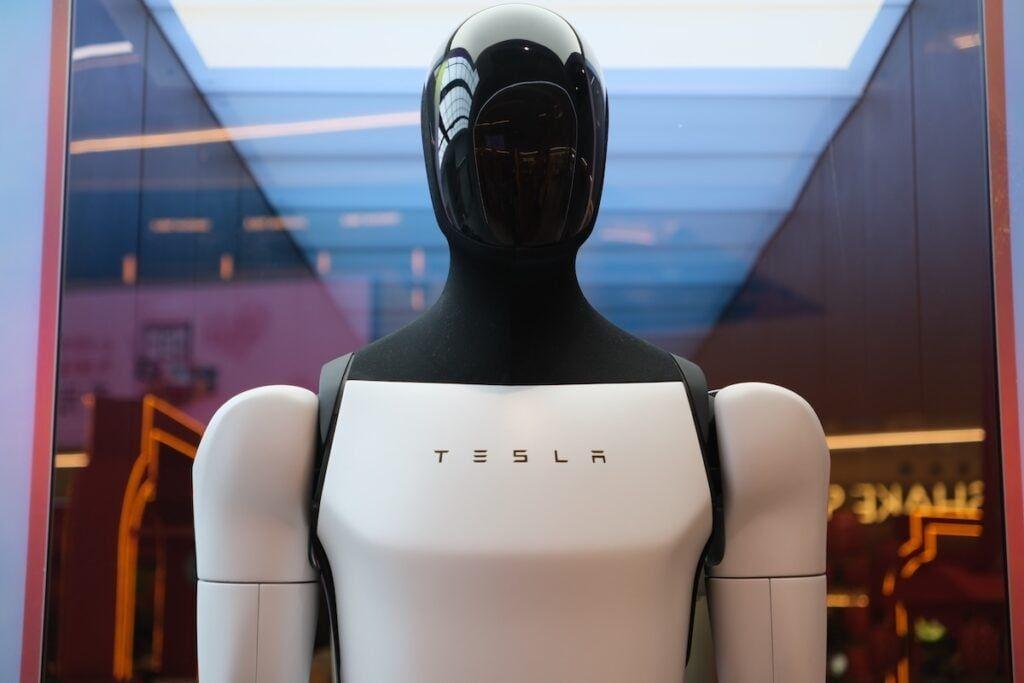
. Tesla is targeting low-volume production of its third-generation Optimus at Fremont this summer, though CEO Elon Musk admitted in January that no Optimus robots are doing "useful work" at Tesla in any material way, and the company has announced no external customers2
. European peers such as Germany's Neura Robotics and Stuttgart-based Sereact have raised heavily over the past year1
. UMA's wager is that a European team with open-source roots can move faster on the software than on the hardware, and that customers on the continent would rather buy a robot built closer to home1
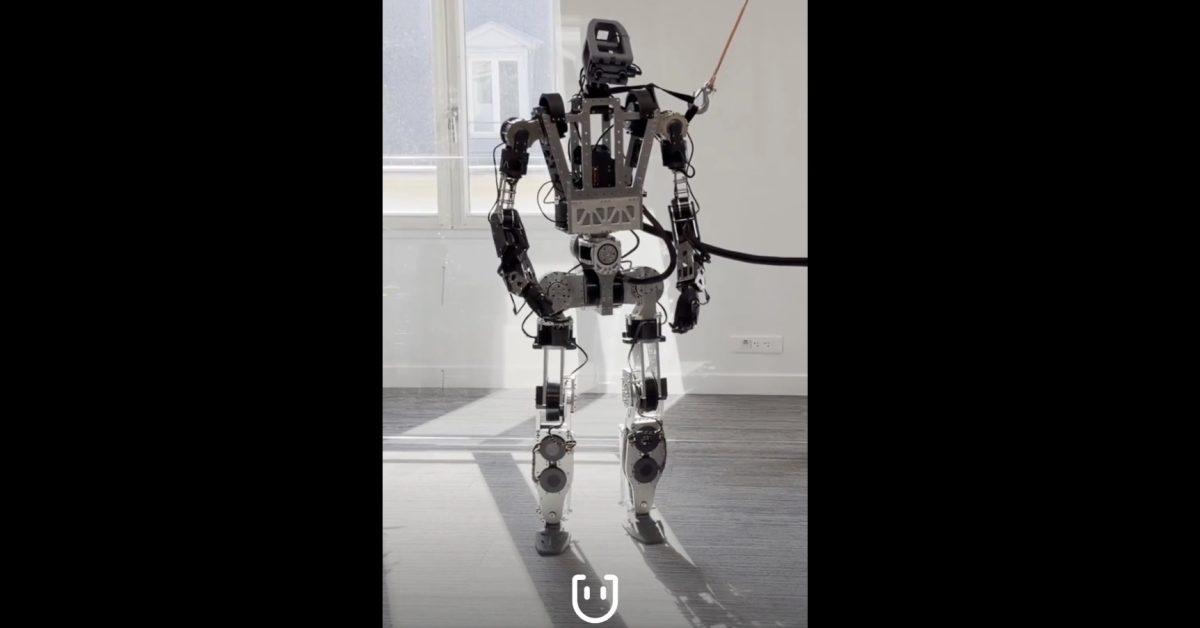
. Based on images shared so far, the project appears far behind on the robotics front, but the biggest bottleneck with humanoid robots appears to be software: having the robots understand and interact intelligently and autonomously with their physical environment2
.
Source: Benzinga
Summarized by
Navi
[3]
1
Policy and Regulation

2
Technology

3
Technology