Explainable AI in Medical Diagnostics: Non-Experts Trust AI Blindly While Clinicians Spot Errors


2 Sources
[1]
Divergent impacts of explainable AI for dermatological diagnosis on clinicians versus lay people - Nature Medicine
In the present study, we designed two large-scale experiments to systematically investigate how different XAI methods and human-AI decision paradigms impact diagnostic performance across expertise levels: the general public (n = 623) and PCPs (n = 153). We chose clinical-image-based skin condition
[2]
The benefits of medical AI assistance vary based on user expertise
A new MIT study found that non-experts tended to trust AI-generated diagnostic advice -- even when it was incorrect -- while clinicians were more likely to recognize the AI's mistakes. A one-size-fits-all approach likely isn't the best strategy when designing artificial intelligence systems that
Share
Copy Link
A groundbreaking MIT study published in Nature Medicine reveals that explainable AI assistance in dermatological diagnosis helps non-experts but triggers dangerous overreliance, while primary care physicians perform better with minimal AI explanations. The research tested 623 general public participants and 153 physicians using different AI explanation methods.
Explainable AI Shows Opposite Effects Across User Expertise Levels
A comprehensive study published in Nature Medicine
1
reveals that explainable AI assistance produces starkly different outcomes in medical diagnostics depending on user expertise. Researchers from MIT, Stanford, and Columbia tested 623 non-experts and 153 primary care physicians on dermatological diagnosis tasks, uncovering critical insights about AI deference and automation bias in healthcare settings2
.The research employed fairness-constrained deep learning models that achieved a weighted AUROC of 0.930 for melanoma vs. nevus classification, with substantially reduced skin tone disparities compared to baseline models. For non-experts, AI assistance improved diagnostic accuracy from 69.7% to 75.8% in melanoma detection tasks
1
. However, this improvement came with a concerning caveat: non-experts demonstrated significant AI deference, trusting multimodal LLM textual explanations even when incorrect.Non-Experts Fall Victim to AI Deference and Vague Explanations
The study revealed that general public participants found LLM-based explanations more convincing when they were vague or generic, regardless of accuracy. This pattern of automation bias represents a significant challenge for patient-facing diagnostic tools that increasingly rely on explainable AI methods
2
. "Good AI systems can improve performance in some health settings, but this has to be balanced carefully with algorithmic deference that can lead to more error," explains Marzyeh Ghassemi, MIT associate professor and principal investigator at the Abdul Latif Jameel Clinic for Machine Learning in Health.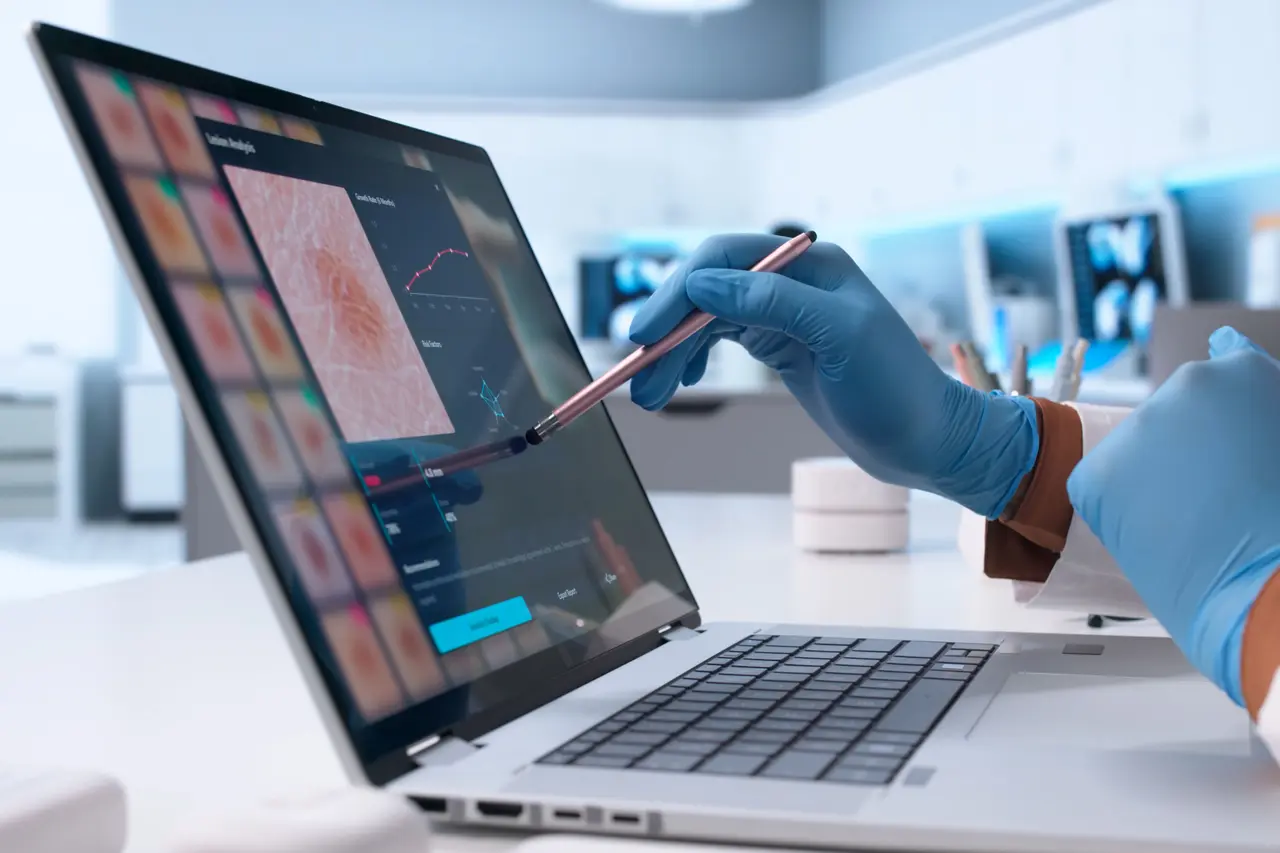
Source: MIT
The research tested four distinct AI assistance methods: basic prediction with confidence levels, GradCAM heatmaps highlighting important image regions, content-based image retrieval showing similar cases, and multimodal LLM providing textual explanations. Non-experts benefited from AI assistance across methods but struggled to recognize diagnostic errors when AI predictions were incorrect
1
.Primary Care Physicians Perform Best With Minimal AI Explanations
In contrast to non-experts, primary care physicians demonstrated markedly different responses to explainable AI assistance in dermatological diagnosis. Clinicians were not misled by incorrect AI suggestions and performed optimally when given only the model's prediction without accompanying explanations. This finding challenges conventional assumptions about explainable AI benefits in clinical AI implementation
2
.The study employed a randomized between-subjects factorial design testing two human-AI decision-making paradigms: Human-First (users decide before reviewing AI) and AI-First (users review AI suggestions before deciding). Physicians evaluated 12 clinical images balanced by skin tone and pathology, focusing on four conditions with potential skin tone disparities: atopic dermatitis, pityriasis rosea, Lyme disease, and cutaneous T cell lymphoma
1
.Related Stories

Implications for Medical AI Design and Healthcare Equity
"These findings are important as patients increasingly turn to AI to help with their health care. Our findings show that those with the least medical knowledge are most likely to be led astray when explainable AI models give an erroneous output," notes Roxana Daneshjou, Stanford assistant professor of biomedical data science and dermatology
2
.The research underscores critical considerations for FDA-approved AI interfaces used in dermatological diagnosis and other medical applications. Lead author Orson Xu emphasizes: "Often the people who could benefit most from AI are the ones most likely to be led astray by it, so how we present a recommendation matters as much as whether it's correct." These results highlight the urgent need to develop explainability methods that encourage critical thinking rather than blind acceptance, particularly as AI-powered diagnostic tools become more prevalent in both clinical and consumer health settings
2
.References
Summarized by

Navi
Related Stories
AI Shows Promise in Clinical Decision-Making, But Challenges Remain
23 Jul 2024

AI Diagnosis Outperforms Emergency Room Doctors in Harvard Study, Raises Questions on Patient Care
30 Apr 2026•Science and Research

AI in Healthcare: Patients Trust AI Medical Advice Over Doctors, Raising Concerns and Challenges
18 Aug 2025•Health

Recent Highlights
1
Microsoft and Nvidia Launch Surface Laptop Ultra: A $2,599 AI-Ready PC With RTX Spark Chip
Technology

2
OpenAI Releases 722 AI-Generated Math Papers on GitHub, Igniting Fury Among Mathematicians
Science and Research

3
Trump Consulted Grok AI Before Ordering Venezuela Invasion and Capture of Nicolás Maduro
Policy and Regulation

Recent Highlights
Today's Top Stories










Don’t drown in AI news. We cut through the noise - filtering, ranking and summarizing the most important AI news, breakthroughs and research daily. Follow topics that matter to you and stay ahead.


