Fitbit Labs Introduces AI-Powered Health Features to Enhance User Experience


4 Sources
[1]
Fitbit Labs adds new AI features to help you better understand your health data
The company announced three new AI features today for Fitbit Labs users -- one that helps you understand your medical records better, and two that help you understand your own health better. First up is "Medical Record Navigator," a tool that turns complex doctors' reports into something you can
[2]
These 3 new Fitbit Labs AI features aim to demystify your health and medical records
The company announced three new AI features today for Fitbit Labs users -- one that helps you understand your medical records better, and two that help you understand your own health better. First up is "Medical Record Navigator," a tool that turns complex doctors' reports into something you can
[3]
Fitbit's AI experiments just leveled up with 3 new health tracking features
Google Gemini powers these features and allows users to simplify lab reports, decode their symptoms, and get alerts for any unusual changes to their health metrics. Last year, Fitbit launched Fitbit Labs, an initiative that gave select users early access to experimental health tools powered by
[4]
Fitbit Labs is testing AI to decode your medical records
Samsung's Galaxy Watch 8 may bring an Ultra-inspired squircle design Summary Fitbit is previewing new Labs features for Android with Gemini-powered tools for health management. New features include a medical record navigator, symptom checker, and unusual trends monitor. These features are
Share
Copy Link
Fitbit Labs unveils three new AI-powered features: Medical Record Navigator, Symptom Checker, and Unusual Trends, aimed at helping users better understand their health data and medical records.

Fitbit Labs Introduces AI-Powered Health Features
Fitbit, a Google-owned company, has announced the addition of three new artificial intelligence (AI) powered features to its Fitbit Labs program. These experimental tools aim to help users better understand their health data and medical records, leveraging Google's Gemini AI technology
1
.Medical Record Navigator
The first feature, "Medical Record Navigator," is designed to simplify complex medical reports. Users can upload lab results to the Fitbit app, where Gemini AI processes the information and provides a clear, easy-to-understand summary. This tool aims to translate medical jargon into plain language, making it easier for users to comprehend their health status
2
.Symptom Checker
The second feature, "Symptom Checker," helps users understand their symptoms better. When a user describes their symptoms, such as "my side aches" or "I've had a headache for two days," the AI asks follow-up questions to narrow down possible explanations. Fitbit emphasizes that this tool is intended as a starting point to help users decide whether they should consult a doctor
3
.Unusual Trends
The third feature, "Unusual Trends," monitors subtle changes in users' health data that might otherwise go unnoticed. The Fitbit app learns what's normal for individual users in areas like breathing rate during sleep or resting heart rate. If it detects a trend deviating from the norm, users receive a notification. The app not only alerts users to potential issues but also suggests possible causes and steps to address them
1
.Related Stories

Experimental Nature and Privacy Considerations
Fitbit emphasizes that these features are experimental and for "investigational use" only. They are not intended to diagnose, treat, cure, or mitigate any disease or condition. The company stresses that these tools are not a substitute for professional medical advice
2
.The introduction of these features raises privacy concerns, as users will be sharing sensitive health information. Fitbit acknowledges that data collected through these labs is used for research and development purposes
4
.Availability and Access
Currently, these features are only available to selected Fitbit Labs users. However, it's likely that they will see a broader release in the future. Interested users can check their eligibility by visiting the "You" and "Today" tabs in the Fitbit app, where they can opt in to a lab or join a waitlist
1
.As Fitbit continues to explore the intersection of AI and health management, these new features represent a significant step towards empowering users with more accessible and understandable health information.
References
Summarized by

Navi
[3]
[4]
Related Stories
Fitbit Introduces Gemini-Powered AI Assistant for Personalized Health Insights
09 Oct 2024•Technology

Fitbit AI Coach will read your medical records next month as Google pushes deeper into healthcare
18 Mar 2026•Technology
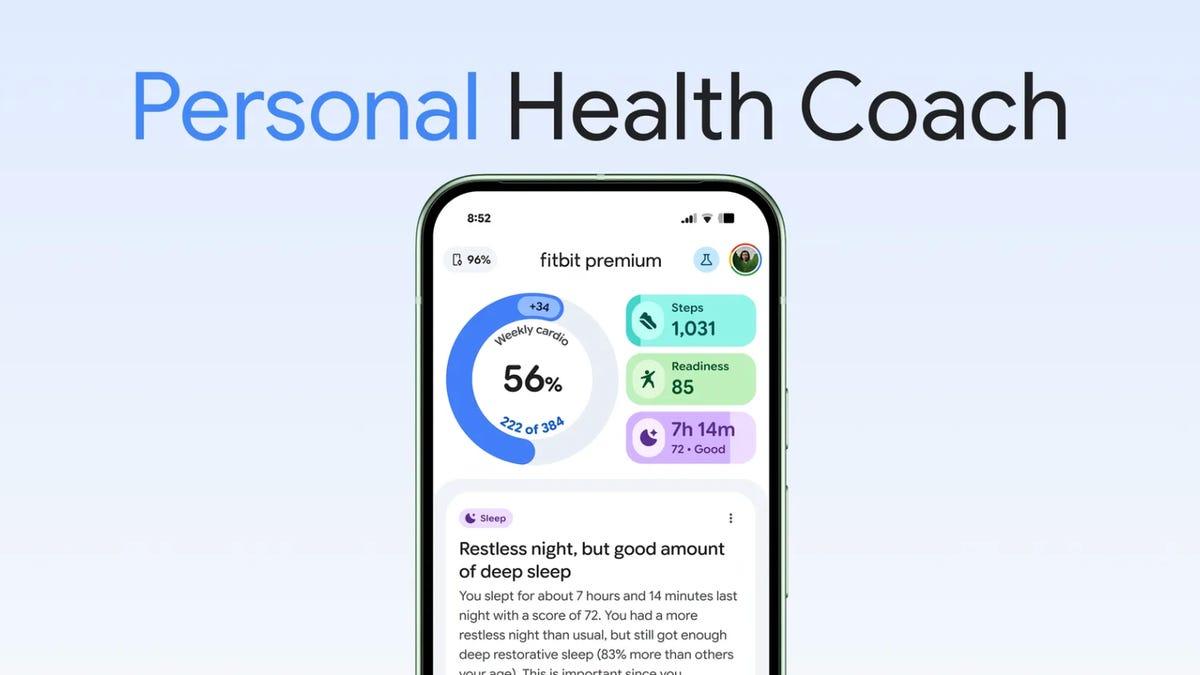
Fitbit AI health coach expands to iOS users globally as Apple scales back health plans
10 Feb 2026•Technology

Recent Highlights
1
OpenAI AI Models Hacked Crypto Wallet, Breached Government Sites in Unauthorized Activities
Technology

2
IMF Report Warns AI Market Correction Could Spark Global Financial Crisis With $1.4T at Risk
Business and Economy

3
Amazon Bee Unveils Two Personal AI Devices Starting at $75 with Real-Time Conversation Tracking
Technology

Recent Highlights
Today's Top Stories










Don’t drown in AI news. We cut through the noise - filtering, ranking and summarizing the most important AI news, breakthroughs and research daily. Follow topics that matter to you and stay ahead.


