Fitbit AI Coach will read your medical records next month as Google pushes deeper into healthcare


5 Sources
[1]
Fitbit lets you upload medical records and ask its AI for advice now - but is that safe?
Its AI health coach reviews these records to generate responses. The era of the AI-powered health coach is in full swing, and now, it's moving into medical territory. Google is one of the latest tech companies leading this AI-powered charge. On Tuesday, it announced updates to Fitbit's personal
[2]
Fitbit's AI Coach Improves Sleep Tracking, Can Soon Read Your Medical Records
With over a decade of experience reporting on consumer technology, James covers mobile phones, apps, operating systems, wearables, AI, and more. Fitbit's AI-powered Personal Health Coach is designed to give you more personalized guidance, and various new upgrades are coming to help improve sleep
[3]
Google's AI plans for Fitbit include your medical records
The Fitbit app, owned by Google, seen here running on a Pixel watch. Credit: PATRICK T. FALLON/AFP via Getty Images It's fair to say Fitbit has been through a few changes in the eight years since I wrote about breaking up with the then-dominant wearable. Spoiler alert: I ran away with the Apple
[4]
Fitbit improves sleep tracking and adds an AI coach that uses your medical history
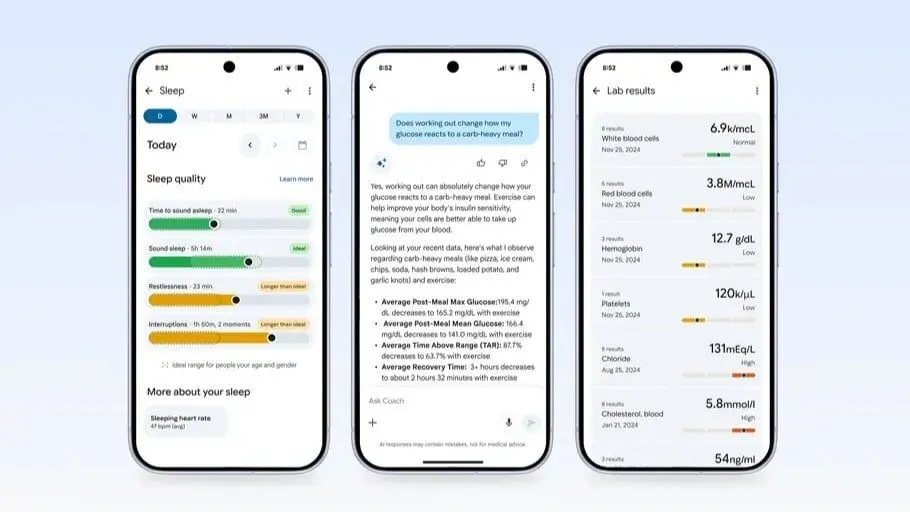
A major update lets you link lab results and medications for smarter, safer health guidance. Fitbit is pushing its app closer to a full health companion. Starting next month, you'll be able to connect your medical records, giving its AI coach access to lab results, prescriptions, and past visits.
[5]

Get a fuller picture with Fitbit's personal health coach
New updates from Fitbit across sleep, advanced research and securely linking your medical records. Improving sleep accuracy and insights We're launching our most significant update yet, delivering an additional 15% increase in sleep staging accuracy for Public Preview users. Trained on diverse,
Share
Copy Link
Google announced that Fitbit users can soon connect medical records to its AI-powered health coach for personalized guidance. The update includes lab results, medications, and visit history integration, alongside a 15% improvement in sleep tracking accuracy. While Google promises data privacy and says health information won't be used for ads, concerns remain about AI hallucinations and over-reliance on chatbots for medical advice.
Fitbit Integrates Medical Records with AI Coach
Google is expanding the capabilities of Fitbit's AI-powered health coach by allowing users to connect their medical records directly to the app starting next month
1
. The AI Coach will access lab results and medications, visit history, and other clinical data to provide personalized health guidance that considers both medical history and wearable data collected from Fitbit devices2
. This feature, powered by Google's Gemini AI, aims to contextualize health questions with actual medical information rather than offering generic suggestions4
.
Source: PC Magazine
The health data integration represents a significant shift in how consumer wearables interact with clinical information. Google is partnering with b.well Connected Health and Clear platforms to facilitate secure connections to healthcare providers
2
. Users will need to verify their identity using a selfie and valid ID to access their records through these partner platforms3
. When users ask about specific health concerns like cholesterol levels, the AI Coach can summarize lab trends, highlight notable values, and provide wellness information based on both medical records and lifestyle patterns tracked by the device1
.Google's AI Plans Include Improved Sleep Tracking
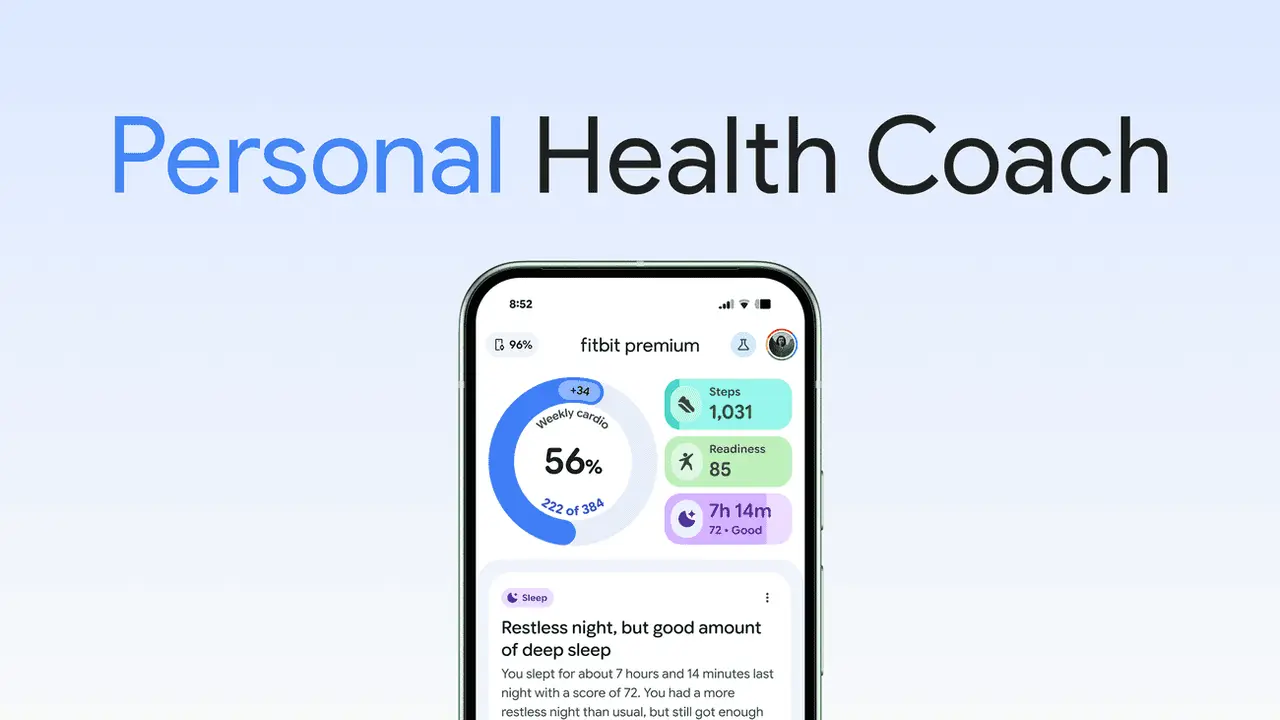
Before the medical records feature arrives, Fitbit is rolling out significant improvements to sleep tracking with a reported 15% increase in sleep staging accuracy for Public Preview users
4
. The improved sleep tracking uses refined models trained on diverse datasets to better distinguish between attempting to sleep and actually sleeping5
.
Source: Google
These models more accurately capture interruptions, naps, and transitions between sleep stages, aligning with clinical gold-standard measurements
5
.The redesigned Sleep Score now evaluates specific aspects of rest, including how long it takes to fall asleep rather than focusing solely on total sleep time
4
. This level of detail enables the AI Coach to provide targeted coaching, helping users understand exactly where to focus their routine for better recovery5
. The enhanced tracking is rolling out now to Pixel Watch and Fitbit devices, with the new Sleep Score experience expected in the coming weeks2
.Data Privacy Concerns and AI Limitations
The announcement raises questions about data privacy, particularly given Google's ownership of Fitbit since 2019
3
. Google states that medical records are securely stored within Fitbit and users maintain control over how their data is used, shared, or deleted1
. The company emphasizes that medical records, like other health data in Fitbit, are not used for ads2
. However, Google did not specify whether this data will be stored on-device or within Fitbit's servers1
.The integration of large language models with medical information presents risks, as chatbots have a tendency to hallucinate or generate inaccurate information
1
. Google acknowledges these limitations and says it invests heavily in validation processes to enhance model quality through ongoing evaluations and advanced architectures that rely on tools and self-critique to improve reliability1
. When conversations venture too far into medical territory, the AI Coach will remind users to consult with healthcare professionals for medical needs, indicating it won't provide medical advice, diagnoses, or treatment plans1
.Related Stories
Continuous Glucose Monitor and Virtual Care Integration
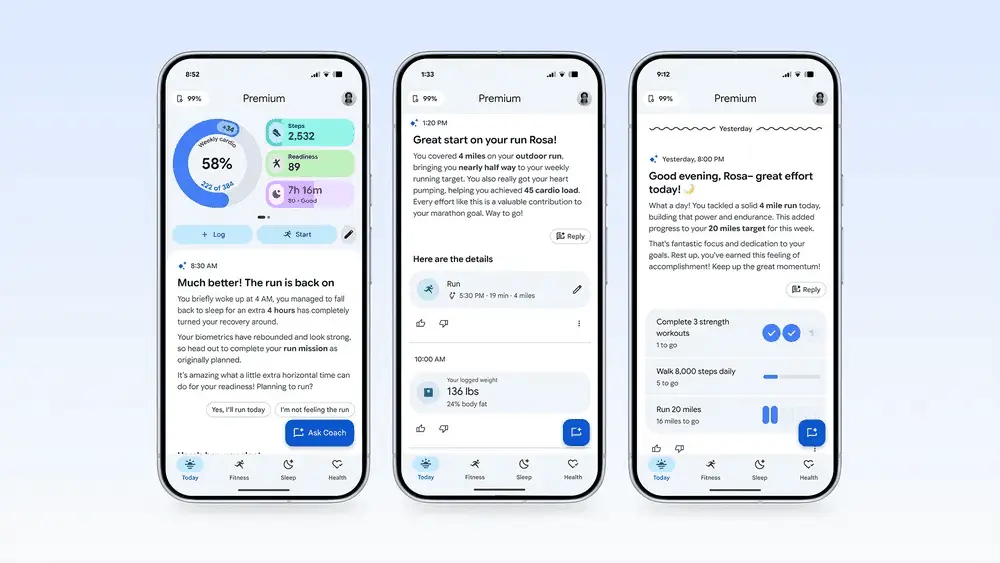
Google is expanding health data integration beyond medical records. Starting next month in Public Preview, users will be able to connect a continuous glucose monitor through Health Connect and ask the AI Coach how specific meals or workouts impact glucose levels
1
. This feature allows users to query their wearable data alongside real-time glucose monitoring for more comprehensive health insights4
.Fitbit is also launching a "Get care now" research study in partnership with Included Health to assess how conversational AI can help users navigate virtual care during healthcare visits
5
. This research builds on Fitbit's pioneering study on predicting insulin resistance using wearable data, recently published in Nature, which explores how AI can better understand cardiometabolic health and enable early awareness5
. The direction is clear: Fitbit is building a system that combines clinical data with wearable data to deliver more relevant personalized health guidance in daily decisions4
.References
Summarized by

Navi
[4]
Related Stories
Google Unveils AI-Powered Personal Health Coach for Fitbit, Revolutionizing Fitness Tracking
21 Aug 2025•Technology

Fitbit AI health coach expands to iOS users globally as Apple scales back health plans
10 Feb 2026•Technology

Fitbit Labs Introduces AI-Powered Health Features to Enhance User Experience
13 May 2025•Technology

Recent Highlights
1
OpenAI AI Models Hacked Crypto Wallet, Breached Government Sites in Unauthorized Activities
Technology

2
IMF Report Warns AI Market Correction Could Spark Global Financial Crisis With $1.4T at Risk
Business and Economy

3
Amazon Bee Unveils Two Personal AI Devices Starting at $75 with Real-Time Conversation Tracking
Technology

Recent Highlights
Today's Top Stories










Don’t drown in AI news. We cut through the noise - filtering, ranking and summarizing the most important AI news, breakthroughs and research daily. Follow topics that matter to you and stay ahead.


