2 Sources
[1]
Flying Wedge Defence unveils FWD Supreme Lite touted as India's first AI-fighter jet
Defence startup Flying Wedge Defence & Aerospace has unveiled its FWD Supreme Lite flight demonstrator as it moves its AI-piloted fighter programme from digital design towards physical testing. The 250-kg-class aircraft is undergoing ground tests and is targeting a first flight in Q3 2026. FWDA says the Supreme family is built around its Mobbing Doctrine and includes RATO as a capability under exploration. Indian defence startup Flying Wedge Defence & Aerospace (FWDA) has unveiled FWD Supreme Lite, its flight technology demonstrator for an AI-piloted fighter aircraft programme, marking a transition from digital engineering and concept development to a physical aircraft. The company released a video preview of the approximately 250-kg-class demonstrator, which is now progressing through airframe development, system integration and ground testing. FWDA is targeting the first flight of Supreme Lite in the third quarter of 2026. Also Read: Why Taiwan and the South China Sea are two sides of the same strategic coin FWD Supreme Lite to validate fighter technologiesSupreme Lite is intended to serve as the first flying testbed for the wider FWD Supreme aircraft family. FWDA plans to use the demonstrator to progressively validate its aerodynamic configuration, flight architecture and key technologies before incorporating them into larger variants. The development follows FWDA's announcement several weeks ago of its Mobbing Doctrine, a proposed approach to changing the economics of air combat. The doctrine challenges the traditional model of relying on relatively small numbers of increasingly expensive combat aircraft. Instead, it proposes deploying larger numbers of AI-piloted fighter aircraft to create numerical, tactical and economic asymmetry. FWDA aims to combine fighter-like performance, AI-enabled autonomy and combat mass, with the potential to alter the cost equation of generating air power and impose costs on an adversary. The Supreme family is the aircraft platform through which FWDA plans to develop and demonstrate this concept. 'The future will be defined by who will own the algorithms'Suhas Tejaskanda, founder and CEO of FWDA, said in a press release that Supreme Lite would allow the company to begin testing its approach through a physical aircraft rather than keeping the programme within a digital environment. "The battlefield is moving towards greater autonomy, distributed operations and combat mass; the future will be defined by who will own the algorithms. The Mobbing Doctrine is built around the idea that AI can change that equation by enabling a larger number of capable fighter-class aircraft to operate as a coordinated force. Supreme Lite is our first opportunity to take that thinking out of the digital environment and begin validating it through a real flying aircraft." Tejaskanda said India should participate in developing the next generation of AI-piloted fighter aircraft rather than simply observing developments elsewhere. "Our vision is clear that as a new generation of AI-piloted fighter aircraft begins to emerge in the skies around the world, India should not merely watch that future being developed elsewhere. We should be a part of building it", he added. FWDA positions Supreme in global autonomous aircraft raceThe development comes as several countries and companies advance autonomous combat aircraft programmes. In the United States, Shield AI's X-BAT is progressing towards its first VTOL flight, while Anduril's YFQ-44A Fury is advancing under the US Air Force's Collaborative Combat Aircraft effort. In Germany, Helsing's CA 1 Europa is being developed as an advanced, multi-role autonomous uncrewed combat aerial vehicle (UCAV). Designed and manufactured in India, FWD Supreme is positioned by FWDA as an indigenous entrant into the emerging AI-piloted fighter race. The company says its architecture is based on its Mobbing Doctrine rather than simply replicating an existing foreign CCA concept. Rocket Assisted Take-Off capabilityThe Supreme family is also being developed with Rocket Assisted Take-Off (RATO) as a capability under exploration. According to FWDA, the capability could potentially allow operations from shorter or austere launch locations and reduce dependence on conventional full-length fighter runways. The company said these capabilities will be developed and validated progressively as the programme matures. Also Read: First flight planned for Q3 2026With Supreme Lite now undergoing ground testing, FWDA's next major milestone is its planned first flight in Q3 2026. The programme follows the company's August 22, 2025 announcement on the readiness of the Kaal Bhairava E2A2 programme, which it described as India's first AI-powered Medium Altitude Long Endurance (MALE) Autonomous Combat Aircraft. Designed and developed entirely in India, the platform is engineered for up to 30 hours of endurance and a range of 3,000 km. FWDA said it is designed to provide AI-driven autonomy for precision strikes, swarm operations and real-time Intelligence, Surveillance, and Reconnaissance (ISR) missions.
[2]
Flying Wedge Defence Unveils First Footage of FWD Supreme Lite AI Fighter
Flying Wedge Defence & Aerospace releases the first video preview of FWD Supreme Lite, the flight demonstrator that moves Supreme from concept to metal. The approximately 250-kg flight demonstrator is progressing through airframe development, system integration and ground testing, with first flight targeted for Q3 2026 20th August 2026: Flying Wedge Defence & Aerospace (FWDA) today released a video preview of FWD Supreme Lite, its flight technology demonstrator for the company's AI-piloted fighter aircraft programme, marking a significant transition from digital engineering and concept development to a physical aircraft progressing through airframe development, system integration and ground testing. Positioned as the first flying testbed for the wider FWD Supreme family, the approximately 250-kg-class demonstrator is intended to progressively validate the programme's aerodynamic configuration, flight architecture, and key technologies before they are carried over to larger variants. Advancing towards the planned first flight in Q3 2026, the development comes weeks after FWDA announced its Mobbing Doctrine, a proposed new approach to the economics of air combat. Challenging the traditional equation of air power, i.e., relying only on small numbers of increasingly expensive combat aircraft, the doctrine proposes deploying larger numbers of AI-piloted fighter aircraft, creating numerical, tactical and economic asymmetry. The ambition is to combine fighter-like performance, AI-enabled autonomy, and combat mass, potentially changing the cost equation of generating air power and imposing costs on an adversary. Supreme is the aircraft family through which FWDA intends to develop and demonstrate this concept. While speaking about the vision, Suhas Tejaskanda, Founder and CEO, FWDA, said, "The battlefield is moving towards greater autonomy, distributed operations and combat mass; the future will be defined by who will own the algorithms. The Mobbing Doctrine is built around the idea that AI can change that equation by enabling a larger number of capable fighter-class aircraft to operate as a coordinated force. Supreme Lite is our first opportunity to take that thinking out of the digital environment and begin validating it through a real flying aircraft." "Our vision is clear that as a new generation of AI-piloted fighter aircraft begins to emerge in the skies around the world, India should not merely watch that future being developed elsewhere. We should be a part of building it", he further added. The development comes as the global race to build autonomous combat aircraft accelerates. In the United States, Shield AI's X-BAT is progressing towards its first VTOL flight, while Anduril's YFQ-44A Fury is advancing within the U.S. Air Force's Collaborative Combat Aircraft effort. In Germany, Helsing's CA 1 Europa is developing as an advanced, multi-role autonomous uncrewed combat aerial vehicle (UCAV). Designed and manufactured in India, FWD Supreme is an indigenous entry into the emerging AI-piloted fighter race, with an architecture built around its own Mobbing Doctrine rather than simply replicating an existing foreign CCA concept. The Supreme family is also being developed with Rocket Assisted Take-Off (RATO) as a capability under exploration, potentially enabling operations from shorter or austere launch locations and reducing dependence on conventional full-length fighter runways. These capabilities will be progressively developed and validated as the programme matures. With Supreme Lite now moving through ground testing, the programme's next defining milestone is no longer a concept reveal or digital simulation. For the company, the next answer is expected in the sky, with the first flight of FWD Supreme Lite in Q3 2026.
Share
Copy Link
Indian defense startup Flying Wedge Defence & Aerospace has unveiled FWD Supreme Lite, a 250-kg flight demonstrator for its AI-piloted fighter aircraft program. The aircraft is undergoing ground testing with a planned first flight in Q3 2026, marking India's entry into the global race for autonomous combat aircraft alongside US and European competitors.
Flying Wedge Defence & Aerospace (FWDA) has released the first video preview of FWD Supreme Lite, marking a significant transition from digital engineering to physical aircraft development in its AI-piloted fighter aircraft program.
1
The approximately 250-kg-class flight demonstrator is progressing through airframe development, system integration, and ground testing, with the Indian defense startup targeting a first flight in Q3 2026.2
This development positions India as an indigenous entrant into the emerging global race for autonomous combat aircraft, challenging established programs in the United States and Europe.
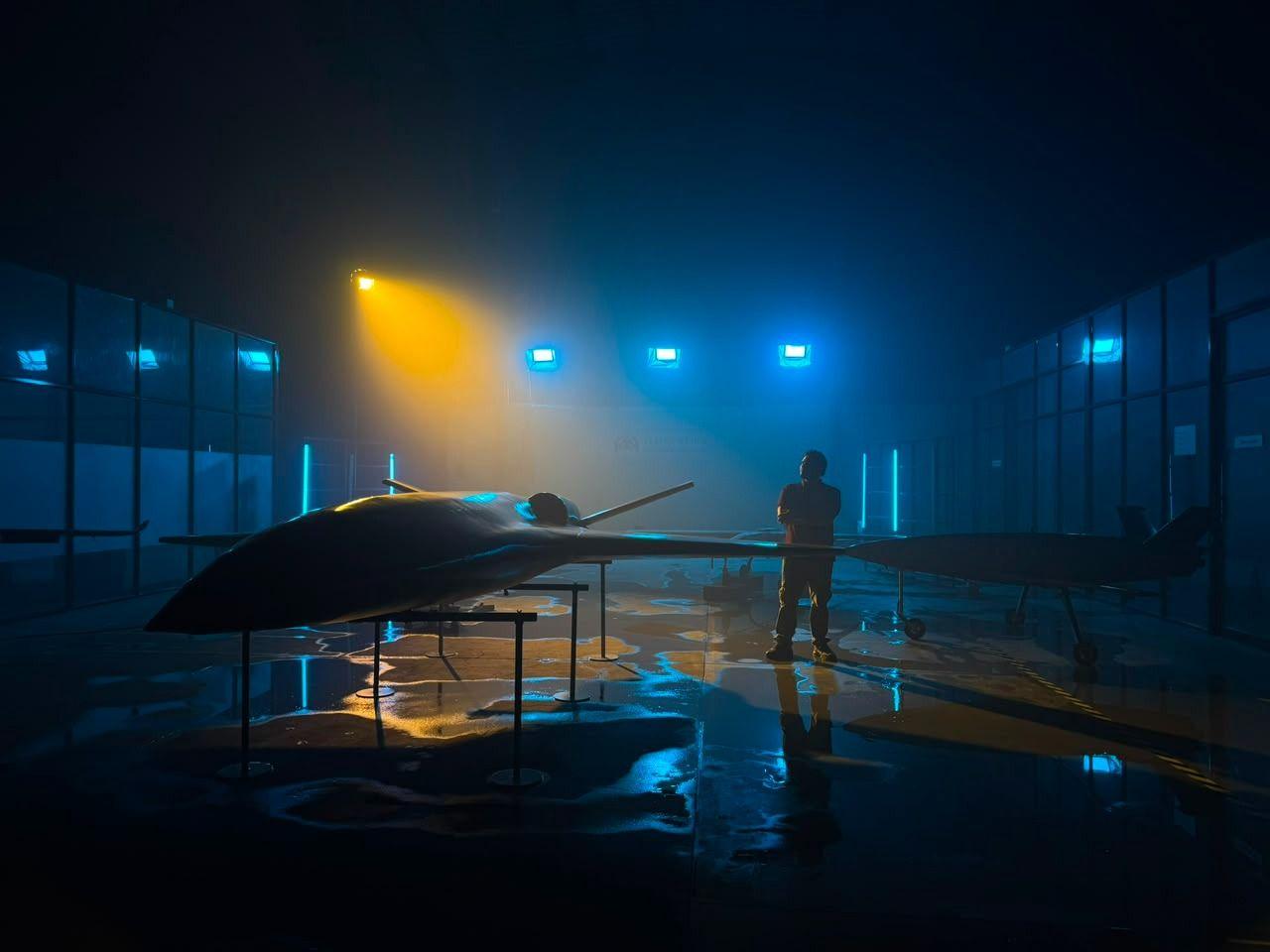
Source: CXOToday
FWD Supreme Lite serves as the first flying testbed for the wider FWD Supreme aircraft family, designed to progressively validate aerodynamic configurations, flight architecture, and key technologies before incorporation into larger variants.
1
The demonstrator represents a critical step in moving the AI-piloted fighter jet program from digital simulations to real-world testing. Suhas Tejaskanda, Founder and CEO of FWDA, emphasized the strategic importance of this transition: "The battlefield is moving towards greater autonomy, distributed operations and combat mass; the future will be defined by who will own the algorithms."2
He added that Supreme Lite represents "our first opportunity to take that thinking out of the digital environment and begin validating it through a real flying aircraft."The FWD Supreme Lite development follows FWDA's announcement of its Mobbing Doctrine, a proposed approach to fundamentally changing the economics of air combat.
1
The doctrine challenges the traditional model of relying on small numbers of increasingly expensive combat aircraft. Instead, it proposes deploying larger numbers of AI-piloted fighter aircraft to create numerical, tactical, and economic asymmetry against adversaries.2
FWDA aims to combine fighter-like performance, AI-enabled autonomy, and combat mass, potentially altering the cost equation of generating air power and imposing costs on adversaries. The Supreme family is the aircraft platform through which FWDA plans to develop and demonstrate this concept, with an architecture built around its own Mobbing Doctrine rather than replicating existing foreign CCA concepts.Related Stories
The Supreme family is being developed with Rocket Assisted Take-Off (RATO) as a capability under exploration, which could potentially allow operations from shorter or austere locations and reduce dependence on conventional full-length fighter runways.
1
According to FWDA, these capabilities will be developed and validated progressively as the AI-piloted fighter aircraft program matures.2
This feature could provide significant operational flexibility, enabling deployment in scenarios where traditional runway infrastructure is unavailable or compromised.The unveiling of FWD Supreme Lite positions India alongside global competitors in developing autonomous combat aircraft. In the United States, Shield AI's X-BAT is progressing towards its first VTOL flight, while Anduril's YFQ-44A Fury is advancing under the US Air Force's Collaborative Combat Aircraft effort.
1
In Germany, Helsing's CA 1 Europa is being developed as an advanced, multi-role autonomous uncrewed combat aerial vehicle. Designed and manufactured entirely in India, FWD Supreme represents India's first AI-fighter jet program entering this competitive landscape. Tejaskanda articulated this vision clearly: "As a new generation of AI-piloted fighter aircraft begins to emerge in the skies around the world, India should not merely watch that future being developed elsewhere. We should be a part of building it."2
The program follows FWDA's August 22, 2025 announcement of the Kaal Bhairava E2A2 programme, described as India's first AI-powered Medium Altitude Long Endurance Autonomous Combat Aircraft, designed for up to 30 hours of endurance and a range of 3,000 km.1
Summarized by
Navi
24 Jun 2026•Technology

15 May 2026•Technology

22 Oct 2025•Technology

1
Technology

2
Policy and Regulation

3
Policy and Regulation