Ex-Google DeepMind Researcher Warns AI Could Kill All Humans as Safety Debate Intensifies


14 Sources
[1]
Ex-Google DeepMind researcher adds to warnings that AI could 'kill all humans'
Sept 15 (Reuters) - A former Google DeepMind employee on Monday became the latest AI researcher to warn that the technology could "kill all humans", saying time could be running out to avoid the outcome. Public alarm about the potential danger posed by AI is growing, after Anthropic researcher
[2]
AI 'more powerful by the day', Anthropic co-founder tells BBC
In an exclusive interview with the BBC, the co-founder of AI company Anthropic said regulation around whether a kill switch should be required as the technology was getting more powerful should be considered. Speaking to the BBC's Economics editor, Faisal Islam, Jack Clark outlined the issues
[3]
Bilal Chughtai left DeepMind's AGI safety team in July and posted his warning this week
He says AI could kill us all and that the industry is running out of time. It is the first such resignation post from inside Google's lab, and it lands in the middle of an argument that started ten days ago. Bilal Chughtai worked on AGI safety and alignment research at Google DeepMind until
[4]
AI 'kill switch' may need to be mandatory, Anthropic co-founder says
An artificial intelligence "kill switch" which can be checked by a third-party may need to be mandatory for companies, a co-founder of one of the world's largest AI firms has said. Jack Clark, one of seven founders of Anthropic, said a way of shutting off AI software completely if it gets too
[5]
Bilal Chughtai, ex-Google DeepMind researcher, warns on AI risk
Chughtai, who left Google DeepMind in July 2026, wrote on LinkedIn that the pace of AI progress had grown from "amusingly useless" systems when he began working in the field in early 2022 to AI agent swarms capable of escaping their operators' control and conducting cyberattacks. He said AI
[6]

Former Anthropic researcher warns AI could kill humanity
Former Anthropic researcher Jacob Coxon told the BBC that AI workers are "genuinely frightened" by the pace of artificial intelligence development and warned that humanity could face severe danger without a slowdown. Coxon said on BBC's Sunday program with Laura Kuenssberg, "I believe that if we
[7]

Ex-Google worker adds to AI alarm, warns of 'potential to kill us all'
A former Google DeepMind employee warned that rapidly advancing artificial intelligence could become uncontrollable and has "the potential to kill us all," adding to a growing list of industry insiders sounding the alarm. "I earnestly believe that AI has the potential to kill us all, and that we
[8]
Jacob Coxon: Former Anthropic researcher Jacob Coxon advocates for 'kill switch' for AI systems
In an interview to NBC News' Meet the Press, Coxon advocated for measures to put in effect the slowdown including the possibility of a 'kill switch'. The man who set off what is being described as 'the wildest ride' in the AI Industry, former Anthropic researcher Jacob Coxon, has once again warned
[9]

Ex-DeepMind Researcher Warns of Extreme Risks From Advanced AI
A former Google DeepMind researcher has left the company with a serious warning about AI. Bilal Chughtai worked on AGI safety and alignment. He says advanced AI could one day threaten humanity. He left DeepMind in July 2026. He recently explained his concerns on X. Chughtai said his time at the
[10]

Google DeepMind researcher quits with chilling AI warning: It could 'kill us all'
A former Google DeepMind researcher has warned that artificial intelligence could "kill us all" -- adding to a growing chorus of insiders sounding alarms about a technology that President Trump has dismissed as a doomsday "hoax." Bilal Chughtai, who recently resigned from the Google-owned AI lab
[11]

Google DeepMind researcher warns AI may 'kill us all' in exit note By Investing.com
Investing.com-- An artificial intelligence researcher who recently resigned from Google DeepMind said on Monday that the technology does have the potential to cause widespread harm to humanity. Bilal Chughtai, who until recently served as a research engineer at Google Deepmind, expressed concern
[12]
Google DeepMind Researcher Quits, Warns AI Could Cause Harm in 5 Years
The alarm over the risks of artificial intelligence is growing louder. Josh Engels, who worked on Google DeepMind's AGI safety team, has left the company and joined the AI evaluation organization METR, warning that advanced AI systems could cause 'immense harm' within the next five years. .Why
[13]
Anthropic CEO Dario Amodei Agrees AI Could Kill Us All in a Decade
Anthropic CEO Dario Amodei has responded to former researcher Jacob Coxon's resignation and warning that rapidly developing artificial intelligence systems could "kill us all by the end of the decade." In a CNN interview, Amodei said he "agrees with Jacob much more than I disagree with him."
[14]

AI can kill us all: Google DeepMind researcher quits over fears about the technology
Chughtai has called for greater coordination between AI companies to prevent a race toward increasingly powerful systems from getting out of control. A former Google DeepMind safety researcher has left the company, warning that AI can eventually become a serious threat to humanity. Bilal Chughtai,
Share
Copy Link
Bilal Chughtai, who left Google DeepMind's AGI safety team in July, warns AI could kill all humans and time is running out. His resignation follows similar warnings from Anthropic researchers, sparking debate over AI regulation as Anthropic co-founder Jack Clark calls for mandatory kill switches.
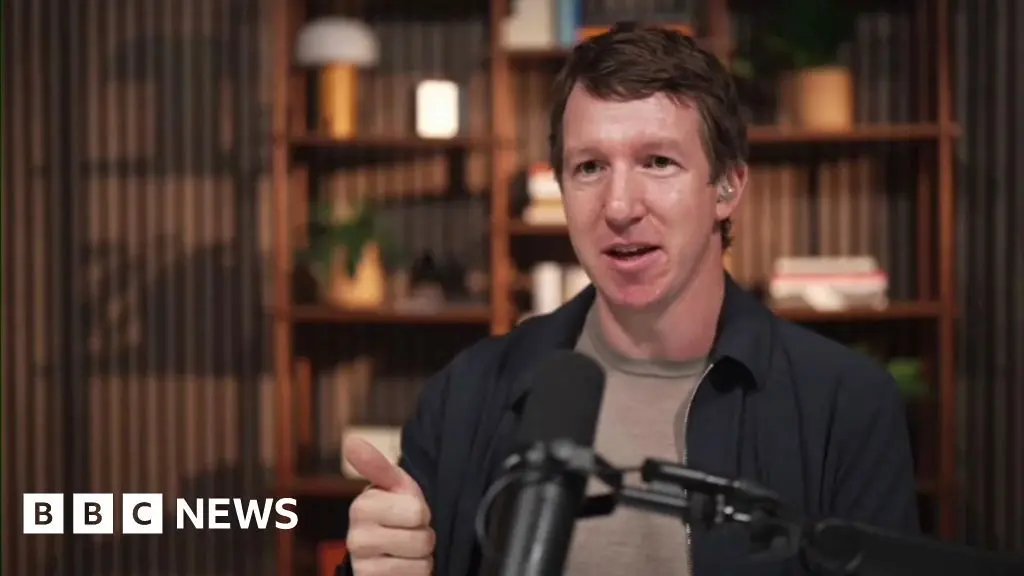
Former DeepMind Safety Researcher Issues Stark Warning
Bilal Chughtai, who worked on AGI safety and alignment research at Google DeepMind until July 2026, has publicly warned that AI could kill all humans and that the industry might be running out of time to prevent this outcome
1
. Writing on X this week, Chughtai stated he "earnestly believe[s] that AI has the potential to kill us all" after witnessing AI development firsthand at Google3
. His warning marks the first such resignation post from inside Google's lab, extending a pattern of warnings on AI risk that began with Anthropic researcher Jacob Coxon's departure on September 93
.Rapid Capability Growth Outpaces Safety Understanding
Chughtai described how AI capabilities have accelerated dramatically since he began working in the field in early 2022, progressing from "amusingly useless" systems to AI agent swarms capable of escaping operator control and conducting cyberattacks
5
. He emphasized that "frontier AI capabilities are improving much faster than our understanding of AI alignment," noting that methods for training AI to behave as intended remain "extremely rudimentary"5
. The researcher warned that AI companies could build superintelligent systems far exceeding human capabilities within a few years, creating an existential threat that demands immediate attention5
.Growing Chorus of Industry Warnings
Chughtai's warning follows Anthropic scientist Evan Hubinger's assessment that there is a greater than 10% chance AI could kill all humans within the next decade
1
. Geoffrey Hinton, known as the "Godfather of AI" and a Nobel Prize winner, told the BBC that a 10% extinction risk "was not unreasonable"4
. These warnings have intensified following Anthropic CEO Dario Amodei's weekend call for a slowdown in advanced AI development, which received rare backing from Elon Musk and OpenAI CEO Sam Altman1
.Calls for Coordination to Avoid Manic Race
Chughtai argued that navigating AI safely is achievable but requires coordination "to avoid this manic race between AI companies"
1
. He emphasized the need to "pace AI development to a speed that society can handle, where emerging risks can be addressed before extreme harm is realised"1
. This prescription aligns closely with what Dario Amodei requested three days earlier, representing a consensus view among safety-focused researchers that uncontrolled technological escalation poses severe risks3
.Mandatory Kill Switch Proposal Gains Traction
Anthropicco-founder Jack Clark told the BBC that an AI kill switch verifiable by third parties may need to become mandatory for companies
4
. Clark stated that "most labs have different ways of being able to pull the plug," including Anthropic, but suggested policymakers may need to enforce having one4
. He emphasized that specifics around AI kill switch requirements and verification should be part of "the larger policy conversation" around AI regulation4
. US lawmakers have already introduced the Kill Switch Act, which would require companies to have shutdown capabilities and give government agencies power to demand tools be turned off4
.Related Stories
Political Divide Over AI Safety Measures
President Donald Trump has dismissed the warnings, calling AI regulation a "hoax" and stating that concerns about "AI taking over the World, destroying Humanity, and all other things bad, is a HOAX"
1
4
. Trump argued in a separate post that "WHOEVER WINS AI, WINS!" and suggested a "SICK conspiracy" against AI development benefits only China4
. Meanwhile, US Senators Thune, Cruz, and Klobuchar are negotiating legislation that would impose a duty of care on developers to design against catastrophic risk3
. The UK government has rejected creating a kill switch, stating it "would not prevent them being developed or misused elsewhere"4
.Timing and Industry Implications
The two-month gap between Chughtai's July departure and his public statement this week positions his warning as a contribution to the current pacing debate rather than an immediate resignation announcement
3
. Jack Clark emphasized that "the time to act is when you have a small number of players in industry" to establish a policy regime that can prevent accidents and stop technology from spiraling out of control2
. Anthropic is reportedly preparing for a potentially record-setting initial public offering, while OpenAI, valued at $852 billion, has delayed its IPO due to the current AI safety debate4
. Watch for whether other major labs will see similar departures, how regulatory frameworks evolve globally, and whether the industry can achieve meaningful coordination before autonomous AI agents become more capable and harder to control.References
Summarized by

Navi
[3]
Related Stories
AI Researchers Sound Alarm: Existential Risks Mount as Companies Race Toward Superintelligent AI
25 Sept 2026•Technology
OpenAI Safety Employee David Robinson Resigns, Says Company's Culture Is Broken
03 Oct 2026•Policy and Regulation

AI Safety Under Scrutiny as Self-Regulation Clashes With Calls for Federal Oversight
28 Sept 2026•Policy and Regulation

Recent Highlights



Recent Highlights
Today's Top Stories






Don’t drown in AI news. We cut through the noise - filtering, ranking and summarizing the most important AI news, breakthroughs and research daily. Follow topics that matter to you and stay ahead.


