Former Intel CEO Pat Gelsinger Critiques NVIDIA's AI Dominance at GTC 2025


4 Sources
[1]
At Nvidia's GTC event, Pat Gelsinger reiterated that Jensen got lucky with AI, Intel missed the boat with Larrabee
At GTC 2025, former Intel CEO Pat Gelsinger reiterated his oft-repeated claim that Nvidia CEO Jensen Huang 'got lucky' with the AI revolution but explained his rationale more in-depth. As GPUs have taken center stage in AI innovation, Nvidia is now one of the world's most valuable companies, while
[2]
What Was Former Intel CEO Doing at NVIDIA's Flagship Event?
Pat Gelsinger disagrees with Jensen Huang on quantum computing. At NVIDIA's GTC 2025 event on Tuesday, the company delivered a variety of new advancements across AI hardware, personal supercomputers, self-driving cars, and humanoid robots. Moreover, the event took an unexpected turn when an
[3]
Former Intel CEO Pat Gelsinger says NVIDIA CEO Jensen Huang 'got lucky' with AI
TL;DR: Former Intel CEO Pat Gelsinger attended NVIDIA's GTC 2025, praising NVIDIA's AI success under Jensen Huang. He reflected on Intel's past missteps, like the failed Larrabee project, and noted the high costs of AI hardware. Intel plans to launch its Jaguar Shores AI GPU in 2026 to compete with
[4]
Intel's Former CEO Pat Gelsinger Claims NVIDIA's AI GPUs Are 10,000 Times More Expensive Than What Is Needed For AI Inferencing
Team Blue's former CEO Pat Gelsinger takes a dig at NVIDIA's current approach to AI GPU pricing, claiming that the market will eventually realize this. Well, it seems like Gelsinger isn't too fond of NVIDIA's progress in the AI market, and given Intel's performance in this particular segment, it
Share
Copy Link
At NVIDIA's GTC 2025 event, former Intel CEO Pat Gelsinger discussed the AI industry's evolution, praising NVIDIA's success while highlighting concerns about GPU costs for AI inference and expressing optimism about quantum computing's future.

Former Intel CEO Reflects on NVIDIA's AI Success
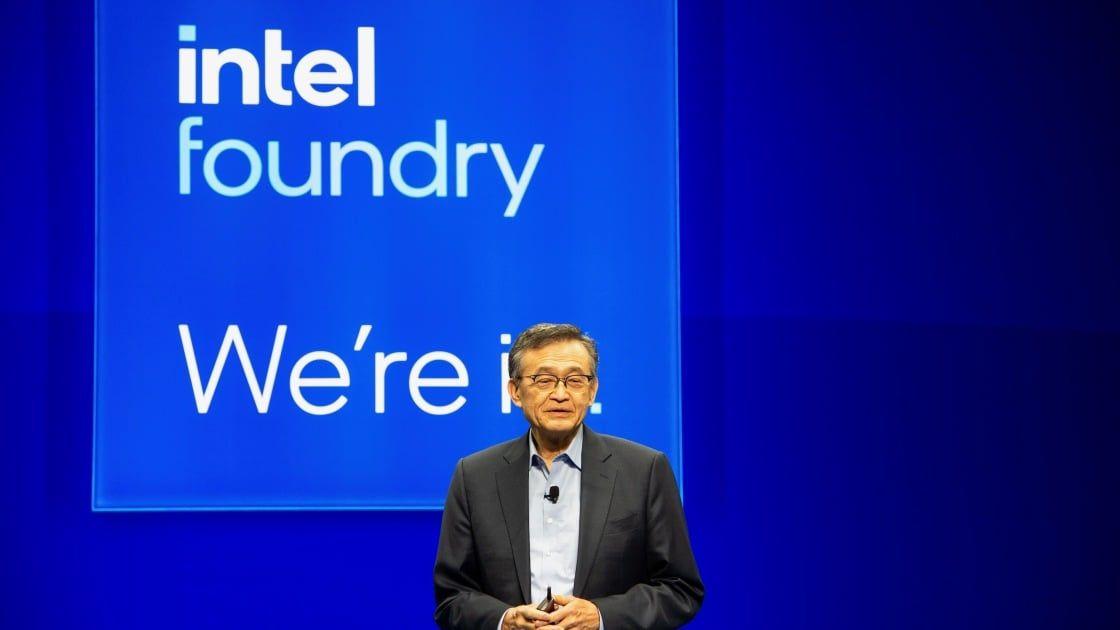
At NVIDIA's GTC 2025 event, former Intel CEO Pat Gelsinger made a surprising appearance, offering insights into the evolving landscape of artificial intelligence and computing. Gelsinger, who once led Intel during a period of CPU dominance, acknowledged NVIDIA's success in the AI revolution while also highlighting missed opportunities and future challenges in the industry
1
2
.NVIDIA's "Lucky" Break with AI
Gelsinger praised NVIDIA CEO Jensen Huang for his tenacity in focusing on graphics processing units (GPUs) when CPUs were still dominant. He noted that NVIDIA "got lucky with AI" as the workload demanded the type of architecture that GPUs could provide
1
. This statement, while seemingly critical, was presented more as an acknowledgment of NVIDIA's foresight and commitment to its vision.Intel's Missed Opportunities
Reflecting on Intel's past, Gelsinger discussed the failed Larrabee project, which attempted to bridge CPU programmability with GPU-like throughput
1
3
. He suggested that had Intel persisted with this approach, "the future could have been different." This admission highlights the strategic decisions that led to Intel's current position of playing catch-up in the AI hardware market.Concerns Over GPU Costs for AI Inference
While acknowledging NVIDIA's success in AI training, Gelsinger expressed concerns about the cost-effectiveness of GPUs for AI inference:
"A GPU is way too expensive. I argue it's 10,000 times too expensive to fully realize what we want to do with the deployment of inference of AI," Gelsinger stated
2
4
.This critique points to potential opportunities for more specialized and cost-effective hardware solutions for AI inference tasks.
The Future of Computing: Quantum Processing
Gelsinger also shared his optimistic view on quantum computing, disagreeing with Jensen Huang's timeline for its practical implementation:
"I disagree with Jensen," Gelsinger said, predicting that quantum processing units (QPUs) could be part of data centers within the next few years, alongside GPUs and CPUs
2
.This perspective aligns with other industry leaders like Bill Gates and contrasts with more conservative estimates from figures like Mark Zuckerberg.
Related Stories


Intel's Path Forward
Despite his critiques, Gelsinger remains a "massive fan" of Huang and NVIDIA's accomplishments
2
. He even revealed that he is an NVIDIA stock buyer, benefiting from recent market fluctuations.As for Intel, the company is pinning its hopes on the next-generation Jaguar Shores AI GPU, slated for release in 2026
3
4
. This project represents Intel's attempt to regain ground in the competitive AI hardware market.Implications for the AI Industry
Gelsinger's comments at GTC 2025 highlight the rapid evolution of the AI hardware landscape and the ongoing competition between major tech companies. As the industry continues to grow, questions about hardware efficiency, cost-effectiveness, and the potential of emerging technologies like quantum computing will likely shape its future direction.
References
Summarized by

Navi
[1]
Related Stories
Recent Highlights



Recent Highlights
Today's Top Stories




Don’t drown in AI news. We cut through the noise - filtering, ranking and summarizing the most important AI news, breakthroughs and research daily. Follow topics that matter to you and stay ahead.


