3 Sources
[1]
As Formula One evolves, AI becomes part of the race
LONDON, May 4 (Reuters) - Artificial Intelligence's integration into Liberty Media-owned Formula One and its 11 teams has been noticeable on- and off-track in the already highly tech-powered sport. Eight new AI partnerships were signed in the past six months alone, according to research firm Ampere Analysis. Among them, nine-time F1 constructors' champion Williams are partnering with AI company Anthropic for its Claude model to support team operations and race strategy. "It's much more than a sticker on a car or a sticker in a billboard," Williams' board advisor Peter Kenyon told Reuters. "We see it as one of our differentiating points: how can this partner help us in that journey back to the top?" Whereas F1 cars in yesteryear had a plethora of brands with tobacco companies at the centre, now partnerships often centre on AI and tech companies helping the teams understand datasets, while benefiting from great exposure. "What Anthropic and our tech team are doing are understanding the opportunities and then integrating those into our business to be able to demonstrate for â ourselves and them, and showcase their technology in the pursuit of getting Williams back to the top," Kenyon added. AI can be a key tool enabling teams to navigate new regulations and new cost cap rules, now set at $215 million. "Efficiency is one of the ubiquitous benefits of AI products, meaning a natural synergy between teams and AI brands," said Adam Lewis, a senior analyst from Ampere Analysis. Technology led the top 10 spending categories for F1 teams, reaching an estimated $769 million last season, up 41% from the previous year, according to intelligence platform SponsorUnited. AI and machine learning brands account for four of the top 15 new sponsorship investors, a SponsorUnited report also showed, including $65 billion-valued cloud infrastructure company CoreWeave (CRWV.O), opens new tab, which has a partnership with Aston Martin's F1 team. In the 2025 season, the single-seater motorsport reached $2.54 billion in total team sponsorship and was the second-highest grossing sports property behind America's National Football League which achieved $2.7 billion. HELPING WITH ADMIN, RULES, TRACK DECISIONS AI has been innovative in sifting through administrative tasks and interpreting key rules within sporting and technical regulations, helping engineers take swifter decisions during on-track â situations which were impossible decades ago. "So it's gone from a sort of basic AI to more of an agentic approach where rather than just searching for something, it's actually providing decisions for us," Jack Harrington, the group partnership lead for Red Bull, told Reuters. The Red Bull outfit, which four-time champion Max Verstappen races for, has a partnership with $494 billion-valued software company Oracle (ORCL.N), opens new tab, and has embedded its technological nous across the team. "So it's really playing into the strength of AI as an enabler for our team. Allowing them (engineers) to focus on the core responsibilities they have and perform better at what â they do," Harrington added. Technology companies like Alphabet-owned Google are also seeing positives from entering the F1 arena. "These blue-chip companies are using Formula One as a launchpad and spotlight for their own AI products or re-brandings," Lewis said, noting Google's partnership with F1's McLaren shifted to Google Gemini, a generative AI tool, from Google Pixel. As an organisation, F1, which returned at Miami after no races in April, has â also embraced AI. Its partnership with Amazon Web Services uses generative AI for live television broadcasting and in 2024 it applied generative AI to the design of the Montreal trophy after it was crafted by a silversmith in the United Kingdom. "I think F1 has the never-ending, unquenchable thirst for the latest technology," Lenovo's Global Chief Information Officer Arthur Hu told Reuters. Lenovo (0992.HK), opens new tab, a â Hong Kong-listed technology company, is one of F1's global partners and has been in a partnership with the organisation since 2022. Hu said that Lenovo helps F1 to enhance productivity, mobility and remote collaboration through Lenovo laptops and devices, including AI PCs, to support with the delivery of races. "Formula One is at the sweet spot where it's an intensely technical sport ... And so I think that only opens up new possibilities," Hu said. Reporting by Streisand Neto; Editing by Andrew Cawthorne and Alan Baldwin Our Standards: The Thomson Reuters Trust Principles., opens new tab * Suggested Topics: * Technology Streisand Neto Thomson Reuters Streisand joined Breakingviews in 2022 as a research assistant. He previously worked at the Financial Times as an editorial assistant and, before that, as an intern. He also holds newsroom experience from CNN International and The Economist. He graduated from SOAS University of London with a degree in International Politics. He enjoys working out, going on long walks and playing football.
[2]
AI is now an F1 sponsor, a strategist, and a tech director
Eight AI partnerships signed in six months. Williams runs Claude. McLaren runs Gemini. Red Bull runs Oracle. The 2026 regulation overhaul has turned the paddock into one of the largest live commercial AI deployments in sport. The teams in the Formula One paddock have always quietly run on data. They have just become noisier about it. According to a Reuters report wired through Sunday, eight new AI partnerships have been signed across F1 and its 11 teams in the last six months alone, and the technology category, broadly defined, has overtaken almost every other line in team budgets. AI and machine-learning brands now account for four of the top 15 new sponsorship investors in the sport. Among the headliners: Williams running Anthropic's Claude, Red Bull deepening an Oracle relationship that has shifted from search-style queries into agentic decisioning, and McLaren's long-running Google partnership migrating from Pixel hardware to Gemini. It is, depending on how one frames it, either an inevitable convergence or the moment a sport that has always been an engineering exercise became, openly, a software exercise too. The data Reuters cites is from research firm Ampere Analysis, and the broader spending picture is striking. Technology now leads the top 10 spending categories for F1 teams, reaching an estimated $769m last season, up 41 per cent on the year before. Yahoo Sports' carry of the Reuters wire breaks out the partnership table in detail, and the cluster of AI-and-cloud names is now meaningfully concentrated. CoreWeave, the GPU-cloud operator, has joined Aston Martin. Oracle has expanded inside Red Bull. Anthropic, a relative newcomer to motorsport sponsorship, has placed Claude inside Williams' operations and race-strategy stack. Google has rolled Gemini into McLaren's analytical platform. Each of these is, in its own way, a marketing bet for the brand involved. Each is also a serious operational commitment. That dual function, sponsor logo and operational software, is the defining feature of what has changed. The historic F1 partnership template was a logo on a sidepod and a hospitality suite. The 2026 template is closer to a deployed enterprise contract. Anthropic engineers reportedly sit with Williams' strategy team. CoreWeave compute powers Aston Martin's CFD pipeline. Oracle's agentic systems shape Red Bull's pit-wall decisions. The sponsorship is the production deployment. The proximate driver is the 2026 technical regulation overhaul, the largest rules reset F1 has experienced in over a decade. The new chassis-and-power-unit specification has changed the maths of car development in ways that favour teams able to evaluate thousands of design variants quickly, and disadvantage those reliant on physical wind-tunnel hours. Racing Bulls partnered with Neural Concept ahead of the regulation change specifically to use digital twins and machine learning to evaluate aerodynamic configurations that would be impossible to test physically inside the FIA's restricted testing windows. Most teams have done some version of the same. The wider point is that F1 has, since the 2022 budget cap, become a sport in which competitive advantage is constrained by money, computation, and access to talent in roughly that order. IMD's recent analysis of F1's human-AI edge framed the dynamic as an industry case study: under cost-capped conditions, the teams that win are the ones that extract the most decision quality per dollar of compute, not those that simply spend more. Generative AI, deployed inside strategy rooms, race-engineering desks, and CFD pipelines, fits that constraint exactly. On race weekends, the visible work is real-time. McLaren, by Google Cloud's own description of the team's setup at Miami, runs close to 300 million race simulations before a Grand Prix begins, with generative models surfacing pit-window options and tyre-compound combinations that would be impossible for a human strategist to evaluate within a single weekend's time budget. McLaren's chief AI officer has described the accuracy of the resulting predictions as approaching "an almost eerie level" alignment with what the actual race produces. Behind the visible work is a less glamorous one. Formula 1 itself, the rights-holder rather than any individual team, has built generative AI workflows on AWS to accelerate race-day issue resolution: triaging telemetry anomalies, surfacing broadcast-relevant context, and reducing the latency between a pit-lane incident and a televised explanation of it. Lenovo's ThinkPad X9 Aura Edition was trialled at the Chinese Grand Prix earlier this year, running a MATLAB sports-data model that produced production-floor insights more than 30 per cent faster than a non-AI laptop, the kind of incremental gain that, repeated across 24 race weekends, adds up. And then there is the regulator. Motorsport.com has reported that the FIA itself is deploying AI to police one of the sport's most contentious technical questions in 2026, with details closely held but the broad direction visible: rule enforcement, like rule design, is becoming algorithmic. Formula1.com's profile of the FIA's new "tech director" AI expert framed the appointment as part of the same shift, intended to give the regulator the analytical capability the teams already have. The Anthropic-Williams partnership, in particular, fits a wider strategic pattern at the model company. TNW reported earlier this week that Anthropic is launching a $1.5bn enterprise AI services firm with Blackstone, Hellman & Friedman, and Goldman Sachs, designed to embed Claude inside the operating businesses of major buyout firms. The Williams deployment is, in operational terms, a pre-cursor: a high-profile, demanding customer using Claude inside a real-time decision environment, in front of cameras. Whatever the team learns about Claude's performance under race conditions, Anthropic's enterprise customers will hear about second. That is a feature of F1 sponsorship that AI vendors have realised faster than most: the sport is, by structure, a public technology bench. Cars race for two hours every other weekend, and what works on the pit wall is, eventually, written up by every business publication that covers the team. For an enterprise software vendor trying to demonstrate that its tools work in adversarial, high-throughput environments, F1 is one of the best demos available. The underlying dataset has grown to a scale that makes the AI investment look proportionate rather than indulgent. TNW reported the McLaren data scale several years ago, when each car was generating roughly 250 million data points per race. Current estimates, across newer sensor packages, put the figure higher. Cars in 2026 carry between 300 and 600 onboard sensors and stream more than a million data points per second; aerodynamic, mechanical, electrical, thermal, and driver-input channels all feed into the same telemetry pipe. Mercedes uses G42's predictive algorithms layered with SAP enterprise systems. Ferrari has built customised models on Amazon SageMaker, achieving up to 60 per cent faster CFD simulations for component testing. McLaren runs Dell's portable micro-datacentres trackside to update the car's digital twin in real time. The setups differ. The category does not. Even TNW's earlier piece on AWS's analysis of the fastest F1 driver of the past 40 years hinted at where this trajectory was heading. That story used machine learning to extract a single comparative metric across 40 years of qualifying data. The 2026 version is the same approach applied at every level of the operation, in real time, by every team in the paddock. There are limits worth naming. The first is the talent problem. F1 race strategists, like fighter-jet pilots, develop intuitions over years that no amount of compute fully replicates. TNW has previously written about the limits of pure-AI competition in the context of the Indy Autonomous Challenge, where the absence of human dramatic stakes turned out to matter more than the engineering achievement. F1 has not, by anyone's account, removed humans from the pit wall. It has armed them. The second is the cost-cap question. F1's $135m team-cost cap was designed, in part, to constrain the kind of compute-and-engineering arms race that AI deployment now arguably revives. The accounting treatment of partner-supplied AI infrastructure, donated GPUs, embedded engineers, in-kind cloud credits, has become an active topic in the paddock. Whether the FIA tightens those rules, or accepts that AI sponsorship is the next frontier of legal cost-cap workaround, is one of the open governance questions of the season. The third is competitive convergence. If every team has access to roughly the same generative AI capability, the marginal advantage from deploying it shrinks over time. The teams that win in this environment will be those that build distinctive proprietary models on top of public foundations, the way Ferrari has invested in correlation-fixing models that close the simulator-to-track gap, or that find ways to deploy the technology faster operationally rather than more elaborately. Three signals will indicate whether AI in F1 is a lasting competitive lever or a fashionable line item. The first is whether the teams currently behind on the grid, financially or technically, can use AI partnerships to close gaps that money alone could not previously buy. The second is whether the regulator's own AI capability matures fast enough to police the technical and financial questions the teams are now asking it. The third is whether the broadcast experience, where AI-augmented insights and faster contextualisation of incidents are visibly changing what fans see on screen, develops the same competitive importance off-track that telemetry models already have on it. On Sunday in Miami, Kimi Antonelli won. By the time the race ended, Williams' Claude-supported strategists had run several million scenarios against the actual unfolding telemetry; McLaren's Gemini-driven simulations had been tested against three of their own pit decisions; Red Bull's Oracle stack had recommended several agentic interventions on a car that, by the chequered flag, finished where the model expected. The race, in the conventional sense, was won by a 19-year-old in a fast car. The race, in the broader sense, was won and lost in front of screens by people the cameras almost never show. F1, like the wider industry it now mirrors, is in the middle of figuring out which of those races matters more.
[3]
AI becoming part of the race for Formula One and its teams
London - Artificial intelligence's integration into Formula One and its 11 teams has been noticeable on -- and off -- the track in the already highly tech-powered sport. Eight new AI partnerships were signed in the past six months alone, according to research firm Ampere Analysis. Among them, nine-time constructors' champion Atlassian Williams is partnering with AI company Anthropic for its Claude model to support team operations and race strategy. "It's much more than a sticker on a car or a sticker in a billboard," Williams' Board Advisor Peter Kenyon said. "We see it as one of our differentiating points: how can this partner help us in that journey back to the top?"
Share
Copy Link
Formula One and its teams have signed eight new AI partnerships in just six months, marking a shift in how the sport operates. Williams now uses Anthropic's Claude for race strategy, McLaren runs Google Gemini, and Red Bull deploys Oracle's agentic AI systems. Technology spending reached $769 million last season, up 41% year-over-year, as teams navigate new cost cap rules set at $215 million.
The integration of Artificial Intelligence into Formula One has reached a tipping point. Eight new AI partnerships were signed across the sport and its 11 teams in the past six months alone, according to research firm Ampere Analysis
1
. This surge represents more than traditional sponsorshipâthese are operational deployments that directly influence how teams compete on race weekends.Source: Japan Times
Nine-time constructors' champion Williams is partnering with AI company Anthropic, embedding its Claude model to support team operations and race strategy
1
. "It's much more than a sticker on a car or a sticker in a billboard," Williams' board advisor Peter Kenyon explained. "We see it as one of our differentiating points: how can this partner help us in that journey back to the top?"1

Source: Reuters
Technology now leads the top 10 spending categories for Formula One teams, reaching an estimated $769 million last seasonâa 41% increase from the previous year, according to intelligence platform SponsorUnited
1
. AI and machine learning brands account for four of the top 15 new sponsorship investors1
. Among these, $65 billion-valued cloud infrastructure company CoreWeave has established a partnership with Aston Martin's F1 team1
.The 2025 season saw Formula One reach $2.54 billion in total team sponsorship, making it the second-highest grossing sports property behind only America's National Football League, which achieved $2.7 billion
1
. This financial momentum reflects how AI adoption in F1 has become central to competitive strategy.AI has proven innovative in handling administrative tasks and interpreting sporting and technical regulations, enabling engineers to make swifter decisions during on-track situations
1
. Red Bull's partnership with $494 billion-valued software company Oracle exemplifies this evolution. "It's gone from a sort of basic AI to more of an agentic approach where rather than just searching for something, it's actually providing decisions for us," Jack Harrington, the group partnership lead for Red Bull, told Reuters1
.McLaren's long-standing partnership with Alphabet-owned Google has shifted from Google Pixel to Google Gemini, a generative AI tool
1
2
. According to reports, McLaren runs close to 300 million race simulations before a Grand Prix begins, with generative models surfacing pit-window options and tire-compound combinations that would be impossible for human strategists to evaluate within a single weekend's time budget2
.Related Stories
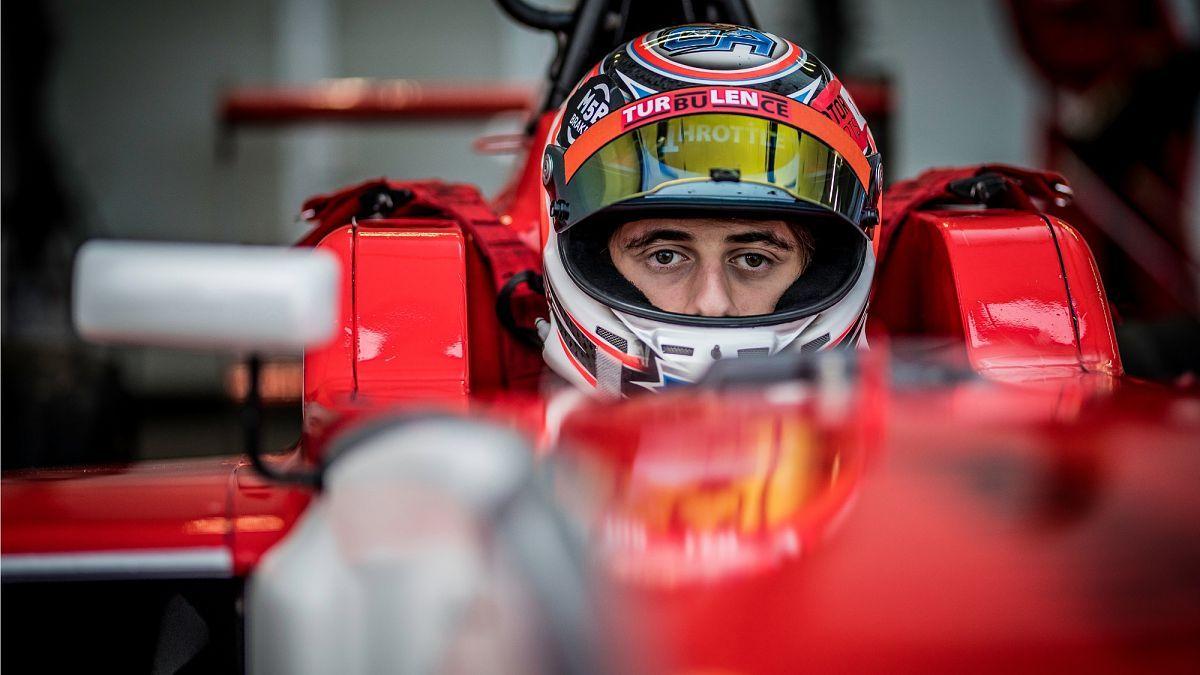
AI for race strategy has become essential as teams navigate new cost cap rules, now set at $215 million
1
. "Efficiency is one of the ubiquitous benefits of AI products, meaning a natural synergy between teams and AI brands," said Adam Lewis, a senior analyst from Ampere Analysis1
. Under cost-capped conditions, competitive advantage depends on extracting maximum decision quality per dollar of compute rather than simply spending more2
.The 2026 regulations represent the largest rules reset Formula One has experienced in over a decade, changing the mathematics of car development in ways that favor teams able to evaluate thousands of design variants quickly
2
. Racing Bulls partnered with Neural Concept ahead of the regulation change specifically to use digital twins and machine learning to evaluate aerodynamic configurations impossible to test physically inside the FIA's restricted testing windows2
.As an organization, Formula One has embraced AI through its partnership with Amazon Web Services, using generative AI for live television broadcasting
1
. In 2024, the sport applied generative AI to the design of the Montreal trophy after it was crafted by a silversmith in the United Kingdom1
. Lenovo, one of Formula One's global partners since 2022, helps enhance productivity, mobility and remote collaboration through AI PCs and devices to support race delivery1
."Formula One is at the sweet spot where it's an intensely technical sport," Lenovo's Global Chief Information Officer Arthur Hu told Reuters. "And so I think that only opens up new possibilities"
1
. The shift from logo-based sponsorships to deployed enterprise contracts marks a fundamental change in how technology companies engage with motorsport, turning the paddock into one of the largest live commercial AI deployments in sport2
.Summarized by
Navi
[2]
[3]
1
Entertainment and Society

2
Health

3
Technology