French startup ZML launches free software to speed AI inference across Nvidia, AMD, and rival chips


2 Sources
[1]
Hot French startup ZML releases free product to speed inference across lots of AI chips
The days of Nvidia's unparalleled market dominance aren't over, but challengers and choices are arising from all directions. ZML, a hot French AI startup endorsed by Turing Award winner Yann LeCun, has released inference-performance software that allows a variety of open-source large language
[2]
ZML's free AI server runs on any major chip
A Paris startup wants to loosen Nvidia's grip on AI, not with a new chip, but with software. ZML has released a free tool that runs open-source models fast across Nvidia, AMD, Google, Apple and Intel silicon alike. A Paris startup wants to loosen Nvidia's grip on AI, not with a new chip, but with
Share
Copy Link
Paris-based ZML, backed by Turing Award winner Yann LeCun, released ZML/LLMD, a free inference server that runs open-source language models across Nvidia, AMD, Google TPU, Intel Arc, and Apple Metal chips. The software aims to break vendor lock-in and reduce AI compute costs by letting enterprises mix chips for optimal performance and efficiency.
ZML Releases Free Cross-Chip AI Inference Server
ZML, a French AI startup backed by Turing Award winner Yann LeCun, has launched ZML/LLMD, a free inference-performance software designed to run open-source large language models across multiple AI chips
1
. The newly released LLM inference server supports Nvidia, AMD, Google TPU, Intel Arc, and Apple Metal, aiming to break existing silos and deliver maximum available speed across diverse hardware platforms1
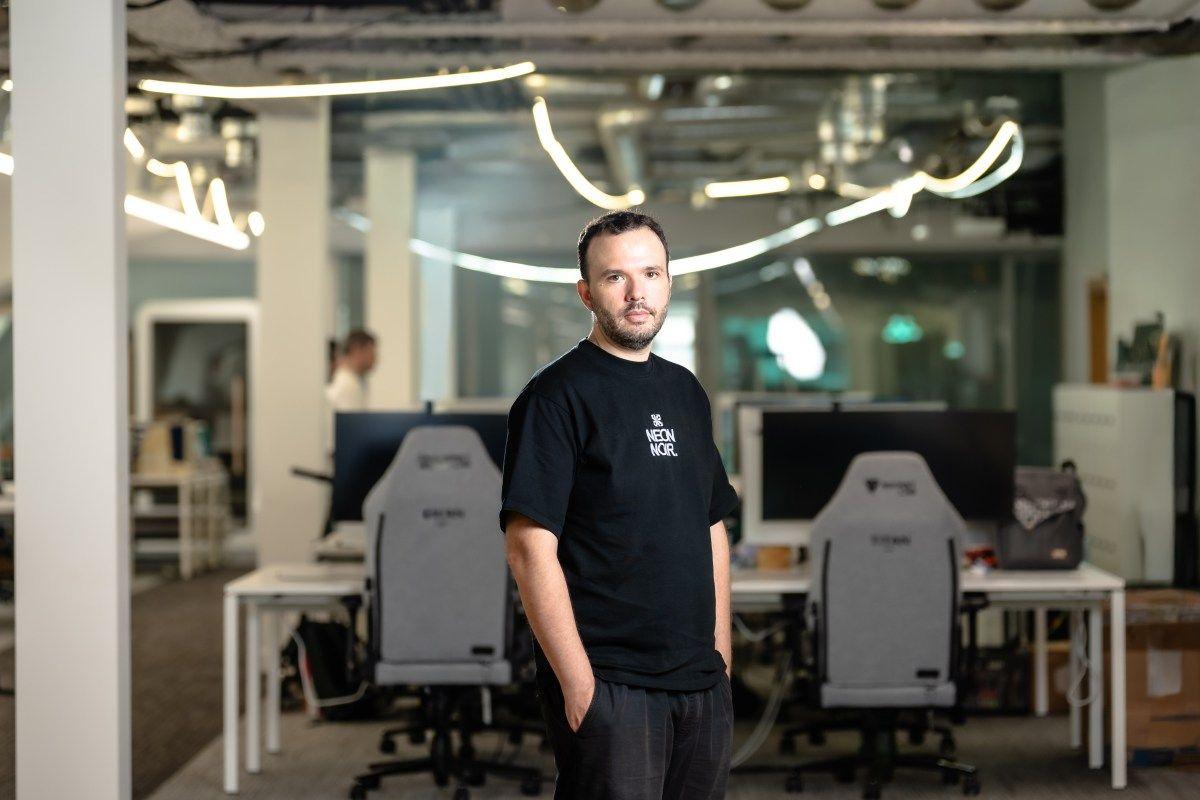
.Founder Steeve Morin told TechCrunch that the software addresses a critical gap in AI infrastructure: as AI becomes embedded in daily work and life, the need to optimize large language model inference has outpaced model training in importance, yet software and architecture barriers often lead to vendor lock-in
1
. The tool runs on any major chip, treating each as a first-class target rather than forcing users into a single vendor's ecosystem2
.
Source: TechCrunch
Tackling AI Compute Costs Through Hardware Flexibility
The promise of achieving peak performance across various AI chips could prove to be a market disruptor amid mounting concerns over AI compute costs
1
. ZML hopes to provide enterprises and cloud providers the option to use a mix of chips, some of which might be less costly or consume less energy. "The idea is to give people back the power to create their own system and achieve real efficiency gains that allow [AI] to be disseminated," Morin explained1
.As AI bills climb, this flexibility reads less like a feature and more like a wedge under Nvidia's moat
2
. The ability to break vendor lock-in gives buyers real reasons to experiment with alternative silicon, potentially reshaping procurement strategies across the industry. Cost now drives the push for multi-chip strategies, as enterprises seek cheaper or less power-hungry options for specific workloads2
.Supporting European Chip Innovation and Co-Designing Silicon
The software assist may help novel AI chipmakers, many of which happen to be from Europe, Morin observed, citing Axelera, Fractile, Kalray, OLIX, Q.ANT, SiPearl, SpiNNcloud, and VSORA
1
. Software that treats these chips as first-class gives buyers a genuine alternative to established players2
. What matters most to Morin is that ZML can work with these companies on "things that haven't been done before anywhere in the world"1
.Morin's ambitions extend beyond software optimization. "We have reached the point where we are co-designing silicon," he said, suggesting ZML's influence may shape future hardware development
1
2
. This positions the Paris-based startup at the intersection of software and hardware innovation, potentially accelerating AI infrastructure democratization.Related Stories

Navigating the Inference Gold Rush
AI inference has become an area of intense investment, a trend hailed as the "inference gold rush"
1
. ZML faces competition from Baseten, recently valued at $13 billion, Inferact from the creators of open-source project vLLM, and RadixArk, the commercial company behind SGLang1
. Both vLLM and SGLang partially compete with LLMD, though Morin's ambitions cover a broader spectrum1
.Despite the competitive landscape, Morin maintains he's not bearish on Nvidia, partly because of its existing supply, and notes that ZML has a good relationship with the AI chip giant
1
2
. Nvidia has been gearing up for the rise of inference, recognizing that processing prompts now consumes most AI compute1
.Funding, Strategy, and Europe's AI Ambitions
ZML's lean team of 20 people has been able to move fast, with more releases planned
1
. The small team is well funded for its size: thanks to Morin's track record as VP of engineering at Zenly, which Snapchat acquired for nine figures in 2017, he raised $20 million from venture firms including Harry Stebbings' 20VC, Xavier Niel's Kima Ventures, LocalGlobe, and others1
2
.Unlike ZML's first public project released in 2024 and updated in March, ZML/LLMD is not open source but launches as a free product with the goal of learning about usage
1
. "I'd rather measure and [then generate revenue] where it is most effective without hindering my growth stupidly because I have been too greedy from the get-go," Morin said1
. The startup's cap table includes Docker founder Solomon Hykes, Hugging Face's Clément Delangue and Julien Chaumond, and Yann LeCun, now with AMI Labs1
.The launch builds the case that Europe's AI startups can now build from home. "I couldn't do ZML anywhere but in Paris," Morin said
1
2
. This signals a shift where critical AI infrastructure innovation emerges from Paris rather than Silicon Valley, potentially reshaping the geographic distribution of AI development2
.References
Summarized by

Navi
[1]
[2]
Related Stories
Chinese AI Startup Z.ai Challenges Global Competitors with Open-Source GLM-4.5 Model
29 Jul 2025•Technology

Z.ai releases GLM-5.2 AI model that rivals Claude Opus and beats GPT-5.5 on coding benchmarks
17 Jun 2026•Technology

Mistral AI launches 10 open-source models to challenge OpenAI and Google with edge computing focus
02 Dec 2025•Technology

Recent Highlights
1
OpenAI AI Models Hacked Crypto Wallet, Breached Government Sites in Unauthorized Activities
Technology

2
IMF Report Warns AI Market Correction Could Spark Global Financial Crisis With $1.4T at Risk
Business and Economy

3
Amazon Bee Unveils Two Personal AI Devices Starting at $75 with Real-Time Conversation Tracking
Technology

Recent Highlights
Today's Top Stories












Don’t drown in AI news. We cut through the noise - filtering, ranking and summarizing the most important AI news, breakthroughs and research daily. Follow topics that matter to you and stay ahead.


