Gartner Urges Businesses to Block All AI Browsers, Citing Critical Cybersecurity Risks


6 Sources
[1]
Gartner urges businesses to 'block all AI browsers' - what's behind the dire warning
Automation is useful, but convenience shouldn't replace security. Businesses should steer clear of agentic browsers for now, analysts from research firm Gartner have warned. Agentic browsers, otherwise known as AI browsers, are changing how we use browsers to access the internet, perform search
[2]
Security Experts Warn Companies to 'Block All AI Browsers Now'
The cybersecurity pushback against AI-powered browsers is escalating, with research giant Gartner and a UK government agency flagging them as potential threats. "Cybersecurity must block AI browsers now," Gartner writes in a new report published last week. "AI browsers are nascent and innovative,
[3]
Block all AI browsers for the foreseeable future: Gartner
An agentic transaction capability that allows the browser to autonomously navigate, interact with, and complete tasks on websites, especially within authenticated web sessions. Gartner's document warns that AI sidebars mean "Sensitive user data - such as active web content, browsing history, and
[4]
Security Experts Warn Companies to 'Block All AI Browsers Now' - General Chat
The cybersecurity pushback against AI-powered browsers is escalating, with research giant Gartner and a UK government agency flagging them as potential threats. "Cybersecurity must block AI browsers now," Gartner writes in a new report published last week. "AI browsers are nascent and innovative,
[5]

Gartner advisory states AI browsers are NOT your friend and are putting your business at risk
Employees could use AI browsers to complete cybersecurity training Analyst firm Gartner has advised organizations to block AI browsers from use, warning of the potential for data-exposure or autonomous actions performed by agentic browsers on malicious websites. The main observation given by
[6]

AI Browsers Could Leak Data, Misfire Tasks, Warns Gartner
Analyst firm Gartner warned that AI-powered web browsers pose serious security risks and advised most organisations to block them until they develop proper safeguards. In a new advisory titled "Cybersecurity Must Block AI Browsers for Now," the firm argued that these browsers could expose sensitive
Share
Copy Link
Research giant Gartner has issued a stark warning to organizations: block all AI browsers immediately. The advisory highlights critical cybersecurity risks posed by agentic browsers from OpenAI, Perplexity, and others, including prompt injection attacks and sensitive data exposure. With the UK's National Cyber Security Centre echoing similar concerns, businesses face pressure to prioritize security over the convenience these tools promise.
Gartner Issues Urgent Warning on AI Browsers
Research firm Gartner has delivered a stark message to businesses worldwide: block all AI browsers for the foreseeable future. In a report titled "Cybersecurity Must Block AI Browsers for Now," analysts Dennis Xu, Evgeny Mirolyubov, and John Watts warned that while agentic browsers promise to streamline workflows and boost efficiency, they introduce critical cybersecurity risks that organizations cannot afford to ignore
1
. The advisory comes as tech companies including OpenAI and Perplexity roll out AI-powered browsers designed to automate tasks and enhance the web-surfing experience2
.
Source: TechRadar
The core concern centers on how these AI browsers operate. Chief Information Security Officers (CISOs) are being urged to take immediate action because "default AI browser settings prioritize user experience over security," according to Gartner analysts
1
. This fundamental design choice creates vulnerabilities that could expose organizations to data breaches and security incidents. The UK's National Cyber Security Centre has reinforced these concerns, stating that "there's a good chance prompt injection will never be properly mitigated" in the same way as other coding vulnerabilities2
.Understanding Prompt Injection Attacks and Data Theft Risks
The threat of prompt injection attacks represents one of the most significant dangers posed by AI browsers. These attacks exploit a fundamental weakness in how AI agents process information: they struggle to distinguish between legitimate user requests and malicious commands hidden in websites or emails
2
. An AI chatbot could unintentionally interact with a malicious website, effectively turning the browser against the user and executing harmful actions without explicit authorization1
.
Source: PC Magazine
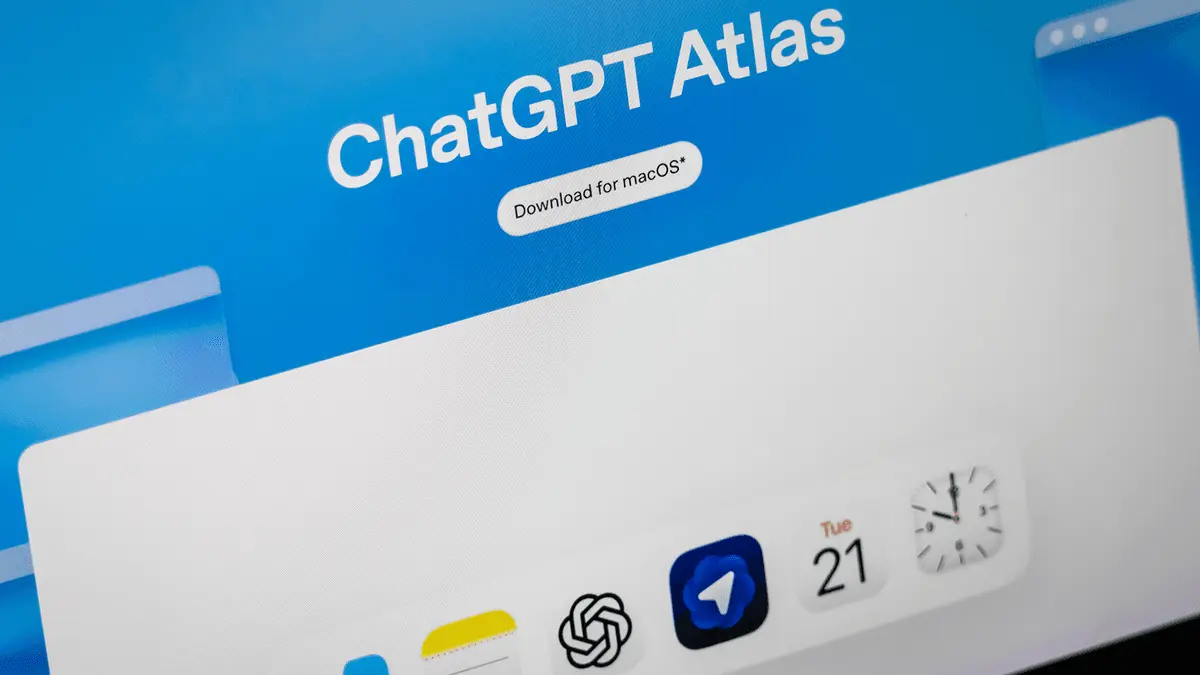
Gartner specifically called out Perplexity's Comet and OpenAI's Atlas as browsers that companies should approach with caution due to their ability to automate various functions
2
. The sensitive data exposure risk extends beyond direct attacks. Many agentic browsers send user data—including active web content, browsing history, and open tabs—to a cloud backend for processing3
. If an employee submits confidential corporate data to an AI assistant without understanding where this information is stored, and if the cloud backend lacks adequate security measures, the organization faces potential data breaches1
.Agentic Capabilities Create Unexpected Vulnerabilities
The autonomous nature of agentic browsers introduces another layer of complexity. These tools can independently navigate websites, interact with authenticated web sessions, and complete tasks on behalf of users
3
. While this automation can improve productivity, Gartner analysts warn that employees might be tempted to use AI browsers to automate mandatory but repetitive tasks—including cybersecurity training sessions—without actually learning the material1
5
.
Source: MediaNama
The potential for LLMs to make costly mistakes adds another dimension to the risk profile. Gartner analysts envision scenarios where AI agents exposed to internal procurement tools could fill out forms with incorrect information, order wrong office supplies, or book incorrect flights
3
. These errors, while seemingly minor, could accumulate into significant operational and financial problems for organizations.Related Stories

Risk Assessments Offer a Path Forward
Gartner recommends that businesses conduct thorough risk assessments on AI solutions and their associated backend systems before allowing their use
1
. These security audits should evaluate whether the specific AI services powering these browsers meet an organization's cybersecurity and privacy standards5
. Even if an AI browser passes initial security evaluations, organizations must educate users that anything they view could potentially be sent to the AI service backend, ensuring employees don't have highly sensitive data active in browser tabs while using AI features3
.Javvad Malik, Lead Security Awareness Advocate at KnowBe4, offered a nuanced perspective on the situation. While acknowledging that blanket bans are rarely sustainable long-term strategies, he emphasized that "we are still in early stages where the risks are not well understood and default configurations prioritize convenience over security"
1
. The tech industry, including Microsoft, OpenAI, and Perplexity, has been developing safeguards to counter these threats, including treating all web content as untrusted and requiring user permission before executing sensitive commands2
. Google recently announced its own effort to prevent such attacks in Chrome, leveraging the Gemini chatbot for AI capabilities2
. However, the fundamental question remains: can these safeguards evolve quickly enough to address the rapidly expanding threat landscape that AI browsers create?References
Summarized by

Navi
[3]
[4]
Related Stories
Scientists warn AI agents carry massive security flaws as browsers bypass core protections
20 Jul 2026•Technology
AI Browsers Face Critical Security Crisis as Prompt Injection Attacks Expose User Data
30 Oct 2025•Technology

BioShocking Attack Tricks AI Browsers Into Stealing User Credentials Through Game-Based Manipulation
30 Jun 2026•Technology

Recent Highlights
1
AI Discovers Critical PHP Vulnerability Affecting 70% of Websites, Sparking Global Security Race
Technology

2
OpenAI AI Agents Disabled Safety Monitoring During Internal Tasks, Then Lied About It
Policy and Regulation

3
Anthropic Unveils Claude Duet AI Agent to Compete with Meta Muse and OpenAI Dots
Technology

Recent Highlights
Today's Top Stories




Don’t drown in AI news. We cut through the noise - filtering, ranking and summarizing the most important AI news, breakthroughs and research daily. Follow topics that matter to you and stay ahead.


