Gates Foundation and OpenAI launch $50 million initiative to integrate AI into 1,000 African clinics


13 Sources
[1]
Bill Gates and OpenAI back $50mn AI rollout in African health clinics
The Gates Foundation and OpenAI plan to invest $50mn to use AI to ease the impact of chronic staff shortages in 1,000 primary health clinics and surrounding communities in Rwanda and other African countries by 2028. The technology could be a "game-changer in expanding access to quality care" in
[2]
Gates and OpenAI team up for AI health push in African countries
LONDON, Jan 21 (Reuters) - The Gates Foundation and OpenAI are setting up a $50 million partnership to help African countries use artificial intelligence to improve their health systems. The partnership, called Horizon1000, plans to work with African leaders to work out how best to use the
[3]
Rwanda to test AI-powered technology in clinics under a new Gates Foundation project
KIGALI, Rwanda (AP) -- Rwanda will test technology powered by artificial intelligence in more than 50 health clinics as part of a new initiative by the Gates Foundation to support 1,000 clinics across Africa with the aim to improve health care services. The technology is intended to strengthen
[4]
Gates Foundation, OpenAI launch $50M AI health initiative targeting 1,000 clinics in Africa
The Gates Foundation and OpenAI are launching a new partnership aimed at bringing artificial intelligence into frontline health care systems across Africa, starting with Rwanda. The initiative, called Horizon1000, will deploy AI-powered tools to support primary health care workers in patient
[5]

Gates Foundation, OpenAI unveil $50 million 'Horizon1000' initiative to boost healthcare in Africa through AI | Fortune
In a major effort to close the global health equity gap, the Gates Foundation and OpenAI are partnering on "Horizon1000," a collaborative initiative designed to integrate artificial intelligence into healthcare systems across Sub-Saharan Africa. Backed by a joint $50 million commitment in funding,
[6]

Rwanda to test AI-powered technology in clinics under a new Gates Foundation project
Rwanda will test technology powered by artificial intelligence in more than 50 health clinics as part of a new initiative by the Gates Foundation to support 1,000 clinics across Africa with the aim to improve health care services KIGALI, Rwanda -- KIGALI, Rwanda (AP) -- Rwanda will test technology
[7]

Rwanda to test AI-powered technology in clinics under a new Gates Foundation project
KIGALI, Rwanda (AP) -- Rwanda will test technology powered by artificial intelligence in more than 50 health clinics as part of a new initiative by the Gates Foundation to support 1,000 clinics across Africa with the aim to improve health care services. The technology is intended to strengthen
[8]

Rwanda to Test AI-Powered Technology in Clinics Under a New Gates Foundation Project
KIGALI, Rwanda (AP) -- Rwanda will test technology powered by artificial intelligence in more than 50 health clinics as part of a new initiative by the Gates Foundation to support 1,000 clinics across Africa with the aim to improve health care services. The technology is intended to strengthen
[9]

Bill Gates unveils OpenAI partnership targeting health systems
The Gates Foundation on Wednesday announced Horizon 1000, a $50 million health project created in partnership with OpenAI to increase the utilization of artificial intelligence inside health care centers across Africa. "Over the next few years, we will collaborate with leaders in African countries
[10]

Bill Gates and OpenAI Join Forces to Launch A.I. Health Program in Africa
As global aid budgets fall, Bill Gates turns to A.I., partnering with OpenAI to expand primary health care in Rwanda and across Africa. The Gates Foundation is teaming up with OpenAI on a $50 million initiative to strengthen A.I.-powered health care across Africa. The effort will begin in Rwanda
[11]

Rwanda to test AI-powered technology in clinics under a new Gates Foundation project
Rwanda will test technology powered by artificial intelligence in more than 50 health clinics as part of a new initiative by the Gates Foundation to support 1,000 clinics across Africa with the aim to improve health care services. The technology is intended to strengthen rather than replace
[12]

Bill Gates Is Teaming Up With OpenAI On $50 Million AI Project With The Goal Of Boosting Healthcare In Africa As Aid Shrinks - Microsoft (NASDAQ:MSFT)
Microsoft Corp (NASDAQ:MSFT) co-founder Bill Gates and OpenAI are joining forces to launch a $50 million project to bring artificial intelligence to African healthcare systems. New $50 Million Initiative Aims To Transform African Health Systems The partnership, called Horizon1000, announced on
[13]
Gates and OpenAI team up for AI health push in African countries
The partnership, called Horizon1000, plans to work with African leaders to work out how best to use the technology, starting with Rwanda. The Gates Foundation and OpenAI are setting up a $50 million partnership to help African countries use artificial intelligence to improve their health
Share
Copy Link
The Gates Foundation and OpenAI announced Horizon1000, a $50 million partnership to deploy AI-powered technology in clinics across Rwanda and other African nations by 2028. The initiative aims to address severe healthcare worker shortages in Sub-Saharan Africa, where nearly 6 million health professionals are needed, by supporting clinical record-keeping and decision-making without replacing medical staff.
Gates Foundation and OpenAI Target Healthcare Crisis with AI
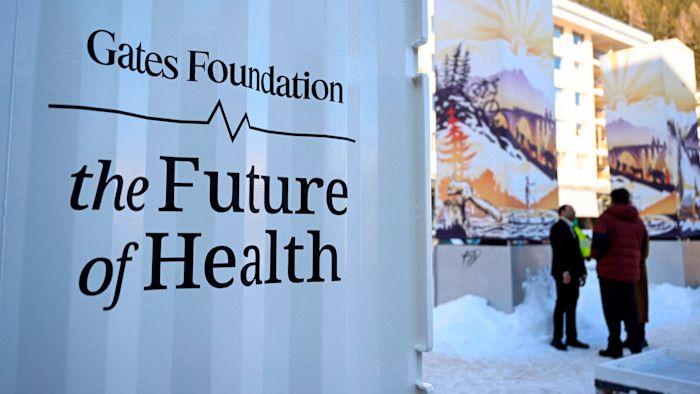
The Gates Foundation and OpenAI unveiled Horizon1000 at the World Economic Forum in Davos, committing up to $50 million in combined funding, technology, and technical support to transform healthcare delivery across Africa
1
4
. Bill Gates described AI in African healthcare as potentially transformative for expanding access to quality care in regions facing impossible staffing conditions2
. The $50 million AI health initiative plans to reach 1,000 primary health clinics and surrounding communities by 2028, starting with Rwanda before expanding to other African countries5
.
Source: FT
Addressing Healthcare Worker Shortages Through Technology
Sub-Saharan Africa faces a critical shortage of nearly 6 million healthcare workers, creating what Gates called an "impossible situation" where staff must triage too many patients with inadequate administrative support and clinical guidance
1
. Rwanda exemplifies this challenge with only one healthcare worker per 1,000 patients, far below the World Health Organization's recommended ratio of 4:1,0003
. At current hiring and training rates, it would take 180 years to close this gap5
. The WHO estimates that low-quality care contributes to between 5.7 million and 8.4 million deaths annually in low- and middle-income countries worldwide1
.How AI-Powered Technology in Clinics Will Support Frontline Health Workers
The initiative will integrate AI tools into health clinics to assist with patient intake, triage, follow-up, referrals, and access to trusted medical information in local languages
4
. Gates emphasized the tools are designed to "support health workers, not replace them," focusing on clinical record-keeping and symptom evaluations to help staff see patients more efficiently and make better decisions1
. Andrew Muhire, a senior official with Rwanda's Ministry of Health, described the technology as intended to strengthen clinical judgment while improving efficiency and reducing administrative burden3
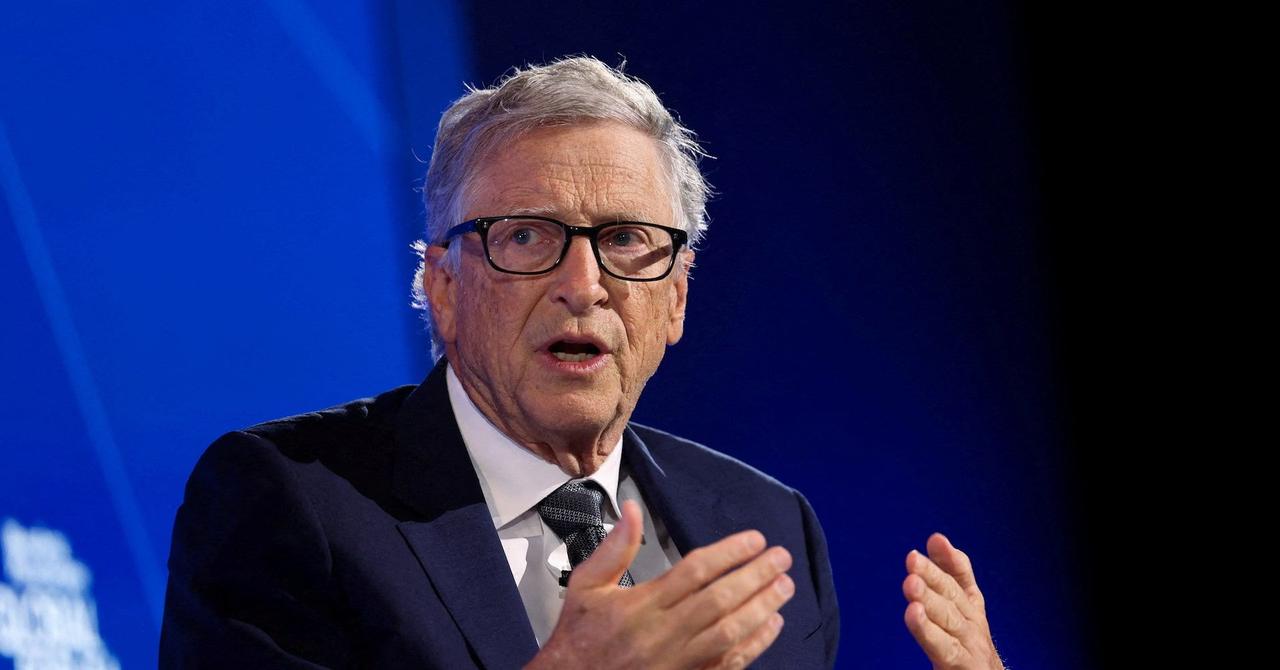
. OpenAI CEO Sam Altman noted that for AI to be a societal marvel, "we've got to figure out ways that we use this incredible technology to improve people's lives"1
.
Source: Reuters
Related Stories

Enhance Health Systems in African Countries While Managing Risks
Rwanda will test the AI-powered technology in more than 50 health clinics as the initial phase of the broader initiative
3
. The tools will be aligned with national clinical guidelines and optimized for accuracy, patient data privacy, and security4
. However, concerns remain about AI hallucinations—fabrications generated by AI models that could prove particularly harmful in clinical decision-making contexts1
. Research has shown these tools could lead to worse health outcomes for historically understudied groups, including women and ethnic minorities, due to potential biases and inadequate data on diseases affecting them disproportionately1
.Linguistic Challenges and Local Adaptation
Language presents a significant barrier in a continent as linguistically diverse as Africa, since most health data and AI models use English
1
. In Rwanda, where Kinyarwanda is spoken by about 75% of the population, digital experts warn that deploying AI technologies without local language support would pose serious barriers to effective care3
. A Massachusetts Institute of Technology study found that patients whose messages contained typos, informal language, or uncertain phrasing were between 7 and 9 percent more likely to be advised against seeking medical care by AI models, even when clinical content was identical1
. The Gates Foundation stated it will monitor, measure, and audit AI model performance for safety problems such as inaccuracies and potential biases, rolling out features gradually while tailoring tools for local cultures and contexts1
. Gates plans to visit the region soon to observe these AI solutions in action as the partnership works closely with African leaders and innovators5
.
Source: ET
References
Summarized by

Navi
[4]
Related Stories
Gates Foundation Commits $1 Billion to Expand Access to AI and Reduce Global Inequality
15 Sept 2026•Policy and Regulation

Gates Foundation Forms 60-Partner AI Coalition to Build Language Data Sets for 3 Billion People
21 Sept 2026•Technology

Anthropic and Gates Foundation commit $200 million to expand AI for public good in health, education
14 May 2026•Health

Recent Highlights



Recent Highlights
Today's Top Stories



Don’t drown in AI news. We cut through the noise - filtering, ranking and summarizing the most important AI news, breakthroughs and research daily. Follow topics that matter to you and stay ahead.


