Gates Foundation Commits $1 Billion to Expand Access to AI and Reduce Global Inequality


18 Sources
[1]
The Gates Foundation says it's spending $1 billion to expand access to AI.
Over the next two years, the funding will go toward improving AI access in education, healthcare, and agriculture, and adding to AI's "digital foundation." That includes priorities like creating AI datasets in more languages and making access to AI more affordable. [Link: Gates Foundation Commits
[2]
Bill Gates compares AI to alien intelligence in movies where 'magically the US and China' solve the problem together -- warns world governments that they're not ready for AI
Microsoft founder Bill Gates has said in an interview that the world's governments are not ready for artificial intelligence. The billionaire philanthropist made the warning in an interview with Reuters, saying that nations must prepare for the various risks that the technology poses to the
[3]
Governments worldwide are way behind on AI, says Bill Gates
LONDON, Sept 15 (Reuters) - No government in the world is ready for the changes artificial intelligence will bring to society, Bill Gates said in an interview with Reuters, as he warned of the risks ahead. The Microsoft co-founder and billionaire philanthropist had until recently been optimistic
[4]
Gates Foundation Pledges $1 Billion to Combat A.I. Inequality
Sign up for the On Tech newsletter. Get our best tech reporting from the week. Get it sent to your inbox. The Gates Foundation has pledged to spend at least $1 billion over the next two years to expand global access to artificial intelligence and use it to tackle social inequalities. The
[5]

Gates Foundation bets $1B on AI to boost global health, agriculture and education
The Gates Foundation is pledging to spend at least $1 billion over the next two years on artificial intelligence for health workers, farmers and teachers, largely in the world's poorest countries, funding AI tools for people the market would otherwise overlook. The bet is that AI can help
[6]

The Gates Foundation will spend at least $1bn on AI access over the next two years
The money goes to education, health and agriculture partners, and to building the data that would let models work in languages they currently do not. Bill Gates has committed the Gates Foundation to spending at least $1bn over the next two years on expanding access to AI, and paired the
[7]

The Gates Foundation is spending $400 million on AI in schools. Teachers warn it could 'end up widening' the divide it's meant to close | Fortune
This week, the Gates Foundation announced a $1 billion commitment to build and deliver equitable AI tools to schools, frontline health care workers, farmers, and more. Of that commitment, 40% will go toward education, including AI tutoring to individualize learning in classrooms both in the U.S.
[8]

Gates Foundation pledges $1 billion for AI in global health and education
The funding breaks down to roughly $400 million each for health care and education, and about $100 million for agriculture, according to the Associated Press. An additional $100 million will go toward building AI training data sets in languages spoken by underserved communities. Gates Foundation
[9]

Can AI save global health? Bill Gates is betting $1 billion that it can.
Sara Herschander is a reporter for Vox, focusing on infrastructure, and how America builds, or fails to build, the hidden systems shaping much of everyday life, from how we get our water to the cables that keep the lights on. On stage at Davos in the Swiss Alps earlier this year, Bill Gates,
[10]

Bill Gates Warns Future Technology Will Favor Those Who Can Pay. His Foundation Is Pledging $1 Billion to Fight It
Bill Gates is warning that the rise of artificial intelligence could lead to immense social inequality. Now, his foundation is pledging $1 billion to fight future disparities. In his 2026 Goalkeepers Report, Make This Matter: AI, Equity, and the Choice We Can't Delay, the tech founder notes that
[11]

Gates Foundation Warns AI Could Widen Inequality as Foundation Pledges $1B to Expand Access
NEW YORK (AP) -- Bill Gates is warning technology companies and world leaders that they must act now to ensure artificial intelligence combats social inequities rather than deepening disparities -- and his foundation is pledging $1 billion to improve access. The Microsoft co-founder made the
[12]

Bill Gates Issues Stark AI Warning As Part Of Billion-Dollar Pledge
Gates is warning technology companies and world leaders that they must act now to ensure artificial intelligence combats social inequities. NEW YORK (AP) -- Bill Gates is warning technology companies and world leaders that they must act now to ensure artificial intelligence combats social
[13]

Governments worldwide are way behind on AI, says Bill Gates
Bill Gates believes governments worldwide are unprepared for artificial intelligence's societal shifts. He warns of potential threats to jobs and increased dangers from AI. However, Gates sees great potential for AI to aid the world's poorest populations. His foundation will invest at least one
[14]

Bill Gates Warns Governments Are Not 'Nearly' Prepared for AI's Impact -- Says Policymakers Are Falling Be
Bill Gates, chair of the Gates Foundation, said governments around the world are not prepared for the changes artificial intelligence will bring to society, warning that policymakers are falling behind as the technology advances. "I don't think any government is nearly as deep on this as they have
[15]

Bill Gates: International governments are 'way behind' on AI, must work together to avoid issues
No government in the world is ready for the changes artificial intelligence will bring to society, Bill Gates said in an interview with Reuters, as he warned of the risks ahead. The Microsoft co-founder and billionaire philanthropist had until recently been optimistic about AI, but has changed his
[16]

Gates Foundation warns AI could widen inequality, pledges $1B for access - The Korea Times
The Goalkeepers report said the foundation projected 2025 to be the first year this century with an increase in child deaths in last year's report. NEW YORK -- Bill Gates is warning technology companies and world leaders that they must act now to ensure artificial intelligence combats social
[17]

Gates Foundation warns AI could widen inequality as foundation pledges US$1B to expand access
NEW YORK -- Bill Gates is warning technology companies and world leaders that they must act now to ensure artificial intelligence combats social inequities rather than deepening disparities -- and his foundation is pledging US$1 billion to improve access. The Microsoft co-founder made the appeal
[18]

Bill Gates gives terrifying warning about AI crisis and world governments: 'Way behind'
Microsoft billionaire Bill Gates said no government in the world is properly prepared for a looming global crisis in artificial intelligence, adding to an outpouring of warnings from top tech leaders about the rapidly progressing technology. The 70-year-old philanthropist had been an AI optimist
Share
Copy Link
The Gates Foundation announced a $1 billion investment over two years to expand access to AI in healthcare, education, and agriculture for underserved populations. Bill Gates warns that world governments are unprepared for AI's societal impact, comparing the technology to alien intelligence requiring global cooperation to manage effectively.
Gates Foundation Commits $1 Billion to Combat AI Inequality
The Gates Foundation announced it will spend at least $1 billion over the next two years to expand access to artificial intelligence and combat AI inequality, marking one of the largest philanthropic commitments to ensure equitable global development through technology
1
4
. The funding, part of the foundation's $9 billion annual budget, will support AI in education, healthcare, and agriculture, with 40% allocated to education, 40% to healthcare, 10% to agriculture, and 10% to building the digital foundation including multilingual datasets5
.Mark Suzman, the foundation's CEO, called the $1 billion a "down payment" and expects the figure to grow significantly after the initial two-year period
5
. This investment aims to ensure AI helps narrow gaps between the richest and poorest rather than widening them, addressing concerns that the most capable tools will be built first for those able to pay, not necessarily for those who could benefit most4
.Bill Gates Warns Governments Unprepared for AI's Societal Impact
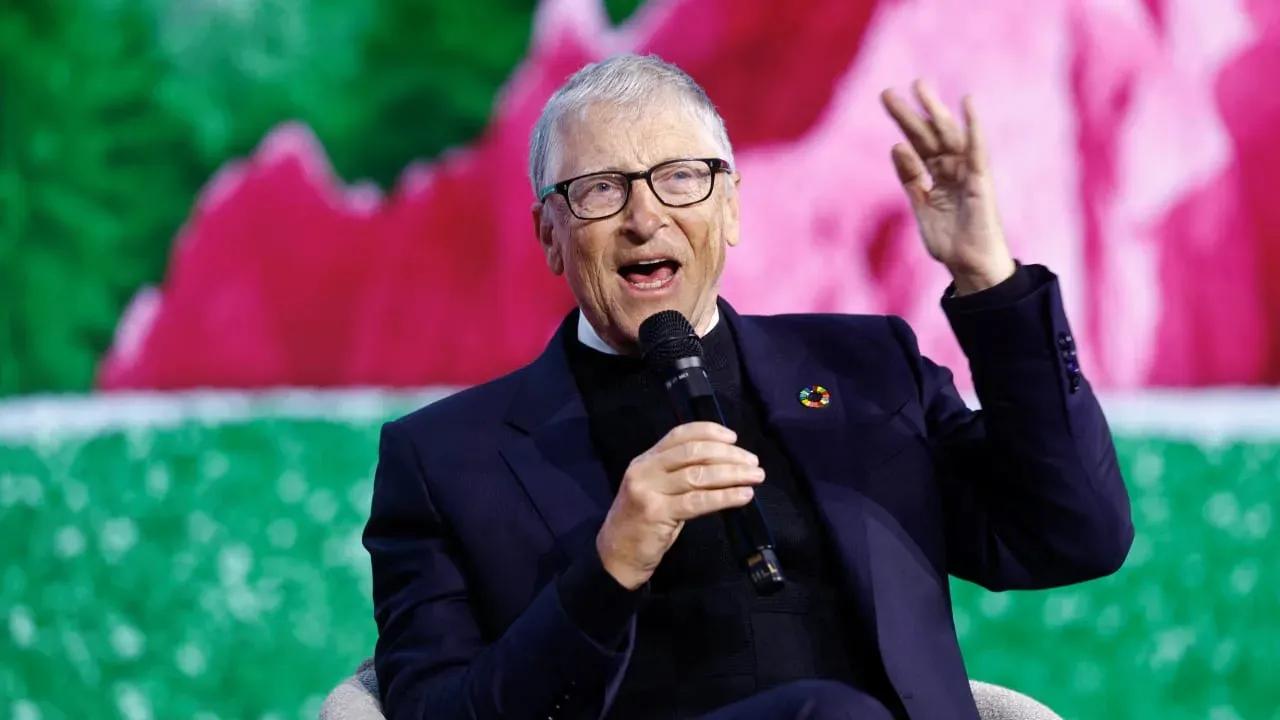
Source: Jerusalem Post
Bill Gates issued stark warnings that no government worldwide is ready for the changes artificial intelligence will bring to society, telling Reuters that "governments are way behind on this one"
3
. The Microsoft co-founder compared AI to alien intelligence, stating: "There's all sorts of movies where some aliens are coming, and magically the U.S. and China and everybody comes together to solve the problem. AI is kind of like this alien intelligence. It's here, and we better do like it shows in those movies"2
3
.Gates has been meeting with world leaders including President Donald Trump and aims to meet Chinese President Xi Jinping later this year to discuss his concerns about job disruption, potential attacks, and dangers of addiction to AI companions
3
. He emphasized that the decisions made in the next 12 to 18 months about how AI is built, funded, and deployed will determine whether this technology primarily benefits those who already have the most or reaches those who have the least5
.Addressing Language Barriers and Building Multilingual Datasets
A critical component of the Gates Foundation's strategy involves creating AI datasets in more languages and ensuring large language models work in every language people speak
1
3
. More than 90% of the data used to train early large language models came from English-language sources, according to the Goalkeepers Report5
.
Source: NYT
Leading AI speech recognition systems make errors less than 6% of the time in English but more than 60% of the time in Yoruba, a West African language spoken by tens of millions of people
5
. Since most people in Africa use feature phones rather than smartphones, the tools must work by voice, requiring recordings of speech in local accents and including children's voices5
. The foundation works with Google and Microsoft on AI language initiatives to address these gaps5
.Related Stories
Early Results Show Promise in Healthcare, Education, and Agriculture
The Goalkeepers Report highlights several AI tools already demonstrating impact across different sectors. At Penda Health, a network of affordable clinics in Nairobi, Kenya, an AI tool built into patient records has raised diagnostic accuracy by 16 percentage points
5
. In education, seventh graders using Kiddom Atlas across 21 middle schools in the U.S. gained the equivalent of six extra months of learning in a single year5
.In India, the state of Maharashtra runs MahaVISTAAR, a free AI advisory service that has signed up more than 740,000 farmers, with 70,000 more joining every month
5
. Gates emphasized the health potential, stating "For health it's hard to overstate what the potential is," from supporting frontline healthcare workers to discovering new drugs and vaccines3
. Suzman noted that while education work remains on a relatively small scale, agriculture already operates at significant size, giving the foundation confidence to commit at this level5
.Foundation's Broader Mission and Timeline for Ethical AI Development
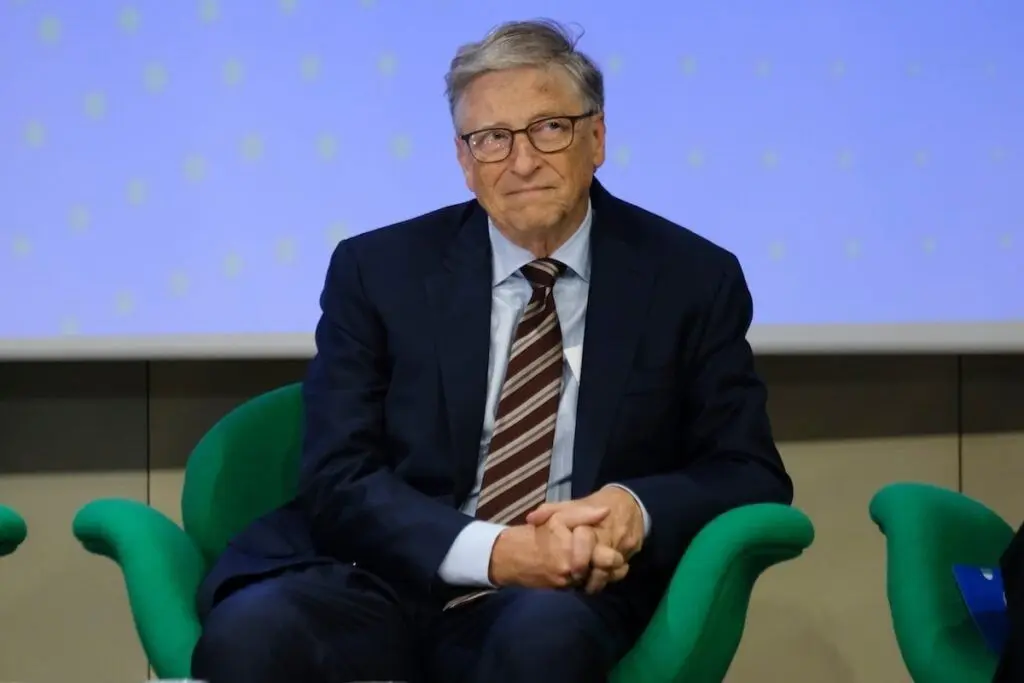
Source: Benzinga
This $1 billion investment aligns with the Gates Foundation's broader mission to accelerate progress against child mortality, poverty, and disease, which has slowed as governments cut global health funding
5
. Gates announced in May 2025 that he would give away virtually all his wealth and close the foundation in 2045, requiring the foundation to give away $200 billion before shutting down5
.The foundation's goals for its final two decades include cutting preventable child deaths in half again, eradicating polio and malaria, and bringing tuberculosis and HIV under control
5
. Gates wrote in the report that "the window to influence who benefits, and how soon, is short," arguing that without intervention, AI will primarily serve the people and institutions most able to pay rather than those who could benefit most4
. He concluded: "We can harness AI for good. But it won't happen by accident"4
.References
Summarized by

Navi
Related Stories
Gates Foundation Forms 60-Partner AI Coalition to Build Language Data Sets for 3 Billion People
21 Sept 2026•Technology

$1 Billion Initiative Launched to Develop AI Tools for Frontline Workers
18 Jul 2025•Technology

Big Tech Invests Millions in AI Training for Teachers, Sparking Debate and Concerns
17 Oct 2025•Technology

Recent Highlights



Recent Highlights
Today's Top Stories








Don’t drown in AI news. We cut through the noise - filtering, ranking and summarizing the most important AI news, breakthroughs and research daily. Follow topics that matter to you and stay ahead.


