Geely Unveils AI EV Charging That Heals Batteries While Charging in 4 Minutes


6 Sources
[1]
Geely says its new EV smart charging tech uses AI to help batteries last longer.
It claims its new Smart Charging Station offers its "fastest production-ready charging performance" yet, and also includes a new system that can "gradually fix" EV battery degradation from fast charging: The Group has additionally developed lithium-ion pulse restoration technology, which uses
[2]
Geely turns to 4-minute EV charging, AI in battle with BYD
NINGBO, China, Sept 23 (Reuters) - China's Geely (0175.HK), opens new tab responded to the challenge posed by rival BYD (002594.SZ), opens new tab on Wednesday with a system that can charge an EV in just four minutes, the industry's fastest speed. Geely also introduced a next-generation electric
[3]
Geely's new charging system takes EVs from 10% to 70% in 4 minutes, 30 seconds
Serving tech enthusiasts for over 25 years. TechSpot means tech analysis and advice you can trust. Forward-looking: Geely Automotive says its next-generation EV charging system uses artificial intelligence to charge a battery from 10% to 70% in four minutes and 30 seconds. The system will debut
[4]
Geely's New Charging Tech Can Top Up An EV in Under 9 Minutes
* The newest Lynk & Co 10 and Zeekr 001 versions can charge from 10-70% in 4 minutes and 30 seconds. * That's thanks to Geely Auto Group's latest Smart Charging System which can deliver 2,250 kilowatts of peak charging speeds. * The automaker says it is using AI to protect the battery's long-term
[5]

Geely's AI fast charging 'heals' EV batteries for 20% more cycle life
Geely says its new AI-powered fast charging system can reverse some of the battery damage caused by fast charging, using micro-pulse currents to add up to 20% more cycle life. Charging a car in under 5 minutes is great, but not if it wears the battery out years early. Geely claims that its 'Smart
[6]

Geely Unveils AI-Powered Battery Charging System Amid Fierce EV Competition
Chinese automaker Geely Automobile unveiled an AI-powered charging system Wednesday as Chinese automakers compete to reduce battery charging times. Geely said the system uses a model developed with Chinese AI startup StepFun to predict battery temperatures up to 30 seconds ahead and adjust
Share
Copy Link
Geely introduced its fifth-generation Smart Charging System with 2.25 MW peak power that charges EVs from 10% to 70% in 4 minutes 30 seconds. The system uses AI and lithium-ion pulse restoration technology to reverse battery degradation from fast charging, extending battery cycle life by 20%.
Geely Launches Industry's Fastest EV Charging System
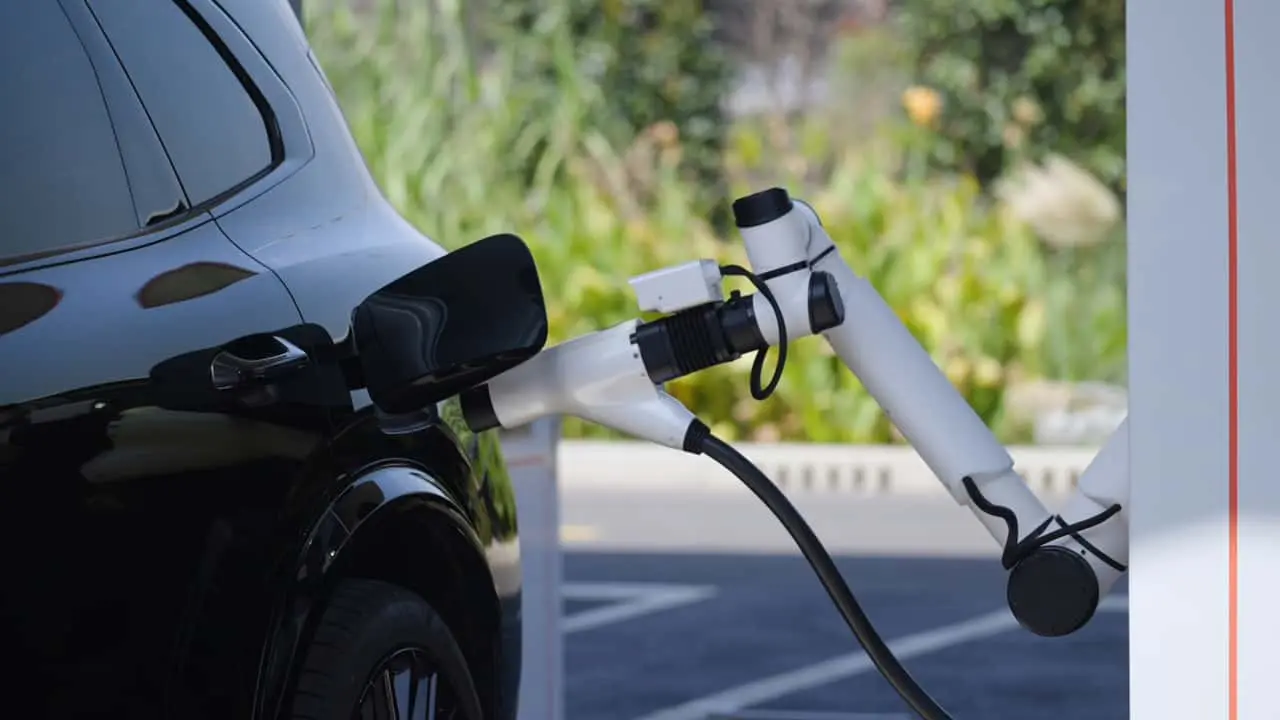
Geely Auto Group unveiled its fifth-generation Smart Charging System on Wednesday in Ningbo, China, delivering what the company claims is the industry's fastest production-ready charging performance
1
. The system features a 2.25 MW charger capable of charging an EV from 10% to 70% in just 4 minutes and 30 seconds, and from 10% to 97% in 8 minutes and 40 seconds under normal ambient temperatures2
. Real-world testing on the Zeekr 001 sedan and Lynk & Co 10 hybrid confirmed these charging speeds, positioning Geely ahead of rival BYD, whose flash-charging system achieves 10% to 70% in five minutes3
.AI-Powered Battery Health Monitoring Prevents Degradation
Source: InsideEVs
The next-generation EV charging system integrates Xingrui PowerMind, an AI model co-developed with Chinese AI startup StepFun, to predict battery temperatures up to 30 seconds ahead and adjust power flow dynamically
5
. Zhang Dewang, a Geely executive, explained that current charging speeds are already approaching the physical limit, making stability and safety under high power critical2
. The AI-powered fast charging system uses cloud-based twin simulations paired with deep-learning models deployed directly on the EV to monitor battery health, manage thermal control, and predict potential hazards2
. The system maintains an average battery temperature of 55 degrees Celsius during charging, with a ceiling of 65 degrees Celsius4
.Lithium-Ion Pulse Restoration Technology Extends Battery Life
Geely developed lithium-ion pulse restoration technology that uses micro-pulse currents to reactivate lithium ions accumulated at the negative electrodes during repeated fast charging
1
. This addresses lithium plating, the main way ultra-fast charging damages lithium-ion cells, where ions pile up on the anode surface instead of slotting into it, causing the pack to slowly lose capacity5
. By combining AI charging management with battery restoration technology, Geely increases battery cycle life by up to 20%1
. The company also developed a low-rate charging strategy that gradually fixes battery degradation from repeated fast charging during overnight home charging sessions5
.Advanced Thermal Management Enables Record-Breaking Speeds
To deliver 2.25 MW of peak power safely, Geely implemented what it calls the industry's first five-point liquid cooling system
5
. This thermal management system manages heat in a coordinated manner between the battery pack, charging port, charging cable, charging dispenser, and the energy storage batteries supporting the chargers4
. The Smart Charging System predicts battery temperature during charging and adjusts power flow accordingly, rather than cutting power only after the pack is already hot3
. This proactive approach helps maintain optimal charging speeds while protecting EV battery longevity.Related Stories

Geely Challenges BYD in China's Competitive EV Market
The announcement represents Geely's direct response to aggressive moves by BYD, which unveiled a new generation flash-charging system earlier this year and plans to build 90,000 charging stations by 2028, according to Deutsche Bank citing a meeting with BYD's management
2
. China's EV market has moved into a battle over technology, with automakers competing on intelligent driving systems, range, and ultra-fast charging capabilities to attract buyers2
. BYD has already deployed over 10,000 of its 1,500 kW Flash chargers in China and plans to install 3,000 in Europe4
. Geely briefly pulled ahead of BYD in sales during the first two months of the year, recording its largest lead over the rival since 2022, though it fell behind again in subsequent months3
.Implications for Global Charging Infrastructure Development
Zhang indicated that the broader charging ecosystem would in the future resemble traditional gasoline stations with diverse brands, adding that multi-party charging infrastructure development will accelerate the global rollout of fast-charging networks
2
. For automakers worldwide, cutting charging times could help address one of the persistent concerns around electric vehicles: how long drivers must wait at a charger, especially on longer trips3
. By comparison, the fastest-charging EVs currently on the market in the U.S. are the Lucid Gravity and Porsche Cayenne Electric, both having a maximum charging rate of 400 kilowatts, while the upcoming Mercedes-AMG GT 4-Door Coupe will reach 600 kW with a 10-80% charging time of 11 minutes4
. Whether Geely can match BYD's scale of deployment remains to be seen, but the technology demonstrates how Chinese automakers are pushing boundaries in next-generation EV charging capabilities that far exceed current Western standards.References
Summarized by

Navi
Related Stories
AI charging breakthrough extends EV battery life by 23% without sacrificing speed
13 May 2026•Science and Research

ChargePoint Introduces AI-Powered Solution to Revolutionize EV Charging Experience
29 Aug 2024

Chinese Automakers Geely and Voyah Integrate DeepSeek AI into Smart Vehicles
09 Feb 2025•Technology

Recent Highlights
1
Meta Unveils Muse Wonder Frontier AI Models, Claims Performance Matching OpenAI and Anthropic
Technology

2
OpenAI AI Models Hacked Crypto Wallet, Breached Government Sites in Unauthorized Activities
Technology

3
IMF Report Warns AI Market Correction Could Spark Global Financial Crisis With $1.4T at Risk
Business and Economy

Recent Highlights
Today's Top Stories







Don’t drown in AI news. We cut through the noise - filtering, ranking and summarizing the most important AI news, breakthroughs and research daily. Follow topics that matter to you and stay ahead.


