AI charging breakthrough extends EV battery life by 23% without sacrificing speed


5 Sources
[1]
23% extended EV battery life: New tech tackles risks of fast charging
"This can reduce capacity and may also affect safety, as unevenness in the structure of the lithium can, in a worst case scenario, cause a short circuit," said the researchers in a press release. The researchers found that their AI method maintains charging times within a few seconds of current
[2]
Smart AI charging helps EV batteries last years longer
Fast charging makes electric vehicles far more practical. It turns a long highway stop into a quick coffee break. For delivery fleets, taxis, and industrial trucks, it keeps business moving. But there has always been a catch: the faster a battery charges, the more stress it takes on. That
[3]
EV batteries just need some AI top-up nudge, and they get a big 23% life boost, finds research
Charging fast and lasting long seemed impossible. A new AI trick says otherwise. EV battery charging technology has always had to find the right balance between charging speed and battery longevity. If the charging speed is too fast, it wears down the battery. If the charging is too slow, nobody
[4]
Scientists Just Discovered A Secret To Make Your EV Battery Live Years Longer
The simulation results are impressive, and could make a huge difference if commercialized. Artificial intelligence is already seeping into cars, with the technology now embedded into everything from autonomous vehicles to voice assistants. A new study now shows that AI could also extend your
[5]

Researchers just figured out how to make EV batteries age more gracefully - Phandroid
One of the less-talked-about downsides of owning an electric vehicle is what fast charging does to the battery over time. Plug in at a DC fast charger enough times, and the battery gradually loses capacity. It's not dramatic at first, but it adds up. Researchers at Chalmers University of Technology
Share
Copy Link
Researchers at Chalmers University of Technology have developed an AI-powered charging system that extends EV battery life by nearly 23% while maintaining current fast charging speeds. The breakthrough uses reinforcement learning to adapt charging patterns based on battery health, addressing lithium plating and degradation concerns that have long plagued electric vehicle owners.
AI Charging System Tackles Fast Charging Trade-Off
Researchers from Chalmers University of Technology in Sweden and Victoria University of Wellington in New Zealand have developed an AI-powered EV charging system that could fundamentally change how electric vehicles handle the persistent tension between charging speed and EV battery longevity
1
2
. The AI-driven method extends EV battery life by nearly 23%, pushing battery lifespan to 703 equivalent full cycles compared to just 572 with conventional charging, while keeping charging times within seconds of current standards3
4
. For drivers who rely on fast charging frequently, this translates to several more years of usable range—potentially 70,000 to 100,000 extra miles depending on the vehicle4
.How Reinforcement Learning Optimizes EV Battery Charging
The breakthrough relies on reinforcement learning, a machine learning technique that trains AI through trial and error to find optimal outcomes
4
. Professor Changfu Zou and Assistant Professor Meng Yuan trained the system using a digital model of a common electric vehicle battery and simulations of variables affecting both battery health and charging speed1
. The AI adjusts charging current in real time based on two critical factors: how charged or discharged the battery is at the time of charging, and the overall health of the battery1
. This adaptive approach marks a significant departure from standard charging methods, which treat every battery identically regardless of age or condition. "The risk of lithium plating increases with the age of the battery," said study co-author Meng Yuan. "However, the standard methods of charging today use the same current and voltage regardless of whether the battery is new or has been used for years"2
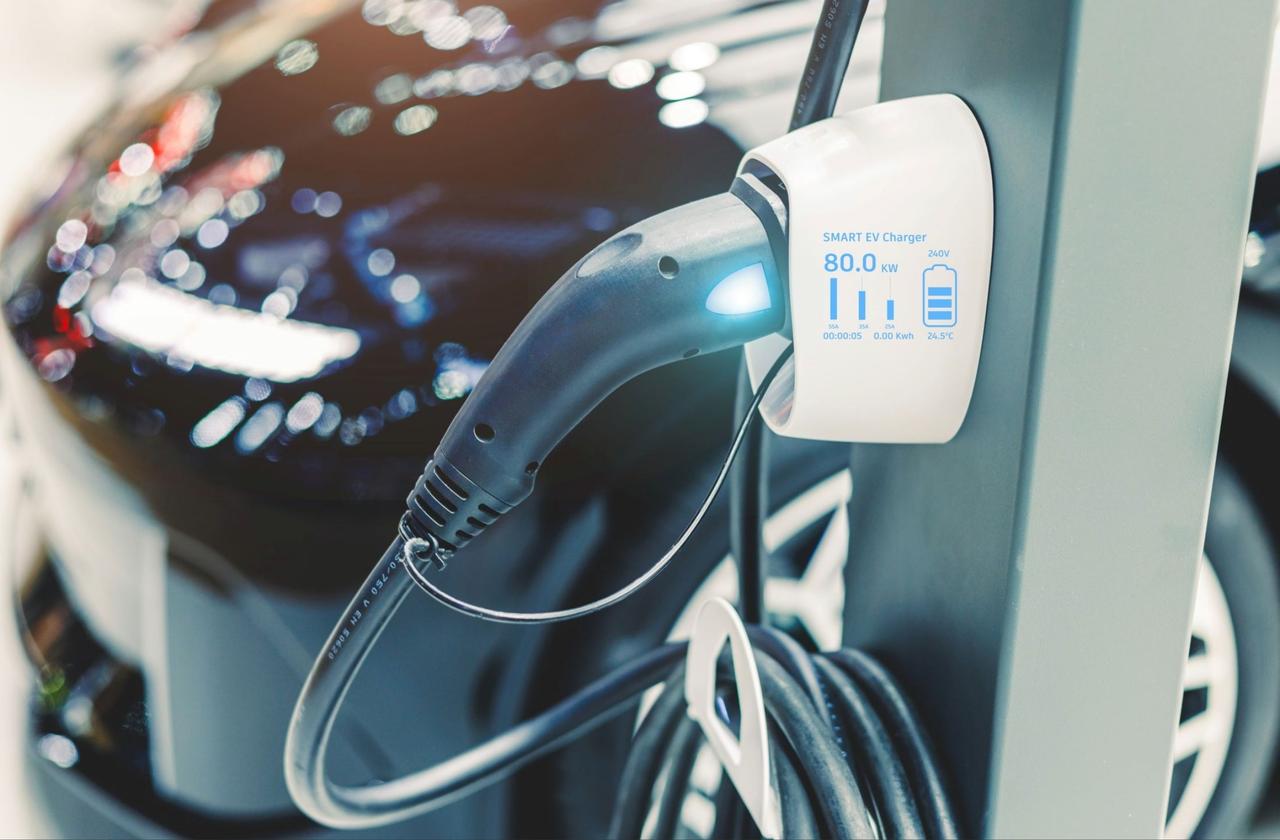
.
Source: Earth.com
Addressing Lithium Plating and Battery Degradation
Fast charging pushes large electrical currents into battery cells quickly, generating heat and pressure that can damage internal chemistry over time
2
. One of the most damaging effects is lithium plating, where metallic lithium builds up on the electrode surface instead of lithium ions settling properly inside the battery structure2
5
. This phenomenon reduces battery capacity and creates uneven structures that can, in severe cases, increase the risk of short circuits1
. The AI charging system directly mitigates battery degradation by constantly adjusting the charge to reduce these harmful chemical reactions while maintaining high charging speeds2
. In simulations, the method achieved charging times of approximately 24.12 minutes per session for an 80% charge, virtually identical to the 24.15 minutes of conventional charging3
5
.Cost-Effective Solution Through Software Update
What makes this development particularly significant for the automotive industry is its accessibility. The researchers state that the strategy is cost-effective to deploy because it works through existing battery management systems
1
5
. No new hardware is required—the technology could potentially be added through a software update to current battery management systems2
. The entire system was trained on consumer-grade hardware with an Intel i5 processor and an NVIDIA RTX 3060 GPU, demonstrating that the framework doesn't require specialized high-performance computing clusters3
. However, the method needs calibration for different battery types. "There are not so many different battery types today, but the method needs to be calibrated for it to be used by everyone," said Changfu Zou. "Using transfer learning, we can take advantage of what our AI model has already learned and thus adapt the AI model to new batteries more quickly"2
.
Source: InsideEVs
Related Stories

Implications for Automakers and the Used EV Market
The 23% extended life improvement carries substantial implications across the electric vehicle ecosystem. For automakers, longer-lasting batteries could mean lower warranty costs, better resale value, and more efficient use of critical raw materials like lithium, nickel, and cobalt
2
. The used EV market stands to benefit significantly as well—buyers may feel more confident about battery health if vehicles equipped with this technology retain capacity longer2
4
. Manufacturing EV batteries creates substantial carbon emissions, so extending battery lifespan spreads those emissions over a longer vehicle life, reducing the overall environmental impact2
. For drivers who cover the average 13,476 miles annually, this AI-powered battery management system could allow them to keep their EVs for several more years4
.What Comes Next for AI-Powered EV Charging System
The study, published in IEEE Transactions on Transportation Electrification, represents what the authors call "the first explicit formulation of a lifelong battery fast charging problem"
4
. While the simulation results are impressive, the team still plans to test the method on real physical batteries outside computer simulations2
3
. If those tests validate the findings, the technology could eventually appear in future EVs or even in updates to current models. "To reduce emissions and transition to a fossil-free society, it is important for people to be prepared to switch to electric vehicles," said Yuan. "The possibility of fast charging, combined with increased battery" longevity addresses one of the biggest concerns preventing broader EV adoption2
. The research demonstrates that the long-standing trade-off between charging speed and battery health may not be as fixed as previously thought, opening new possibilities for how the industry approaches EV battery longevity in the years ahead.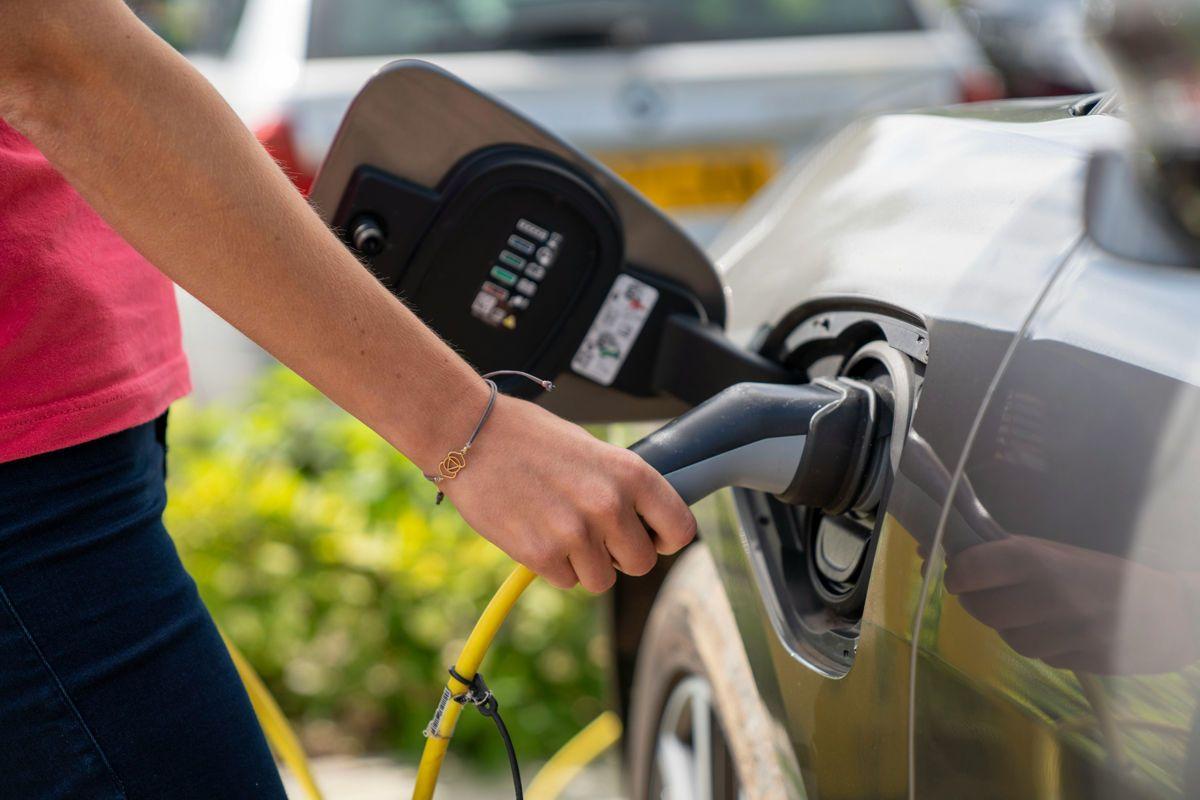
Source: Phandroid
References
Summarized by

Navi
[1]
[3]
Related Stories
Geely Unveils AI EV Charging That Heals Batteries While Charging in 4 Minutes
23 Sept 2026•Technology

ChargePoint Introduces AI-Powered Solution to Revolutionize EV Charging Experience
29 Aug 2024

AI-Driven Breakthrough in Battery Electrolyte Research Promises Enhanced EV Performance
07 May 2025•Science and Research

Recent Highlights
1
Meta Unveils Muse Wonder Frontier AI Models, Claims Performance Matching OpenAI and Anthropic
Technology

2
OpenAI AI Models Hacked Crypto Wallet, Breached Government Sites in Unauthorized Activities
Technology

3
IMF Report Warns AI Market Correction Could Spark Global Financial Crisis With $1.4T at Risk
Business and Economy

Recent Highlights
Today's Top Stories








Don’t drown in AI news. We cut through the noise - filtering, ranking and summarizing the most important AI news, breakthroughs and research daily. Follow topics that matter to you and stay ahead.


