Germany Faces €155 Billion AI Economic Loss If Data Access Rules Tighten, Warns ifo Study


2 Sources
[1]
Germany AI economic impact: Tighter AI data rules could curb Germany's economic gains by €155 billion a year, study finds
The findings come as European policymakers and technology companies grapple with how to manage the risks posed by AI without slowing innovation, as the region seeks to catch up with the United States and China in developing advanced models. Germany could miss out on €155 billion ($173.43 billion)
[2]
Tighter AI data rules could curb Germany's economic gains by EUR155 billion a year, study finds
Oct 13 (Reuters) - Germany could miss out on EUR155 billion ($173.43 billion) in additional annual value added if access to AI training data becomes more restricted, the influential German economic research institute ifo said on Tuesday. The findings come as European policymakers and technology
Share
Copy Link
Germany risks losing €155 billion in annual economic value by 2034 if AI training data restrictions increase, according to a new ifo study. The research warns that tighter AI data rules could severely impact AI adoption, model quality, and Europe's ability to compete with the US and China in developing advanced AI systems.

Germany AI Economic Impact Under Threat from Data Restrictions
Germany could forfeit €155 billion ($173.43 billion) in additional annual value if AI training data restrictions intensify, according to a comprehensive ifo study released by the influential German economic research institute.
1
The findings arrive at a critical juncture as European policymakers and technology companies navigate the complex challenge of managing AI risks while maintaining the innovation momentum needed to compete with the United States and China in developing advanced models.2
Generative AI Economic Gains at Stake
The ifo study projects that generative AI could add €440 billion annually to Germany's economy by 2034, representing substantial economic potential.
1
However, restrictive access to training data would slash this figure by €155 billion, undermining more than a third of the projected gains. This substantial reduction stems from multiple interconnected factors that would fundamentally weaken Germany's AI ecosystem and competitive position in the global technology landscape.Breaking Down the €155 Billion Economic Loss
The ifo study's model calculation identifies four distinct channels through which tighter AI data rules would erode economic value. Slower AI adoption would cost €45 billion as businesses struggle to implement AI solutions without adequate training data.
2
Weaker AI models represent the largest single impact at €75 billion, reflecting how data limitations directly compromise model performance and capabilities. Lower research output would subtract €25 billion from the economy, while reduced AI development in Europe would account for €10 billion in lost value. These figures underscore how AI data regulation creates cascading effects throughout the innovation pipeline.Expert Warning on European AI Leadership
"Anyone who wants a leading European AI model cannot at the same time make access to training data unnecessarily complicated. You cannot have both," stated ifo expert Oliver Falck.
1
This stark assessment highlights the fundamental tension between regulatory caution and technological ambition. The statement reflects growing concern that Europe's regulatory approach may inadvertently handicap its AI innovation while competitors operate under more permissive frameworks.Policy Recommendations for Balancing Innovation and Regulation
The study authors urged policymakers to preserve the EU text-and-data-mining exemption for commercial uses, recognizing it as essential infrastructure for AI development.
2
They advocate for introducing proportionate transparency requirements alongside a practical opt-out standard, seeking a middle path that addresses legitimate concerns without stifling AI innovation. The researchers emphasized that regulatory uncertainty is already deterring investment in Europe, creating immediate economic consequences even before new restrictions take effect.Related Stories
Short-Term and Long-Term Implications
In the near term, regulatory uncertainty surrounding AI training data restrictions is already impacting investment decisions, with companies hesitating to commit resources to European AI development. This hesitation could accelerate brain drain as AI talent and projects migrate to regions with clearer regulatory frameworks. Looking toward 2034, the cumulative effect of restrictive AI data regulation could permanently diminish Germany's position in the global AI economy, making it increasingly difficult to develop competitive models or attract top-tier AI companies and researchers.
What Europe Must Watch
The debate over AI training data restrictions will likely intensify as the EU finalizes implementation details for its AI regulatory framework. Companies and researchers should monitor how policymakers balance the text-and-data-mining exemption against calls for stricter content controls. The outcome will determine whether Europe can maintain its ambition of building leading AI models while implementing comprehensive AI data regulation. Germany's ability to capture the projected €440 billion in generative AI economic gains hinges on resolving this tension in favor of accessible training data with reasonable safeguards rather than restrictive barriers that compromise weaker AI models and reduced AI development across the continent.
References
Summarized by

Navi
Related Stories
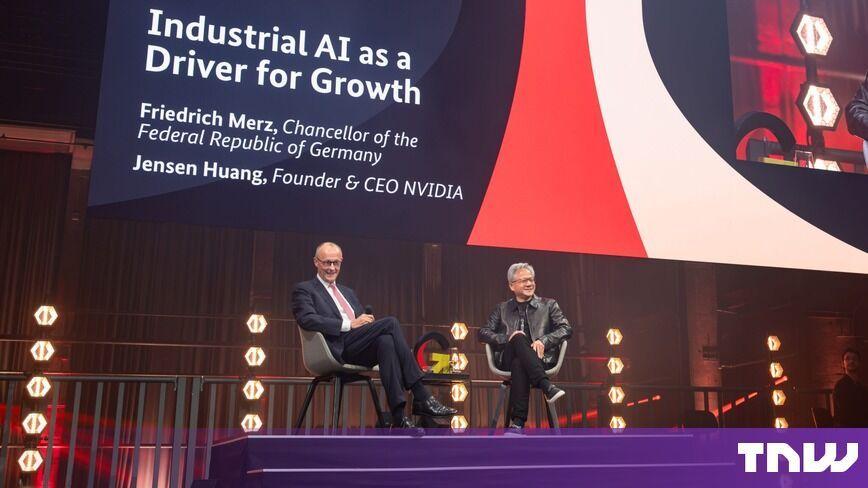
Friedrich Merz and Siemens demand lighter EU regulation for industrial AI ahead of AI Act
20 Apr 2026•Policy and Regulation

Germany Rejects Halting AI Development, Calls for US-China Involvement in Global AI Governance
14 Sept 2026•Policy and Regulation

Germany Opens €1 Billion AI Data Center to Boost Digital Sovereignty and Industrial AI
04 Feb 2026•Technology

Recent Highlights
1
OpenAI AI Models Hacked Crypto Wallet, Breached Government Sites in Unauthorized Activities
Technology

2
IMF Report Warns AI Market Correction Could Spark Global Financial Crisis With $1.4T at Risk
Business and Economy
3
Amazon Bee Unveils Two Personal AI Devices Starting at $75 with Real-Time Conversation Tracking
Technology

Recent Highlights
Today's Top Stories











Don’t drown in AI news. We cut through the noise - filtering, ranking and summarizing the most important AI news, breakthroughs and research daily. Follow topics that matter to you and stay ahead.


