Friedrich Merz and Siemens demand lighter EU regulation for industrial AI ahead of AI Act


2 Sources
[1]
Germany's Merz says industrial AI needs less stringent EU regulation
HANOVER, Germany, April 19 (Reuters) - Germany's Chancellor Friedrich Merz said on Sunday that artificial intelligence for industrial use will require more regulatory freedom in the European Union than other AI areas such as consumer use to boost productivity. "I will push to ease the regulatory
[2]
Merz, Siemens call for easing of EU regulations on industrial AI
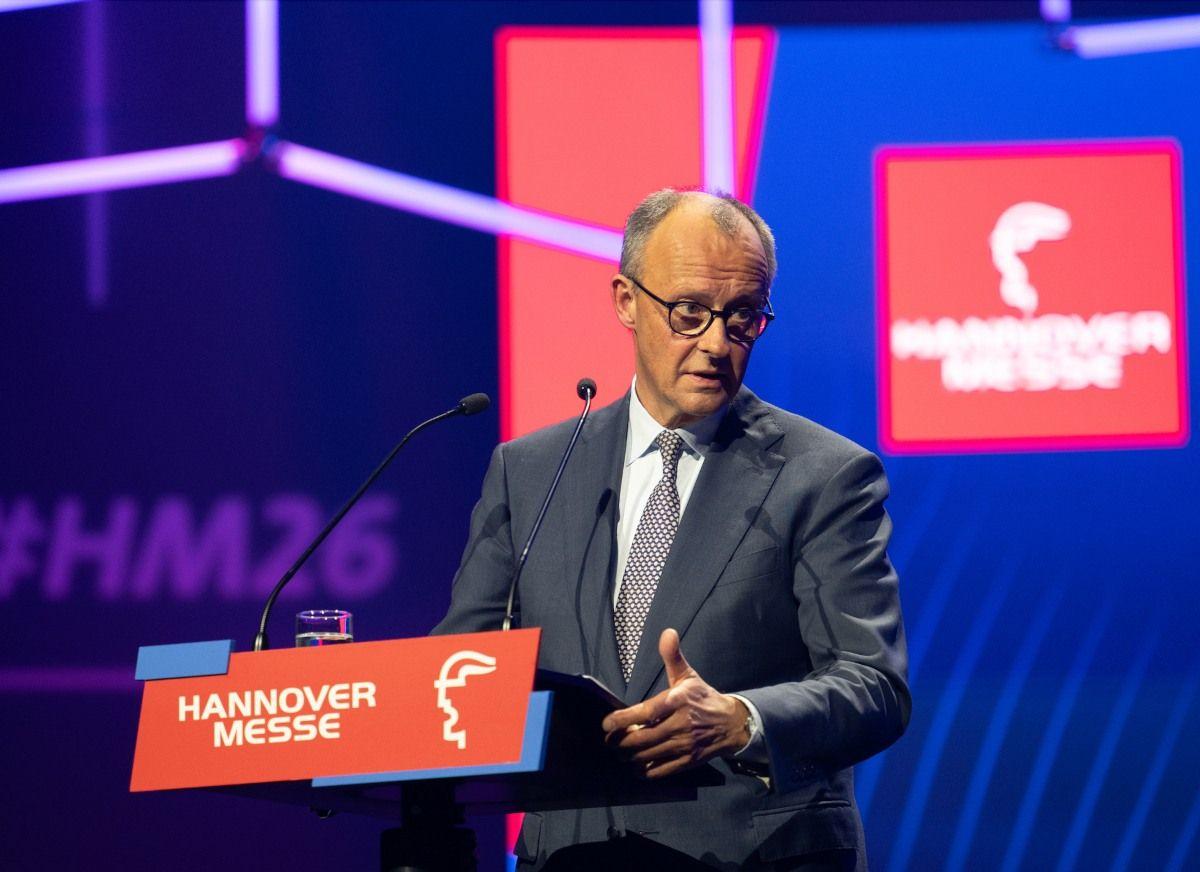
German Chancellor Friedrich Merz speaks at the weekend. Image: Hannover Messe At the huge Hannover Messe trade fair over the weekend, attendees heard calls for a lightening of EU Act regulations for industrial AI. It's one of the largest industrial trade fairs in the world, and little surprise
Share
Copy Link
German Chancellor Friedrich Merz called for less stringent EU regulation on industrial AI at Hannover Messe, arguing current rules are too restrictive. Siemens CEO Roland Busch echoed the concerns, warning the company may prioritize investments in the US and China if regulations aren't eased before the EU AI Act takes full effect in August.
Friedrich Merz Challenges EU Regulation Framework at Hannover Messe
German Chancellor Friedrich Merz delivered a pointed message at the Hannover Messe trade fair on Sunday, calling for the easing of EU regulations on industrial AI to boost productivity across the European Union
1
. Speaking at one of the world's largest industrial exhibitions, Merz argued that industrial AI requires different regulatory approaches compared to consumer AI applications. "I will push to ease the regulatory burden in the EU on AI and, where possible, to exempt industrial AI from the current regulatory straightjacket that is too tight for AI within the European Union," Merz stated in his speech1
. The Chancellor emphasized that AI will contribute to greater efficiency and productivity, optimized use of resources, and reduced costs2
.
Source: Silicon Republic
Siemens CEO Warns of Investment Flight to US and China
Merz's position received strong backing from Roland Busch, CEO of Siemens, Germany's most valuable company with a market capitalization of approximately €194 million
2
. In an interview at the same event, Busch warned that the industrial giant would prioritize investment in the United States and China if the European Union does not lighten its regulatory burden. "It's complete nonsense to treat industrial and machine data the same way as personal data," Busch stated, adding, "I can't explain to my shareholders why I'm investing money in an environment where I'm being held back"2
. The CEO's remarks underscore growing industry concerns that current frameworks are stifling productivity, innovation, and investment in Europe's industrial sector.Germany Races to Compete with Dominant AI Players
The push for less stringent EU regulation comes as Germany attempts to compete with dominant AI players like the United States and China in the global race to master transformational technology and attract high-income jobs
1
. Last month, Berlin announced plans to encourage investments to boost AI data processing capacity at least fourfold by 20301
. The timing of these calls is particularly significant as the EU's AI Act is scheduled to come into full force on August 2 of this year2
.Related Stories

Implications for Upcoming AI Act Regulations
The warnings from both political and industry leaders arrive at a critical juncture for European AI policy. While supporters have praised the EU's measured approach to AI governance, critics continue to call for amendments as Europe vies to maintain competitiveness in the fast-moving world of AI innovation
2
. Busch noted that industrial applications are already subject to sector-specific regulations, suggesting that additional AI-specific rules create unnecessary layers of compliance2
. As August approaches, expect intensified debate over whether the AI Act should distinguish between industrial AI and consumer AI applications, with industry leaders watching closely to see if regulatory adjustments will prevent capital flight to more permissive jurisdictions.References
Summarized by

Navi
[2]
Related Stories
Siemens and SAP CEOs Call for Revision of EU AI Regulations, Citing Innovation Concerns
14 Jul 2025•Policy and Regulation
Germany and Nvidia Sign AI Partnership to Transform Industrial Manufacturing
16 Oct 2026•Business and Economy
Europe Pushes for Digital Sovereignty as Leaders Rally Against US Tech Dominance at Berlin Summit
18 Nov 2025•Policy and Regulation

Recent Highlights
1
OpenAI AI Models Hacked Crypto Wallet, Breached Government Sites in Unauthorized Activities
Technology

2
IMF Report Warns AI Market Correction Could Spark Global Financial Crisis With $1.4T at Risk
Business and Economy

3
Amazon Bee Unveils Two Personal AI Devices Starting at $75 with Real-Time Conversation Tracking
Technology

Recent Highlights
Today's Top Stories











Don’t drown in AI news. We cut through the noise - filtering, ranking and summarizing the most important AI news, breakthroughs and research daily. Follow topics that matter to you and stay ahead.


