Germany's Merz Declares AI Independence 'Existential' as Europe Races to Catch Up


4 Sources
[1]
Merz says Germany must preserve 'digital sovereignty' in AI era
BERLIN, Nov 2 (Reuters) - Germany and Europe must move more quickly to develop their own artificial intelligence capabilities to protect their "digital sovereignty" in an era being transformed by the new technology, Chancellor Friedrich Merz said on Monday. Speaking at a conference on artificial
[2]
Chancellor Friedrich Merz says Germany and Europe must build their own AI more quickly
The German chancellor called digital sovereignty in AI "a truly existential question" at a conference in Berlin. Germany and Europe must move faster to build their own AI technology or risk becoming dependent on outside providers, German Chancellor Friedrich Merz said on Monday, according to
[3]
Germany's Merz Calls for Greater AI Independence | PYMNTS.com
German Chancellor Friedrich Merz called for an accelerated push to develop domestic artificial intelligence capabilities, warning that Germany and Europe risk losing control over critical technologies as competition in the global AI industry intensifies. Speaking at a digital technology conference
[4]
Digital minister seeks more momentum on AI
BERLIN (dpa-AFX) - Digital Minister Karsten Wildberger (CDU) has called on Germany to move faster and become more active in the field of artificial intelligence (AI) ahead of the Digital Summit. "This is where value is created, where growth is generated and where jobs are created," the CDU
Share
Copy Link
German Chancellor Friedrich Merz warned that Germany and Europe must accelerate AI development to avoid dependency on foreign providers. Speaking at Berlin's Digital Summit, he called digital sovereignty an existential question as Germany faces challenges including weak digital infrastructure and skills shortages despite €225bn in investment pledges.
Germany and Europe Must Build Their Own AI to Preserve Control
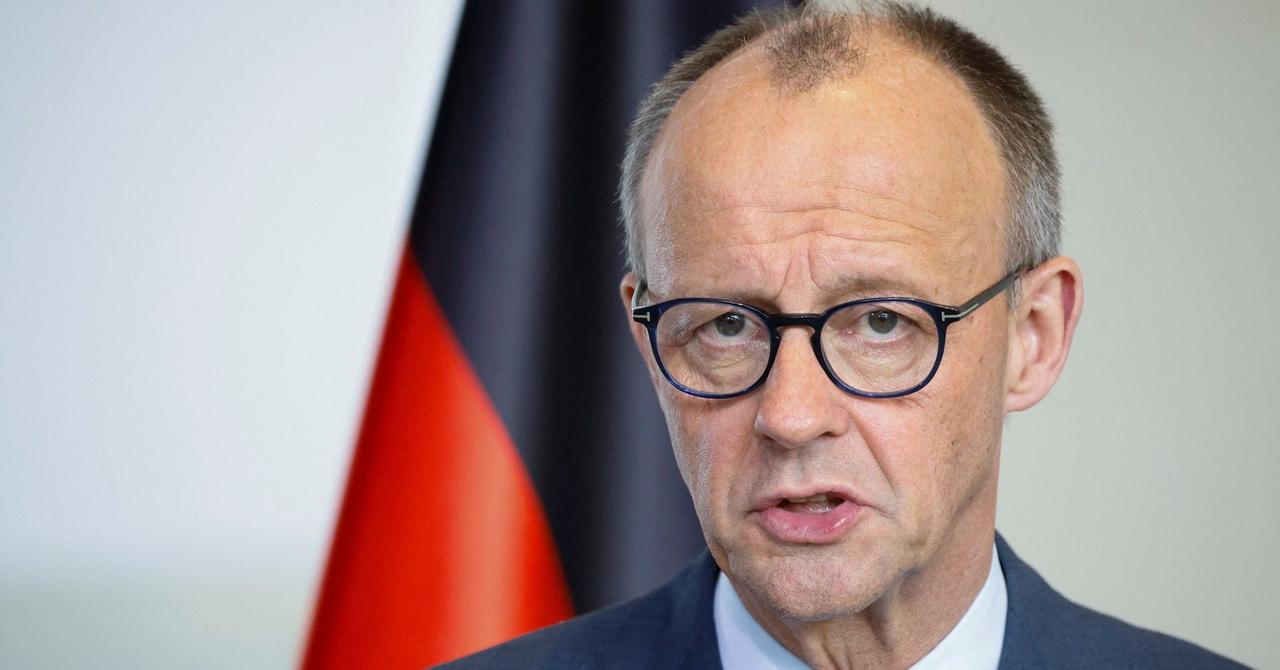
German Chancellor Friedrich Merz delivered a stark warning at an artificial intelligence conference in Berlin on Monday, declaring that Germany and Europe must accelerate AI development or risk surrendering control to outside providers
1
. Speaking at the Digital Summit, Friedrich Merz framed digital sovereignty as "a truly existential question" as AI becomes deeply embedded across economic sectors2
. The chancellor emphasized that nations must "at all costs, avoid becoming entirely dependent on third parties when it comes to developing and using this technology"1
.
Source: The Next Web
Merz outlined Germany's ambition to develop and operate AI capabilities independently across the entire AI supply chain, from hardware to software
2
. This push for technological sovereignty reflects growing concerns that countries lacking control over AI infrastructure will become increasingly dependent on those that do3
. The chancellor acknowledged this would require "an enormous technological and organisational effort, a far-reaching modernisation of our state and our economy"1
.Structural Obstacles Threaten Germany's AI Ambitions
Despite establishing a national AI strategy in 2018, Germany faces persistent challenges that could limit its ability to capitalize on AI capabilities
1
. The Ifo economics research institute found Germany still lacks important prerequisites for exploiting AI's growth potential4
. Oliver Falck, head of the Ifo Center for the Economics of Innovation and Digital Transformation in Munich, stated: "The high-tech sector is still too small, the public administration is not digitalized enough, and the education system is not adapting quickly enough to the changes brought about by AI"4
.Germany's continued reliance on paper-based processes in public administrative bodies and companies represents a significant barrier to digital transformation
1
. The country's poorly digitalized public services and skills shortages compound these structural weaknesses2
. These challenges have raised questions about whether Germany can translate its established industrial capabilities into leadership in emerging digital technologies, even as many German firms and startups have adopted and integrated AI1
.Accelerate AI Development Through Strategic Partnerships
To address these gaps, Merz appointed Digital Minister Karsten Wildberger when he took office last year, establishing a dedicated ministry for digitalization and modernization
1
. Wildberger emphasized the urgency on ARD's program, stating: "This is where value is created, where growth is generated and where jobs are created. What matters now is really getting started and consolidating what we have already begun"4
. The minister called for innovation-friendly regulation, arguing that "when it comes to regulation, we need more room for innovation"4
.The government has pledged to catch up with European countries that have moved faster on digitalization, including the Netherlands and Denmark
2
. However, AI independence does not mean isolation. Following a five-day trip to Singapore, Japan and South Korea, Merz indicated Germany would work with like-minded partners such as Canada and France to reduce reliance on foreign technology1
. He and French President Emmanuel Macron hosted a summit on European digital sovereignty in Berlin a year ago2
.Related Stories

Investment Commitments Signal Economic Competitiveness Push
Investment commitments are beginning to materialize as Germany seeks to modernize digital infrastructure. At a summit last month, companies including Amazon and Nvidia joined pledges worth more than €225bn, according to the economy ministry
2
. Germany also aims to quadruple its AI computing power by 20302
. These investments reflect the growing connection between technological capability, economic competitiveness and national autonomy3
.
Source: PYMNTS
Merz's strategy combines near-term support for commercially useful industrial applications with longer-term research into emerging technologies, including AI integrated with physical machines and robotics
3
. This approach leverages Germany's traditional strengths in industrial engineering, machinery and electronics rather than competing exclusively in general-purpose AI systems3
. The chancellor highlighted these industrial strengths while acknowledging that translating them into digital leadership remains a critical challenge1
. The Digital Summit brought together government representatives, experts and tech entrepreneurs from numerous countries for discussions on AI's opportunities, risks and impact4
.References
Summarized by

Navi
[2]
[4]
Related Stories
Europe Pushes for Digital Sovereignty as Leaders Rally Against US Tech Dominance at Berlin Summit
18 Nov 2025•Policy and Regulation

Friedrich Merz and Siemens demand lighter EU regulation for industrial AI ahead of AI Act
20 Apr 2026•Policy and Regulation
Germany Rejects Halting AI Development, Calls for US-China Involvement in Global AI Governance
14 Sept 2026•Policy and Regulation

Recent Highlights
1
Anthropic AI Development Doubles Speed as Self-Improving Systems Near Breakthrough
Technology

2
Google's AI Policy Forces Schools to Accept AI Overviews or Lose Search Access Entirely
Technology

3
Jensen Huang Scandal: Nvidia CEO's Alleged Relationship with Chinese Spy Threatens US AI Dominance
Policy and Regulation
Recent Highlights
Today's Top Stories





Don’t drown in AI news. We cut through the noise - filtering, ranking and summarizing the most important AI news, breakthroughs and research daily. Follow topics that matter to you and stay ahead.


