GitHub Copilot shifts to usage-based billing as agentic AI breaks subscription economics


8 Sources
[1]
GitHub Copilot shifts to usage-based pricing June 1 - but there's good news
Users who expect to see far higher prices already hate the deal. It's been an open secret that people haven't been paying anything like the full cost for their AI services. The bill's finally coming due. GitHub announced that as of June 1, 2026, all GitHub Copilot plans will shift to usage-based
[2]
Microsoft's GitHub shifts to metered AI billing
Microsoft is closing the AI buffet offered to GitHub Copilot customers, acknowledging that it can't sell AI like Red Lobster's Endless Shrimp. The US seafood restaurant's all-you-can-eat shrimp promotion led the company to bankruptcy in 2024 and while Microsoft is nowhere near so financially
[3]
GitHub shifts Copilot to usage-based billing, signaling a new cost model for enterprise AI tools
The move reflects rising compute demands and agentic workflows, requiring CIOs to rethink budgeting and governance. GitHub is moving its Copilot coding assistant to a usage-based billing model, replacing fixed subscription pricing with consumption-based charges as demand for AI-driven development
[4]
Microsoft's GitHub suspends Copilot account sign-ups
Remember what we promised when you subscribed for a year? Well, we've got a new deal that's better for us. Microsoft's GitHub has stopped accepting new Copilot individual subscriptions while the code hosting biz figures out how it can meet its service commitments without breaking the bank. The
[5]
GitHub freezes new Copilot sign-ups as agentic AI breaks the economics
Agentic coding workflows are now routinely generating costs that exceed what users pay per month. GitHub's response, pausing new sign-ups for Pro, Pro+, and Student plans and tightening usage caps, signals that the era of unlimited AI assistance at fixed prices is ending. GitHub has paused new
[6]
GitHub pauses new Copilot sign-ups as agentic AI strains infrastructure
GitHub said long-running, parallelized AI coding sessions are pushing Copilot beyond the limits of its original individual plan structure, prompting tighter caps and a pause on new sign-ups. GitHub has paused new sign-ups for several individual Copilot plans and tightened usage limits, saying
[7]

GitHub Copilot's price shakeup could end cheap AI coding as we know it
The shift signals the end of cheap flat-rate AI coding, potentially increasing costs for heavy users and setting a trend for other AI providers. It was fun while it lasted, but it's starting to look like the end for flat-rate AI plans as we know them, with GitHub being the first to turn out the
[8]

GitHub pauses Copilot Pro sign-ups over rising compute costs
GitHub has paused new sign-ups for its Copilot Pro, Pro+, and Student plans, citing cost issues linked to agentic coding workflows. The change, effective 20 April, positions Copilot Free as the only individual plan accepting new users. Joe Binder, GitHub's VP of product, indicated that these
Share
Copy Link
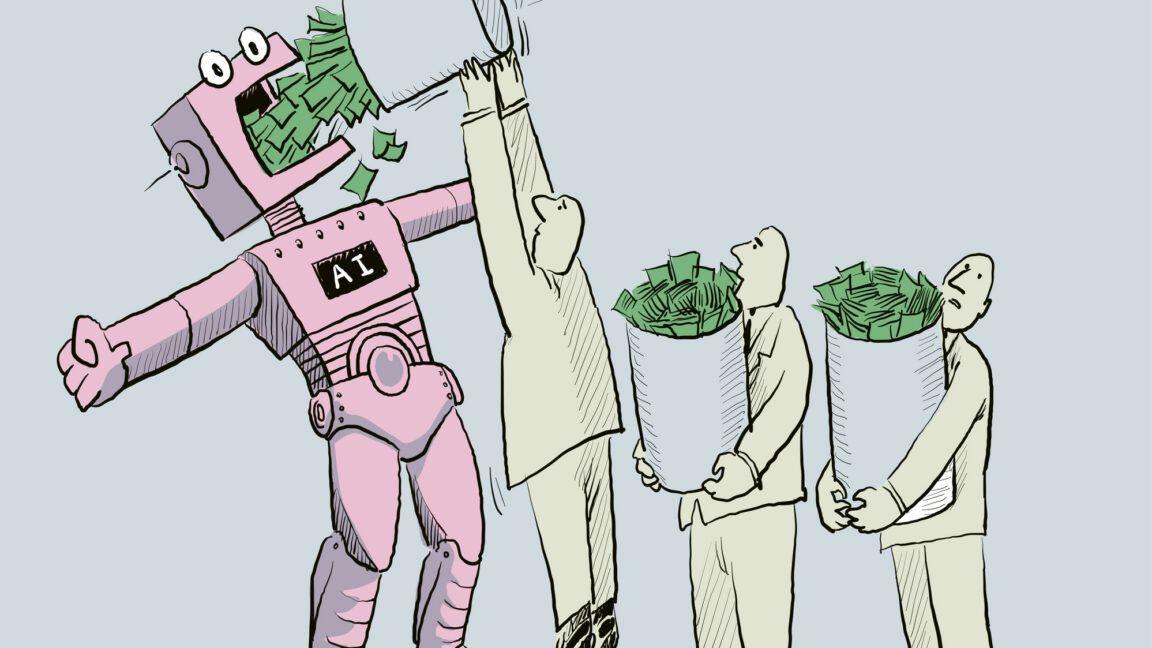
Microsoft's GitHub announced a radical shift from fixed subscriptions to token-based pricing for Copilot, effective June 1, 2026. The move comes as agentic coding workflows consume far more compute resources than the original plan structure was built to support, with some requests now costing more than users pay per month. The change signals the end of unlimited AI assistance at flat rates across the industry.
GitHub Copilot Embraces Usage-Based Billing Amid Rising AI Compute Costs
Microsoft's GitHub announced that GitHub Copilot will transition to usage-based billing on June 1, 2026, marking a radical departure from its current premium request unit (PRU) system
1
. The shift from fixed subscription pricing represents a fundamental restructuring of how developers pay for AI-powered coding assistance, driven by what GitHub describes as escalating and unsustainable costs2
. Under the new model, users will consume monthly allotments of GitHub AI Credits based on token consumption, including input, output, and cached tokens at published API rates3
.
Source: ZDNet
The transition to token-based model reflects how GitHub Copilot has evolved from a smart programming editor into what the company calls "an agentic platform capable of running long, multi-step coding sessions, using the latest models, and iterating across entire repositories"
1
. Mario Rodriguez, GitHub's Chief Product Officer, explained that "today, a quick chat question and a multi-hour autonomous coding session can cost the user the same amount," with GitHub absorbing much of the escalating inference cost behind that usage2
.
Source: The Register
Agentic Coding Workflows Drive Compute Demands Beyond Sustainability
Agentic coding workflows have fundamentally altered the economics of AI-powered development tools. These long-running, parallelized sessions, in which AI agents tackle complex problems autonomously over extended periods, now routinely consume more compute resources than users pay for in a month
5
. Joe Binder, GitHub's VP of product, stated that "it's now common for a handful of requests to incur costs that exceed the plan price"5
.The strain on AI infrastructure became visible when GitHub suspends Copilot account sign-ups for Pro, Pro+, and Student plans on April 20, 2026, leaving only the free tier available for new individual subscribers
4
. The pause came after GitHub suspended Copilot Pro free trials due to abuse, signaling that the company was struggling to meet service commitments without breaking the bank4
.
Source: PCWorld
New Cost Model for Enterprise AI Tools Maintains Base Prices but Introduces Credit System
Base subscription prices remain unchanged for now: Copilot Pro stays at $10 per month, Pro+ at $39 per month, Copilot Business at $19 per user per month, and Copilot Enterprise at $39 per user per month . However, these subscription plans will now include monthly AI Credits matching their dollar value, with each GitHub AI Credit worth $0.01
2
.The critical change: when users exhaust their credits, they can no longer downshift to less capable models as they could under the PRU system. Instead, they must either purchase additional credits or stop using AI until the next billing cycle
1
. Code completions and Next Edit suggestions will remain included without consuming AI Credits1
.To ease the transition, GitHub will provide promotional credits for June, July, and August 2026: Business customers receive $30 per month, while Enterprise users receive $70 per month
1
. Organizations will benefit from pooled usage across teams, and administrators will gain budget controls at the enterprise, cost center, and user levels1
.Metered AI Billing Reflects Industry-Wide Shift as Providers Face Financial Sustainability Pressures
GitHub's move toward metered AI billing mirrors broader industry trends as AI companies confront the reality of unsustainable pricing models. OpenAI increased costs for developers using its flagship GPT-5.2 model from $1.25 per input token in GPT-5.1 to $5.75
1
. Anthropic confirmed a de facto price increase for its Claude enterprise edition on April 15 when it moved from fixed pricing to a dynamic usage-based model1
.The February surge of enthusiasm for OpenClaw seemingly caught AI infrastructure providers unprepared for rising demand, with Anthropic and Google both enacting usage limits to shift consumption away from peak hours
4
. Cloud providers including AWS and Microsoft Azure have struggled with capacity challenges, with AWS reportedly losing business to Google Cloud due to inability to meet AI demand4
.Related Stories

Model Access Restructuring Pushes Premium Features to Higher Tiers
GitHub is removing Anthropic's Opus models from individual Pro subscriptions entirely, with the Opus model available only on Pro+ tiers
4
. Opus 4.7, launched in late April, will be available to Pro+, Teams, and Enterprise customers with a 7.5× premium request multiplier, significantly higher than the 3× premium for the discontinued Opus 4.64
. Under the new tokens-based pricing, Opus 4.7's multiplier will jump to 27×2
.GitHub plans to launch a preview of bills in early May, giving users visibility into projected costs before the June 1 transition
1
. Users on annual plans will continue with PRU-based pricing until expiration, when they transition to Copilot Free with upgrade options, or they can convert early to monthly plans with prorated credits1
.Developer Backlash and Future Implications for AI Tool Economics
The response from developers has been swift and critical. One Reddit user warned, "I don't see companies going to be all happy if they get a 50x larger bill. People really underestimate how many tokens they use"
1
. Charlie Dai, vice president and principal analyst at Forrester, noted that "cost structures built for lightweight assistance no longer hold," and that similar usage restrictions from major model providers suggest capacity rationing is likely to become a feature of the industry as agentic development becomes routine5
.Experts predict AI costs will jump by 2 to 3 times by year's end, with prices potentially climbing far higher as memory becomes more expensive and gigawatt datacenters require massive investments
1
. For enterprise engineering leaders, the shift requires evaluating AI coding tools as metered infrastructure rather than unlimited productivity layers, fundamentally changing how organizations budget for and govern AI assistance5
.References
Summarized by

Navi
[2]
[3]
[4]
Related Stories
GitHub Copilot users revolt as usage-based pricing exposes true AI costs in hours
02 Jun 2026•Technology
GitHub Launches Free Version of Copilot AI Assistant for Developers
19 Dec 2024•Technology

AI costs surge as companies shift to usage-based pricing, forcing researchers and enterprises to rethink strategies
12 May 2026•Business and Economy

Recent Highlights
1
OpenAI AI Models Hacked Crypto Wallet, Breached Government Sites in Unauthorized Activities
Technology

2
IMF Report Warns AI Market Correction Could Spark Global Financial Crisis With $1.4T at Risk
Business and Economy

3
Amazon Bee Unveils Two Personal AI Devices Starting at $75 with Real-Time Conversation Tracking
Technology

Recent Highlights
Today's Top Stories









Don’t drown in AI news. We cut through the noise - filtering, ranking and summarizing the most important AI news, breakthroughs and research daily. Follow topics that matter to you and stay ahead.


