Samsung averts strike with $26.6 billion in AI boom bonuses, but deep divisions remain


12 Sources
[1]
Samsung reportedly set to distribute up to $26.6 billion to staff in AI-driven semiconductor bonuses after last-minute union deal -- average payouts could approach $400,000 per chip employee
Following a last-minute deal yesterday between Samsung Electronics and its South Korean workers' union, the company will reportedly distribute 40 trillion won ($26.6 million) in bonuses to chip employees. According to a Bloomberg report, the bonus, which will vary by employee, will result in an
[2]
Samsung Elec's South Korean labour union to vote on tentative pay plan -union
SEOUL, May 20 (Reuters) - Samsung Electronics (005930.KS), opens new tab and its South Korean labour union reached a preliminary pay deal on Wednesday, potentially averting a planned lengthy strike that threatened to disrupt the production of AI and other chips. The labour union said it had
[3]
Samsung Averts a Walkout With Big Bonuses, but Discord Over A.I. Profits Brews
Samsung Electronics, a global memory chip supplier, has been a major beneficiary of the A.I boom. It has also become the center of a debate over how to divide its spoils. For months, workers at the semiconductor division of Samsung Electronics felt left behind in the global artificial intelligence
[4]
Samsung chip workers offered a $340,000 average bonus as union pushes toward $1m and an 18-day strike
Leaked transcripts show memory-line staff offered up to 607% bonuses worth $477,000, while logic-chip employees get as little as 50%. The 45,000-person walkout, if it lands, would be the largest in semiconductor-industry history. Samsung Electronics will pay its chip workers an average bonus of
[5]
Exclusive: At Samsung, the global AI boom spurred a looming strike and deep divisions
SEOUL, May 15 (Reuters) - A looming 18-day strike at South Korean chip giant Samsung that has triggered worries within the government, rattled foreign investors and threatened global supply chains rests on one crucial question: who should share in the spoils of the AI boom? More than 45,000
[6]

A 45,000-person labor strike at Samsung's memory chip plants could throw a wrench into the AI boom | Fortune
Samsung makes about a third of the world's DRAM -- the memory inside virtually every phone, laptop, server, and data center on the planet. Together with its Korean rival SK Hynix, it controls roughly two-thirds of the global DRAM market and an even larger share of high-bandwidth memory (HBM), the
[7]

Union calls strike at South Korea chip giant Samsung Electronics
Seoul (AFP) - A planned strike at South Korean chip giant Samsung Electronics will go ahead from Thursday, its union said, after talks on bonus payouts collapsed, raising concerns over a disruption to the country's key semiconductor industry. The walkout, set to begin Thursday, is expected to
[8]

Samsung strike talks enter final hours as global chip supply chains at risk
All eyes are on South Korea today as officials bid to avert a strike by more than 45,000 Samsung workers that could impact global semiconductor supply chains. With a planned walkout set to begin on 21 May, Samsung Electronics and its workers' unions held what the government described as a final
[9]

[ED] Tentative deal struck at Samsung - The Korea Times
Samsung Electronics Labor Union leader Choi Seung-ho, left, and Yeo Myung-koo, vice president of the People Team at Samsung Electronics' Device Solutions division, are seen arriving for mediated talks at the National Labor Relations Commission in Sejong, Wednesday. The talks fell through.
[10]
What are Samsung union workers demanding and how might strike play out? - The Korea Times
SEOUL -- Korean memory chip maker Samsung Electronics is facing its worst-ever strike, with nearly 48,000 workers threatening to walk off production lines on Thursday for 18 days over a dispute about bonus payouts. Samsung's union has asked the company to abolish a cap that limits bonuses to 50
[11]
Samsung, union hold final mediation as strike deadline nears - The Korea Times
Choi Seung-ho, left, head of Samsung Electronics' largest labor union, enters the National Labor Relations Commission office in Sejong, Tuesday. Yonhap Samsung Electronics and its largest labor union resumed government-led wage mediation Tuesday, entering the final day of talks in a last-ditch
[12]
Samsung's chip output cut feared to disrupt global supply chains - The Korea Times
Samsung Electronics' move to cut its chip output is fueling concerns over major disruptions to global customer deliveries, after the chipmaker failed to reach a wage agreement with its unions, industry officials said Friday. More than 43,000 unionized workers -- mostly from the firm's Device
Share
Copy Link
Samsung Electronics reached a last-minute deal with its South Korean union to distribute up to $26.6 billion in semiconductor bonuses, with average payouts approaching $340,000 per chip employee. The agreement averts an 18-day strike that threatened global AI chip production, but internal divisions over profit distribution reveal deeper tensions about sharing the spoils of the AI boom.
Samsung Electronics Union Deal Prevents Historic Strike
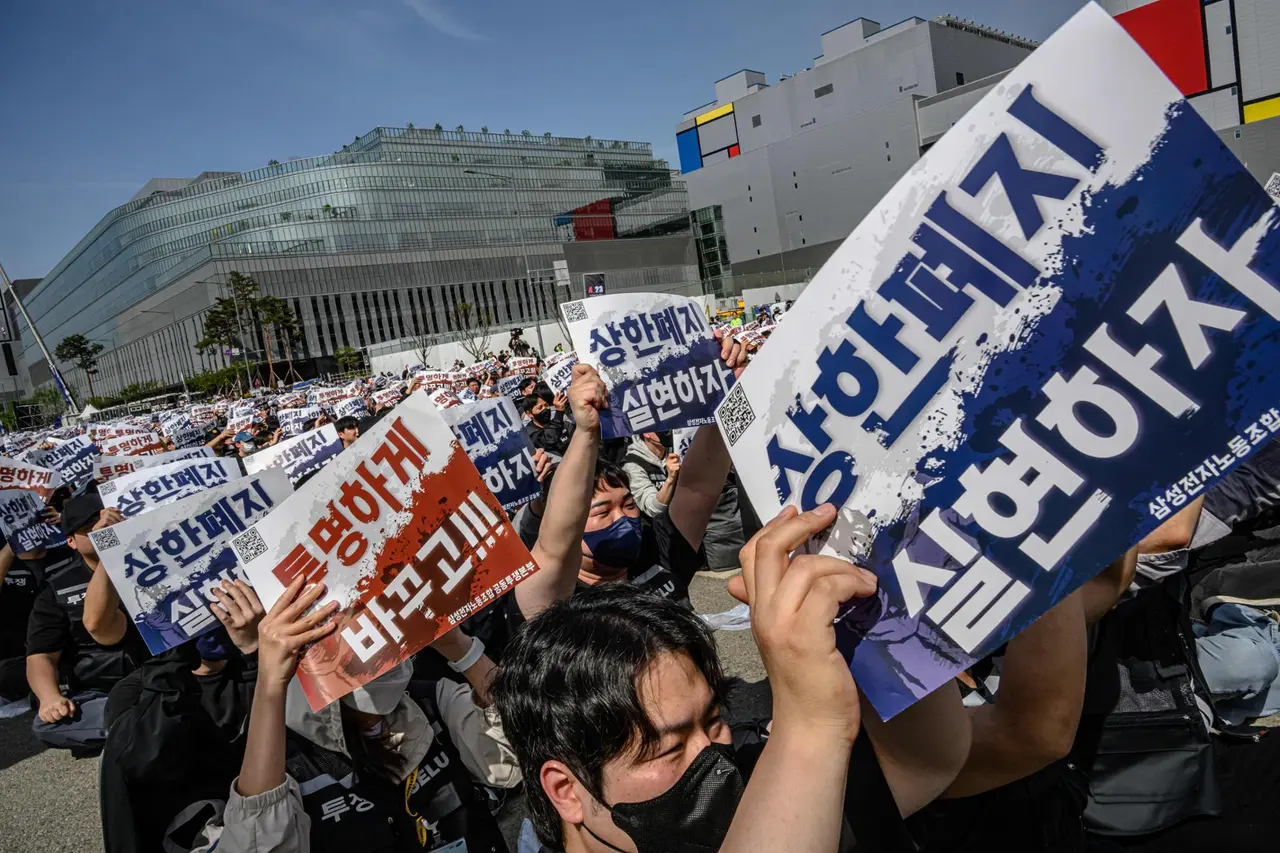
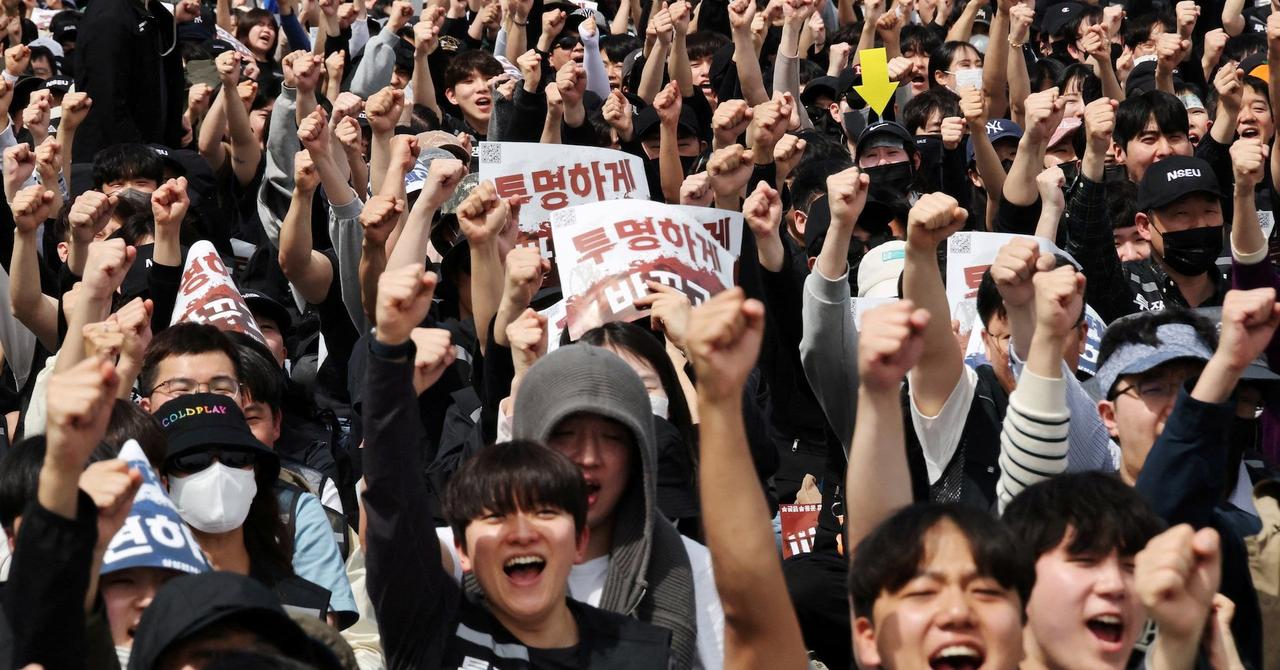
Samsung Electronics and its South Korean workers' union reached a tentative agreement on May 20, narrowly averting what would have been the largest strike in semiconductor industry history
2
. The Samsung Electronics union deal will see the company distribute up to 40 trillion won ($26.6 billion) in bonuses to Samsung chip workers, with average payouts estimated at 513 million won (~$339,000) per employee in the semiconductor division1
. Other estimates put the figure closer to 600 million won (~$396,000)1
. The union suspended the planned 18-day walkout involving more than 45,000 workers and scheduled a vote on the agreement from May 23 to May 282
.
Source: Korea Times
AI-Driven Semiconductor Boom Reshapes Compensation
Under the provisional agreement, Samsung committed to distribute 10.5% of its profits as employee bonuses in stock, plus another 1.5% in cash—falling short of the union's initial 15% request but marking a significant shift in how the company shares AI-driven profits
1
. The bonus program will continue for 10 years rather than being a one-off payment, provided specified profit targets are met1
. This structure addresses worker concerns about capturing sustained value from the AI-driven semiconductor boom, which has transformed memory chips from a cyclical commodity business into one of the most lucrative industries globally1
. Bloomberg estimates Samsung's 2026 operating profit will multiply sevenfold to 330 trillion won (~$218 billion), driven by surging demand for High Bandwidth Memory and other AI-oriented components from Nvidia, AMD, and hyperscaler customers1
.Sharing the Spoils of the AI Boom Sparks Industry Debate
The Samsung labor dispute reflects broader questions about profit distribution in the semiconductor industry. Samsung's agreement follows SK Hynix, which settled with its union in September 2025 to allocate 10% of annual operating profit directly to employees as performance bonuses for the next decade while removing bonus caps
1
. That precedent fueled Samsung workers' demands, as SK Hynix employees reportedly receive bonuses of $900,000 to $1 million under their profit-sharing structure4
. The New York Times noted that Samsung Electronics, a global memory chip supplier and major beneficiary of the AI boom, has become the center of a debate over how to divide its spoils3
. In the first three months of this year alone, Samsung's profit soared to $39 billion3
.
Source: France 24
Related Stories

Internal Divisions Threaten One-Stop Semiconductor Company Vision
Beneath the headline numbers lie deep internal divisions that reveal structural tensions within Samsung's business model. Reuters reviewed hundreds of pages of transcripts showing Samsung proposed memory chip workers receive bonuses of 607% of their annual salary (roughly $477,000), while logic chip employees working on foundry operations would receive just 50% to 100%
5
. This disparity reflects underlying business performance: Samsung's HBM3E and HBM4 lines for AI chip production are running at full capacity, while the foundry business has continued to lag TSMC and remains margin-pressured4
. Union representatives called the gap a "retention crisis the company cannot afford"4
. The discrepancy threatens Samsung's goal to become the world's only one-stop semiconductor company offering services spanning different chip types, unlike specialized competitors like Micron or TSMC5
.Talent Drain Risks and Global Supply Chain Implications
The bonus structure has triggered a talent drain that could undermine Samsung's competitive position. A foundry engineer in Pyeongtaek said his team has shrunk sharply as colleagues moved to Samsung's memory division and SK Hynix
5
. Two other employees reported many colleagues are currently applying for jobs with SK Hynix and other companies5
. JPMorgan estimated the strike could have impacted Samsung's operating profit by 21 trillion won to 31 trillion won ($14.08 billion to $20.79 billion), with sales losses of about 4.5 trillion won5
. An 18-day stoppage would have directly hit global supply chains, landing on the production runway that Nvidia, AMD, and major hyperscalers have priced into their second-half capital expenditure commitments4
. The agreement permits employees to sell one-third of their shares immediately, with the remainder in installments over two years, providing liquidity while maintaining retention incentives1
. Should the deal pass the union vote, employees will likely receive bonuses in early 20271
. Competition for roles at Samsung and SK Hynix has intensified dramatically, with potential bonuses exceeding lifetime earnings of workers in other sectors1
.
Source: Korea Times
References
Summarized by

Navi
[4]
Related Stories
Samsung workers reject $340,000 bonus, threaten strike that could shake global AI chip supply
07 May 2026•Business and Economy
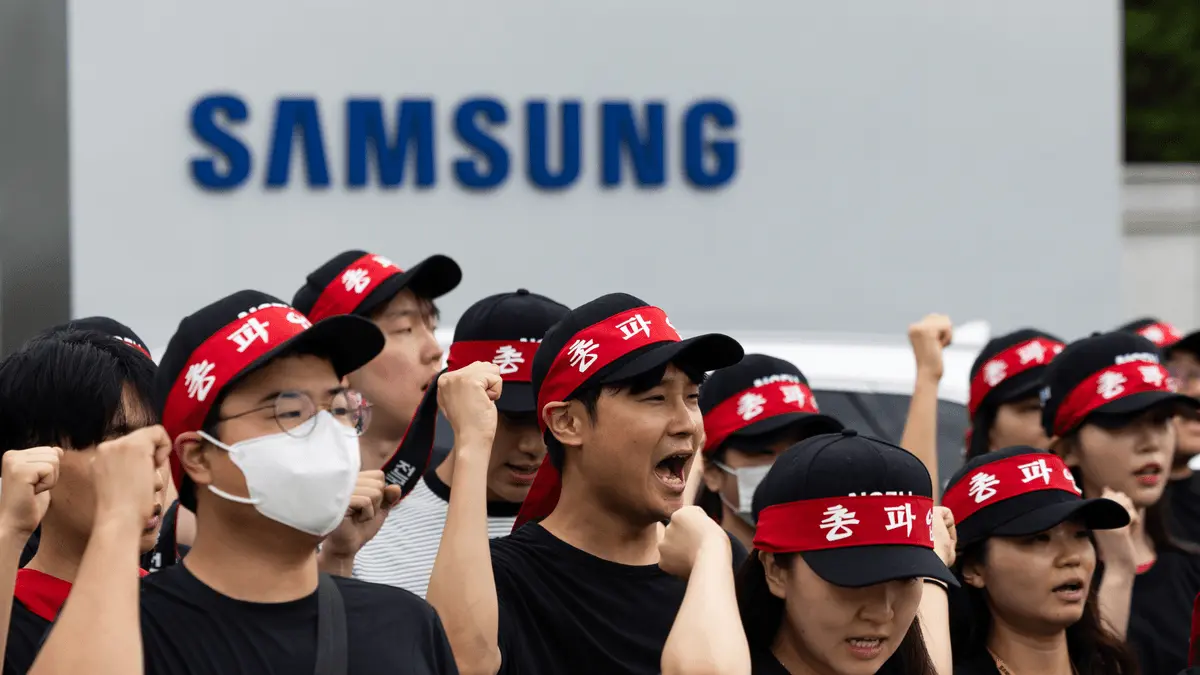
Samsung pay deal marks seismic change for South Korea, emboldening unions across industries
27 May 2026•Business and Economy
Samsung Electronics Reports Soaring Q2 Profits Amid AI Chip Demand Surge
31 Jul 2024

Recent Highlights



Recent Highlights
Today's Top Stories



Don’t drown in AI news. We cut through the noise - filtering, ranking and summarizing the most important AI news, breakthroughs and research daily. Follow topics that matter to you and stay ahead.


