Goodfire Raises $150 Million at $1.25 Billion Valuation to Decode AI Models and Improve Safety


4 Sources
[1]
Startup Goodfire Notches $1.25 Billion Valuation to Decode AI Models
Goodfire has raised $150 million, with investors valuing it at $1.25 billion, and plans to work on retraining AI models for better performance and spend more money on computing power and new hires. A growing cadre of multibillion-dollar startups are racing to create the best artificial
[2]
Goodfire raises $150M in funding to enhance its AI interpretability platform - SiliconANGLE
Goodfire raises $150M in funding to enhance its AI interpretability platform Goodfire Inc., a startup working to uncover how artificial intelligence models make decisions, has raised $150 million in funding. B Capital led the Series B round. Goodfire stated in its funding announcement today that
[3]
Goodfire Raises $150 Million to Better Understand AI | PYMNTS.com
By completing this form, you agree to receive marketing communications from PYMNTS and to the sharing of your information with our sponsor, if applicable, in accordance with our Privacy Policy and Terms and Conditions. The company's Series B funding round, announced Thursday (Feb. 5), values
[4]
Goodfire raises $150 million to improve AI model understanding By Investing.com
Investing.com -- Goodfire, a startup focused on examining AI models to understand their functions, has raised $150 million in Series B funding, reaching a valuation of $1.25 billion. B Capital led the investment round, with participation from Menlo Ventures and Lightspeed Venture Partners. The
Share
Copy Link
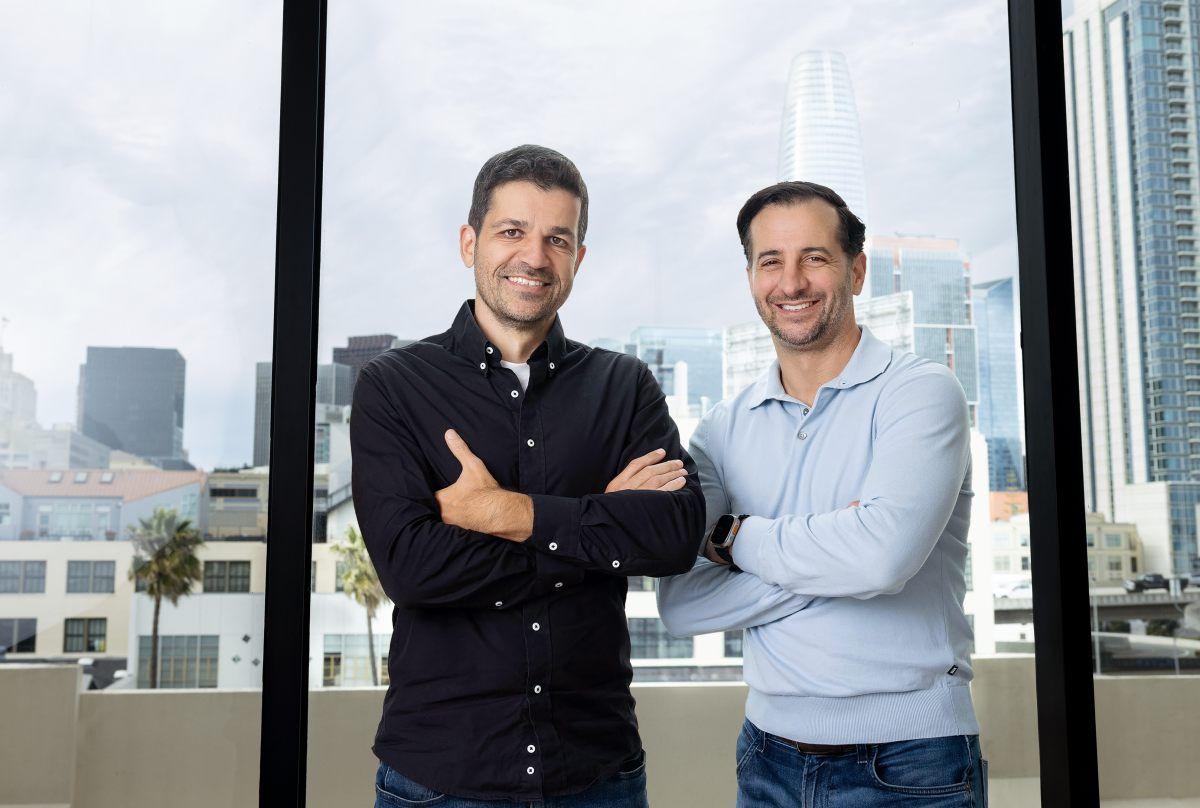
Goodfire has raised $150 million in Series B funding at a $1.25 billion valuation to advance AI interpretability research. The startup creates interpreter models to decode neural networks and understand how AI models make decisions. CEO Eric Ho warns the industry is moving too fast without understanding the technology it's deploying.
Goodfire Secures $150 Million in Series B Funding at $1.25 Billion Valuation
Goodfire has closed a $150 million in Series B funding round led by B Capital, with participation from Menlo Ventures and Lightspeed Venture Partners, along with contributions from Salesforce and former Google CEO Eric Schmidt
2
. The deal values the San Francisco-based startup at $1.25 billion valuation, bringing its total raised capital to $209 million since its founding in 20241
4
. The fresh capital will fund the startup's mission to decode AI models and make their decision-making processes transparent, addressing what CEO Eric Ho calls a "reckless" approach to AI development.
Source: Bloomberg
Understanding How AI Models Make Decisions Through Interpretability
Goodfire specializes in AI interpretability, the science of reverse engineering neural networks to understand what AI models are actually doing when they process information
3
. The challenge stems from the fundamental architecture of large language models (LLMs), which consist of artificial neurons that interact in extraordinarily complex ways—tens of thousands of neurons can be involved in generating a single prompt response2
. The weights underlying an AI model's performance are written in code that's indecipherable to humans, making it nearly impossible for developers to debug problems without completely retraining models1
.Model Design Environment Enables AI Model Understanding
To break through this opacity, Goodfire has built what it calls a model design environment—a platform that uses AI interpretability methods to map out the internal components of foundation models
2
3
. The company creates interpreter models that effectively map the mind of an AI model, then perform what Ho describes as "brain surgery" to improve performance or derive novel insights1
. The platform operates across two critical phases: during training, it maps out the learning workflow and identifies flaws to boost output quality, and in production, it monitors model performance to catch issues like AI hallucinations, which Goodfire claims to have reduced by half in one recent project2
.
Source: PYMNTS
Real-World Impact: Discovering Alzheimer's Biomarkers
The practical applications of Goodfire's technology extend into critical healthcare domains. Prima Mente, a healthcare AI startup, developed an AI model to detect Alzheimer's disease by analyzing cfDNA fragments, but the team didn't fully understand how the model made its predictions
1
. Using Goodfire's interpreter technology, researchers discovered a novel class of Alzheimer's biomarkers based on the length of cfDNA fragments—connections the model was making that humans had not previously identified in existing scientific literature2
. This breakthrough demonstrates how debugging AI can unlock scientific insights hidden within neural networks.Related Stories


Growing Client Base and Technical Innovation
Goodfire works with major clients including Microsoft, the Mayo Clinic, and the nonprofit Arc Institute
4
. Some organizations use the platform to build their own AI tools using existing foundation models, while model makers leverage it to enhance AI performance. Last year, the company developed a method called SPD that identifies which model components are involved in generating prompt responses by systematically removing components and observing the effects on output2
. Eric Ho frames this work as essential: "Interpretability, for us, is the toolset for a new domain of science: a way to form hypotheses, run experiments, and ultimately design intelligence rather than stumbling into it"2
.Investment Plans and Industry Context
With the new funding, Goodfire plans to advance from debugging existing models to retraining AI models for better performance, while also investing heavily in computing power and expanding its team
1
4
. The startup joins a growing class of AI research companies sometimes called neolabs that have commanded significant valuations. OpenAI alums Mira Murati and Ilya Sutskever have secured billions for their ventures, while AI researcher Richard Socher is in funding talks at a $4 billion valuation1
. Ho's concerns about the current trajectory remain stark: "I don't like the trajectory of AI right now—we're about to deploy all these systems that we don't understand everywhere. I think that's not good, and I want to change that"1
.References
Summarized by

Navi
[2]
Related Stories
Recent Highlights



Recent Highlights
Today's Top Stories







Don’t drown in AI news. We cut through the noise - filtering, ranking and summarizing the most important AI news, breakthroughs and research daily. Follow topics that matter to you and stay ahead.


