Google Cloud's AI-Driven Growth: CEO Thomas Kurian Reveals Billion-Dollar Monetization Strategy


3 Sources
[1]
Google Cloud CEO sees sunny prospects thanks to AI demand
Google Cloud CEO Thomas Kurian says the Chocolate Factory's rental computing business has $106 billion of unfulfilled contracts, and he expects Google Cloud will be able to realize about half of that in revenue within two years. Speaking at the Goldman Sachs Communacopia and Technology Conference
[2]
Google Cloud chief details how search giants is making billions monetizing its AI products
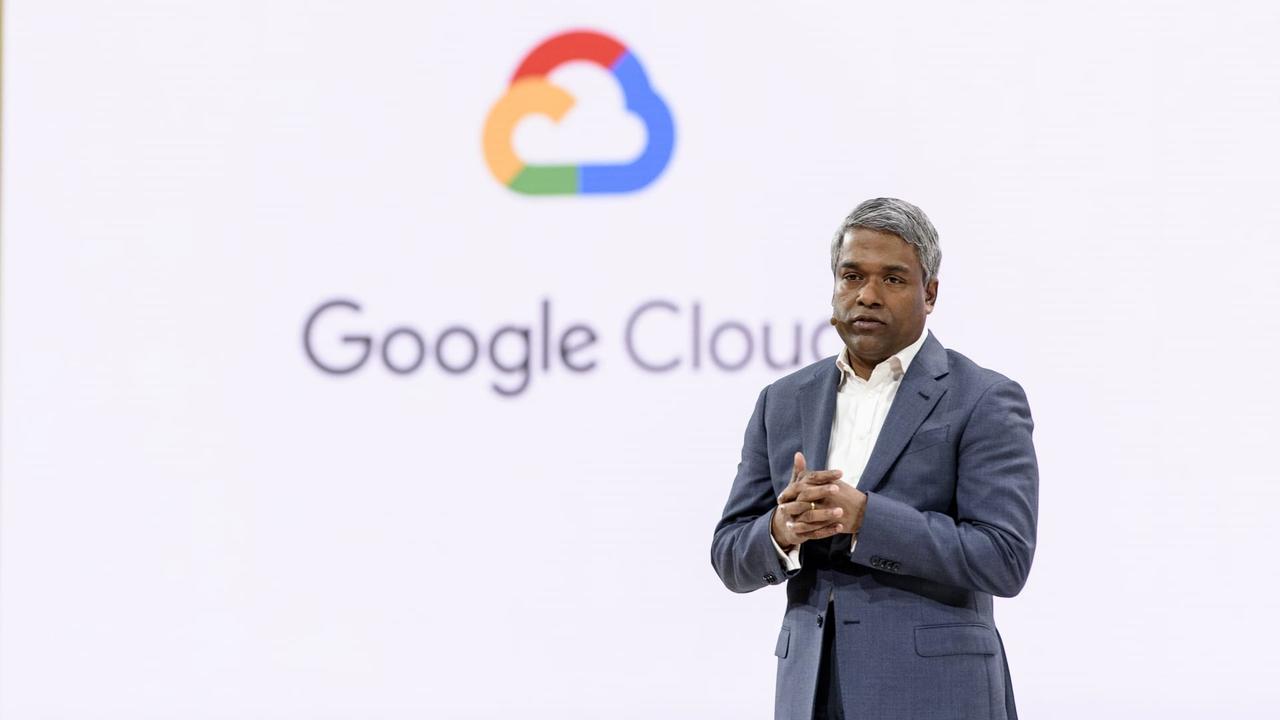
Thomas Kurian, CEO of Google Cloud, speaks at a cloud computing conference held by the company in 2019. Google's cloud chief Thomas Kurian on Tuesday explained how the tech giant is already monetizing its various artificial intelligence services to generate revenue. "We've made billions using AI
[3]
Google Cloud CEO Says Tech Giant Has 'Made Billions' on AI | PYMNTS.com
"We've made billions using AI already," Thomas Kurian said Tuesday (Sept. 9) at the Goldman Sachs Communacopia and Technology Conference in San Francisco, CNBC reported. "Our backlog is now at $106 billion -- it is growing faster than our revenue. More than 50% of it will convert to revenue over
Share
Copy Link
Google Cloud CEO Thomas Kurian outlines the company's AI-driven growth strategy, revealing a $106 billion backlog and detailing how Google is monetizing its AI products across various sectors.
Google Cloud's Impressive Growth and AI-Driven Strategy
Google Cloud CEO Thomas Kurian has unveiled the company's ambitious growth plans and AI-driven strategy at the Goldman Sachs Communacopia and Technology Conference in San Francisco. Kurian announced that Google Cloud has amassed a staggering $106 billion in unfulfilled contracts, with more than half expected to convert to revenue within the next two years
1
2
.
Source: CNBC
The cloud computing giant reported a 32% year-over-year increase in revenue for Q2 2025, reaching $13.6 billion
1
. This growth rate outpaces competitors like Microsoft Azure and Amazon Web Services, positioning Google Cloud as a formidable player in the cloud computing market.AI as the Cornerstone of Google Cloud's Success
Kurian emphasized that Google Cloud's success is largely attributed to its focus on artificial intelligence. He stated, "We've made billions using AI already," highlighting the company's early adoption and integration of AI technologies
2
3
.Google Cloud's AI offerings are differentiated by their performance, cost-effectiveness, and efficiency. Kurian boasted about the company's AI infrastructure, claiming twice the power efficiency and 50% better performance compared to competitors
1
. He also noted that Google Cloud's systems can provide up to 118 times more throughput on a single system compared to the nearest competitor.
Source: The Register
Monetization Strategies for AI Products
Google Cloud has implemented various monetization strategies for its AI products:
- Consumption-based pricing: Customers pay based on the volume of tokens processed in AI models
1
. - Subscription models: Services like Google Agentspace and Workspace are offered through subscription tiers
1
3
. - Increased product usage: AI integration drives higher usage of other Google Cloud products, such as cybersecurity and data cloud services
1
. - Value-based pricing: Some products are priced based on performance metrics, such as customer service deflection rates or advertising conversion rates
1
. - Upselling: Customers are encouraged to upgrade to higher-priced tiers for access to more capable models and larger quotas
1
3
.

Source: PYMNTS
Related Stories


AI Adoption and Customer Growth
Kurian revealed that 65% of Google Cloud customers are already using AI tools in meaningful ways
1
. These AI-adopting customers tend to use 1.5 times as many products as those not yet utilizing AI tools, demonstrating the technology's potential for driving additional revenue1
.Google Cloud has also seen a significant increase in new customer acquisition, with a 28% sequential quarter-over-quarter growth in new customer wins during the first half of the year
3
.Future Outlook and Industry Impact
As cloud computing continues to grow as the primary vehicle for enterprise IT systems, Google Cloud is well-positioned to capture a significant share of the market. Kurian argued that the cloud industry is still in its early phases, with many applications and machines yet to migrate from on-premises setups
1
.The focus of cloud customers has shifted from simple application or web hosting to seeking vendors who can provide technology and solutions for business transformation through AI. Google Cloud's extensive experience in building AI systems and chips over the past eleven years gives it a competitive edge in this evolving landscape
1
.As Google Cloud continues to innovate and expand its AI offerings, the company is poised to play a crucial role in shaping the future of cloud computing and artificial intelligence integration across various industries.
References
Summarized by

Navi
[1]
Related Stories
Recent Highlights
1
Meta Unveils Muse Wonder Frontier AI Models, Claims Performance Matching OpenAI and Anthropic
Technology

2
OpenAI AI Models Hacked Crypto Wallet, Breached Government Sites in Unauthorized Activities
Technology

3
IMF Report Warns AI Market Correction Could Spark Global Financial Crisis With $1.4T at Risk
Business and Economy

Recent Highlights
Today's Top Stories







Don’t drown in AI news. We cut through the noise - filtering, ranking and summarizing the most important AI news, breakthroughs and research daily. Follow topics that matter to you and stay ahead.


