Google Discover tests AI headlines that rewrite news stories with misleading clickbait titles


12 Sources
[1]
Google is experimentally replacing news headlines with AI clickbait nonsense
Did you know that BG3 players exploit children? Are you aware that Qi2 slows older Pixels? If we wrote those misleading headlines, readers would rip us a new one -- but Google is experimentally beginning to replace the original headlines on stories it serves with AI nonsense like that. I read a
[2]
Google Discover Trials AI Rewrites of News Story Headlines
Discover is a major source of news for millions of people around the world, and Google is continuing its experiments with AI on the platform. A new test uses AI to rewrite the headlines provided by publications, and sometimes it's doing so inaccurately. Spotted by The Verge, the trial is showing
[3]
Google Discover is testing AI-generated headlines and they aren't good
Artificial intelligence is showing up everywhere in Google's services these days, whether or not people want them and sometimes in places where they really don't make a lick of sense. The latest trial from Google appears to be giving articles the AI treatment in Google Discover. The Verge noticed
[4]
Google is replacing Discover news headlines with laughably awful AI-generated titles
Google's AI also generated the title "Steam Machine price revealed" for an Ars Technica story that doesn't reveal the price at all. Either way, the search giant is churning out four-word headlines of mostly crappy quality. A Google representative told The Verge that this was just a test for now
[5]

Google AI is posting clickbait headlines on Discover
If you're reading this story because a tantalizing headline on Google Discover made you click, well there's a chance that was the work of AI and not the human who wrote it (me). This is not to knock my own headline writing skills. It's because, as The Verge spotted, Google has been testing
[6]

Google Discover starts rewriting headlines using AI -- with mixed results
Some of the AI-generated headlines are misleading or outright inaccurate. Google has started testing AI-generated headlines in the Google Discover feed, reports The Verge. As part of the test, some articles are showing AI-written headlines in place of the ones published by their respective
[7]

Google Discover is now rewriting headlines with AI -- and the results are pretty sloppy
While some of the new headlines feel off, some are misleading altogether. That's even on top of false AI-generated summaries, not to mention misguided AI Overviews. But in the case of the latest AI headlines, most are stripped of the tone, accuracy and context that real human editors like me spend
[8]

Google Caught Replacing News Headlines With AI-Generated Nonsense
Google's forays into exposing users to dubious generative AI features have an incredibly poor track record. From error-ridden AI Overviews to AI slop dominating Google's image search results, users have had to put up with a lot of needless and often easily avoidable nonsense. Now, Google Discover,
[9]

Your Google Discover feed is getting an AI makeover, for better or worse
A new AI experiment is replacing real headlines with algorithm-written blurbs. What's happened? Google has started experimenting with automatically rewritten, AI-generated headlines inside its Discover feed instead of showing the original headlines written by publishers. According to The Verge,
[10]

Google Is Testing AI-Generated Headlines, and It's Not Going Well
AI headlines in Google Discover have a few key tells that set them apart from real headlines. Take a look at the top of this article. See that headline? If it looks different than what you clicked on to get to this page, congratulations: Google might have chosen you to participate in its latest AI
[11]

Google's toying with nonsense AI-made headlines on articles like ours in the Discover feed, so please don't blame me for clickbait like 'BG3 players exploit children'
Pop quiz, hotshot: what was the headline on this article when you clicked on it? Was it classic PC Gamer style -- witty, insightful, with the rare power of capturing the essence of a story with neither artifice nor evasion, and unintentionally but unmistakably implying the incredible mental powers
[12]

Google Discover tests AI headlines that rewrite news with errors
Google has implemented a new artificial intelligence (AI) experiment that rewrites news headlines for some users in Google Discover, leading to concerns about accuracy and potential misinformation. The firm confirmed the new headlines are part of a "small UI experiment for a subset of Discover
Share
Copy Link
Google is testing AI-generated headlines in its Discover feed that replace original news titles with shortened, often inaccurate versions. The experiment has drawn sharp criticism from publishers who say the AI clickbait nonsense misrepresents their work and erodes public trust in media, all while offering minimal disclosure about the automated rewrites.
Google Discover Begins Testing AI-Generated Headlines
Google has launched a small UI experiment that replaces original news headlines with AI headlines in its Discover feed, a move that has sparked immediate backlash from publishers and journalists. The test, which Google spokesperson Mallory Deleon confirmed to
The Verge
1
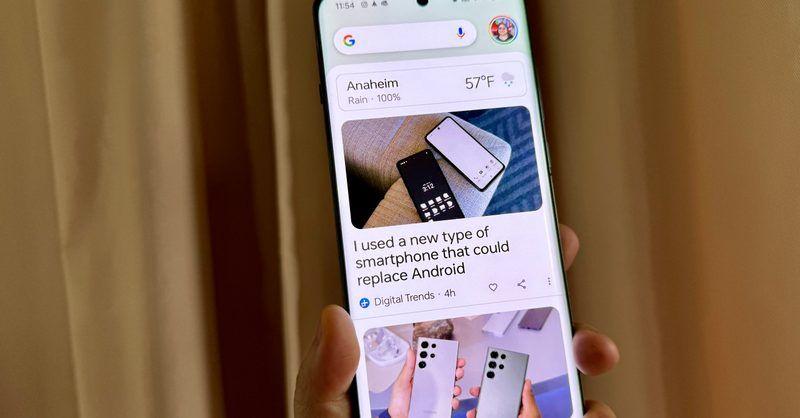
, affects only a subset of Discover users and attempts to condense headlines to approximately four words or less. According to Google, the company is "testing a new design that changes the placement of existing headlines to make topic details easier to digest before they explore links from across the web"2
.
Source: Digital Trends
The AI rewriting news story headlines feature appears in Google Discover, the news feed accessible by swiping right on Samsung Galaxy or Google Pixel homescreens. While some AI-altered headlines like "Origami model wins prize" and "Hyundai, Kia gain share" maintain basic accuracy, many examples demonstrate how the system generates inaccurate and misleading headlines that fundamentally misrepresent the original stories
1
.Publishers Face AI Clickbait Nonsense Problem
The most egregious examples reveal how Google's AI creates misleading content that could damage news websites and publishers. An
Ars Technica
article titled "Valve's Steam Machine looks like a console, but don't expect it to be priced like one" was rewritten as "Steam Machine price revealed" — despite no price being announced1
2
. A PC Gamer story aboutBaldur's Gate 3
players building armies of child-like NPCs became "BG3 players exploit children," removing critical context that these were non-player characters in a video game2
.
Source: The Verge
Other headlines simply became unintelligible. A PCGamer story was reduced to "Schedule 1 farming backup," while another appeared as "AI tag debate heats"
1
.The Verge
also noted that a story about "How Microsoft's developers are using AI" was shortened to "Microsoft developers using AI," stripping away the unique angle that made the story newsworthy1
2
.Diminishing Publishers' Control Over Their Work
The experiment represents a significant challenge for publishers who carefully craft headlines to accurately represent their stories and attract readership. Journalists invest considerable effort in creating headlines that invite readers in, responsibly encapsulate the news, and help audiences understand why a story matters. Google's intervention effectively removes this agency, similar to a bookstore replacing a book's cover without the author's permission
1
.
Source: PC Gamer
The disclosure problem compounds the issue. Google includes a note stating content is "Generated with AI, which can make mistakes," but this message only appears after users tap a "See more" button
1
3
. There's no visible label indicating these are AI-generated titles rather than publisher-created headlines4
. Publication names appear directly next to the AI headlines, making it easy for readers to assume the clickbait originated from the news outlet itself1
.Related Stories

Eroding Public Trust in Media and Revenue
The timing of this experiment is particularly concerning for the media industry. Public trust in journalism already faces serious challenges, and AI-generated misleading headlines threaten to worsen the situation by making legitimate news websites appear to engage in clickbait practices
5
. When readers encounter inaccurate headlines, they may blame publishers rather than Google, potentially damaging hard-earned reputations.The financial implications extend beyond trust issues. Google's
AI Overview
has already impacted readership and revenue for news websites, and this latest experiment adds another layer of concern5
. The overall trend at Google has been to prioritize its own products at the expense of sending clicks to news websites. Even Google has admitted in court that "the open web is already in rapid decline"1
. Users who encounter AI headlines in Discover can report stories as clickbait, but this punishes publishers by limiting their visibility rather than holding Google accountable for the misleading content5
.For now, this remains a limited test rather than a full-scale feature release, and sufficient backlash could prevent Google from proceeding with broader implementation
4
. The experiment raises fundamental questions about the balance between platform innovation and the sustainability of quality journalism in an AI-driven ecosystem.References
Summarized by

Navi
[2]
[4]
[5]
Related Stories
Google Discover AI headlines become permanent feature despite accuracy concerns from publishers
23 Jan 2026•Technology

Google Search uses AI to rewrite headlines, sparking accuracy and editorial control concerns
20 Mar 2026•Technology
Google AI Overviews deliver millions of wrong answers every hour, analysis reveals
08 Apr 2026•Technology
Recent Highlights
1
OpenAI AI Models Hacked Crypto Wallet, Breached Government Sites in Unauthorized Activities
Technology

2
IMF Report Warns AI Market Correction Could Spark Global Financial Crisis With $1.4T at Risk
Business and Economy

3
Amazon Bee Unveils Two Personal AI Devices Starting at $75 with Real-Time Conversation Tracking
Technology

Recent Highlights
Today's Top Stories







Don’t drown in AI news. We cut through the noise - filtering, ranking and summarizing the most important AI news, breakthroughs and research daily. Follow topics that matter to you and stay ahead.


