10 Sources
[1]
Google Gemini co-lead Noam Shazeer leaves for OpenAI
In August 2024, Google brought back Shazeer and fellow researcher Daniel De Freitas to its DeepMind AI unit. Google's vice president of engineering and a co-lead of its Gemini AI models Noam Shazeer announced Wednesday that he was leaving the company to join OpenAI. "I'm excited to share that I'll be joining OpenAI and look forward to working with the exceptional team there," Shazeer said in a post on X. "It was a difficult decision to move on. I'm incredibly proud of the amazing team at Google and everything we've built together. It has been an honor and a pleasure to work with all of you," he added. Shazeer's departure comes less than two years after he returned to Google. In August 2024, Google brought back Shazeer and fellow researcher Daniel De Freitas to its DeepMind AI unit as part of a partnership with startup Character.AI, which the pair founded after leaving Google in 2021. The two had left Google after it declined to aggressively pursue a chatbot project they had championed. They subsequently founded Character.AI, one of the most prominent AI startups. The latest move underscores the intense battle for top AI talent, which has become a key front in competition among technology companies. The departure also comes weeks after Google unveiled new AI products, including its Gemini 3.5 Flash model and Gemini Spark AI agent, at its annual I/O developer conference. OpenAI, the maker of ChatGPT, confidentially filed for an initial public offering earlier this month, setting the stage for one of the most closely watched technology listings in recent years. -- CNBC's Jennifer Elias contributed to this report.
[2]
Google's Gemini co-lead Noam Shazeer is leaving for OpenAI
Less than two years after Google reportedly paid $2.7bn to bring him back, the transformer co-inventor is switching sides. Noam Shazeer is leaving Google for OpenAI. The man widely credited as a principal architect of Google's Gemini models and a co-author of the 2017 transformer paper that underpins virtually every modern large language model announced the move himself, on X: "I'm excited to share that I'll be joining OpenAI and look forward to working with the exceptional team there." The departure is striking for its speed. Shazeer returned to Google less than two years ago in a deal that was itself remarkable: the company reportedly paid around $2.7bn to bring him back, along with a team of his researchers, from Character.AI, the startup he had co-founded after leaving Google the first time. To lose him again, this quickly, to the company Google most directly competes with, is the kind of talent loss that money was supposed to prevent. Shazeer is a vice president of engineering at Google and a co-leader of the Gemini effort. As one of the authors of "Attention Is All You Need", the paper that introduced the transformer architecture, he is among a small group of researchers whose work sits underneath ChatGPT, Claude, Gemini, and most of what the industry now calls AI. His decision to switch sides carries weight beyond a single hire. OpenAI gains him at a particular moment. The company is widely reported to be heading towards an initial public offering, and adding a researcher of Shazeer's standing to work on new model architectures is both a research move and a signal to the market about who wants to be there. For a company whose pitch rests heavily on staying at the frontier of model design, recruiting one of the transformer's co-inventors is about as direct a statement as it can make. For Google, the loss lands amid an intensifying contest with OpenAI and Anthropic across the enterprise AI stack. At Cloud Next this year the company rebuilt its AI platform around agents, consolidating products and lining up partners in an explicit bid to out-package its rivals. The Gemini models are central to that bet, which makes the exit of one of their co-leads more than a routine personnel matter. The competitive churn around Gemini has been visible elsewhere too. Google has been pushing its models into high-profile deployments, including a Pentagon rollout that scaled from tens of thousands of users to more than a million in six months. Holding the technical talent that builds those models is part of sustaining that momentum, and Shazeer's move is a reminder of how mobile the most senior researchers remain even after enormous sums are spent to retain them. The departure also reframes a debate inside the industry about whether enormous retention packages actually work. Google's reported $2.7bn move to reacquire Shazeer and his Character.AI team was held up as evidence that the giants would pay almost anything to hold the people who build frontier models. His exit, so soon after, suggests money buys presence but not permanence, and that the pull of a company seen as the field's frontier can outweigh a nine-figure reason to stay. It also feeds a recruitment dynamic that OpenAI has been pressing hard. The company has spent the past year hiring aggressively from rivals while expanding its commercial footprint, including distribution deals that put its models in front of far more enterprise customers. A researcher of Shazeer's standing is both a capability gain and a morale signal, the kind of hire that tells the rest of the field where the gravity is. Neither company has detailed the terms of Shazeer's move, his start date, or precisely what he will work on at OpenAI beyond new architectures. What is on the record is the announcement itself, made by Shazeer, and what it represents: less than two years after a multibillion-dollar effort to bring him home, Google's Gemini co-lead is walking across the street.
[3]
Top AI researcher leaves Google for OpenAI
Why it matters: This shows the limits of acqui-hires, in which the most valuable assets can walk out the door once retention periods end. * Shazeer also is viewed as one of AI's top researchers, particularly in the area of pretraining, and was co-lead of Google's Gemini. Go deeper, via The Information: "Shazeer's hiring is a major win for OpenAI in the AI talent wars, as OpenAI competes to catch up with archrival Anthropic's most advanced models ahead of the two companies' hotly anticipated IPOs." -- Erin Woo & Amir Efrati, The Information
[4]
Google's Noam Shazeer leaving organisation to join rival OpenAI
The prominent researcher is jumping ship at a critical point in the global race to develop the world's most powerful AI technologies. Noam Shazeer, the vice-president of engineering at Google and the Gemini AI model co-lead, has announced that he will be leaving the organisation in order to join rival artificial intelligence innovator Open AI. Shazeer is a key figure in the AI space and his departure comes at a critical moment in the race by organisations to develop the most sophisticated and advanced AI models. Notably, he announced his departure ahead of Anthropic's plans to become an IPO. He co-authored a pioneering paper on AI in 2017, exploring the transformer architecture that defines the GenAI of today. He previously left Google in 2021 and founded his own company Character.AI, returning with a team of researchers in 2024, reportedly in a deal valued at roughly $2.7bn. Commenting in a post on X, Shazeer said, "I'm excited to share that I'll be joining OpenAI and look forward to working with the exceptional team there. It was a difficult decision to move on. I'm incredibly proud of the amazing team at Google and everything we've built together. It has been an honor and a pleasure to work with all of you." Shazeer is joining ahead of OpenAI's anticipated plans to transition into an IPO and according to reports he will act as the organisation's lead for AI architecture research, where he will essentially study how to build models. In another comment on X, OpenAI's Sam Altman explained that he had wanted to work with Shazeer "since the very beginning of OpenAI", joking that it "only took 10 years" and would be "worth the wait". A Google spokesperson said, "We are grateful for Noam's meaningful contributions to Google over the years and we wish him well." Also this week, senior US officials held discussions with several major AI companies regarding the potential for the federal government to acquire shares in their firms, according to Semafor. Reportedly, talks are still underway regarding AI companies ceding AI stakes to the government, with a potential meeting with US president Donald Trump yet to be confirmed. Sources close to the matter, who spoke on the condition of anonymity, told Semafor that OpenAI's Altman "has discussed the idea with senior Trump administration officials periodically since the president began his second term". Don't miss out on the knowledge you need to succeed. Sign up for the Daily Brief, Silicon Republic's digest of need-to-know sci-tech news.
[5]
Noam Shazeer hired by Google for $2.7 billion in 2024 leaves the tech giant in less than 18 months to join Sam Altman's Open AI
Noam Shazeer, a key figure in Google's Gemini AI development, is departing the company. He will now join rival OpenAI. Shazeer previously left Google in 2021 and returned in 2024 through a significant licensing deal. His departure has sparked considerable discussion regarding its impact on Google's AI ambitions. Industry observers note the swiftness of this move after his recent return. Noam Shazeer, vice president of engineering at Google and co-lead of its Gemini artificial intelligence models, announced on Wednesday that he is leaving the company to join OpenAI. In a post on X, Shazeer said he was looking forward to working with the team at OpenAI. He described the move as a difficult decision and said he was proud of what he and his colleagues had built at Google, calling it an honour and a pleasure to work with the team. Departure sparks discussion over impact on GoogleShazeer's exit prompted widespread discussion on X, where many users described the move as a significant loss for Google. The reaction stems in part from Google's decision to spend $2.7 billion in 2024 to bring him back to the company through a licensing agreement tied to Character.AI. The 48-year-old computer scientist had left Google in 2021 after the company chose not to release a conversational chatbot he had developed. He subsequently co-founded Character.AI. In 2024, Google entered into a $2.7 billion licensing agreement with Character.AI that resulted in Shazeer and several members of his team returning to the company. According to a report by The Wall Street Journal at the time, securing Shazeer's return was a major factor behind the deal. Key figure in AI researchShazeer was among Google's earliest employees and became one of the company's most prominent artificial intelligence researchers. In 2017, he co-authored the landmark paper, Attention Is All You Need, alongside seven other Google researchers. The paper introduced the transformer architecture, a breakthrough that forms the foundation of many modern AI systems. Industry reacts to moveShazeer's announcement surprised many observers, given that he had spent less than two years at Google following his return. His X post garnered more than 1.5 million views within hours. One user described the move as potentially the most significant AI talent shift of the year and questioned what it might indicate about developments at Google. Tech entrepreneur Yuchen Jin called the development "Brutal news for Gemini," noting that Google had spent $2.7 billion to bring Shazeer back before his departure for OpenAI. Meanwhile, Sam Altman, co-founder and chief executive officer of OpenAI, welcomed the move on X, saying he had wanted to work with Shazeer since the early days of OpenAI and believed the long wait would be worthwhile. Other social media users highlighted the short period between Google's efforts to rehire Shazeer and his decision to leave, describing the development as remarkable and difficult to compare with similar moves in other industries.
[6]
Google Gemini Co-Lead Noam Shazeer Joins OpenAI - Alphabet (NASDAQ:GOOGL)
Google Gemini Co-Lead Noam Shazeer Joins OpenAI -- Sam Altman Says It's '10 Years' In The Making Noam Shazeer, Vice President of Engineering and Gemini co-lead at Google DeepMind, announced Wednesday he is leaving to join OpenAI. Sharing the news on X, Shazeer wrote, "I'm excited to share that I'll be joining OpenAI and look forward to working with the exceptional team there." The American computer scientist added that it was "a difficult decision to move on" and said he was "incredibly proud" of his work at Google. Responding to Shazeer's post, OpenAI CEO Sam Altman called him "one of the people I have most wanted to work with since the very beginning of OpenAI," adding the partnership was "only 10 years" in the making. The Man Who Helped Build Modern AI Shazeer is no ordinary engineer. He is best known as a co-author of the landmark 2017 paper "Attention Is All You Need," which laid the foundation for modern large language models and sparked the AI revolution that followed. His trajectory spans over two decades at Google, a stint as CEO of AI character maker Character.AI and a return to lead Gemini development. Shazeer's departure comes just weeks after Alphabet introduced new AI products, including the Gemini 3.5 Flash model and the Gemini Spark AI agent, at its annual I/O developer conference. Photo Courtesy: Shutterstock Disclaimer: This content was partially produced with the help of AI tools and was reviewed and published by Benzinga editors. Market News and Data brought to you by Benzinga APIs To add Benzinga News as your preferred source on Google, click here.
[7]
Google's $2.7 Billion AI Rehire Noam Shazeer Moves to OpenAI in Latest Talent Battle
While the rest of the world grapples with fears of job loss, AI talent is in an enviable position. Last year, in a bid to boost its AI efforts, Mark Zuckerberg led Meta to acquire Scale AI founder Alexandr Wang to lead its Superintelligence Lab. Noam Shazeer, the vice president of engineering and a co-lead of its models, announced that he's joining ChatGPT maker OpenAI. "I'm excited to share that I'll be joining OpenAI and look forward to working with the exceptional team there," Shazeer said in a post on X. One of Time Magazine's 100 most influential people in the AI world, Shazeer, was brought back to Google in 2024 for $2.7 billion through an acqui-hire arrangement after he left the tech giant in 2021 to start his own company, . Shazeer had quit in 2021 as the search giant had refused to release a chatbot he had developed. "It was a difficult decision to move on. I'm incredibly proud of the amazing team at Google and everything we've built together. It has been an honor and a pleasure to work with all of you," Shazeer said on his second exit from Google. Sam Altman, the co-founder and CEO of , replied to Shazeer's post. Altman said, "Noam is one of the people I have most wanted to work with since the very beginning of OpenAI. Only took 10 years. I think it will be worth the wait!"
[8]
Google Gemini co-lead Noam Shazeer to join OpenAI By Investing.com
Investing.com -- Noam Shazeer, a vice president of engineering at Google and co-lead of its Gemini artificial intelligence models, announced Wednesday that he will leave the company to join ChatGPT maker OpenAI. The move comes amid heightened compeititon among leading AI firms to snap up key talent in an effort to further bolster their .advanced models. It also comes as OpenAI prepares for an initial public offering later this year. Shazeer annonuced his departure in a social media statement, and did not specify the timing of his move. The departure comes less than two years after Google paid $2.7 billion to bring Shazeer, the former head of startup Character.AI, along with a team of his researchers, back into its AI efforts. Shazeer was chosen to co-lead the development of Google's Gemini AI model in 2024. He was credited as being a key figure in helping Gemini to close the gap on OpenAI's ChatGPT. This article was generated with the support of AI and reviewed by an editor. For more information see our T&C.
[9]
Google Gemini co-lead Noam Shazeer to join IPO-bound OpenAI
June 17 (Reuters) - Noam Shazeer, a vice president of engineering at Google and co-lead of its Gemini artificial intelligence models, said on Wednesday that he will leave the company to join IPO-bound ChatGPT maker OpenAI. o Shazeer's move comes as leading AI firms compete for talent while racing to develop advanced models. o The surprise departure comes less than two years after Google reportedly paid $2.7 billion to bring Shazeer, the former head of startup Character.AI, back to the company along with a team of his researchers. o The timing of Shazeer's departure from Google was not immediately clear. o In 2024, Google appointed Shazeer to co-lead the development of its Gemini AI model, and he has been credited as key figure behind Gemini's ability to close the gap on OpenAI's ChatGPT. o "I'm incredibly proud of the amazing team at Google and everything we've built together," Shazeer said on X, adding that he was "excited" to join OpenAI. o "We are grateful for Noam's meaningful contributions to Google over the years," Google said in a statement to Reuters. o Shazeer joined Google in 2000 and was a co-author of a seminal 2017 research paper that catalyzed the AI boom. (Reporting by Mrinmay Dey in Mexico City and Kenrick Cai in San Francisco; Editing by Rashmi Aich and Sherry Jacob-Phillips)
[10]
Google's Gemini co-lead quits, to join OpenAI: Reports
Shazeer co-authored the influential 2017 transformer research paper Noam Shazeer, vice president of engineering at Google and co-lead of its Gemini AI models, announced on Wednesday that he is leaving the company to join OpenAI. He shared the news in a post on X. "I'm excited to share that I'll be joining OpenAI and look forward to working with the exceptional team there," he wrote, adding that the decision had been a difficult one. "I'm incredibly proud of the amazing team at Google and everything we've built together." His exact role at OpenAI has not been disclosed. Google responded to the news in a statement to Reuters: "We are grateful for Noam's meaningful contributions to Google over the years." The departure is notable given how recently Shazeer returned to Google. He had left the company in 2021 to co-found Character.AI, the conversational AI startup, where he served as CEO. In August 2024, Google struck a licensing deal with Character.AI and brought Shazeer back, reportedly paying around $2.7 billion as part of an arrangement that also saw a number of his researchers rejoin Google. He was appointed co-lead of Gemini's development shortly after, a role he has held since. Shazeer is widely regarded as one of the central figures behind Gemini's progress in narrowing the gap with OpenAI's own ChatGPT, which makes his move to the rival company particularly striking. His history with Google goes back much further than his recent return: he first joined the company in 2000 and was a co-author of the influential 2017 research paper that introduced the transformer architecture, a foundational piece of work credited with catalysing the broader generative AI boom that followed. The move adds to a string of high-profile talent shifts across the AI industry, where leading companies are competing as intensely for researchers as they are for compute and model performance.
Share
Copy Link
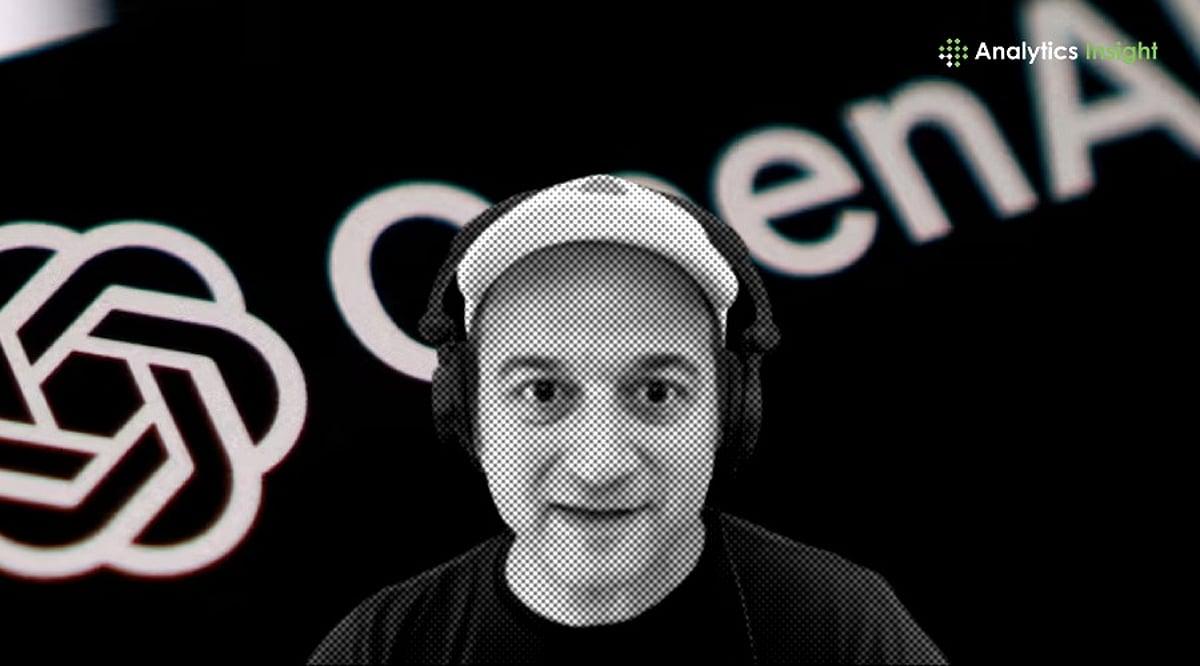
Noam Shazeer, vice president of engineering at Google and co-lead of its Gemini AI models, announced he is leaving to join OpenAI. The move comes less than two years after Google reportedly paid $2.7 billion to bring him back from Character.AI. As co-author of the 2017 transformer paper that underpins modern AI, his departure marks a significant shift in the AI talent war between tech giants.
Noam Shazeer, vice president of engineering at Google and co-lead of its Gemini AI models, announced Wednesday that he is leaving the company to join OpenAI
1
. The top AI researcher shared the news on X, stating he was excited to work with the team at OpenAI while acknowledging the difficulty of his decision4
. His departure comes less than two years after Google brought him back through a licensing deal with Character.AI, the startup he co-founded after initially leaving Google in 20212
.
Source: Benzinga
The move represents a striking development in the AI talent war, particularly given the speed of Shazeer's exit. Google reportedly paid around $2.7 billion in 2024 to bring him back, along with a team of researchers from Character.AI
5
. To lose him again so quickly to the company Google most directly competes with raises questions about whether enormous retention packages actually work in the AI industry2
.Shazeer's significance extends far beyond his role at Google. He co-authored the landmark 2017 paper "Attention Is All You Need," which introduced the transformer architecture that underpins virtually every modern large language model, including ChatGPT, Claude, and Gemini
2
4
. As one of a small group of researchers whose work sits underneath what the AI industry now calls AI, his decision to switch sides carries weight beyond a single hire.The 48-year-old computer scientist was among Google's earliest employees and became one of the company's most prominent artificial intelligence researchers
5
. He initially left Google in 2021 after the company declined to aggressively pursue a chatbot project he had championed, subsequently founding Character.AI with fellow researcher Daniel De Freitas1
. His expertise in pretraining makes him particularly valuable in the competitive landscape of AI development3
.OpenAI gains Shazeer at a particular moment. The company confidentially filed for an initial public offering earlier this month, setting the stage for one of the most closely watched technology listings in recent years
1
. Adding a researcher of Shazeer's standing to work on new model architectures is both a research move and a signal to the market about who wants to be there2
. According to reports, he will act as the organization's lead for AI architecture research4
.Source: Market Screener
Sam Altman, co-founder and CEO of OpenAI, welcomed the move enthusiastically, stating he had wanted to work with Shazeer since the very beginning of OpenAI, joking that it "only took 10 years" and would be "worth the wait"
4
5
. For a company whose pitch rests heavily on staying at the frontier of model design, recruiting one of the transformer's co-inventors is about as direct a statement as it can make.Related Stories
For Google, the loss lands amid an intensifying contest with OpenAI and Anthropic across the enterprise AI stack
2
. The departure comes weeks after Google unveiled new AI products, including its Gemini 3.5 Flash model and Gemini Spark AI agent, at its annual I/O developer conference1
. The Gemini models are central to Google's AI strategy, which makes the exit of one of their co-leads more than a routine personnel matter.
Source: Silicon Republic
Shazeer's announcement sparked widespread discussion, with many describing the move as a significant loss for Google
5
. Tech entrepreneur Yuchen Jin called the development "brutal news for Gemini," noting the $2.7 billion Google spent to bring Shazeer back before his departure5
. The move shows the limits of acqui-hires, in which the most valuable assets can walk out the door once retention periods end3
. A Google spokesperson said, "We are grateful for Noam's meaningful contributions to Google over the years and we wish him well"4
.Summarized by
Navi
[2]
[4]
1
Policy and Regulation

2
Business and Economy

3
Policy and Regulation