9 Sources
[1]
AI researchers continue to leave Google for its rivals
Top AI researchers Jonas Adler and Alexander Pritzel are leaving Google for Anthropic, according to Bloomberg. Per the report, Adler and Pritzel played key roles in the development of Google's Gemini model. TechCrunch reached out to Google for comment. These departures are part of a concerning trend for Google. Last week, legendary AI researcher Noam Shazeer announced that he was leaving Google for OpenAI. Shazeer had been at Google since 2000, save for the three years he spent building his controversial chatbot startup, Character.AI (which Google effectively acquihired for $2.7 billion, in part to bring Shazeer back to work on Gemini). Just days after Shazeer made his announcement, Google DeepMind Director John Jumper said he was leaving Google for Anthropic. Alongside DeepMind CEO Demis Hassabis, Jumper won the 2024 Nobel Prize in Chemistry for his work on AlphaFold, which can predict 3D protein structures from animo acid sequences. As OpenAI and Anthropic prepare to go public, this trend could continue -- it's a great time for the companies to recruit top AI talent with a promise of equity.
[2]
Nobel laureate John Jumper is leaving DeepMind for rival Anthropic
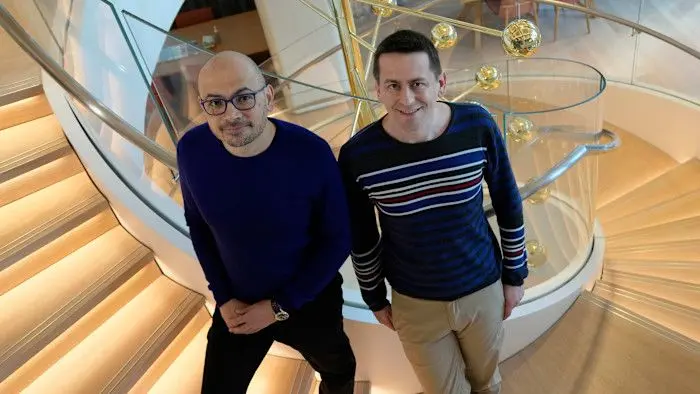
John Jumper, who shared a recent Nobel Prize in chemistry, announced Friday that he's making the leap to Anthropic after "nearly 9 years" at Google DeepMind. In a post on X, Jumper wrote that DeepMind CEO Demis Hassabis "took a real chance letting me lead the AlphaFold team just six months after finishing my PhD, and the entire GDM team taught me so much about how to do great science." Jumper (pictured above right, with Hassabis) added, "GDM is a special place, and I'll still be excited to hear about what amazing things they discover next." Bloomberg reports that Jumper was a key member of Google's team developing coding tools, which the company has struggled to sell to businesses. Character AI co-founder Noam Shazeer also announced this week that he's leaving DeepMind -- though in Shazeer's case, he's joining OpenAI. Jumper and Hassabis won the Nobel Prize in 2024 for their work on AlphaFold, an AI model that can predict the 3D structure of proteins based on their genetic sequences.
[3]
US scientist John Jumper to leave Google DeepMind for Anthropic
June 19 (Reuters) - Senior research scientist John Jumper said on Friday he would leave Google DeepMind to join AI startup Anthropic, the latest high-profile departure at the Big Tech giant's AI research and development division. Jumper, who won a Nobel prize alongside Google's Demis Hassabis in 2024, is best known as the co-creator of AlphaFold, a breakthrough AI that has predicted over 200 million protein structures, cutting years off biological and medical research. "After nearly nine years, I have decided to leave Google DeepMind and join Anthropic," Jumper said in a post on X. Technology giants including Meta (META.O), opens new tab and Alphabet (GOOGL.O), opens new tab, along with AI upstarts such as Anthropic and OpenAI are locked in a fierce talent war, competing for elite researchers as they race to build next-generation AI systems. Jumper's surprise departure comes just days after Noam Shazeer, a vice president of engineering at Google and co-lead of its Gemini AI models, said he would leave the company to join IPO-bound OpenAI. "What we achieved with AlphaFold changed the world, and showed the field what was possible with AI for science and medicine, lighting the way for how AI can benefit humanity," Hassabis said in a reply to Jumper's post. Jumper serves as VP, Engineering Fellow, at Google DeepMind, according to his LinkedIn page. He is moving to Anthropic at a time when the startup is embroiled in a high-stakes legal and regulatory battle with the U.S. government. Anthropic is hosting a science event on June 30. The startup did not immediately respond to a Reuters request for comment regarding Jumper's new role. In the X post, Jumper described Google DeepMind as a "special place" and indicated his continued interest in its future discoveries. "We are grateful for John's significant contributions to Google DeepMind's work in advancing science and AI. We wish him well in his next chapter," a Google DeepMind spokesperson told Reuters in an emailed response. Reporting by Jaspreet Singh in Bengaluru; Editing by Andrea Ricci Our Standards: The Thomson Reuters Trust Principles., opens new tab
[4]
John Jumper to leave Google DeepMind for Anthropic
Senior research scientist John Jumper said on Friday he would leave Google DeepMind to join AI startup Anthropic, the latest high-profile departure at the Big Tech giant's AI research and development division. Jumper, who won a Nobel prize alongside Google's Demis Hassabis in 2024, is best known as the co-creator of AlphaFold, a breakthrough AI that has predicted over 200 million protein structures, cutting years off biological and medical research. "After nearly nine years, I have decided to leave Google DeepMind and join Anthropic," Jumper said in a post on X. Technology giants including Meta and Alphabet, along with AI upstarts such as Anthropic and OpenAI are locked in a fierce talent war, competing for elite researchers as they race to build next-generation AI systems. Jumper's surprise departure comes just days after Noam Shazeer, a vice president of engineering at Google and co-lead of its Gemini AI models, said he would leave the company to join IPO-bound OpenAI. "What we achieved with AlphaFold changed the world, and showed the field what was possible with AI for science and medicine, lighting the way for how AI can benefit humanity," Hassabis said in a reply to Jumper's post. Jumper serves as VP, Engineering Fellow, at Google DeepMind, according to his LinkedIn page. He is moving to Anthropic at a time when the startup is embroiled in a high-stakes legal and regulatory battle with the U.S. government. Anthropic is hosting a science event on June 30. The startup did not immediately respond to a Reuters request for comment regarding Jumper's new role. In the X post, Jumper described Google DeepMind as a "special place" and indicated his continued interest in its future discoveries. "We are grateful for John's significant contributions to Google DeepMind's work in advancing science and AI. We wish him well in his next chapter," a Google DeepMind spokesperson told Reuters in an emailed response.
[5]
Nobel laureate John Jumper is leaving Google DeepMind for Anthropic after nearly nine years
John Jumper, who won the 2024 Nobel Prize in Chemistry for AlphaFold, is leaving Google DeepMind after nine years to join Anthropic. John Jumper, the Google DeepMind vice president who won the 2024 Nobel Prize in Chemistry for creating AlphaFold, is leaving the company after nearly nine years to join Anthropic. Jumper announced the move on X on Thursday, saying he would take some time to recharge before starting at the Claude maker. Both Google DeepMind and Anthropic confirmed the departure. "Demis Hassabis took a real chance letting me lead the AlphaFold team just six months after finishing my PhD," Jumper wrote. Hassabis, who shared the Nobel Prize with Jumper, responded publicly: "What we achieved with AlphaFold changed the world, and showed the field what was possible with AI for science and medicine, lighting the way for how AI can benefit humanity." The departure lands one day after Gemini co-lead Noam Shazeer announced he was leaving Google for OpenAI, making this the second landmark talent loss for Google's AI operation in 48 hours. Shazeer co-authored the 2017 "Attention Is All You Need" paper that underpins virtually every modern large language model. Google reportedly paid $2.7 billion to bring him back from Character.AI less than two years ago. Jumper shared half the 2024 Nobel Prize in Chemistry with Hassabis for developing AlphaFold2, an AI system that can predict the three-dimensional structure of proteins from their amino acid sequences. The other half went to University of Washington professor David Baker for computational protein design. AlphaFold2 has been used by more than two million scientists across 190 countries since its release, accelerating research on malaria vaccines, cancer treatments, and drug-resistant bacteria. Before joining DeepMind, Jumper earned a Marshall Scholarship to study at Cambridge and completed a PhD in theoretical chemistry at the University of Chicago. He was born in 1985, making him the youngest chemistry Nobel laureate in more than 70 years when he received the prize. Neither Anthropic nor Jumper has disclosed what role he will take at the company. But the hire aligns with Anthropic's expanding push into life sciences and computational biology. In April, Anthropic paid $400 million in stock for Coefficient Bio, a stealth biotech startup with fewer than 10 employees, most of them former Genentech computational biology researchers. That acquisition brought domain expertise in protein design and biomolecule modelling into Anthropic's healthcare and life sciences division, led by Eric Kauderer-Abrams, who has said he wants "a meaningful percentage of all of the life science work in the world to run on Claude." Adding a Nobel laureate whose work fundamentally changed how the field understands protein structure would give that ambition considerable scientific credibility. The timing also matters for Google. Bloomberg has reported that employees and executives at DeepMind have raised concerns in recent months that the company lacks a clear solution for businesses seeking AI coding tools, an area where Anthropic and OpenAI have built significant momentum. Anthropic's Claude Code has driven much of the company's recent revenue growth, and engineers at DeepMind have been leaving for Anthropic at a ratio of nearly 11 to 1, according to industry analyses. Google DeepMind remains a formidable research operation. It spun off Isomorphic Labs to pursue AI-designed drug candidates now entering clinical trials, and its Gemini models power products used by more than a million people across the Pentagon alone. A spokesperson said the company was "grateful for his contributions to DeepMind's work in advancing science and AI." But the back-to-back departures of Jumper and Shazeer raise a question that Google's retention spending has not been able to answer. Shazeer left despite a deal reportedly worth billions. Jumper leaves with a Nobel Prize bearing DeepMind's name. If neither prestige nor money can hold the people who built the company's most celebrated achievements, the problem may not be compensation. For Anthropic, the hire is a statement about where the company is heading. Jumper's expertise sits at the intersection of AI and fundamental science, a domain Anthropic has been investing in aggressively but has not yet proven it can lead. Whether the AlphaFold creator can replicate that kind of breakthrough outside the lab that made it possible is something neither his Nobel Prize nor his new employer's valuation can guarantee.
[6]
AI researchers leaving Google: Google poised to lose two more senior AI staffers to Anthropic
Their moves rattled investors and cast new doubt on Google's ability to compete in the fierce race to build better models.Shares of Alphabet closed down slightly after falling as much as 1.2% during the trading day Wednesday. Two leading artificial intelligence researchers at Alphabet Inc.'s Google are planning to leave for rival Anthropic PBC, according to people familiar with the matter, adding to a series of high-profile departures that risk undercutting the search giant's position in AI. Jonas Adler and Alexander Pritzel, both viewed internally as key contributors to Google's Gemini AI model, are set to move to the Claude maker, said the people, who spoke on condition of anonymity as the information is not public. Adler worked on the company's AI coding effort and Pritzel was involved in the process of training artificial intelligence systems.Google, an early pioneer in artificial intelligence, spent much of the current AI boom playing catch-up with the likes of OpenAI and Anthropic before hitting its stride late last year with more capable models and chips. In recent days, however, the company had already lost two prominent staffers, with Nobel laureate John Jumper heading to Anthropic and star researcher Noam Shazeer going to OpenAI. Their moves rattled investors and cast new doubt on Google's ability to compete in the fierce race to build better models.Shares of Alphabet closed down slightly after falling as much as 1.2% during the trading day Wednesday. The exits highlight the pressure Google faces from two startups that are on the cusp of going public, offering even well-heeled employees at Big Tech firms the chance at a rare payday by signing on before an IPO. In at least one case, a Google departure also appeared to be preceded by shifting priorities over how to allocate precious computing resources, an issue that has prompted other employees to leave the company entirely. Shortly before Shazeer announced his plans to join OpenAI, computing power dedicated to one of his projects was reassigned to a London-based team at Google DeepMind, according to two people familiar with the matter. The move was made in an attempt to boost collaboration across teams and streamline Google's work on pre-training, the initial phase of AI development in which models learn from massive datasets, the people said.Adler, Pritzel, Jumper and Shazeer did not respond to requests for comment. Anthropic declined to comment. A spokesperson for Google said the company remains confident in its position in the market for AI talent and pointed to Google DeepMind CEO Demis Hassabis's remarks earlier this week. "There's a lot of talent movement between all the leading labs and we win our fair share of the top talent. We have by far the biggest and broadest research bench of any of the labs out there," Hassabis said at an event in Cannes. "It's a ferociously competitive market right now, the most ferociously competitive it's ever been in the tech industry." Shazeer's career trajectory is emblematic of the intense talent wars that have defined the AI landscape. After co-authoring a seminal paper that helped catalyze the AI boom, he left Google in 2021 to found Character.AI, a chatbot startup, only to rejoin the firm in 2024 as part of an unusual licensing deal that valued his company at $2.5 billion.Once back at Google, Shazeer co-led development of the company's flagship Gemini AI model. Prior to his departure, he had also been working on a new AI architecture, two people said. The architecture was still based on the transformer, a technique that Shazeer and his colleagues introduced in 2017 that has become a staple of AI development in the years since, but it had been achieving promising results, one of the people said. Shazeer was at once an admired and divisive figure within Google, current and former employees say. His comments within Google about transgender identity and the Gaza conflict stirred controversy among some employees, two people said.Jumper, meanwhile, had emerged as a face of Google's most ambitious AI efforts after winning the Nobel Prize for landmark research using AI to predict protein folding. Adler and Pritzel, both of whom are set to join Jumper at Anthropic, worked with him on that research. Key members of Jumper's team on the protein-folding research have exited Google DeepMind in recent months. Some have shifted to Isomorphic Labs, an Alphabet spinout company working on AI-designed drugs, according to a person familiar with the matter. Anthropic, which both competes with Google and partners with it, has aggressively siphoned talent from the tech giant. DeepMind engineers are nearly 11 times more likely to leave for Anthropic than the reverse, according to a 2025 industry analysis from the venture capital firm SignalFire.Like Google, the Claude maker is exploring life sciences and healthcare applications in a bid to broaden the uses of its technology. Anthropic recently raised a new round of funding at a $965 billion valuation, overtaking OpenAI, and is considering going public as soon as this fall. AI researchers in the UK, where DeepMind's leadership is based, are often subject to lengthy non-compete agreements, which are enforceable under British law. Jumper would likely not begin work at Anthropic until next year, according to a person familiar with the matter. Another researcher, Arthur Conmy, wrote on X Wednesday that he was set to join Anthropic to work on AI safety. During his time at DeepMind, Conmy was a senior research engineer who contributed to the Gemini 2.5 model as well as AI coding, according to his LinkedIn profile.
[7]
Nobel Prize winner John Jumper quits Google DeepMind after nearly a decade; set to join Anthropic
Nobel laureate John Jumper, a key figure behind the groundbreaking AlphaFold AI, is departing Google DeepMind after nearly nine years. He announced his move to rival AI firm Anthropic on X. Jumper's departure underscores the intense competition for top AI talent as startups like Anthropic vie with tech giants for leading researchers. Nobel Prize-winning artificial intelligence (AI) researcher John Jumper is leaving Google DeepMind after nearly nine years to join Anthropic, marking the latest high-profile move in Silicon Valley's intensifying AI talent race. Announcing the decision on X, Jumper wrote, "A bit of news: After nearly 9 years, I have decided to leave Google DeepMind and join Anthropic (after taking some time to recharge). I am incredibly grateful for my time at GDM." "@demishassabis took a real chance letting me lead the AlphaFold team just six months after finishing my PhD, and the entire GDM team taught me so much about how to do great science. GDM is a special place, and I'll still be excited to hear about what amazing things they discover next," he wrote. Jumper joined Google DeepMind nearly a decade ago and went on to co-develop AlphaFold alongside DeepMind cofounder and chief executive Demis Hassabis. The pair shared the 2024 Nobel Prize in Chemistry for their work on the breakthrough AI system. AlphaFold is an AI system that solved a decades-old scientific challenge by accurately predicting the 3D structures of proteins from their amino acid sequences. The achievement transformed computational biology, accelerating research into diseases and the development of new medicines. His move comes as leading AI startups such as Anthropic and OpenAI continue to attract top talent from major technology companies, including Google and Meta, amid fierce competition in the sector.
[8]
Google's Nobel-Winning AI Expert Departing for Anthropic | PYMNTS.com
"After nearly 9 years, I have decided to leave Google DeepMind and join Anthropic," Jumper posted on the social media platform X Friday (June 19). "Demis Hassabis took a real chance letting me lead the AlphaFold team just six months after finishing my PhD," he added, referring to DeepMind's CEO. A report by Bloomberg News said that Google has confirmed Jumper's departure. That report also noted that the move could hinder Google's campaign to beat Anthropic, OpenAI and SpaceX in the race to create the most powerful AI models. Former Google employees told Bloomberg the company has struggled to sell AI coding tools to businesses. The report added that workers and executives at DeepMind -- the Google AI division where Jumper had been vice president -- have recently raised concerns that the company has no obvious solution for businesses in search of AI coding tools. Tools like that, the report added, have become a major focus for both Anthropic and OpenAI, helping fuel both companies' momentum in the last few months. Jumper and Hassabis shared the 2024 Nobel Prize for Chemistry for developing AlphaFold, an AI system which can accurately predict the three-dimensional structure of proteins from their amino acid sequences. As covered here at the time, this achievement solved a long-standing challenge in molecular biology. "Thanks John for an extraordinary partnership and wonderful collaboration over the past 9 years," Hassabis wrote in his own X post. "What we achieved with AlphaFold changed the world, and showed the field what was possible with AI for science and medicine, lighting the way for how AI can benefit humanity." In other Google AI news, PYMNTS wrote earlier this month about the company's decision to slash the cost of its entry-level AI subscription from $7.99 to $4.99 a month as AI companies shift from competing on model performance to competing on price. "The divergence between consumer and enterprise AI pricing points to the same underlying problem: Usage is growing faster than the economics are improving," PYMNTS wrote. "On the consumer side, companies are cutting prices to add subscribers while absorbing the cost of heavy users. On the enterprise side, companies that treated AI spend like flat-rate software are discovering it bills more like utilities." For all PYMNTS AI coverage, subscribe to the daily AI Newsletter.
[9]
Nobel-Winning AI Researcher Leaves Google for Anthropic
John Jumper, a Nobel Prize-winning artificial-intelligence researcher at Google DeepMind, is leaving the company for Anthropic. Jumper served as a director, and later, a vice president of Google DeepMind, the company's AI lab, according to his LinkedIn profile. He was part of a team, along with DeepMind founder Demis Hassabis, to win a Nobel Prize in chemistry in 2024 for their work using AI to predict the structure of proteins. "After nearly 9 years, I have decided to leave Google DeepMind and join Anthropic (after taking some time to recharge)," Jumper wrote in a Friday post on X. "GDM is a special place, and I'll still be excited to hear about what amazing things they discover next." His hiring was confirmed Monday by Anthropic. The departure is a blow for Google, which last week lost another prized AI researcher, Noam Shazeer, to OpenAI. Google had rehired Shazeer in 2024 with a roughly $2.7 billion check, The Wall Street Journal reported. Shares in Google parent Alphabet slid 5.9% to $345.71 as of midday Monday.
Share
Copy Link
John Jumper, who won the 2024 Nobel Prize in Chemistry for creating AlphaFold, is leaving Google DeepMind to join Anthropic after nearly nine years. The move comes just days after Gemini co-lead Noam Shazeer announced his departure for OpenAI, marking the second major talent loss for Google's AI division in 48 hours and intensifying concerns about the company's ability to retain top researchers.
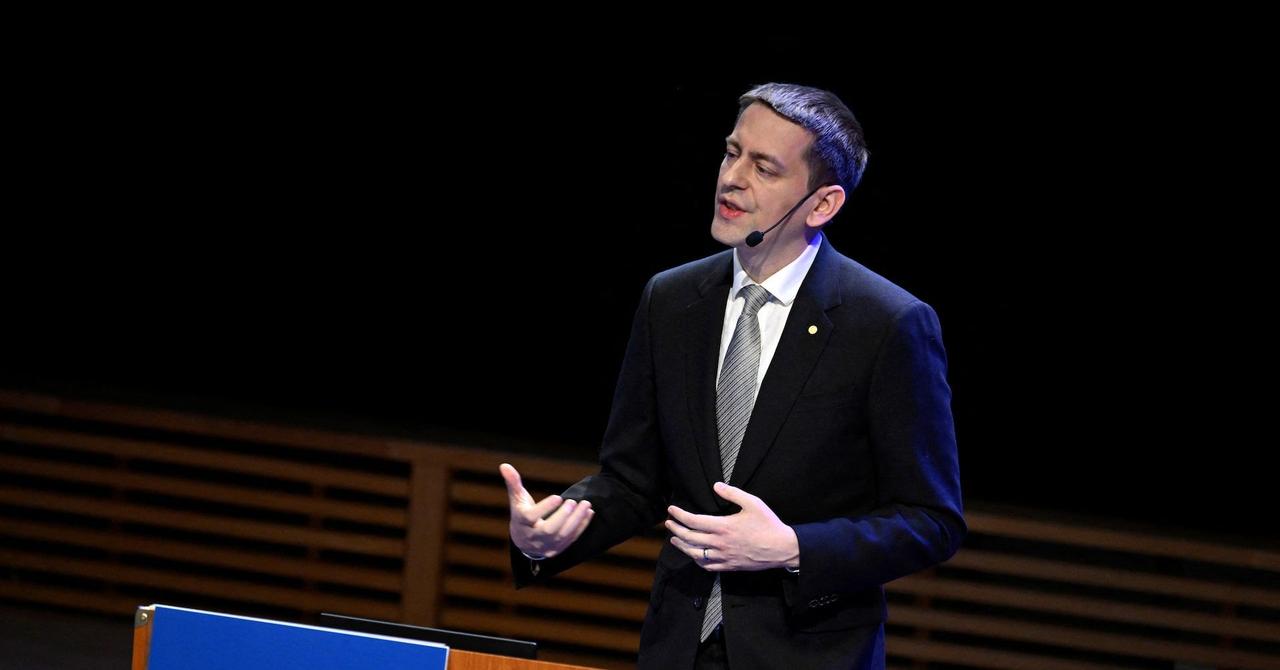
John Jumper, the 2024 Nobel Prize winner in Chemistry and co-creator of AlphaFold, announced his departure from Google DeepMind to join Anthropic after nearly nine years with the company
5
. In a post on X, Jumper reflected on his time at the AI research division, noting that Demis Hassabis "took a real chance letting me lead the AlphaFold team just six months after finishing my PhD"2
. Jumper shared the 2024 Nobel Prize with Hassabis for developing AlphaFold2, an AI system that predicts the three-dimensional structure of proteins from their amino acid sequences—a breakthrough that has been used by more than two million scientists across 190 countries5
. The protein structure prediction technology has accelerated research on malaria vaccines, cancer treatments, and drug-resistant bacteria, with AlphaFold predicting over 200 million protein structures and cutting years off biological and medical research3
.
Source: Reuters
The timing of Jumper's exit intensifies concerns about Google's talent retention challenges. His departure comes just days after Noam Shazeer, a vice president of engineering at Google and co-lead of its Gemini model, announced he would leave for IPO-bound OpenAI
3
. Shazeer co-authored the 2017 "Attention Is All You Need" paper that underpins virtually every modern large language model, and Google reportedly paid $2.7 billion to bring him back from Character.AI less than two years ago5
. Adding to Google's challenges, top AI researchers Jonas Adler and Alexander Pritzel are also leaving for Anthropic, according to Bloomberg1
. Both played key roles in the development of the Gemini model. This wave of AI talent migration represents more than isolated departures—it signals a broader pattern of high-profile talent shift in AI that could reshape the competitive landscape.
Source: TechCrunch
Technology giants including Meta and Alphabet, along with AI startups such as Anthropic and OpenAI, are locked in a fierce talent war, competing for elite researchers as they race to build next-generation AI systems
4
. As OpenAI and Anthropic prepare to go public, this trend could continue—it's a great time for the companies to recruit top AI talent with a promise of equity1
. The back-to-back departures of Jumper and Shazeer raise questions that Google's retention spending has not been able to answer. Shazeer left despite a deal reportedly worth billions, while Jumper leaves with a Nobel Prize bearing DeepMind's name5
. If neither prestige nor money can hold the people who built the company's most celebrated achievements, the problem may extend beyond compensation.
Source: PYMNTS
Related Stories
Neither Anthropic nor Jumper has disclosed what role he will take at the company, but the hire aligns with Anthropic's expanding push into life sciences and computational biology
5
. In April, Anthropic paid $400 million in stock for Coefficient Bio, a stealth biotech startup with fewer than 10 employees, most of them former Genentech computational biology researchers. That acquisition brought domain expertise in protein design and biomolecule modeling into Anthropic's healthcare and life sciences division, led by Eric Kauderer-Abrams, who has said he wants "a meaningful percentage of all of the life science work in the world to run on Claude"5
. Adding Nobel laureate John Jumper, whose work fundamentally changed how the field understands protein structure, would give that ambition considerable scientific credibility. Anthropic is hosting a science event on June 30, though the startup has not commented on Jumper's new role3
.Bloomberg has reported that employees and executives at DeepMind have raised concerns in recent months that the company lacks a clear solution for businesses seeking AI coding tools, an area where Anthropic and OpenAI have built significant momentum
5
. Anthropic's Claude Code has driven much of the company's recent revenue growth, and engineers at DeepMind have been leaving for Anthropic at a ratio of nearly 11 to 1, according to industry analyses. Google DeepMind remains a formidable research operation—it spun off Isomorphic Labs to pursue AI-designed drug candidates now entering clinical trials, and its Gemini models power products used by more than a million people across the Pentagon alone5
. A Google DeepMind spokesperson said the company was "grateful for John's significant contributions to Google DeepMind's work in advancing science and AI"3
. Hassabis responded to Jumper's announcement, stating: "What we achieved with AlphaFold changed the world, and showed the field what was possible with AI for science and medicine, lighting the way for how AI can benefit humanity"3
. For Anthropic, the hire represents a statement about where the company is heading. Jumper's expertise sits at the intersection of AI and fundamental science, a domain Anthropic has been investing in aggressively. Whether the AlphaFold creator can replicate that kind of breakthrough outside the lab that made it possible remains to be seen, as the move comes at a time when Anthropic is embroiled in a high-stakes legal and regulatory battle with the U.S. government3
.Summarized by
Navi
[1]
29 Oct 2024•Technology

22 Jun 2026•Business and Economy

18 Jun 2026•Business and Economy

1
Technology

2
Policy and Regulation

3
Technology