Google launches Gemini 3.1 Flash Live with faster responses and natural-sounding AI voices


8 Sources
[1]
The debut of Gemini 3.1 Flash Live could make it harder to know if you're talking to a robot
Text generated by artificial intelligence often has a particular vibe that gives it away as machine-generated, but it has become harder to pick out those idiosyncrasies as the tech has improved. We may be seeing a similar evolution of generative AI audio. Google has announced a new AI audio model
[2]
Search Live with Gemini's latest model tries to keep up with your rapid-fire questions
It's available now in Gemini Live and Search Live, the latter of which is now available worldwide. Google is rolling out another new Gemini model. Gemini 3.1 Flash Live is meant to enable quicker and more natural-sounding AI voices, among other, less immediately tangible benefits, and it's
[3]
Gemini 3.1 Flash Live: Making audio AI more natural and reliable
This content is generated by Google AI. Generative AI is experimental Today, we're advancing Gemini's real-time dialogue capabilities with Gemini 3.1 Flash Live, our highest-quality audio and voice model yet. It delivers the speed and natural rhythm needed for the next generation of voice-first
[4]
Gemini Live just doubled its memory, and longer conversations finally work
Outside of the office, Josh can be found digging into the latest video games, fantasy books, or tinkering with the newest features in Windows. Gemini Live has expanded and evolved quite a bit since Google first introduced it as a true Google Assistant replacement. From helping with daily problems
[5]

Google's Gemini Live Gets a Major Upgrade as Search Live Expands Globally
Google, on Thursday, announced two major updates to its artificial intelligence (AI)-powered live features. The Mountain View-based tech giant is now expanding Search Live globally, allowing users to receive relevant answers to their search queries using the Gemini assistant. Additionally, Gemini
[6]

Google rolls out Gemini 3.1 Flash Live for real-time voice AI conversations, expands Search Live globally
Google has introduced Gemini 3.1 Flash Live, a real-time audio and voice AI model designed to enable faster, more natural conversational experiences. The model enhances latency, reliability, and dialogue quality for developers, enterprises, and everyday users, supporting the next generation of
[7]

Google launches Gemini 3.1 Flash Live audio model for developers By Investing.com
Investing.com - Google announced Thursday the release of Gemini 3.1 Flash Live, a new audio and voice model designed to enable real-time dialogue with improved precision and lower latency. The model is available to developers in preview through the Gemini Live API in Google AI Studio, to
[8]

Google introduces Gemini 3.1 Flash Live AI model: Check features and availability
Gemini 3.1 Flash Live is available starting today through the Gemini API and Google AI Studio. Google has introduced a new AI model dubbed Gemini 3.1 Flash Live. According to the tech giant, the new model is built to help developers create AI agents that can see, hear, and respond to the world
Share
Copy Link
Google unveiled Gemini 3.1 Flash Live, its highest-quality audio and voice AI model designed for real-time conversations. The update brings faster responses, more natural cadence, and a doubled context window to Gemini Live and Search Live, which now expands to over 200 countries. All outputs include SynthID watermarks to identify AI-generated speech.
Google Unveils Gemini 3.1 Flash Live for Voice-First AI Experiences
Google has announced Gemini 3.1 Flash Live, positioning it as the company's highest-quality AI audio model designed specifically for real-time conversations
1
3
. The new AI model delivers faster responses and more natural cadence, addressing long-standing issues with AI-generated speech that have made conversations feel sluggish and harder to follow1
. The update rolls out today across multiple Google products, including Gemini Live and Search Live, while developers gain access through AI Studio, the Gemini API, and Gemini Enterprise for Customer Experience1
.
Source: Ars Technica
While researchers generally believe 300 milliseconds of latency is optimal for speech perception, Google has not specified exact delay numbers for the new model, stating only that it has "the speed you need"
1
. The company emphasizes that Gemini 3.1 Flash Live makes for "more helpful and natural responses" in conversational-style interfaces2
.Benchmark Scores Show Significant Performance Gains
Google has backed its claims with substantial benchmark scores demonstrating improved reliability for voice-first AI experiences. On ComplexFuncBench Audio, which measures multi-step function calling with various constraints, Gemini 3.1 Flash Live achieves a score of 90.8 percent compared to previous models
3
. The AI model also tops charts in the Big Bench Audio test, which evaluates reasoning with a set of 1,000 audio questions1
.In Scale AI's Audio MultiChallenge, which tests the ability to handle conversational interruptions and hesitation, Gemini 3.1 Flash Live scores 36.1 percent
1
. While this outpaces other real-time audio models, non-conversational audio models can reach scores over 50 percent in the same test, suggesting room for improvement in handling natural speech patterns.Doubled Context Window Enables Longer Contextually Aware Conversations
One of the most significant upgrades comes in the form of an expanded context window, which has been increased two-fold
4
. This enhancement addresses a critical limitation in conversational AI, where models can only follow a specific amount of data before information begins to be overwritten. When that happens, conversations degrade rapidly as responses lose the context that helps carry the dialogue forward4
.
Source: Android Authority
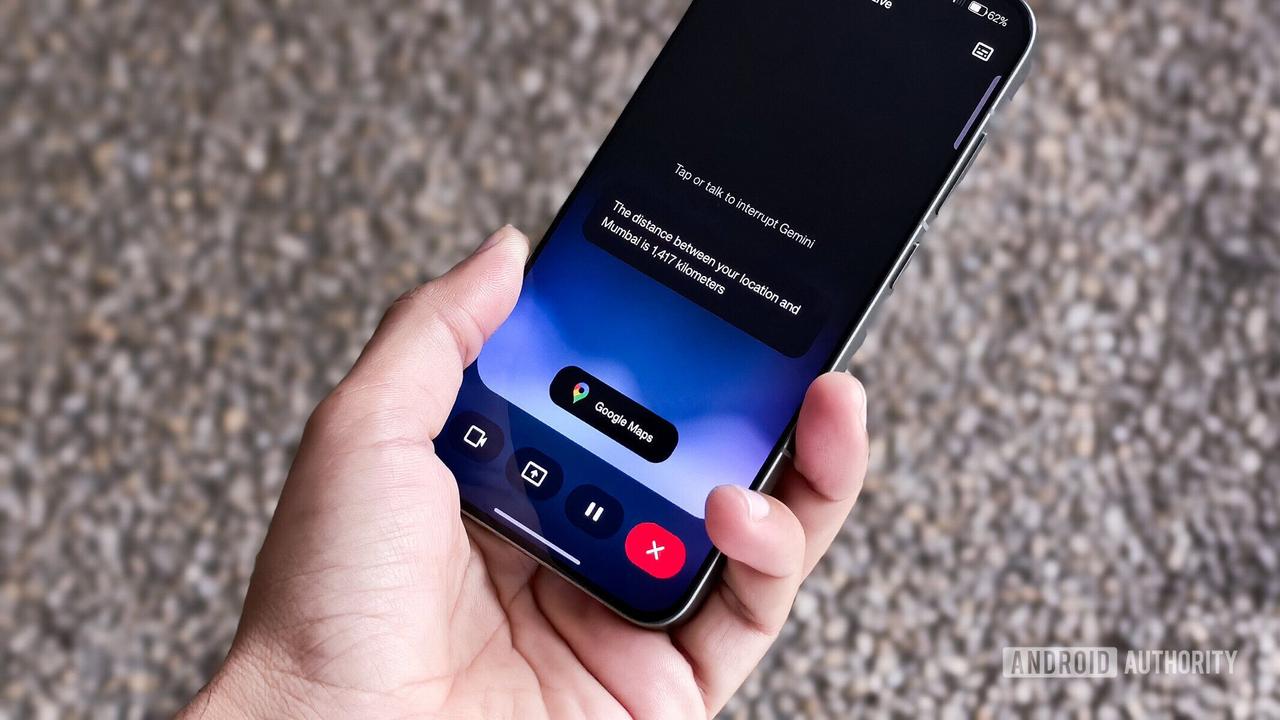
The doubled context window allows Gemini Live to hold onto conversation threads twice as long, making it easier to conduct extended brainstorming sessions and complex multi-turn dialogues
4
. Google claims the feature can now adjust answer lengths and tone to match context more effectively5
. The AI model is also "inherently multilingual," a characteristic that enabled the global expansion of Search Live.SynthID Watermarks Address AI Transparency Concerns
As natural-sounding AI voices become increasingly difficult to distinguish from human speech, Google has integrated SynthID watermarks into all audio generated by Gemini 3.1 Flash Live
1
5
. These watermarks are not perceptible to human listeners but can be detected if someone attempts to pass off AI-generated speech as authentic human voice1
.However, this protection has limitations. While SynthID can identify AI-generated audio after the fact, it cannot help users determine in real-time whether they're speaking with an AI assistant or a human during a phone call
1
. This raises questions about transparency in AI-powered customer service interactions.Related Stories
Enterprise Clients and Developers Gain Access to Advanced Capabilities
Google has partnered with enterprise clients including Home Depot and Verizon to test the model, with all reporting positive experiences in how well Gemini 3.1 Flash Live can mimic human speech
1
. For customer service agents, the new AI model can better discern pitch and pace, allowing it to adjust its approach when it calculates a customer is getting confused or annoyed2
.Developers can now access Gemini 3.1 Flash Live to build voice-first agents capable of completing complex tasks at scale
3
. The model is available through AI Studio, the Gemini API, and Gemini Enterprise for Customer Experience, which serves as a toolkit for agentic shopping applications1
.Search Live Expands to Over 200 Countries
Alongside the Gemini 3.1 Flash Live announcement, Google is expanding Search Live globally to more than 200 countries and territories wherever AI Mode is available
5
. The feature supports all languages currently available in Gemini and can be accessed via voice and camera on both Android and iOS devices5
.
Source: Gadgets 360
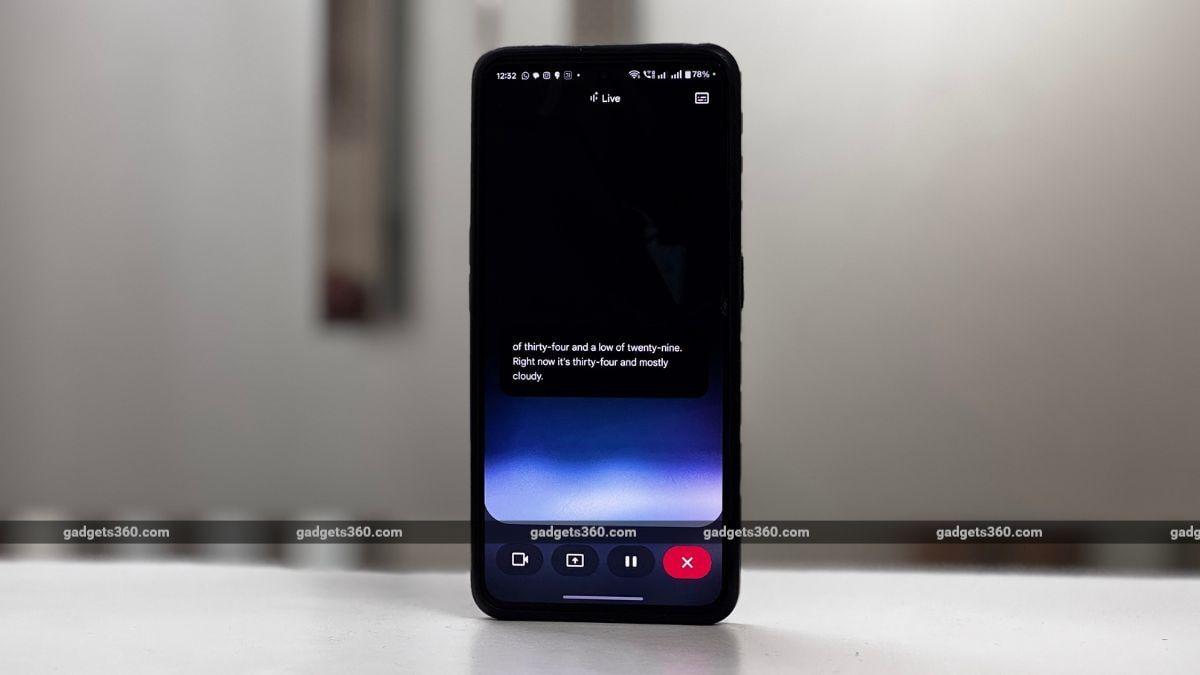
Users can activate Search Live by tapping the Live icon under the search bar in the Google app, or by tapping the Live option while using Google Lens to ask questions about their surroundings in real-time
5
. This expansion makes AI-powered live features accessible to millions of users worldwide, potentially transforming how people interact with search technology and AI assistants in their daily lives.References
Summarized by

Navi
[1]
[2]
Related Stories
Google Unveils Gemini 3.8 Live Models With Real-Time Reasoning for Voice Agents
16 Sept 2026•Technology

Google Gemini Live gets biggest update ever with human-like conversational AI upgrades
13 Nov 2025•Technology
Google upgrades Gemini audio models to handle natural conversations and live translation
12 Dec 2025•Technology

Recent Highlights



Recent Highlights
Today's Top Stories






Don’t drown in AI news. We cut through the noise - filtering, ranking and summarizing the most important AI news, breakthroughs and research daily. Follow topics that matter to you and stay ahead.


