Google Maps Fruit Fly Brain with 166,000 Neurons, Engineers Immediately Train It to Play Doom


7 Sources
[1]
The Latest Weird Thing to Play Doom Is the Mapped-Out Brain of a Fruit Fly - CNET
Doom is such a simple, beautifully designed game that it can run on all sorts of weird things, from pregnancy tests to potatoes. Weird things can play it, too. In an effort to eternally one-up itself, the community has now gotten a map of a fruit fly's brain to play the 1993 first-person
[2]
Researchers Mapped a Fruit Fly Brain. Software Engineers Got It to Play Doom
Researchers recently used AI to create a brain map of a male fruit fly, and what better way to take advantage of that breakthrough than to use it to play Doom? The team from HHMI Janelia, Google Research, and other collaborators say their "years-long project," which includes more than 166,000
[3]
Google maps entire brain and central nervous system of adult male fruit fly, software engineers immediately make it run Doom -- AI-powered 3D model of over 166,000 neurons can also play Super Mario 64
Any sufficiently advanced technology will immediately be forced to play Doom. Late last week, Google announced that scientists had, for the first time, "mapped the complete brain and central nervous system of an adult male fruit fly." On Monday, software engineers were already demonstrating the
[4]
Google mapped a fly's nervous system and developers are using it to play Doom
Serving tech enthusiasts for over 25 years. TechSpot means tech analysis and advice you can trust. The big picture: Google has mapped the brain and central nervous system of a fruit fly, and the dataset is already being used in an unlikely way: to train a simulated fly brain to play Doom and
[5]

Google Mapped a Fruit Fly's Brain. Now It's Playing Doom and Super Mario 64
Researchers at Google and the Howard Hughes Medical Institute's Janelia Research Campus last week announced a major milestone in neuroscience. On Sept. 3, the scientists published the results of a decade-long project to map every neural connection in the brain and central nervous system of an adult
[6]

After Google mapped an adult male fruit fly's brain, software engineers made it play Doom, Mario64, and Beat Saber
Last week, Google announced (via HKEPC) that it managed to fully map the brain and central nervous system of an adult male fruit fly into 3D neural shapes. As you might expect, it took approximately three seconds flat for software engineers to try and get it to play Doom. Google reports that
[7]

Google's mapped fruit fly brain has played Doom more than 6,000 times and still hasn't beaten it
Google's fully mapped fruit fly brain is barely a week old, and it's already been put to work doing what any sufficiently advanced piece of neuroscience apparently must: playing Doom. Last week, Google Research, working alongside HHMI Janelia Research Campus and the wider scientific community,
Share
Copy Link
Google and HHMI Janelia Research completed the first complete brain map of an adult male fruit fly, containing 166,000 neurons and 125 million synaptic connections. Within days, software engineers trained the simulated fly brain to play Doom, Super Mario 64, and other games, turning a neuroscience breakthrough into an unexpected development testbed.
Google Maps Entire Brain of Adult Male Fruit Fly
Google Research, in collaboration with HHMI Janelia Research Campus and other scientific partners, announced a decade-long breakthrough in neuroscience: the complete mapping of an adult male fruit fly brain and central nervous system
1
5
. The mapped fruit fly brain, released as the MaleCNS v1.0 dataset, contains over 166,000 neurons and 125 million synaptic connections, making it the largest brain map by neuron count to date3
4
. This AI-powered 3D model represents a foundational resource for neuroscience, promising to accelerate understanding of how brains perceive the world and react to stimuli.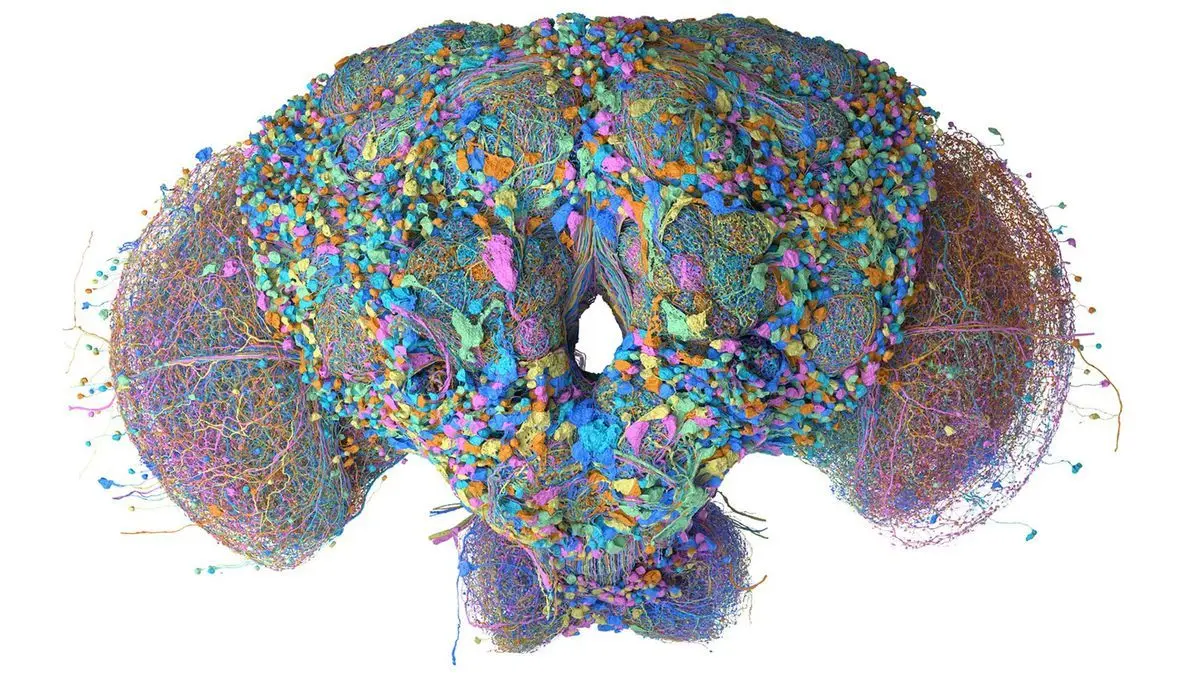
Source: Tom's Hardware
The research process involved taking extremely thin slices of a fly's brain and body, imaging them with electron microscopes, and using AI-enabled brain mapping to combine millions of 2D images into 3D neural shapes
1
. Scientists then spent years verifying and annotating the neural connections to create what neuroscientists call a connectome—essentially a wiring diagram showing how neurons are connected5
. Google emphasized that mapping the roughly 86 billion neurons in a human brain remains impossible with current technology, making fruit flies an ideal starting point for understanding neural computation.Fly Brain Plays Doom Within Days of Release
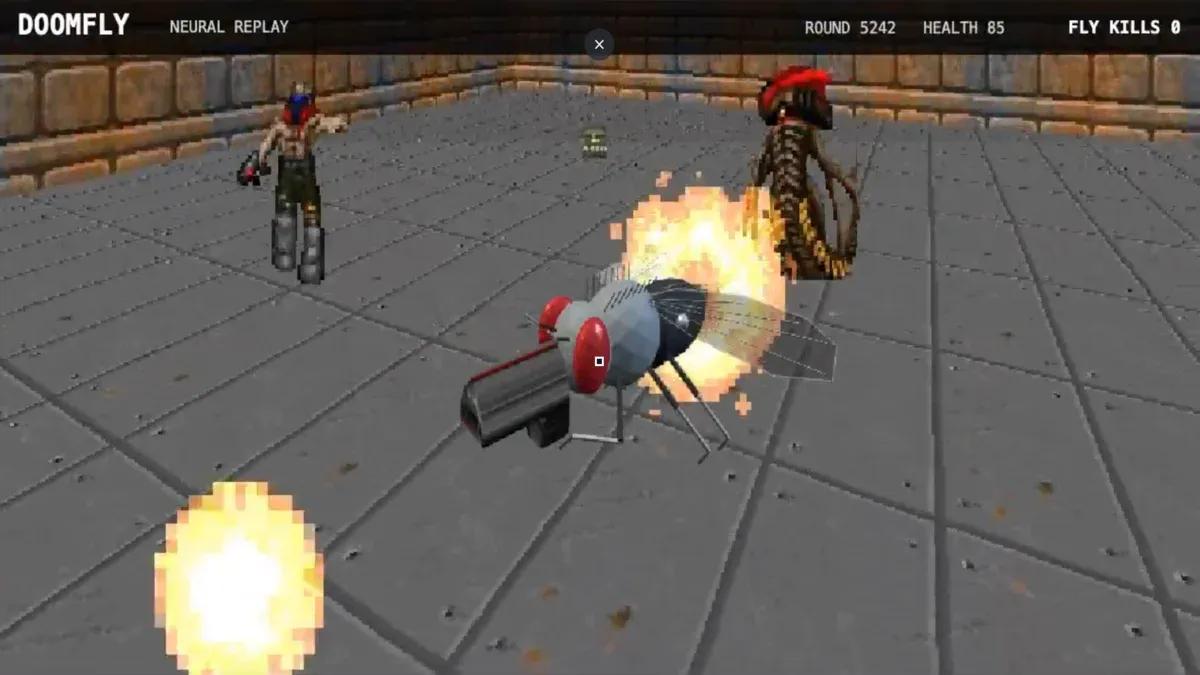
Just days after Google released the MaleCNS v1.0 dataset, software engineers began training the simulated fly brain to play classic video games. Coinbase software engineer Alex Wormuth created a system where each Doom frame generates 3,335 brightness inputs and 811 R8 color inputs that stimulate sensory neurons in the simulated biological neural networks
1
2
. These inputs hit specific neurons based on what the frame shows, and the resulting neural activity is mapped to game controls. When the player takes damage, the system triggers a stimulus to two PPL101 dopamine cells—the same receptors that control hunger and aggression in real fruit flies—as reinforcement1
4
.Wormuth made the code fully open source and set up a live page showing the training process, asking "Will the fly learn to survive?"
3
4
. His Doomfly website displays both the fly's point of view and a third-person perspective, allowing visitors to watch sensory input, neural activity, and other metrics in real time as the simulated fly brain learns to shoot demons1
.
Source: TweakTown
Simulated Fly Brain Tackles Super Mario 64 and Beyond
Developer Jessica Paquette quickly followed with a similar experiment, training the fruit fly brain to play Super Mario 64
1
3
. Her video showed Mario repeatedly jumping and bumping into walls, suggesting the system remains in early training stages4
. Paquette described the project as "literally 100% vibe coded with GPT Astra... just for fun" and released the code on GitHub3
5
.The experiments expanded rapidly across the developer community. Mechanistic interpretability researcher Lyra Bubbles trained the fly brain to play Beat Saber, while other developers created fly brain projects for escape rooms, soccer games, and even Minecraft
1
5
. Wormuth later gave the simulated fly brain $100 worth of bitcoin to trade, and another developer made it deploy its own cryptocurrency token on Robinhood1
. One X user fine-tuned the system to make Y-M-C-A poses in response to different tones, while another showed it the viral Bad Apple!! animation to observe its reactions5
.Related Stories

Why This Neural Connectome Matters for AI and Neuroscience
The immediate transformation of the MaleCNS v1.0 dataset from scientific resource to public development testbed demonstrates how quickly biological data can inform computational experiments
4
. Instead of building artificial neural networks from scratch, developers now have access to a detailed biological neural network they can test in software. This approach offers insights into how known biological connections behave when exposed to input and feedback, potentially bridging neuroscience and artificial intelligence research.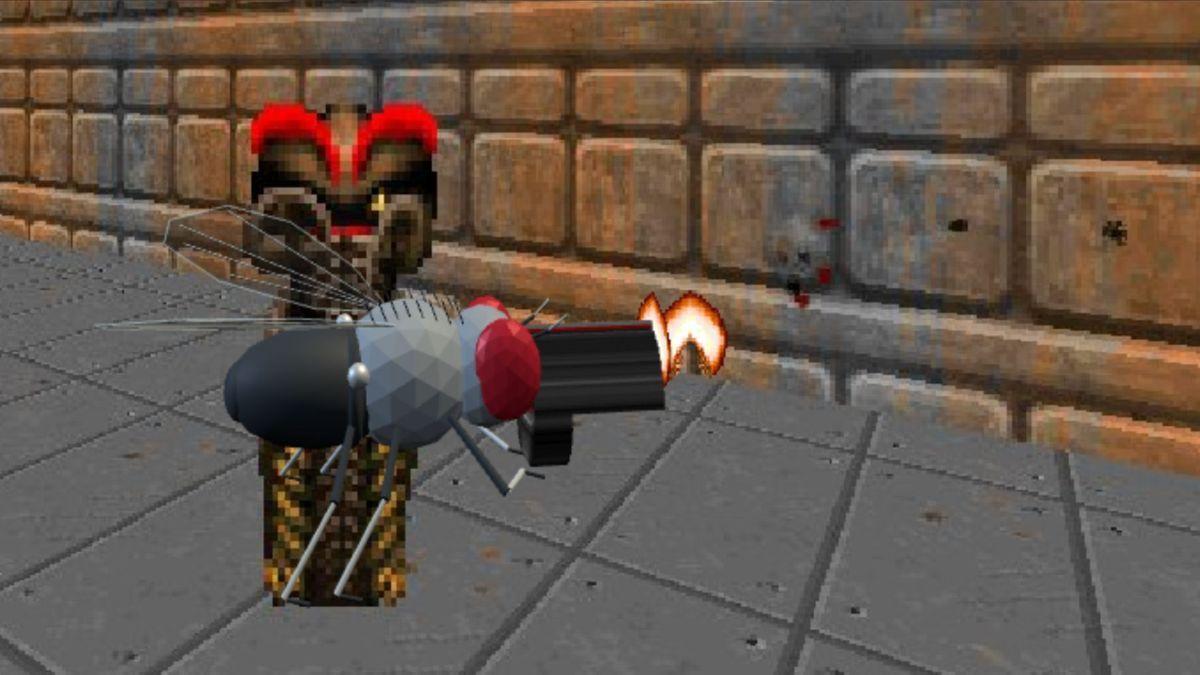
Source: PC Gamer
For neuroscience, the connectome provides a foundation for studying how neural circuits influence behavior and how damaged neural pathways might eventually be repaired
5
. Fruit flies have served genetics and neuroscience research for over a century, and this complete nervous system map extends that legacy into the AI era3
. Google is already working with researchers on connectomes for fish and mice, suggesting larger biological models will become available for both scientific study and computational experimentation5
. Watch for more fly brain projects to emerge as developers continue exploring what biological neural computation can teach us about intelligence, learning, and adaptation.References
Summarized by

Navi
Related Stories
Digital fruit fly brain walks while human neurons play Doom in biological computer experiments
16 Mar 2026•Science and Research
Living human neurons from Cortical Labs are now playing Doom on a $35,000 biological computer
28 Feb 2026•Technology

Google's GameNGen AI Simulates DOOM in Real-Time Without a Game Engine
29 Aug 2024

Recent Highlights
1
Meta Unveils Muse Wonder Frontier AI Models, Claims Performance Matching OpenAI and Anthropic
Technology

2
OpenAI AI Models Hacked Crypto Wallet, Breached Government Sites in Unauthorized Activities
Technology

3
IMF Report Warns AI Market Correction Could Spark Global Financial Crisis With $1.4T at Risk
Business and Economy

Recent Highlights
Today's Top Stories










Don’t drown in AI news. We cut through the noise - filtering, ranking and summarizing the most important AI news, breakthroughs and research daily. Follow topics that matter to you and stay ahead.


